Works for
0 of 1 advertised claim delivered
Anti-aging4 ingredients credited for this claimLimited support
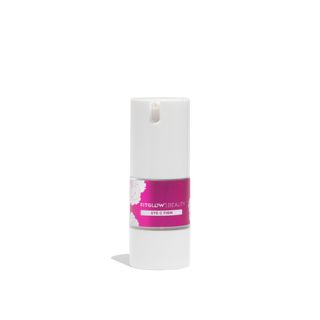
“Eye C Firm”
This product does not contain ingredients that are able to reduce fine lines and wrinkles or help with skin elasticity, but it can improve the look of the skin temporarily through moisturization. Well-moisturized skin might also be able to repair the sun damage better.This ingredient - butyrospermum parkii butter - could be helpful for preventing or repairing signs of aging in theory, but there is no evidence that it actually works.
This ingredient punica granatum extract might be able to help neutralize free radicals in skin and help it fight off some of the sun damage.
Anti-oxidationNot advertised by the brand · 9 ingredients credited for this claimModerate support
This product contains antioxidants (punica granatum extract) that might be able to help neutralize free radicals in skin to lessen the damage it gets from the UV light (sun). There is not enough evidence to confirm their effectiveness in skin though.
MoisturizingNot advertised by the brand · 14 ingredients credited for this claimGood support
This product can help improve hydration of the skin with the two types of ingredients.
The first type is called “humectants”:
these ingredients help attract water.
When humectants are on the surface of the skin, they “pull in” the moisture from the outside environment, or from
within deeper layers of the skin. The following ingredients in this product do the job:
sodium hyaluronate.
This product also contains ingredients called “occlusives”. They help reduce the speed with which our skin loses moisture to the outside environment. These ingredients also help soften the upper layer of the skin, so it feels less tight and nicer to the touch. The following ingredients in this product do the job: butyrospermum parkii butter, helianthus annuus seed oil.
Can it cause trouble?
Irritancy1 strong irritant: Rosa damascena extractMedium risk
Comedogenic1 ingredient rated 2 or more on the 0–5 pore-clogging scale1 flagged
User reviews
Be the first — your take helps the next person decide.
Ingredients
Filter by role to see what each ingredient is doing.
Water~40–60%
Cetearyl olivate~5.1–7.7%
Olea europaea fruit oil~3.8–5.8%
- Irritation risk
- Medium
An emollient that helps soften the skin but is not effective for restoring its barrier function. Might be helpful to calm down inflammation
More about Olea europaea fruit oilSorbitan olivate~2.5–3.7%
Olea europaea fruit oil~2–3%
- Irritation risk
- Medium
An emollient that helps soften the skin but is not effective for restoring its barrier function. Might be helpful to calm down inflammation
More about Olea europaea fruit oilArgania spinosa kernel oil~1.8–2.6%
- Irritation risk
- Medium
An emollient that helps soften the upper layer of the skin. Might have some weak anti-oxidant properties
More about Argania spinosa kernel oilSimmondsia chinensis seed oil~1.5–2.3%
- Irritation risk
- Medium
Softens the upper layer of skin and helps restore the healthy skin barrier. Has shown to help calm down inflammation in skin. It is a stable oil, meaning that it retains its properties even when exposed to air.
More about Simmondsia chinensis seed oilButyrospermum parkii butter~1.3–2%
- Irritation risk
- Low
- Comedogenicity
- 3/5
A great moisturising ingredient that softens the skin and reduces water loss from its upper layer. It also can be helpful in protecting skin from free radicals
More about Butyrospermum parkii butterRosa canina seed oil~1.1–1.6%
- Irritation risk
- Medium
A plant oil that helps soften the upper layer of the skin. It might have anti-oxidant properties. Might help reduce inflammation in skin and help against blemishes
More about Rosa canina seed oilVitis vinifera seed oil~0.85–1.3%
- Irritation risk
- Medium
A great emollient that can also have anti-oxidant properties
More about Vitis vinifera seed oilLeuconostoc/aloe barbadensis leaf/sorbus aucuparia fruit ferment filtrate~0.5–1.1%
- Irritation risk
- High
A preservative
More about Leuconostoc/aloe barbadensis leaf/sorbus aucuparia fruit ferment filtratePhospholipids~0.4–0.95%
- Irritation risk
- Low
Emollients that are naturaly present in skin. In addition, they help water and oil mix together in the product
More about PhospholipidsAscorbyl palmitate~0.35–0.85%
- Irritation risk
- Medium
Being a lipid soluble form of vitamin C, it is more stable and can penetrate the skin better than L-Ascorbic acid. It is effective in protecting the skin from free radicals, as well as evening the skin tone, but is less effective in stimulating collagen production compared to L-Ascorbic acid.
More about Ascorbyl palmitateHelianthus annuus seed oil~0.35–0.85%
- Irritation risk
- Low
A great emollient due to its high linoleic acid content. One of the most effective plant oils in helping skin hydration and repairing skin barrier function
More about Helianthus annuus seed oilRosa damascena extract~0.3–0.75%
- Irritation risk
- High
Oil of a very fragrant pink rose used as fragrance in cosmetics. Extensive research has shown it has mixed benefits. In the pro column, inhaling this flower’s scent seems to have relaxing properties and the plant’s petals contain skin-soothing and antioxidant compounds that can benefit skin. On the flipside, the numerous chemicals that create this rose’s distinctive fragrance pose a risk of causing skin aggravation.
More about Rosa damascena extractAmber extract~0.2–0.8%
- Irritation risk
- Low
Lactobacillus ferment lysate~0.2–0.8%
- Irritation risk
- Low
A "broth" with parts of dead cells of lactobacteria. Might be helpful supporting diverse microbiome in skin, but evidence is lacking
More about Lactobacillus ferment lysateCamellia sinensis leaf extract~0.2–0.7%
- Irritation risk
- Low
Can contain potent anti-oxidant compounds (abbreviated ECG, GCG, EGC, and EGCG) that might help protect the skin from free radicals. Can help calm down inflammation and has some anti-bacterial properties. Unfortunately, these antioxidants are unstable and lose their effectiveness very quickly in products. The concentration of the antioxidant compounds in the extract also tends to be low to be effective in topical formulation
More about Camellia sinensis leaf extractPunica granatum extract~0.15–0.55%
- Irritation risk
- Medium
A plant extract that can help neutralize free radicals in skin and even out the skin tone, but is typically used in products in a concentration that is too low to be effective
More about Punica granatum extractCaffeine~0.1–0.5%
- Irritation risk
- Medium
Might be helpful in neutralizing free radicals. Can have a dehydration effect that might somewhat decrease the look of puffy eyes
More about CaffeinePhospholipids~0.15–0.5%
- Irritation risk
- Low
Emollients that are naturaly present in skin. In addition, they help water and oil mix together in the product
More about PhospholipidsPhytonadione~0.1–0.35%
- Irritation risk
- Low
Cucumis sativus fruit extract~0.05–0.25%
- Irritation risk
- Medium
Might be somewhat helpful in reducing hyperpigmentation and neutralizing free radicals but its typical concentration in a product is too low for having an effect
More about Cucumis sativus fruit extractCetyl alcohol~0.1–0.3%
- Irritation risk
- Low
A non-drying alcohol that works to soften the skin and stabilize product formulations helping oil and water mix together
More about Cetyl alcoholSodium hyaluronate~0.05–0.2%
- Irritation risk
- Low
One of the best moisturizing ingredients. Attracts water into the upper layer of the skin
More about Sodium hyaluronateHyaluronic acid~0.05–0.15%
- Irritation risk
- Low
One of the best moisturizing ingredients. Attracts water into the upper layer of the skin. Naturally present in skin. Typically has large molecule size unless advertised otherwise on the product label. Helps support skin's barrier function and may help to reduce inflammation
More about Hyaluronic acidIngredient list view
Water, Cetearyl olivate, Olea europaea fruit oil, Sorbitan olivate, Olea europaea fruit oil, Argania spinosa kernel oil, Simmondsia chinensis seed oil, Butyrospermum parkii butter, Rosa canina seed oil, Vitis vinifera seed oil, Leuconostoc/aloe barbadensis leaf/sorbus aucuparia fruit ferment filtrate, Phospholipids, Ascorbyl palmitate, Helianthus annuus seed oil, Rosa damascena extract, Amber extract, Lactobacillus ferment lysate, Camellia sinensis leaf extract, Punica granatum extract, Caffeine, Phospholipids, Phytonadione, Cucumis sativus fruit extract, Cetyl alcohol, Sodium hyaluronate, Hyaluronic acid
Compare prices
Retailers ranked by price — lowest first.

Product summary
Based on the ingredient list, "Fitglow Beauty - Eye C Firm" can work well for skin moisturization. To work well, any moisturizer needs to include a combination of water-binding and emollient ingredients. Fitglow Beauty - Eye C Firm ticks this box. Panthenol and sodium hyaluronate in this product (humectants) attract water molecules to the upper layer of the skin (the water comes from the outside air or from the deeper layers of the skin if the air is dry). Argania spinosa kernel oil, vitis vinifera seed oil, butyrospermum parkii butter, helianthus annuus seed oil and simmondsia chinensis seed oil in this product help decrease the water evoporation from the skin, so that it stays hydrated for longer. These ingredients also soften the skin and take away the feeling of tightness and dryness.
Ingredient callouts
- This formulation also uses an effective concentration of panthenol (pro-vitamin B5) - about 0.35% - 0.80%. Panthenol helps strengthen the skin barrier, improve hydration and reduce inflammation in skin.
Irritation risk
There are some common irritants in this product, including ingredients that do not have benefits for the skin. We assess the overall irritancy of this moisturizer to be low. For a detailed overview of all potential irritants: click here
You can see the detailed formula review with the breakdown of all actives in the product and the full ingredient list with estimated concentrations in the tables below.
Price
The product retails for 79.00$ in the United States.
For a detailed price comparison: click here.
Sources cited in this review
Every concentration estimate and effectiveness label is anchored to one of these 16 studies and safety reviews.
- 1Use of “natural” oils for moisturization: Review of olive, coconut, and sunflower seed oilonlinelibrary.wiley.com
- 2
- 3Nutrient composition of rose (Rosa canina L.) seed and oilsncbi.nlm.nih.gov
- 4
- 5
- 6

Affiliate links · As an Amazon Associate, WIMJ earns from qualifying purchases.