Works for
2 of 3 advertised claims delivered
Moisturizing27 ingredients credited for this claimStrong support
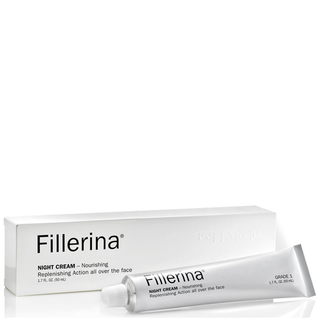
“Night Cream .”
This product can help improve hydration of the skin with the two types of ingredients.
The first type is called “humectants”:
these ingredients help attract water.
When humectants are on the surface of the skin, they “pull in” the moisture from the outside environment, or from
within deeper layers of the skin. The following ingredients in this product do the job:
arginine, betaine.
This product also contains ingredients called “occlusives”. They help reduce the speed with which our skin loses moisture to the outside environment. These ingredients also help soften the upper layer of the skin, so it feels less tight and nicer to the touch. The following ingredients in this product do the job: arginine, butyrospermum parkii butter.
The following ingredients in this product are especially good for supporting the skin barrier and helping with the hydration level: acetyl hexapeptide-30, acetyl hexapeptide-37, palmitoyl tripeptide-38
Anti-aging8 ingredients credited for this claimModerate support
“Developed to mirror the effects of the Dermo-Cosmetic Replenishing Treatment Grade 1, it will correct the appearance of fine lines and barely-there wrinkles to leave skin feeling smoother, plumper and 'filled' out.”
This product contains acetyl hexapeptide-30, acetyl hexapeptide-37, palmitoyl tripeptide-38. These ingredients might be able to help reduce and prevent fine lines and wrinkles, improve skin elasticity and firmness, but there is not enough evidence that it actually works.
Exfoliation2 ingredients credited for this claimWeak support
“Nurturing and caring, it marries nourishing Shea Butter and Wheat Germ Oil with exfoliating Salicylic Acid and a blend of Sweet Almond Oil, Rose Hip Seed Oil and antioxidant Vitamin E to correct daily damage that occurs to skin.”
This product does not contain effective exfoliating ingredients. It might be able to deliver physical exfoliation, that is scrub off some of the dead cells on the surface of the skin. We do not recommend physical exfoliation, because it is not uniform (some bits of skin can get exfoliated too much while others not at all). It can also traumatize the skin and aggrevate acne and other skin conditions.
Can it cause trouble?
Irritancy12 strong irritants: Rosa moschata seed oil, Parfum + 10 more — patch-test recommendedHigh risk
Comedogenic6 ingredients rated 2 or more on the 0–5 pore-clogging scale6 flagged


User reviews
Be the first — your take helps the next person decide.
Ingredients
Filter by role to see what each ingredient is doing.
Water~45–55%
Dimethicone~5.6–6.8%
- Irritation risk
- Low
A silicone that helps to reduce water loss from the surface of the skin. Can temporarily "fill in" lines and wrinkles, absorb oil, and create a nice product finish
More about DimethiconeDiisopropyl dimer dilinoleate~4.5–5.4%
- Irritation risk
- Low
Hydrogenated polydecene~3.1–3.8%
- Irritation risk
- Low
Helps to soften the upper layer of the skin and create a nice product texture
More about Hydrogenated polydeceneIsostearyl isostearate~2.4–3%
- Irritation risk
- Medium
- Comedogenicity
- 3/5
Helps soften the upper layer of the skin and improve the product texture. It can be comedogenic
More about Isostearyl isostearateTriticum vulgare germ oil~2–2.5%
- Irritation risk
- Low
- Comedogenicity
- 3/5
A good emoillient. Contains vitamin E which can help neutralise free radicals, however the oil is unstable. Avoid if you have gluten or wheat sensitivity (including food allergies).
More about Triticum vulgare germ oilButyrospermum parkii butter~1.8–2.2%
- Irritation risk
- Low
- Comedogenicity
- 3/5
A great moisturising ingredient that softens the skin and reduces water loss from its upper layer. It also can be helpful in protecting skin from free radicals
More about Butyrospermum parkii butterGlycerin~1.5–1.9%
- Irritation risk
- Low
One of the best moisturizing ingredients. Naturally present in skin. It attracts water to the upper layer of the skin working as a humectant
More about GlycerinBetaine~1.2–1.4%
- Irritation risk
- Low
Helps attract water to the upper layer of the skin and improves the product texture
More about BetaineCetearyl alcohol~1.1–1.3%
- Irritation risk
- Low
- Comedogenicity
- 2/5
A non-drying alcohol. Works as an emollient. Helps water and oil mix together and creates a nice product texture
More about Cetearyl alcoholGlyceryl stearate~0.75–1.1%
- Irritation risk
- Low
An emollient that softens the skin and forms a protective layer on its surface. Helps water and oil mix together
More about Glyceryl stearateSodium lauroyl glutamate~0.6–0.85%
- Irritation risk
- Medium
Used as a cleansing agent. It creates foam
More about Sodium lauroyl glutamateStearic acid~0.65–0.95%
- Irritation risk
- Low
Helps oil and water mix together and works as an emollient
More about Stearic acidPhenoxyethanol~0.45–0.7%
- Irritation risk
- Low
A preservative. It helps prevent bacterial growth in cosmetic products
More about PhenoxyethanolAcrylates/c10-30 alkyl acrylate crosspolymer~0.45–0.7%
- Irritation risk
- Medium
Maintains the texture of skincare products. Allows the product to spread evenly. Helps oil and water mix together
More about Acrylates/c10-30 alkyl acrylate crosspolymerPrunus amygdalus dulcis oil~0.5–0.7%
- Irritation risk
- Low
An emollient that softens the skin
More about Prunus amygdalus dulcis oilRosa moschata seed oil~0.45–0.65%
- Irritation risk
- High
Tocopheryl acetate~0.4–0.6%
- Irritation risk
- Medium
A more stable but less bio-available form of vitamin E compared to Tocopherol. Might help moisturize and protect the skin from free radicals, but mostly used in low concentrations to stabilize other ingredients.
More about Tocopheryl acetateXanthan gum~0.35–0.6%
- Irritation risk
- Low
Used to create a thicker product consistency
More about Xanthan gumParfum~0.3–0.5%
- Irritation risk
- High
An aromatic blend of unspecified and possibly irritating ingredients
More about ParfumDiazolidinyl urea~0.25–0.5%
- Irritation risk
- High
A preservative. Works by releasing formaldehyde. Can be irritating
More about Diazolidinyl ureaSodium hyaluronate~0.3–0.55%
- Irritation risk
- Low
One of the best moisturizing ingredients. Attracts water into the upper layer of the skin
More about Sodium hyaluronateHydrolyzed glycosaminoglycans~0.25–0.5%
- Irritation risk
- Low
Long sugars that help attract water to the upper layer of the skin
More about Hydrolyzed glycosaminoglycansTriethanolamine~0.3–0.55%
- Irritation risk
- Medium
Used to adjust pH of the product and can help improve the product's smell
More about TriethanolamineMethylparaben~0.15–0.3%
Disodium edta~0.25–0.5%
Potassium chloride~0.3–0.5%
- Irritation risk
- Low
Limonene~0.25–0.45%
- Irritation risk
- High
A common frangrance that can easily irritate skin, especially if exposed to air, light or heat
More about LimoneneEthylparaben~0.2–0.4%
Cyathea cumingii leaf extract~0.3–0.55%
- Irritation risk
- Low
Linalool~0.25–0.45%
Butylene glycol~0.25–0.5%
- Irritation risk
- Low
Used to create a nice product texture and help delivery of other ingredients. Might be somewhat helpful in attracting water to the upper layer of the skin
More about Butylene glycolPseudoalteromonas ferment extract~0.25–0.5%
- Irritation risk
- Low
Sodium hyaluronate crosspolymer~0.25–0.5%
- Irritation risk
- Medium
Attracts water into the upper layer of the skin
More about Sodium hyaluronate crosspolymerHexyl cinnamal~0.25–0.45%
Retinyl palmitate~0.25–0.45%
- Irritation risk
- High
Three steps removed from the active form of vitamin A - retinoic acid. To have an effect in the skin, it first needs to be converted twice to become the retinoic acid. This means it is less potent than retinol, but could also be less irritating. Once converted to the retinoic acid in the skin, it helps against all signs of aging, improves skin cell turnover and helps fight blemishes and clogged pores. However, in many cosmetic formulations, it is used in a concentration that is too low to have the full effect
More about Retinyl palmitateHydrolyzed hyaluronic acid~0.25–0.5%
- Irritation risk
- Low
One of the best moisturizing ingredients. Attracts water into the upper layer of the skin. A version of it is naturally present in skin
More about Hydrolyzed hyaluronic acidButylphenyl methylpropional~0.25–0.45%
- Irritation risk
- High
A fragrance. Can trigger allergic reactions and be irritating
More about Butylphenyl methylpropionalGeraniol~0.25–0.45%
Citronellol~0.25–0.45%
Hyaluronic acid~0.25–0.5%
- Irritation risk
- Low
One of the best moisturizing ingredients. Attracts water into the upper layer of the skin. Naturally present in skin. Typically has large molecule size unless advertised otherwise on the product label. Helps support skin's barrier function and may help to reduce inflammation
More about Hyaluronic acidCoumarin~0.25–0.45%
Hydroxypropyl cyclodextrin~0.3–0.55%
- Irritation risk
- Medium
Used to stabilize product formulations and help soften the upper layer of the skin
More about Hydroxypropyl cyclodextrinHydrolyzed sodium hyaluronate~0.25–0.5%
- Irritation risk
- Low
Attracts water into the upper layer of the skin
More about Hydrolyzed sodium hyaluronateCitral~0.25–0.45%
Pentylene glycol~0.3–0.6%
- Irritation risk
- Medium
Used to preserve products, dissolve other ingredients and create a nice product texture
More about Pentylene glycolCaprylyl glycol~0.3–0.55%
- Irritation risk
- Medium
Helps preserve products and creates a nice product texture
More about Caprylyl glycolArginine~0.25–0.45%
- Irritation risk
- Low
An amino acid that is naturally present in skin and helps keep it hydrated. When used together with AHAs, it can reduce their irritating effect on the skin
More about ArginineSalicylic acid~0.25–0.5%
- Irritation risk
- High
Used for skin exfoliation. It has an anti-inflammatory and anti-bacterial effect, helps to unclog pores, prevent blemishes and speed up healing of the existing ones. Sometimes referred to as a BHA (beta-hydroxy acid)
More about Salicylic acidSodium hydroxide~0.25–0.5%
Ethylhexylglycerin~0.25–0.5%
Acetyl hexapeptide-30~0.25–0.45%
- Irritation risk
- Low
A type of peptide. Peptides are excellent moisturizers and might be able support collagen production reducing fine lines and wrinkles
More about Acetyl hexapeptide-30Palmitoyl tripeptide-38~0.25–0.5%
- Irritation risk
- Low
A type of peptide. Peptides are excellent moisturizers and might be able support collagen production reducing fine lines and wrinkles
More about Palmitoyl tripeptide-38Acetyl hexapeptide-37~0.25–0.45%
- Irritation risk
- Low
A type of peptide. Peptides are excellent moisturizers and might be able support collagen production reducing fine lines and wrinkles
More about Acetyl hexapeptide-37Butyrospermum parkii butter~0.3–0.55%
- Irritation risk
- Low
- Comedogenicity
- 3/5
A great moisturising ingredient that softens the skin and reduces water loss from its upper layer. It also can be helpful in protecting skin from free radicals
More about Butyrospermum parkii butterPrunus amygdalus dulcis oil~0.25–0.5%
- Irritation risk
- Low
An emollient that softens the skin
More about Prunus amygdalus dulcis oilHexapeptide-78~0.15–0.3%
- Irritation risk
- Low
Rosa canina seed oil~0.15–0.3%
- Irritation risk
- Medium
A plant oil that helps soften the upper layer of the skin. It might have anti-oxidant properties. Might help reduce inflammation in skin and help against blemishes
More about Rosa canina seed oilVegetable oil~0.2–0.4%
- Irritation risk
- Low
An oil from a mixture of different vegetables. Helps soften the upper layer of the skin
More about Vegetable oilTriticum vulgare germ oil~0.15–0.3%
- Irritation risk
- Low
- Comedogenicity
- 3/5
A good emoillient. Contains vitamin E which can help neutralise free radicals, however the oil is unstable. Avoid if you have gluten or wheat sensitivity (including food allergies).
More about Triticum vulgare germ oilTocopherol~0.1–0.25%
- Irritation risk
- Low
Pure form of vitamin E. Can help moisturise and protect the skin from free radicals. Often used to help stabilise other ingredients or the formula itself
More about TocopherolIngredient list view
Water, Dimethicone, Diisopropyl dimer dilinoleate, Hydrogenated polydecene, Isostearyl isostearate, Triticum vulgare germ oil, Butyrospermum parkii butter, Glycerin, Betaine, Cetearyl alcohol, Glyceryl stearate, Sodium lauroyl glutamate, Stearic acid, Phenoxyethanol, Acrylates/c10-30 alkyl acrylate crosspolymer, Prunus amygdalus dulcis oil, Rosa moschata seed oil, Tocopheryl acetate, Xanthan gum, Parfum, Diazolidinyl urea, Sodium hyaluronate, Hydrolyzed glycosaminoglycans, Triethanolamine, Methylparaben, Disodium edta, Potassium chloride, Limonene, Ethylparaben, Cyathea cumingii leaf extract, Linalool, Butylene glycol, Pseudoalteromonas ferment extract, Sodium hyaluronate crosspolymer, Hexyl cinnamal, Retinyl palmitate, Hydrolyzed hyaluronic acid, Butylphenyl methylpropional, Geraniol, Citronellol, Hyaluronic acid, Coumarin, Hydroxypropyl cyclodextrin, Hydrolyzed sodium hyaluronate, Citral, Pentylene glycol, Caprylyl glycol, Arginine, Salicylic acid, Sodium hydroxide, Ethylhexylglycerin, Acetyl hexapeptide-30, Palmitoyl tripeptide-38, Acetyl hexapeptide-37, Unknown, Butyrospermum parkii butter, Prunus amygdalus dulcis oil, Hexapeptide-78, Rosa canina seed oil, Vegetable oil, Unknown, Triticum vulgare germ oil, Tocopherol
Compare prices
Retailers ranked by price — lowest first.

Worth comparing, line by line.
Match % combines shared ingredients, the first five ingredients, shared actives and hero ingredients, irritancy (lower counts in the alternative's favour), texture and body area. Only products in the same routine step are compared.
| FillerinaNight Cream - Grade 1YOUR PRODUCT | BeautycounterCountermatch Recovery Sleeping Cream | YEOUTHDaytime Defense | CeraVePsoriasis Moisturizing Cream | |
|---|---|---|---|---|
| Match | — | 70% | 69% | 69% |
| Price | $60.00 | $62.00+$2.00 | $54.85−$5.15 | — |
| Shared key ingredients | — | 7 of 18 | 4 of 18 | 5 of 18 |
| Key difference | — | Caprylic/Capric Triglyceride | Copper Tripeptide-1 | Niacinamide |
| Irritancy | High | Low | Medium | Low |
| Drying alcohol | — | — | — | — |
| View product | Shop | Shop | Shop |


Product summary
"Fillerina - Night Cream - Grade 1" has a good moisturizing formula. As we expect from a proper moisturizer, the formula includes a combo of effective humectants and emollients. These are the two different types of ingredients that are essential for improving the skin hydration and supporting a healthy skin barrier. Arginine, betaine, glycerin, hyaluronic acid and hydrolyzed glycosaminoglycans in this product (humectants) attract water molecules to the upper layer of the skin (the water comes from the outside air or from the deeper layers of the skin if the air is dry). Emollients in this formulation (triticum vulgare germ oil, arginine, butyrospermum parkii butter, dimethicone and cetearyl alcohol) help to reduce the moisture loss from the skin. They also soften the skin surface and relieve the feeling of dryness and tightness.
Ingredient callouts
- this moisturizer includes a form of retinoids (vitamin A) - retinyl palmitate 0.25% - 0.45%, but this type of vitamin A is not very effective. It could in theory help with fine lines and wrinkles, but the effect is most likely minimal.
- We like that this moisturizer contains peptides (palmitoyl tripeptide-38 0.25% - 0.50%, acetyl hexapeptide-37 0.25% - 0.45% and acetyl hexapeptide-30 0.25% - 0.45%). There are many different kind of peptides and they are naturally present in our skin. They all are a combination of amino-acids. Some of them work as natural anti-biotics, promote wound-healing and production of collagen. The science is still not settled on how effective peptides in skincare are, but it is very likely that they have a benefit. Peptides might help restore the skin barrier and fight the signs of aging. At the very least, peptides work as humectants: they attract water to the upper layer of the skin and improve its hydration.
Irritation risk
This moisturizer contains a bunch of common irritants, including ingredients that do not provide any known benefit for the skin. It might not be the best choice if your skin is sensitive. We assess the overall irritancy of this moisturizer to be high. For a detailed overview of all potential irritants: click here
You can see the detailed formula review with the breakdown of all actives in the product and the full ingredient list with estimated concentrations in the tables below.
Price
The product retails from 49.00$ up to 75.00$ in the United States, for 274.00A$ in Australia, from 60.00£ up to 107.68£ in the United Kingdom and for 90.00CA$ in Canada.
For a detailed price comparison: click here.
Sources cited in this review
Every concentration estimate and effectiveness label is anchored to one of these 19 studies and safety reviews.
- 1
- 2Final Report on the Safety Assessment of Dimethicone Copolyoljournals.sagepub.com
- 3Safety Assessment of Polyene Group as Used in Cosmeticscir-safety.org
- 4
- 5
- 6Hyaluronic acid: A key molecule in skin agingncbi.nlm.nih.gov

Affiliate links · As an Amazon Associate, WIMJ earns from qualifying purchases.