Works for
0 of 1 advertised claim delivered
Evens skin toneNo ingredient credited for this claimNo support
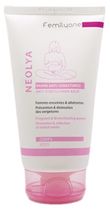
“It attenuates recent stretch marks, improves the elasticity and firmness of the skin, helping to avoid the formation of new stretch marks.Its formula penetrates quickly and leaves a non-greasy and non-sticky skin.Its daily use nourishes and soothes the skin, it is more beautiful and smoother.Hypoallergenic.”
Effective ingredients missing or their concentration is too low
MoisturizingNot advertised by the brand · 10 ingredients credited for this claimGood support
This product can help improve hydration of the skin with the two types of ingredients.
The first type is called “humectants”:
these ingredients help attract water.
When humectants are on the surface of the skin, they “pull in” the moisture from the outside environment, or from
within deeper layers of the skin. The following ingredients in this product do the job:
glycerin, sodium hyaluronate.
This product also contains ingredients called “occlusives”. They help reduce the speed with which our skin loses moisture to the outside environment. These ingredients also help soften the upper layer of the skin, so it feels less tight and nicer to the touch. The following ingredients in this product do the job: butyrospermum parkii butter, butyrospermum parkii butter extract.
Can it cause trouble?
Irritancy9 flagged ingredientsLow risk
Comedogenic3 ingredients rated 2 or more on the 0–5 pore-clogging scale3 flagged
User reviews
Be the first — your take helps the next person decide.
Ingredients
Filter by role to see what each ingredient is doing.
Water~40–60%
Myristyl myristate~4.9–7.4%
- Irritation risk
- Medium
- Comedogenicity
- 3/5
An emollient. Is not recommended for acne-prone skin as it can be comedogenic
More about Myristyl myristateButyrospermum parkii butter~3.8–5.7%
- Irritation risk
- Low
- Comedogenicity
- 3/5
A great moisturising ingredient that softens the skin and reduces water loss from its upper layer. It also can be helpful in protecting skin from free radicals
More about Butyrospermum parkii butterGlycerin~2.7–4.1%
- Irritation risk
- Low
One of the best moisturizing ingredients. Naturally present in skin. It attracts water to the upper layer of the skin working as a humectant
More about GlycerinDicaprylyl carbonate~2.1–3.2%
- Irritation risk
- Low
Helps products spread more easily and works as an emollient to soften skin
More about Dicaprylyl carbonateSucrose polystearate~1.8–2.6%
- Irritation risk
- Medium
Helps oil and water mix together
More about Sucrose polystearateCaprylic/capric triglyceride~1.5–2.3%
- Irritation risk
- Medium
A good mix of fatty acids that forms a protective layer on the skin. Improves the shelf life of products. Derived from coconut and glycerin
More about Caprylic/capric triglycerideButyrospermum parkii butter extract~1.3–2%
- Irritation risk
- Low
- Comedogenicity
- 3/5
A great moisturising ingredient that softens the skin and reduces water loss from its upper layer. It also can be helpful in protecting skin from free radicals
More about Butyrospermum parkii butter extractSclerotium gum~1–1.45%
- Irritation risk
- Low
Used to create gel-like formulas and stabilize emulsions
More about Sclerotium gumArgania spinosa kernel oil~0.9–1.35%
- Irritation risk
- Medium
An emollient that helps soften the upper layer of the skin. Might have some weak anti-oxidant properties
More about Argania spinosa kernel oilP-anisic acid~0.55–1.25%
- Irritation risk
- High
Helps preserve products. Can mask unpleasant smell. Could be irritating
More about P-anisic acidSodium stearoyl glutamate~0.5–1.2%
- Irritation risk
- Medium
Helps oil and water mix together
More about Sodium stearoyl glutamateSodium benzoate~0.25–0.5%
Spent grain wax~0.35–0.8%
- Irritation risk
- Low
Tocopherol~0.2–0.75%
- Irritation risk
- Low
Pure form of vitamin E. Can help moisturise and protect the skin from free radicals. Often used to help stabilise other ingredients or the formula itself
More about TocopherolAstragalus membranaceus root extract~0.2–0.8%
- Irritation risk
- Low
Codonopsis pilosula extract~0.15–0.6%
- Irritation risk
- Low
Phytic acid~0.1–0.4%
- Irritation risk
- Medium
An alpha-hydroxy acid (AHA), but is mostly used to stabilize product formulations in cosmetics
More about Phytic acidSodium hyaluronate~0.1–0.3%
- Irritation risk
- Low
One of the best moisturizing ingredients. Attracts water into the upper layer of the skin
More about Sodium hyaluronatePotassium sorbate~0.05–0.3%
Helianthus annuus seed oil~0.05–0.3%
- Irritation risk
- Low
A great emollient due to its high linoleic acid content. One of the most effective plant oils in helping skin hydration and repairing skin barrier function
More about Helianthus annuus seed oilCitric acid~0.05–0.1%
- Irritation risk
- Medium
Can work as an exfoliant but is typically used to adjust the product pH
More about Citric acidIngredient list view
Water, Myristyl myristate, Butyrospermum parkii butter, Glycerin, Dicaprylyl carbonate, Sucrose polystearate, Caprylic/capric triglyceride, Butyrospermum parkii butter extract, Sclerotium gum, Argania spinosa kernel oil, P-anisic acid, Sodium stearoyl glutamate, Sodium benzoate, Spent grain wax, Tocopherol, Astragalus membranaceus root extract, Codonopsis pilosula extract, Phytic acid, Sodium hyaluronate, Potassium sorbate, Helianthus annuus seed oil, Citric acid
Compare prices
Retailers ranked by price — lowest first.

Affiliate links · prices updated regularly
Sources cited in this review
Every concentration estimate and effectiveness label is anchored to one of these 13 studies and safety reviews.
- 1
- 2
- 3Sodium anisateecha.europa.eu
- 4Vitamin E in dermatologyncbi.nlm.nih.gov
- 5Vitamin E and Skin Healthlpi.oregonstate.edu
- 6Cosmetic and dermatologic use of alpha hydroxy acidsonlinelibrary.wiley.com

Affiliate links · As an Amazon Associate, WIMJ earns from qualifying purchases.