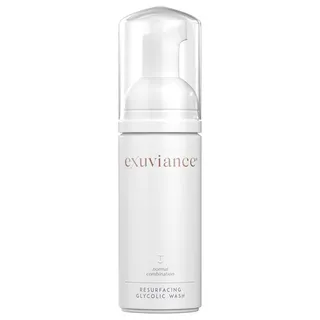
Works for
CleansingSodium c14-16 olefin sulfonate, Cocamidopropyl betaine + 1 moreCleanses gently
“Resurfacing Glycolic Wash”
This product works by removing dirt and oil from the surface of the skin. It uses a combination of mild cleansing agents (cocamidopropyl betaine, polysorbate 20, sodium c14-16 olefin sulfonate) and should be able to cleanse the skin gently. Still keep in mind that any cleansing can disrupt the skin barrier, and most people do not need to cleanse their skin more than once per day.
Even though this formulation is mild, the following cleansing agents could trigger an irritation or allergy for some people: cocamidopropyl betaine, sodium c14-16 olefin sulfonate
ExfoliationGlycolic acid, Lactobionic acidWorks well
“Resurfacing Glycolic Wash”
This product can help exfoliate the skin. In other words, it helps break down the bonds between dead cells on the surface of the skin and speed up the skin turnover. Skin often appears softer and brighter after exfoliation, but overdoing it can result in disrupted skin barrier. The following ingredient is doing the exfoliating job in this product: glycolic acid, lactobionic acid.
Anti-blemishGlycolic acid, Lactobionic acidNot delivered
“Supercharged with Glycolic Acid and Bionic Acid, this gentle, soap-free foaming mousse cleanser targets dullness, uneven or rough skin texture while deeply cleaning clogged pores for a clarified and balanced complexion.”
This product contains ingredients (glycolic acid, lactobionic acid) that could help reduce blemishes and clogged pores in theory, but there is not enough evidence that they actually work.
Can it cause trouble?
Irritancy3 strong irritants: Alcohol denat., Citrus grandis peel oil + 1 more — patch-test recommendedHigh risk
ComedogenicClean of flagged comedogenic ingredientsNone flagged


User reviews
Be the first — your take helps the next person decide.
Ingredients
Filter by role to see what each ingredient is doing.
Water~40–60%
Glycolic acid~5.7–8.6%
- Irritation risk
- High
An alpha-hydroxy acid (AHA) that helps to remove the dead skin cells on the surface of the skin reveling a more even, smoother complexation. It is also able to stimulate collagen production with long-term use. Could help to reduce pore congestion. It can be irritating to the skin. Apply sunscreen daily if using products with glycolic acid
More about Glycolic acidPeg-8~3.2–4.7%
- Irritation risk
- Medium
Used to create a nice product consistency
More about Peg-8Alcohol denat.~2.6–3.9%
- Irritation risk
- High
Produces temporary toning effect. Can help dissolve other ingredients or preserve products
More about Alcohol denat.Arginine~2.1–3.1%
- Irritation risk
- Low
An amino acid that is naturally present in skin and helps keep it hydrated. When used together with AHAs, it can reduce their irritating effect on the skin
More about ArginineSodium c14-16 olefin sulfonate~1.6–2.4%
- Irritation risk
- High
Helps oil and water mix together and used as a cleansing agent. Can be irritating and is better avoided for sensitive skin
More about Sodium c14-16 olefin sulfonateSodium hydroxide~1.2–1.7%
Lactobionic acid~1–1.6%
- Irritation risk
- Medium
A polyhydroxy acid (PHA) that helps shed dead cells from the surface of the skin revealing a smoother, more even skin. PHAs tend to be gentler on the skin compared to AHAs (for example, glycolic acid). It also has hydrating properties and helps attract water to the upper layer of the skin. It can help calm down inflammation in skin and support restoration of the barrier function. It has an anti-oxidant effect as well. It can help reduce fine line, wrinkles and improve skin elasticity
More about Lactobionic acidCocamidopropyl betaine~1.2–1.9%
- Irritation risk
- High
Helps water and oil mix together. Used as a cleansing ingredient. Could be an allergen
More about Cocamidopropyl betaineCitrus grandis peel oil~0.4–1%
- Irritation risk
- High
A plant oil with high content of volatile compounds that, especially when exposed to air, can cause allergic reactions and irritate the skin
More about Citrus grandis peel oilPolysorbate 20~0.35–0.85%
Propylene glycol~0.15–0.6%
- Irritation risk
- High
Helps oil and water mix together and can enhance the penetration of other ingredients into the skin. It can be irritating
More about Propylene glycolCaprylyl glycol~0.1–0.5%
- Irritation risk
- Medium
Helps preserve products and creates a nice product texture
More about Caprylyl glycolPhenoxyethanol~0.05–0.25%
- Irritation risk
- Low
A preservative. It helps prevent bacterial growth in cosmetic products
More about PhenoxyethanolChlorphenesin~0.05–0.15%
Limonene~0.01–0.05%
- Irritation risk
- High
A common frangrance that can easily irritate skin, especially if exposed to air, light or heat
More about LimoneneIngredient list view
Water, Glycolic acid, Peg-8, Alcohol denat., Arginine, Sodium c14-16 olefin sulfonate, Sodium hydroxide, Lactobionic acid, Cocamidopropyl betaine, Citrus grandis peel oil, Polysorbate 20, Propylene glycol, Caprylyl glycol, Phenoxyethanol, Chlorphenesin, Limonene
Compare prices
Retailers ranked by price — lowest first.

Worth comparing, line by line.
Match % combines shared ingredients, the first five ingredients, shared actives and hero ingredients, irritancy (lower counts in the alternative's favour), texture and body area. Only products in the same routine step are compared.
| ExuvianceResurfacing Glycolic WashYOUR PRODUCT | NEOSTRATAGlycolic Mousse Cleanser | MesoesteticPurifying Mousse Cleanser | Dr. Bailey Skin CareFoaming AHA/BHA Acne Treatment Cleanser | |
|---|---|---|---|---|
| Match | — | 72% | 56% | 50% |
| Price | — | — | $41.37 | — |
| Shared key ingredients | — | 6 of 6 | 2 of 6 | 4 of 6 |
| Key difference | — | — | Lactic Acid | Salicylic Acid |
| Irritancy | High | High | Medium | Medium |
| Drying alcohol | Contains drying alcohol | Contains drying alcohol | — | — |
| View product | Shop | Shop | Shop |


More alternatives: ACSEINE Reset WashAcneFree Dermatology Inspired Care NEW Benzoyl Peroxide Deep Cleansing Foaming Wash
Sources cited in this review
Every concentration estimate and effectiveness label is anchored to one of these 11 studies and safety reviews.
- 1
- 2Glycolic acid peel therapy – a current reviewncbi.nlm.nih.gov
- 3
- 4Final Report On the Safety Assessment of Sodium Alpha-Olefin Sulfonatesjournals.sagepub.com
- 5Lactobionic acidmdedge.com
- 6

Affiliate links · As an Amazon Associate, WIMJ earns from qualifying purchases.