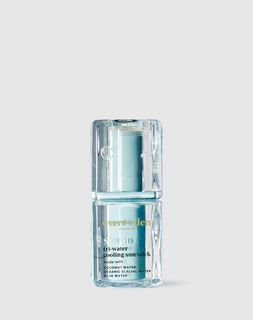
Evereden Tri-Water Cooling Sun Stick

Evereden Tri-Water Cooling Sun Stick

Efficacy75/100IrritancyLow
Edit

Works for

1 of 1 advertised claim delivered

Moisturizing
Sodium pca, Caprylic/capric triglyceride + 8 more
Good evidence
What the product description says
“Immediately hydrate skin with this cooling stick, made especially for baby and super sensitive skin.”
Source: Evereden

This product can help improve hydration of the skin with the two types of ingredients.

The first type is called “humectants”:
these ingredients help attract water. When humectants are on the surface of the skin, they “pull in” the moisture from the outside environment, or from within deeper layers of the skin. The following ingredients in this product do the job: glycerin, sodium pca.

This product also contains ingredients called “occlusives”. They help reduce the speed with which our skin loses moisture to the outside environment. These ingredients also help soften the upper layer of the skin, so it feels less tight and nicer to the touch. The following ingredients in this product do the job: caprylic/capric triglyceride, carthamus tinctorius oleosomes.

Sodium pcaKey active· HumectantEffect: HighNaturally present in skin and helps to attract water to its upper layer~0.35–0.85%
Caprylic/capric triglycerideKey active· Emollient, OcclusiveEffect: HighA good mix of fatty acids that forms a protective layer on the skin. Improves the shelf life of products. Derived from coconut and glycerin~2.1–3.2%
GlycerinKey active· HumectantEffect: HighOne of the best moisturizing ingredients. Naturally present in skin. It attracts water to the upper layer of the skin working as a humectant~4.3–6.5%
Carthamus tinctorius oleosomesKey active· EmollientEffect: MediumHelps soften the upper layer of the skin~2.8–4.1%
Polyglyceryl-10 stearateEffect: LowHelps water and oil mix together and softens the upper layer of the skin~1–1.5%
Polyglyceryl-6 distearateEffect: LowHelps oil and water mix together while softening the upper layer of the skin~0.35–0.85%
Propylene glycol· HumectantEffect: LowHelps oil and water mix together and can enhance the penetration of other ingredients into the skin. It can be irritating~0.05–0.25%
Dibutyl adipate· EmollientEffect: LowHelps soften the upper layer of the skin and create a nice product consistency~1.7–2.6%
GluconolactoneUnder-dosedEffect: HighA polyhydroxy acid (PHA) that helps shed the dead cells from the skin surface revealing smoother skin. Is believed to be genter than AHAs. It helps attract water to the upper layer of the skin and can stimulate production of skin's own hyaluronic acid resulting in improved hydration levels. It has been shown to be helpful against acne and clogged pores if used consistently (e.g over a period of 12 weeks) in high enough concentration. It can help reduce fine lines and wrinkles and improve skin tone with long-term application. Can help neutralize free radicals~0.1–0.35%
Aloe barbadensis leaf juiceEffect: Low, below effective doseTraditionally used to treat sunburns, dermatitis and inflammation, but evidence for its effectiveness is lacking. The extract can contain humectants that help attract water into the skin~0.1–0.5%

Can it cause trouble?

Irritancy
14 flagged ingredients
Low risk
We flag 14 ingredients with irritancy potential; the product's overall irritancy is low. The table lists each ingredient's own rating.
IngredientFunctionIrritationEst. amount
Decyl glucosideHelps oil and water mix together. Can be irritatingHigh~0.15–0.6%est.
Propylene glycolHelps oil and water mix together and can enhance the penetration of other ingredients into the skin. It can be irritatingHigh~0.05–0.25%est.
Sodium stearateHelps oil and water mix togetherMedium~3.9–5.9%est.
Caprylic/capric triglycerideA good mix of fatty acids that forms a protective layer on the skin. Improves the shelf life of products. Derived from coconut and glycerinMedium~2.1–3.2%est.
Bis-ethylhexyloxyphenol methoxyphenyl triazineTinosorb S. One of the most effective broad spectrum sunscreen ingredients. Protects from both UVA and UVB rays. It is photostable. Unfortunately, not approved by FDA (US) yet.Medium~1.8–2.8%est.
Ethylhexyl triazoneUvinul T. A UV filter. Effective against UVB rays. It is photostable. Can increase water resistance properties of the sunscreen. Unfortunately, not approved by the FDA (US) yetMedium~1.8–2.6%est.
Polyglyceryl-10 stearateHelps water and oil mix together and softens the upper layer of the skinMedium~1–1.5%est.
Methylene bis-benzotriazolyl tetramethylbutylphenolTinosorb M. A UV filter. Is effective against both UVA and UVB rays. It also provides some protection against visible light. It is photostable and can also be used to improve photostability of other sunscreen ingredients. Its physical properties help to create lightweight sunscreen formulations. It can leave a slight white cast. Unfortunately, it is not approved by the FDA (US) yetMedium~1.2–1.8%est.
1,2-hexanediolA preservativeMedium~0.4–0.95%est.
Polyglyceryl-6 distearateHelps oil and water mix together while softening the upper layer of the skinMedium~0.35–0.85%est.
HydroxyacetophenoneUsed to increase effectiveness of preservativesMedium~0.3–0.7%est.
Aloe barbadensis leaf juiceTraditionally used to treat sunburns, dermatitis and inflammation, but evidence for its effectiveness is lacking. The extract can contain humectants that help attract water into the skinMedium~0.1–0.5%est.
GluconolactoneA polyhydroxy acid (PHA) that helps shed the dead cells from the skin surface revealing smoother skin. Is believed to be genter than AHAs. It helps attract water to the upper layer of the skin and can stimulate production of skin's own hyaluronic acid resulting in improved hydration levels. It has been shown to be helpful against acne and clogged pores if used consistently (e.g over a period of 12 weeks) in high enough concentration. It can help reduce fine lines and wrinkles and improve skin tone with long-term application. Can help neutralize free radicalsMedium~0.1–0.35%est.
Sodium citrateHelps to control the skin's pH level. Maintains the skin's natural film of amino-lactic acids and oils. Helps to preserve productsMedium~0.1–0.3%est.
Comedogenic
Clean of flagged comedogenic ingredients
None flagged
Edit

User reviews

Would you recommend?
No community reviews yet.

Be the first — your take helps the next person decide.

Write a review · ~30s

Ingredients

Filter by role to see what each ingredient is doing.

Water~40–60%
Formula
Irritation risk
Low

Plain old water

More about Water
Glycerin~4.3–6.5%
Key active
Irritation risk
Low
Works for
Moisturizing

One of the best moisturizing ingredients. Naturally present in skin. It attracts water to the upper layer of the skin working as a humectant

More about Glycerin
Sodium stearate~3.9–5.9%
Irritant · medium
Irritation risk
Medium
Works for
Cleansing

Helps oil and water mix together

More about Sodium stearate
Carthamus tinctorius oleosomes~2.8–4.1%
Key active
Irritation risk
Low
Works for
Moisturizing

Helps soften the upper layer of the skin

More about Carthamus tinctorius oleosomes
Caprylic/capric triglyceride~2.1–3.2%
Key activeIrritant · medium
Irritation risk
Medium
Works for
Moisturizing

A good mix of fatty acids that forms a protective layer on the skin. Improves the shelf life of products. Derived from coconut and glycerin

More about Caprylic/capric triglyceride
Dibutyl adipate~1.7–2.6%
Formula
Irritation risk
Low
Works for
Moisturizing

Helps soften the upper layer of the skin and create a nice product consistency

More about Dibutyl adipate
Bis-ethylhexyloxyphenol methoxyphenyl triazine~1.8–2.8%
Irritant · medium
Irritation risk
Medium
Works for
Sun protection

Tinosorb S. One of the most effective broad spectrum sunscreen ingredients. Protects from both UVA and UVB rays. It is photostable. Unfortunately, not approved by FDA (US) yet.

More about Bis-ethylhexyloxyphenol methoxyphenyl triazine
Ethylhexyl triazone~1.8–2.6%
Irritant · medium
Irritation risk
Medium
Works for
Sun protection

Uvinul T. A UV filter. Effective against UVB rays. It is photostable. Can increase water resistance properties of the sunscreen. Unfortunately, not approved by the FDA (US) yet

More about Ethylhexyl triazone
Polyglyceryl-10 stearate~1–1.5%
Irritant · medium
Irritation risk
Medium
Works for
Moisturizing

Helps water and oil mix together and softens the upper layer of the skin

More about Polyglyceryl-10 stearate
Methylene bis-benzotriazolyl tetramethylbutylphenol~1.2–1.8%
Irritant · medium
Irritation risk
Medium
Works for
Sun protection

Tinosorb M. A UV filter. Is effective against both UVA and UVB rays. It also provides some protection against visible light. It is photostable and can also be used to improve photostability of other sunscreen ingredients. Its physical properties help to create lightweight sunscreen formulations. It can leave a slight white cast. Unfortunately, it is not approved by the FDA (US) yet

More about Methylene bis-benzotriazolyl tetramethylbutylphenol
Menthone glycerin acetal~0.5–1.2%
Formula
1,2-hexanediol~0.4–0.95%
Irritant · medium
Irritation risk
Medium

A preservative

More about 1,2-hexanediol
Sodium pca~0.35–0.85%
Key active
Irritation risk
Low
Works for
Moisturizing

Naturally present in skin and helps to attract water to its upper layer

More about Sodium pca
Polyglyceryl-6 distearate~0.35–0.85%
Irritant · medium
Irritation risk
Medium
Works for
CleansingMoisturizing

Helps oil and water mix together while softening the upper layer of the skin

More about Polyglyceryl-6 distearate
Hydroxyacetophenone~0.3–0.7%
Irritant · medium
Irritation risk
Medium

Used to increase effectiveness of preservatives

More about Hydroxyacetophenone
Decylene glycol~0.2–0.8%
Formula
Irritation risk
Low

Used to creat a nice product texture and support penetration of other ingredients

More about Decylene glycol
Maris limus extract~0.2–0.75%
Formula
Propanediol~0.15–0.65%
Formula
Irritation risk
Low

Acts as a solvent for other ingredients. Speeds up the absorption of other ingredients into the skin

More about Propanediol
Aloe barbadensis leaf juice~0.1–0.5%
Irritant · medium
Irritation risk
Medium
Works for
MoisturizingAnti-inflammatoryReduces irritationAntibacterialReduces rednessAnti-blemishAnti-aging

Traditionally used to treat sunburns, dermatitis and inflammation, but evidence for its effectiveness is lacking. The extract can contain humectants that help attract water into the skin

More about Aloe barbadensis leaf juice
Cocos nucifera fruit juice~0.15–0.55%
Formula
Decyl glucoside~0.15–0.6%
Irritant · high
Irritation risk
High
Works for
Cleansing

Helps oil and water mix together. Can be irritating

More about Decyl glucoside
Gluconolactone~0.1–0.35%
Under-dosedIrritant · medium
Irritation risk
Medium
Works for
MoisturizingAnti-agingEvens skin toneExfoliationAnti-blemishAnti-oxidation

A polyhydroxy acid (PHA) that helps shed the dead cells from the skin surface revealing smoother skin. Is believed to be genter than AHAs. It helps attract water to the upper layer of the skin and can stimulate production of skin's own hyaluronic acid resulting in improved hydration levels. It has been shown to be helpful against acne and clogged pores if used consistently (e.g over a period of 12 weeks) in high enough concentration. It can help reduce fine lines and wrinkles and improve skin tone with long-term application. Can help neutralize free radicals

More about Gluconolactone
Sodium citrate~0.1–0.3%
Irritant · medium
Irritation risk
Medium

Helps to control the skin's pH level. Maintains the skin's natural film of amino-lactic acids and oils. Helps to preserve products

More about Sodium citrate
Xanthan gum~0.05–0.3%
Formula
Irritation risk
Low
Works for
Cleansing

Used to create a thicker product consistency

More about Xanthan gum
Propylene glycol~0.05–0.25%
Irritant · high
Irritation risk
High
Works for
Moisturizing

Helps oil and water mix together and can enhance the penetration of other ingredients into the skin. It can be irritating

More about Propylene glycol
Sodium phytate~0.05–0.15%
Formula
Irritation risk
Low

Used to stabilize product formulations

More about Sodium phytate
Sodium benzoate~0.05–0.15%
Formula
Irritation risk
Low

A preservative

More about Sodium benzoate
Ingredient list view

Water, Glycerin, Sodium stearate, Carthamus tinctorius oleosomes, Caprylic/capric triglyceride, Dibutyl adipate, Bis-ethylhexyloxyphenol methoxyphenyl triazine, Ethylhexyl triazone, Polyglyceryl-10 stearate, Methylene bis-benzotriazolyl tetramethylbutylphenol, Menthone glycerin acetal, 1,2-hexanediol, Sodium pca, Polyglyceryl-6 distearate, Hydroxyacetophenone, Decylene glycol, Maris limus extract, Propanediol, Aloe barbadensis leaf juice, Cocos nucifera fruit juice, Decyl glucoside, Gluconolactone, Sodium citrate, Xanthan gum, Propylene glycol, Sodium phytate, Sodium benzoate

Compare prices

Retailers ranked by price — lowest first.

Evereden
$30.00
Buy

Affiliate links · prices updated regularly

Cheaper alternatives? See how this stacks up against similar formulas.
We compare ingredient profiles across our catalog — pick the closest match for your budget.
Open dupe finder

Sources cited in this review

Every concentration estimate and effectiveness label is anchored to one of these 18 studies and safety reviews.

  1. 1
  2. 2
  3. 3
  4. 4
  5. 5
  6. 6
Evereden Tri-Water Cooling Sun Stick
EveredenTri-Water Cooling Sun Stick

Affiliate links · As an Amazon Associate, WIMJ earns from qualifying purchases.

As an Amazon Associate, WIMJ earns from qualifying purchases.