Estée Lauder Re-Nutriv Ultimate Lift Regenerating Youth Moisturizer Creme Rich
Works for
2 of 2 advertised claims delivered
Anti-aging6 ingredients credited for this claimStrong support
“Skin looks remarkably more lifted, feels firmer-and is strengthened to help resist future signs of aging.”
This product can help reduce and prevent fine lines and wrinkles, improve skin elasticity and firmness because it contains acetyl glucosamine.
These ingredients in the product can also be helpful, even though there is less evidence for their effectiveness: acetyl hexapeptide-8.
Keep in mind that it typically takes at least 6 weeks to notice any results because the changes that are needed to improve fine lines and elasticity happen in the deeper layers of the skin. No topical anti-aging product can “erase” wrinkles or fully reverse signs of aging.
Moisturizing42 ingredients credited for this claimStrong support
“Re-Nutriv Ultimate Lift Regenerating Youth Moisturizer Creme Rich”
This product can help improve hydration of the skin with the two types of ingredients.
The first type is called “humectants”:
these ingredients help attract water.
When humectants are on the surface of the skin, they “pull in” the moisture from the outside environment, or from
within deeper layers of the skin. The following ingredients in this product do the job:
algae extract, artemia extract.
This product also contains ingredients called “occlusives”. They help reduce the speed with which our skin loses moisture to the outside environment. These ingredients also help soften the upper layer of the skin, so it feels less tight and nicer to the touch. The following ingredients in this product do the job: dimethicone, algae extract.
The following ingredients in this product are especially good for supporting the skin barrier and helping with the hydration level: acetyl glucosamine, acetyl hexapeptide-8, linoleic acid, petrolatum
Evens skin toneNot advertised by the brand · 4 ingredients credited for this claimStrong support
This product can help reduce hypepigmentation and even out the skin tone because it contains the following effective ingredients: acetyl glucosamine
The following ingredient (ingredients) in this product might be helpful, but there is no evidence to confirm that it actually can help even out the skin tone: glycine soja protein.
Keep in mind that you would need to apply any topical skincare targetted at hypigmentation consistently for a couple of months to get a result. No topical skincare product can help get rid of hyperpigmentation (including post-acne marks and age spots) instantly.
Anti-oxidationNot advertised by the brand · 16 ingredients credited for this claimModerate support
This product contains antioxidants (decarboxy carnosine hcl) that might be able to help neutralize free radicals in skin to lessen the damage it gets from the UV light (sun). There is not enough evidence to confirm their effectiveness in skin though.
Can it cause trouble?
Irritancy2 strong irritants: Gelidiella acerosa extract, ParfumMedium risk
Comedogenic5 ingredients rated 2 or more on the 0–5 pore-clogging scale5 flagged
User reviews
Be the first — your take helps the next person decide.
Ingredients
Filter by role to see what each ingredient is doing.
Water~45–55%
Caprylic/capric/myristic/stearic triglyceride~4.8–5.9%
- Irritation risk
- Low
Helps to soften the upper layer of the skin
More about Caprylic/capric/myristic/stearic triglyceridePetrolatum~4.3–5.2%
- Irritation risk
- Low
One of the most effective and the most studied occlusive ingredients that creates a protective layer on top of the skin preventing moisture loss
More about PetrolatumHexyldecyl stearate~3.1–3.8%
- Irritation risk
- Medium
Helps create a nice product feeling on the skin and help soften its upper layer
More about Hexyldecyl stearateButylene glycol~2.2–2.7%
- Irritation risk
- Low
Used to create a nice product texture and help delivery of other ingredients. Might be somewhat helpful in attracting water to the upper layer of the skin
More about Butylene glycolDimethicone~1.9–2.4%
- Irritation risk
- Low
A silicone that helps to reduce water loss from the surface of the skin. Can temporarily "fill in" lines and wrinkles, absorb oil, and create a nice product finish
More about DimethiconeGlycereth-26~1.6–1.9%
Peg-100 stearate~1.4–1.7%
- Irritation risk
- Low
Helps oil and water mix togehter and creates a nice product texture
More about Peg-100 stearateBehenyl alcohol~1.2–1.4%
- Irritation risk
- Low
Non-drying alcohol that helps water and oil mix together. Also serves as an emollient
More about Behenyl alcoholSwertia chirata extract~0.75–1.1%
- Irritation risk
- Medium
A plant extract that can have an anti-bacterial and anti-inflammatory effect, but evidence of effectiveness is lacking
More about Swertia chirata extractNarcissus tazetta bulb extract~0.55–0.85%
- Irritation risk
- Medium
Might contain compounds called dormins that in theory could help lighten skin and reduce hyperpigmentation, but solid research is lacking
More about Narcissus tazetta bulb extractHypnea musciformis extract~0.45–0.65%
- Irritation risk
- Low
- Comedogenicity
- 3/5
Might help to attract water to the upper layer of the skin
More about Hypnea musciformis extractGelidiella acerosa extract~0.35–0.65%
- Irritation risk
- High
An algae extract that can help attract water to the upper layer of the skin and have some anti-oxidant properties
More about Gelidiella acerosa extractPolygonum cuspidatum root extract~0.3–0.6%
- Irritation risk
- Medium
A plant extract that can contain resveratrol, an antioxidant that can help neutralize free radicals in skin. The effectiveness depends on the extract quality and concentration in the product
More about Polygonum cuspidatum root extractLaminaria digitata extract~0.25–0.5%
- Irritation risk
- Low
- Comedogenicity
- 3/5
Seaweed extract that helps the skin to attract water and make it more smooth for touch. Also shows promise of anti-aging properties, but good research is lacking at the moment
More about Laminaria digitata extractAlgae extract~0.3–0.6%
- Irritation risk
- Low
- Comedogenicity
- 3/5
Plant extract that helps the skin to attract water and make it more smooth for touch. Also shows promise of anti-aging properties, but research is not extensive yet
More about Algae extractLaminaria ochroleuca extract~0.25–0.45%
- Irritation risk
- Low
- Comedogenicity
- 3/5
Helps attract water to the upper layer of the skin
More about Laminaria ochroleuca extractCordyceps sinensis extract~0.25–0.45%
- Irritation risk
- Low
Fuscoporia obliqua sclerotium extract~0.2–0.35%
- Irritation risk
- Low
Saccharomyces lysate extract~0.15–0.3%
- Irritation risk
- Low
Helps attract water to the upper layer of the skin. Can have some anti-inflammatory effect
More about Saccharomyces lysate extractScutellaria baicalensis root extract~0.1–0.2%
- Irritation risk
- High
A plant extract that might contain a compound baicalin that could be helpful in neutralizing free radicals and reducing inflammation in skin. The baicalin concentration in skincare products is often too low for an effective action. Can be used for its fragrant properties
More about Scutellaria baicalensis root extractArtemia extract~0.1–0.25%
- Irritation risk
- Low
Zooplankton extract that can attract water to the upper level of the skin and might have some anti-oxidant effect
More about Artemia extractAcetyl hexapeptide-8~0.1–0.2%
- Irritation risk
- Low
A type of peptide. Peptides are excellent moisturizers and might be able support collagen production reducing fine lines and wrinkles
More about Acetyl hexapeptide-8Sodium hyaluronate~0.1–0.2%
- Irritation risk
- Low
One of the best moisturizing ingredients. Attracts water into the upper layer of the skin
More about Sodium hyaluronateTocopheryl acetate~0.1–0.2%
- Irritation risk
- Medium
A more stable but less bio-available form of vitamin E compared to Tocopherol. Might help moisturize and protect the skin from free radicals, but mostly used in low concentrations to stabilize other ingredients.
More about Tocopheryl acetateMangifera indica seed oil~0.15–0.25%
- Irritation risk
- Low
Caffeine~0.1–0.2%
- Irritation risk
- Medium
Might be helpful in neutralizing free radicals. Can have a dehydration effect that might somewhat decrease the look of puffy eyes
More about CaffeineHelianthus annuus seed extract~0.1–0.2%
- Irritation risk
- Low
Astrocaryum murumuru seed butter~0.15–0.3%
- Irritation risk
- Medium
Helps soften the upper layer of the skin. Could be comedogenic due to the myrisic acid content
More about Astrocaryum murumuru seed butterTrehalose~0.15–0.25%
- Irritation risk
- Low
A sugar that attracts water to the upper layer of the skin
More about TrehaloseAcetyl glucosamine~0.15–0.25%
- Irritation risk
- Low
An effective moisturizing ingredient that also has been shown to be effective in evening out the skin tone and reducing hyperpigmentation. It can help somewhat reduce wrinkles in skin
More about Acetyl glucosamineCaprylic/capric triglyceride~0.2–0.35%
- Irritation risk
- Medium
A good mix of fatty acids that forms a protective layer on the skin. Improves the shelf life of products. Derived from coconut and glycerin
More about Caprylic/capric triglycerideMyristyl myristate~0.15–0.3%
- Irritation risk
- Medium
- Comedogenicity
- 3/5
An emollient. Is not recommended for acne-prone skin as it can be comedogenic
More about Myristyl myristateGold~0.15–0.25%
Glycerin~0.15–0.3%
- Irritation risk
- Low
One of the best moisturizing ingredients. Naturally present in skin. It attracts water to the upper layer of the skin working as a humectant
More about GlycerinCaprylyl glycol~0.2–0.35%
- Irritation risk
- Medium
Helps preserve products and creates a nice product texture
More about Caprylyl glycolPearl powder~0.15–0.3%
- Irritation risk
- Low
Consists of 95% calcium carbonate that does not have any effect on the skin. The remaining 5% can include compounds that can help neutralize free radicals and support skin barrier function
More about Pearl powderIsohexadecane~0.25–0.45%
- Irritation risk
- Low
Improves the texture of the product and helps soften the skin. Helps oil and water mix together and can be used as a cleansing agent
More about IsohexadecaneLinoleic acid~0.25–0.5%
- Irritation risk
- Low
An excellent emollient. Helps soften the skin, restore its barrier function, and can help to calm down inflammation. It can be helpful to prevent blemishes and clogged pores
More about Linoleic acidPropylene glycol dicaprate~0.2–0.35%
- Irritation risk
- Low
An emollient that helps soften the upper layer of the skin
More about Propylene glycol dicaprateGlycine soja sterols~0.2–0.35%
- Irritation risk
- Low
An emollient that helps soften the skin
More about Glycine soja sterolsCholesterol~0.2–0.35%
- Irritation risk
- Low
An emollient that is naturally found in skin
More about CholesterolWhey protein~0.15–0.3%
- Irritation risk
- Low
A protein derived from milk. In skincare products, might help to soften the upper layer of the skin
More about Whey proteinMyristyl laurate~0.15–0.3%
Hordeum vulgare extract~0.2–0.35%
- Irritation risk
- Medium
A plant extract that might have some anti-oxidant properties. Avoid if you are sensitive to gluten
More about Hordeum vulgare extractCucumis sativus fruit extract~0.15–0.3%
- Irritation risk
- Medium
Might be somewhat helpful in reducing hyperpigmentation and neutralizing free radicals but its typical concentration in a product is too low for having an effect
More about Cucumis sativus fruit extractDecarboxy carnosine hcl~0.15–0.3%
- Irritation risk
- Low
Might be able to protect the skin from free radicals, but further evidence of effectiveness is needed
More about Decarboxy carnosine hclGlucose~0.15–0.3%
- Irritation risk
- Low
Helps attract water to the upper layer of the skin. Could be helpful in restoring the skin barrier function
More about GlucoseHydrolyzed wheat protein~0.15–0.3%
- Irritation risk
- Medium
Can help attract water to the upper layer of the skin. Avoid if sensitive to gluten
More about Hydrolyzed wheat proteinGlycine soja protein~0.2–0.35%
- Irritation risk
- Low
A plant extract that helps to attract water to the upper layer of the skin and soften it. It might be helpful in neutralizing free radicals. It might be somewhat helpful for evening out the skin tone. It might be able to support elastin production but solid research is lacking
More about Glycine soja proteinYeast extract~0.15–0.3%
- Irritation risk
- Low
Helps attract water to the upper layer of the skin and might have some anti-oxidant and skin lightening properties. It can help calm down inflammation in skin
More about Yeast extractPyrus malus fruit extract~0.15–0.3%
- Irritation risk
- Medium
Can have some moisturizing properties due to its sugar content
More about Pyrus malus fruit extractErgothioneine~0.15–0.3%
- Irritation risk
- Low
Can help neutralize free radicals in skin. Preliminary studies show that it can be more effective than coenzyme Q10 but studies on effective concentration for topical applications are lacking
More about ErgothioneineGlyceryl stearate~0.2–0.4%
- Irritation risk
- Low
An emollient that softens the skin and forms a protective layer on its surface. Helps water and oil mix together
More about Glyceryl stearatePentylene glycol~0.2–0.4%
- Irritation risk
- Medium
Used to preserve products, dissolve other ingredients and create a nice product texture
More about Pentylene glycolPolymethylsilsesquioxane~0.2–0.35%
- Irritation risk
- Low
A silicone that improves product texture and helps dissolve other ingredients. Can form a non-greasy film on the skin to prevent moisture loss
More about PolymethylsilsesquioxaneMyristyl alcohol~0.2–0.35%
- Irritation risk
- High
Helps to stabilize the product formulation while softening the upper layer of the skin. Can be irritating
More about Myristyl alcoholTromethamine~0.15–0.3%
Polysorbate 80~0.2–0.35%
Hexylene glycol~0.15–0.3%
- Irritation risk
- Medium
Helps create a more spreadable product texture
More about Hexylene glycolAluminum hydroxide~0.2–0.4%
- Irritation risk
- Low
Is used to add opaque (non-transparent) appearance to formulations. Can be used to coat other ingredients for even dispersion. This is a different ingredient compared to the ones used in antipersperants (aluminium chloride and aluminium chlorohydrate)
More about Aluminum hydroxideStearic acid~0.3–0.5%
- Irritation risk
- Low
Helps oil and water mix together and works as an emollient
More about Stearic acidCellulose~0.2–0.35%
- Irritation risk
- Low
Can be used to help absorb oil as well as add volume and imporve texture of products.
More about CelluloseLecithin~0.2–0.4%
- Irritation risk
- Low
Used mostly for creating emulsions - helping oil and water mix together. Helps soften the upper layer of the skin
More about LecithinAcrylamide/sodium acryloyldimethyltaurate copolymer~0.15–0.3%
- Irritation risk
- Low
Helps water and oil mix together and create gel-like textures
More about Acrylamide/sodium acryloyldimethyltaurate copolymerAcrylates/c10-30 alkyl acrylate crosspolymer~0.2–0.35%
- Irritation risk
- Medium
Maintains the texture of skincare products. Allows the product to spread evenly. Helps oil and water mix together
More about Acrylates/c10-30 alkyl acrylate crosspolymerCitric acid~0.15–0.3%
- Irritation risk
- Medium
Can work as an exfoliant but is typically used to adjust the product pH
More about Citric acidParfum~0.15–0.25%
- Irritation risk
- High
An aromatic blend of unspecified and possibly irritating ingredients
More about ParfumBht~0.15–0.3%
Sodium sulfite~0.1–0.2%
Sodium metabisulfite~0.1–0.2%
Disodium edta~0.15–0.3%
Phenoxyethanol~0.15–0.3%
- Irritation risk
- Low
A preservative. It helps prevent bacterial growth in cosmetic products
More about PhenoxyethanolPotassium sorbate~0.15–0.25%
Sodium benzoate~0.1–0.25%
Titanium dioxide~0.25–0.45%
- Irritation risk
- Low
Works as a UV filter when used in high concentrations. It is photostable and is effective mostly against the UVB light, with some protection in the UVA range. In small concentrations, used for its ability to improve the color of cosmetic products. Is usually well tolerated by the skin
More about Titanium dioxideCi 17200~0.15–0.25%
Ci 19140~0.1–0.15%
Ingredient list view
Water, Caprylic/capric/myristic/stearic triglyceride, Petrolatum, Hexyldecyl stearate, Butylene glycol, Dimethicone, Glycereth-26, Peg-100 stearate, Behenyl alcohol, Swertia chirata extract, Narcissus tazetta bulb extract, Hypnea musciformis extract, Gelidiella acerosa extract, Polygonum cuspidatum root extract, Laminaria digitata extract, Algae extract, Laminaria ochroleuca extract, Cordyceps sinensis extract, Fuscoporia obliqua sclerotium extract, Saccharomyces lysate extract, Scutellaria baicalensis root extract, Artemia extract, Acetyl hexapeptide-8, Sodium hyaluronate, Tocopheryl acetate, Mangifera indica seed oil, Caffeine, Helianthus annuus seed extract, Astrocaryum murumuru seed butter, Trehalose, Acetyl glucosamine, Caprylic/capric triglyceride, Myristyl myristate, Gold, Glycerin, Caprylyl glycol, Pearl powder, Isohexadecane, Linoleic acid, Propylene glycol dicaprate, Glycine soja sterols, Cholesterol, Whey protein, Myristyl laurate, Hordeum vulgare extract, Cucumis sativus fruit extract, Decarboxy carnosine hcl, Glucose, Hydrolyzed wheat protein, Glycine soja protein, Yeast extract, Pyrus malus fruit extract, Ergothioneine, Glyceryl stearate, Pentylene glycol, Polymethylsilsesquioxane, Myristyl alcohol, Tromethamine, Polysorbate 80, Hexylene glycol, Aluminum hydroxide, Stearic acid, Cellulose, Lecithin, Acrylamide/sodium acryloyldimethyltaurate copolymer, Acrylates/c10-30 alkyl acrylate crosspolymer, Citric acid, Parfum, Bht, Sodium sulfite, Sodium metabisulfite, Disodium edta, Phenoxyethanol, Potassium sorbate, Sodium benzoate, Titanium dioxide, Ci 17200, Ci 19140
Compare prices
Retailers ranked by price — lowest first.
Affiliate links · prices updated regularly
Worth comparing, line by line.
Match % combines shared ingredients, the first five ingredients, shared actives and hero ingredients, irritancy (lower counts in the alternative's favour), texture and body area. Only products in the same routine step are compared.
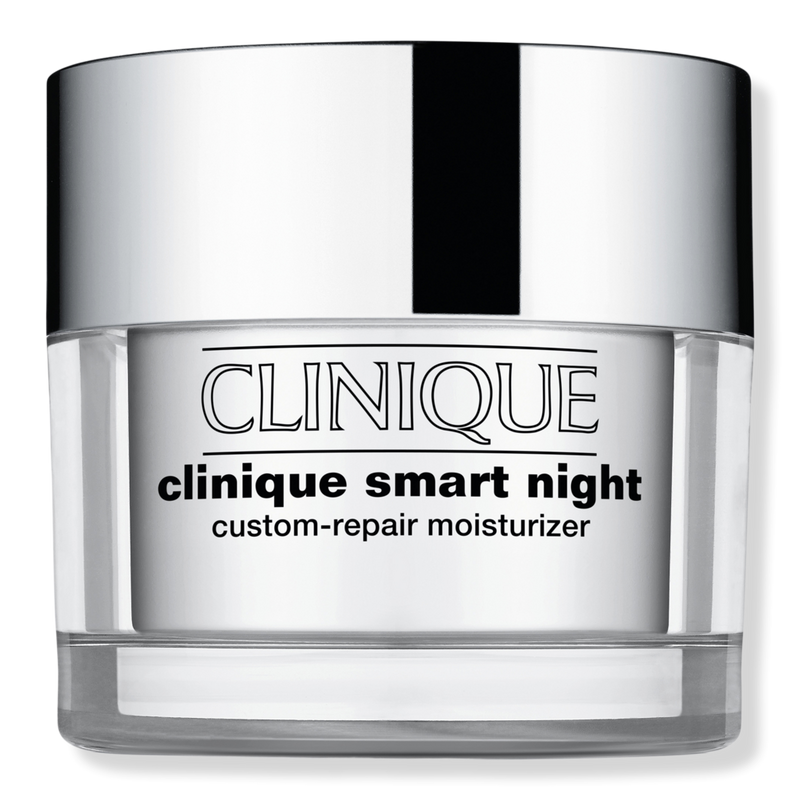
| Estée LauderRe-Nutriv Ultimate Lift Regenerating Youth Moisturizer Creme RichYOUR PRODUCT | CliniqueSmart Night Custom-Repair Moisturizer For Very Dry Skin | |
|---|---|---|
| Match | — | 53% |
| Price | $350.00 | $45.50−$304.50 |
| Shared key ingredients | — | 10 of 23 |
| Key difference | — | Aminopropyl Ascorbyl Phosphate |
| Irritancy | Medium | Medium |
| Drying alcohol | — | — |
| View product | Shop |

Sources cited in this review
Every concentration estimate and effectiveness label is anchored to one of these 49 studies and safety reviews.
- 1
- 2Safety Assessment of Alkyl Esters as Used in Cosmeticsjournals.sagepub.com
- 3
- 4Final Report on the Safety Assessment of Dimethicone Copolyoljournals.sagepub.com
- 5
- 6

Affiliate links · As an Amazon Associate, WIMJ earns from qualifying purchases.