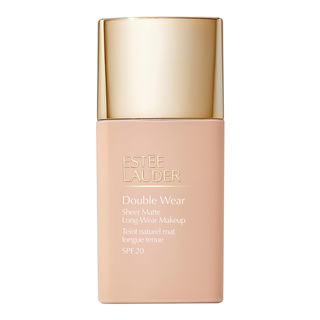
Estée Lauder Double Wear Sheer Long-Wear Makeup SPF 20/PA++
Works for
0 of 2 advertised claims delivered
Sun protectionSPF 20 · 3 UV filters · Partial spectrumWeak protectionSPF under 30
This product does not offer good protection against UVA rays.
Anti-agingMagnesium aluminum silicate, Thermus thermophillus ferment + 2 moreLimited evidence
“With SPF and anti-oxidants, it helps protect against UV rays and pollution.”
This product does not contain ingredients that are able to reduce fine lines and wrinkles or help with skin elasticity, but it can improve the look of the skin temporarily through moisturization. Well-moisturized skin might also be able to repair the sun damage better.These ingredients - magnesium aluminum silicate, thermus thermophillus ferment - could be helpful for preventing or repairing signs of aging in theory, but there is no evidence that it actually works.
The biggest anti-aging effect in this product comes from sun protection. Sun damage is the main factor causing early signs of skin aging. We, however, do not recommend using this product as a sunscreen because the protection it offers is not strong enough).
MoisturizingNot advertised by the brand · Dimethicone, Phenyl trimethicone + 21 moreGood evidence
This product can help improve hydration of the skin with the two types of ingredients.
The first type is called “humectants”:
these ingredients help attract water.
When humectants are on the surface of the skin, they “pull in” the moisture from the outside environment, or from
within deeper layers of the skin. The following ingredients in this product do the job:
glycerin, polyglutamic acid.
This product also contains ingredients called “occlusives”. They help reduce the speed with which our skin loses moisture to the outside environment. These ingredients also help soften the upper layer of the skin, so it feels less tight and nicer to the touch. The following ingredients in this product do the job: dimethicone, methicone.
Can it cause trouble?
Irritancy18 flagged ingredientsMedium risk
Comedogenic1 ingredient rated 2 or more on the 0–5 pore-clogging scale1 flagged
User reviews
Ingredients
Filter by role to see what each ingredient is doing.
Water~45–55%
Methyl trimethicone~5.1–6.3%
- Irritation risk
- Low
A type of silicone that helps create a silky product finish and dissolve other ingredients
More about Methyl trimethiconePhenyl trimethicone~4.2–5.1%
- Irritation risk
- Low
A type of silicone that can decrease loss of moisture from the skin surface. It helps create a nice product texture
More about Phenyl trimethiconeDimethicone~3.1–3.8%
- Irritation risk
- Low
A silicone that helps to reduce water loss from the surface of the skin. Can temporarily "fill in" lines and wrinkles, absorb oil, and create a nice product finish
More about DimethiconeNeopentyl glycol diheptanoate~2.3–2.8%
- Irritation risk
- Low
Helps soften the upper layer of the skin and create a nice product consistency
More about Neopentyl glycol diheptanoatePolymethylsilsesquioxane~1.8–2.3%
- Irritation risk
- Low
A silicone that improves product texture and helps dissolve other ingredients. Can form a non-greasy film on the skin to prevent moisture loss
More about PolymethylsilsesquioxaneSilica~1.8–2.2%
Lauryl peg-9 polydimethylsiloxyethyl dimethicone~1.4–1.7%
- Irritation risk
- Low
A type of silicone that helps to soften upper layer of the skin and create a nice product texture
More about Lauryl peg-9 polydimethylsiloxyethyl dimethiconeC12-15 alkyl benzoate~1.1–1.4%
- Irritation risk
- Low
Enhances the product texture and makes it more spreadable. Helps reduce water loss from the outer layer of skin. Extands the shelf life by preventing bacteria growth
More about C12-15 alkyl benzoateTitanium dioxide~1.3–1.6%
- Irritation risk
- Low
Works as a UV filter when used in high concentrations. It is photostable and is effective mostly against the UVB light, with some protection in the UVA range. In small concentrations, used for its ability to improve the color of cosmetic products. Is usually well tolerated by the skin
More about Titanium dioxideButylene glycol~0.65–1%
- Irritation risk
- Low
Used to create a nice product texture and help delivery of other ingredients. Might be somewhat helpful in attracting water to the upper layer of the skin
More about Butylene glycolButyloctyl salicylate~0.55–0.8%
- Irritation risk
- Medium
A synthetic ester of salicylic acid that is used to help disperse pigments and boost effectiveness of sunscreen ingredients. It is able to absorb UV light (working as an organic, or chemical filter), but is not approved as a sunscreen ingredient on its own
More about Butyloctyl salicylateEthylhexyl methoxycinnamate~0.75–1.15%
- Irritation risk
- High
Octinoxate. When used in higher concentrations, works as a sunscreen protecting the skin from UVB rays. When used in lower concentration, helps to preserve the product formulation. Is shown to be harmful to coral reefs - consider avoiding bathing in coral reef areas when wearing a product with this ingredient. It can be irritating
More about Ethylhexyl methoxycinnamateTrimethylsiloxysilicate~0.55–0.8%
- Irritation risk
- Low
A type of silicone that helps create a nice product consistency and support the delivery of other ingredients
More about TrimethylsiloxysilicateGlycerin~0.5–0.75%
- Irritation risk
- Low
One of the best moisturizing ingredients. Naturally present in skin. It attracts water to the upper layer of the skin working as a humectant
More about GlycerinPeg-10 dimethicone~0.5–0.8%
- Irritation risk
- Low
A silicone that works to soften the upper layer of the skin and reduce its water loss
More about Peg-10 dimethiconePolysilicone-11~0.5–0.75%
- Irritation risk
- Low
A silicone that forms a light film on the skin surface helping to bind water and temporarily absorb oils creating a matt and powdery feel
More about Polysilicone-11Laminaria saccharina extract~0.4–0.65%
- Irritation risk
- Low
- Comedogenicity
- 3/5
A seaweed extract that contains sugars and can be helpful in attracting water to the upper layers of the skin if used in high enough concentrations
More about Laminaria saccharina extractLitchi chinensis seed extract~0.35–0.65%
- Irritation risk
- Low
Citrullus lanatus fruit extract~0.3–0.6%
- Irritation risk
- Medium
A plant extract that can contain an antioxidant compound
More about Citrullus lanatus fruit extractPyrus malus fruit extract~0.3–0.55%
- Irritation risk
- Medium
Can have some moisturizing properties due to its sugar content
More about Pyrus malus fruit extractSodium hyaluronate~0.3–0.55%
- Irritation risk
- Low
One of the best moisturizing ingredients. Attracts water into the upper layer of the skin
More about Sodium hyaluronateLens esculenta fruit extract~0.3–0.5%
- Irritation risk
- Medium
A plant extract containing sugars that might help attract water to the upper layer of the skin. Is claimed by the manufacturer to help reduce pore size but evidence is lacking
More about Lens esculenta fruit extractPolyglutamic acid~0.3–0.55%
- Irritation risk
- Low
Helps attract water to the upper layer of the skin.
More about Polyglutamic acidMethicone~0.3–0.55%
- Irritation risk
- Low
A type of silicone that helps soften the upper layer of the skin and reduces the water loss from the skin surface
More about MethiconeTocopheryl acetate~0.3–0.55%
- Irritation risk
- Medium
A more stable but less bio-available form of vitamin E compared to Tocopherol. Might help moisturize and protect the skin from free radicals, but mostly used in low concentrations to stabilize other ingredients.
More about Tocopheryl acetateCaprylyl glycol~0.3–0.6%
- Irritation risk
- Medium
Helps preserve products and creates a nice product texture
More about Caprylyl glycolTriethyl citrate~0.25–0.5%
Thermus thermophillus ferment~0.25–0.5%
- Irritation risk
- Medium
Might be helpful in neutralising free radicals in skin and have some hydration properties
More about Thermus thermophillus fermentSodium lactate~0.3–0.5%
- Irritation risk
- Medium
Helps attract water to the upper layer of the skin. Is often used to adjust the pH level of the product
More about Sodium lactateSodium pca~0.3–0.5%
- Irritation risk
- Low
Naturally present in skin and helps to attract water to its upper layer
More about Sodium pcaTocopherol~0.3–0.55%
- Irritation risk
- Low
Pure form of vitamin E. Can help moisturise and protect the skin from free radicals. Often used to help stabilise other ingredients or the formula itself
More about TocopherolLecithin~0.3–0.6%
- Irritation risk
- Low
Used mostly for creating emulsions - helping oil and water mix together. Helps soften the upper layer of the skin
More about LecithinDimethicone/peg-10/15 crosspolymer~0.3–0.5%
C24-28 alkyl methicone~0.3–0.55%
- Irritation risk
- Low
Dimethicone silylate~0.3–0.55%
- Irritation risk
- Low
Disteardimonium hectorite~0.3–0.55%
- Irritation risk
- Low
A type of clay that is used to thicken the product consistency
More about Disteardimonium hectoriteZinc stearate~0.3–0.5%
- Irritation risk
- Low
Sodium chloride~0.3–0.6%
- Irritation risk
- Low
Used to stabilize mixtures of oil and water, and create thicker, gel-like product textures
More about Sodium chlorideHexylene glycol~0.3–0.5%
- Irritation risk
- Medium
Helps create a more spreadable product texture
More about Hexylene glycolLaureth-7~0.3–0.55%
Magnesium aluminum silicate~0.3–0.55%
- Irritation risk
- Low
Might be helpful in restoring skin barrier function and, when combined with zinc carbonate and malonic acid, reducing fine lines and wrinkles by stimulating elastin production. Also helps stabilize the product formulation
More about Magnesium aluminum silicateDextrin~0.3–0.55%
- Irritation risk
- Low
A sugar that is used to stabilize the product formulation. Can help attract water to the upper layer of the skin
More about DextrinXanthan gum~0.3–0.55%
- Irritation risk
- Low
Used to create a thicker product consistency
More about Xanthan gumDipropylene glycol~0.25–0.5%
- Irritation risk
- Low
Helps to dissolve other ingredients in a formulation. Slows down the rate of product drying
More about Dipropylene glycolBht~0.3–0.5%
Disodium edta~0.3–0.5%
Sodium citrate~0.3–0.5%
- Irritation risk
- Medium
Helps to control the skin's pH level. Maintains the skin's natural film of amino-lactic acids and oils. Helps to preserve products
More about Sodium citratePotassium sorbate~0.3–0.55%
Sodium dehydroacetate~0.3–0.55%
Sodium benzoate~0.3–0.5%
Phenoxyethanol~0.3–0.55%
- Irritation risk
- Low
A preservative. It helps prevent bacterial growth in cosmetic products
More about PhenoxyethanolTitanium dioxide~0.4–0.6%
- Irritation risk
- Low
Works as a UV filter when used in high concentrations. It is photostable and is effective mostly against the UVB light, with some protection in the UVA range. In small concentrations, used for its ability to improve the color of cosmetic products. Is usually well tolerated by the skin
More about Titanium dioxideCi 77891~0.25–0.45%
- Irritation risk
- Low
Iron oxides~0.2–0.4%
- Irritation risk
- Low
An umbrella term for the following three colorants: CI 77491, CI 77492, CI 77499. They might be able to offer some protection against visible light, but the degree of the protection is not clear
More about Iron oxidesCi 77491~0.2–0.4%
- Irritation risk
- Low
A red colorant made of iron oxide. Typically is not irritating
More about Ci 77491Iron oxides~0.2–0.35%
- Irritation risk
- Low
An umbrella term for the following three colorants: CI 77491, CI 77492, CI 77499. They might be able to offer some protection against visible light, but the degree of the protection is not clear
More about Iron oxidesCi 77492~0.15–0.3%
Iron oxides~0.15–0.25%
- Irritation risk
- Low
An umbrella term for the following three colorants: CI 77491, CI 77492, CI 77499. They might be able to offer some protection against visible light, but the degree of the protection is not clear
More about Iron oxidesCi 77499~0.15–0.25%
Datem~0.15–0.25%
Ingredient list view
Water, Methyl trimethicone, Phenyl trimethicone, Dimethicone, Neopentyl glycol diheptanoate, Polymethylsilsesquioxane, Silica, Lauryl peg-9 polydimethylsiloxyethyl dimethicone, C12-15 alkyl benzoate, Titanium dioxide, Butylene glycol, Butyloctyl salicylate, Ethylhexyl methoxycinnamate, Trimethylsiloxysilicate, Glycerin, Peg-10 dimethicone, Polysilicone-11, Laminaria saccharina extract, Litchi chinensis seed extract, Citrullus lanatus fruit extract, Pyrus malus fruit extract, Sodium hyaluronate, Lens esculenta fruit extract, Polyglutamic acid, Methicone, Tocopheryl acetate, Caprylyl glycol, Triethyl citrate, Thermus thermophillus ferment, Sodium lactate, Sodium pca, Tocopherol, Lecithin, Dimethicone/peg-10/15 crosspolymer, C24-28 alkyl methicone, Dimethicone silylate, Disteardimonium hectorite, Zinc stearate, Sodium chloride, Hexylene glycol, Laureth-7, Magnesium aluminum silicate, Dextrin, Xanthan gum, Dipropylene glycol, Bht, Disodium edta, Sodium citrate, Potassium sorbate, Sodium dehydroacetate, Sodium benzoate, Phenoxyethanol, Titanium dioxide, Ci 77891, Iron oxides, Ci 77491, Iron oxides, Ci 77492, Iron oxides, Ci 77499, Datem
Compare prices
Retailers ranked by price — lowest first.
Product summary
"Estée Lauder - Double Wear Sheer Long-Wear Makeup SPF 20/PA++" does not provide enough UVA protection. UVA rays do not cause sunburn, but still damage the skin, leading to early signs of aging and pigmentation issues.
It contains good moisturizing ingredients and can double as a hydrating day cream.
Sunscreen filters
This is a "mixed" sunscreen in the sense that it uses both mineral and organic (so-called "chemical") sun filters. The organic filters in the product are: butyloctyl salicylate and octinoxate. As for the mineral filters, this sunscreen uses titanium dioxide.
Irritation risk
There are actives in this product that can be irritating. We assess the overall irritancy of this product to be medium. For a detailed overview of all potential irritants: click here
You can see the detailed formula review with the breakdown of all actives in the product and the full ingredient list with estimated concentrations in the tables below.
Price
The product retails for 60.00A$ in Australia and for 80.00NZ$ in New Zealand.
For a detailed price comparison: click here.
Sources cited in this review
Every concentration estimate and effectiveness label is anchored to one of these 17 studies and safety reviews.
- 1
- 2Final Report on the Safety Assessment of Dimethicone Copolyoljournals.sagepub.com
- 3
- 4
- 5
- 6

Affiliate links · As an Amazon Associate, WIMJ earns from qualifying purchases.