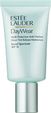
Estée Lauder DayWear Multi-Protection Anti-Oxidant Sheer Tint Release Moisturiser SPF15
Works for
2 of 4 advertised claims delivered
Sun protectionSPF 15 · 4 UV filters · Broad spectrumWeak protectionSPF under 30
This product offers broad spectrum sun protection, but it is weak. We recommend to use a broad spectrum sunscreen with at least SPF 30.
Moisturizing28 ingredients credited for this claimStrong support
“Day Wear Multi-Protection Anti-Oxidant Sheer Tint Release Moisturiser SPF15”
This product can help improve hydration of the skin with the two types of ingredients.
The first type is called “humectants”:
these ingredients help attract water.
When humectants are on the surface of the skin, they “pull in” the moisture from the outside environment, or from
within deeper layers of the skin. The following ingredients in this product do the job:
glycerin, saccharomyces lysate extract.
This product also contains ingredients called “occlusives”. They help reduce the speed with which our skin loses moisture to the outside environment. These ingredients also help soften the upper layer of the skin, so it feels less tight and nicer to the touch. The following ingredients in this product do the job: dimethicone, squalane.
The following ingredients in this product are especially good for supporting the skin barrier and helping with the hydration level: urea
Anti-aging2 ingredients credited for this claimModerate support
“The skin is hydrated and protected, free radical damage is resisted and the signs of premature ageing are reduced. Suitable for all skin types.”
This product contains vitis vinifera seed extract. This ingredient might be able to help reduce and prevent fine lines and wrinkles, improve skin elasticity and firmness, but there is not enough evidence that it actually works. The biggest anti-aging effect in this product comes from sun protection. Sun damage is the main factor causing early signs of skin aging. We, however, do not recommend using this product as a sunscreen because the protection it offers is not strong enough).
Evens skin tone1 ingredient credited for this claimLimited support
“Estée Lauder, Moisturiser The Day Wear Sheer Tint Release Moisturiser is a lightweight treatment that works to perfect the skin's tone and provide a more even and toned glow.”
This product contains ingredients () that could help reduce hyperpigmentation (for example, post-acne marks or age spots) in theory, but there is not enough evidence that they actually work.
The biggest effect for evening out skin tone in this product comes from sun protection. Sun damage is the main factor causing age spots, darkening of post-acne marks and other discolorations. This is why sun protection is the best strategy for maintaining an even skin tone. We, however, do not recommend using this product as a sunscreen because the protection it offers is not strong enough).
Anti-oxidationNot advertised by the brand · 11 ingredients credited for this claimStrong support
This product contains antioxidants (ethylbisiminomethylguaiacol manganese chloride, vitis vinifera seed extract) that can help neutralize free radicals in skin. By doing so, they can lessen the damage the skin gets from the UV light (sun).
Can it cause trouble?
Irritancy4 strong irritants: Rosmarinus officinalis leaf extract, Parfum + 2 more — patch-test recommendedHigh risk
Comedogenic3 ingredients rated 2 or more on the 0–5 pore-clogging scale3 flagged

User reviews
Be the first — your take helps the next person decide.
Ingredients
Filter by role to see what each ingredient is doing.
Water~45–55%
Ethylhexyl methoxycinnamate~5.5–6.7%
- Irritation risk
- High
Octinoxate. When used in higher concentrations, works as a sunscreen protecting the skin from UVB rays. When used in lower concentration, helps to preserve the product formulation. Is shown to be harmful to coral reefs - consider avoiding bathing in coral reef areas when wearing a product with this ingredient. It can be irritating
More about Ethylhexyl methoxycinnamateEthylhexyl salicylate~4.4–5.4%
- Irritation risk
- Low
Octisalate. A UV filter. It offers some protection against the sun rays that cause sunburn (UVB), but does not protect against the most aging sun rays (UVA). It loses its effectiveness quickly when exposed to sunlight. It is an organic, or so called "chemical" sunscreen
More about Ethylhexyl salicylateDimethicone~3.2–4%
- Irritation risk
- Low
A silicone that helps to reduce water loss from the surface of the skin. Can temporarily "fill in" lines and wrinkles, absorb oil, and create a nice product finish
More about DimethiconeCaprylic/capric/myristic/stearic triglyceride~2.4–2.9%
- Irritation risk
- Low
Helps to soften the upper layer of the skin
More about Caprylic/capric/myristic/stearic triglycerideButylene glycol~1.9–2.3%
- Irritation risk
- Low
Used to create a nice product texture and help delivery of other ingredients. Might be somewhat helpful in attracting water to the upper layer of the skin
More about Butylene glycolCyclopentasiloxane~1.7–2%
- Irritation risk
- Low
A silicone that helps improve the product texture and spreadability. Can absorb oil creating a short-term mattifying effect on the skin
More about CyclopentasiloxaneCetyl ricinoleate~1.4–1.7%
- Irritation risk
- Low
An emollient that helps soften the upper layer of the skin
More about Cetyl ricinoleateSteareth-2~1.1–1.4%
Di-c12-15 alkyl fumarate~0.95–1.15%
- Irritation risk
- Medium
Used to soften the upper layer of the skin and create a nice product texture
More about Di-c12-15 alkyl fumaratePolysilicone-11~0.7–1.05%
- Irritation risk
- Low
A silicone that forms a light film on the skin surface helping to bind water and temporarily absorb oils creating a matt and powdery feel
More about Polysilicone-11Butyl methoxydibenzoylmethane~0.75–1.1%
- Irritation risk
- Medium
Avobenzone. An organic, or so-called "chemical" UV filter. Protects against both UVA and UVB rays. Needs to be combined with other filters in a formulation to be stable.
More about Butyl methoxydibenzoylmethanePentylene glycol~0.5–0.75%
- Irritation risk
- Medium
Used to preserve products, dissolve other ingredients and create a nice product texture
More about Pentylene glycolSteareth-21~0.5–0.7%
Hydrogenated lecithin~0.35–0.6%
- Irritation risk
- Low
Helps to retain moisture by creating a protective barrier on the skin. Rich in fatty acids. Improves product texture and helps with the penetration of other ingredients.
More about Hydrogenated lecithinAspalathus linearis leaf extract~0.3–0.55%
- Irritation risk
- Low
Plant extract that might have help to neutralize free radicals in skin, but evidence of effectiveness is skin is lacking
More about Aspalathus linearis leaf extractCamellia sinensis leaf extract~0.3–0.6%
- Irritation risk
- Low
Can contain potent anti-oxidant compounds (abbreviated ECG, GCG, EGC, and EGCG) that might help protect the skin from free radicals. Can help calm down inflammation and has some anti-bacterial properties. Unfortunately, these antioxidants are unstable and lose their effectiveness very quickly in products. The concentration of the antioxidant compounds in the extract also tends to be low to be effective in topical formulation
More about Camellia sinensis leaf extractPolygonum cuspidatum root extract~0.3–0.55%
- Irritation risk
- Medium
A plant extract that can contain resveratrol, an antioxidant that can help neutralize free radicals in skin. The effectiveness depends on the extract quality and concentration in the product
More about Polygonum cuspidatum root extractTriticum vulgare germ extract~0.25–0.5%
- Irritation risk
- Medium
- Comedogenicity
- 3/5
Plant extract that might have moisturizing properties. Avoid if you suffer from wheat or gluten intolerance
More about Triticum vulgare germ extractBetula alba bark extract~0.2–0.35%
- Irritation risk
- High
Has astringent properties. Creates a tightening and drying effect on the skin. Can be irritating
More about Betula alba bark extractLaminaria ochroleuca extract~0.2–0.35%
- Irritation risk
- Low
- Comedogenicity
- 3/5
Helps attract water to the upper layer of the skin
More about Laminaria ochroleuca extractHordeum vulgare extract~0.2–0.4%
- Irritation risk
- Medium
A plant extract that might have some anti-oxidant properties. Avoid if you are sensitive to gluten
More about Hordeum vulgare extractSaccharomyces lysate extract~0.15–0.3%
- Irritation risk
- Low
Helps attract water to the upper layer of the skin. Can have some anti-inflammatory effect
More about Saccharomyces lysate extractRosmarinus officinalis leaf extract~0.15–0.25%
- Irritation risk
- High
Can be helpful in reducing inflammation in skin, including inflamed acne. It can be irritating
More about Rosmarinus officinalis leaf extractVitis vinifera seed extract~0.2–0.4%
- Irritation risk
- Low
A plant extract that contains resveratrol and other anti-oxidant compounds that can help neutralize free radicals, reduce inflammation in skin and even out its tone. Can be also used to stabilize the product formulation
More about Vitis vinifera seed extractEthylbisiminomethylguaiacol manganese chloride~0.2–0.35%
- Irritation risk
- Medium
A potent anti-oxidant that can help neutralize free radicals in skin and protect from harmful effects of sun exposure, even though more studies are needed to confirm its effectiveness in topical applications
More about Ethylbisiminomethylguaiacol manganese chlorideCholesterol~0.25–0.45%
- Irritation risk
- Low
An emollient that is naturally found in skin
More about CholesterolMaltodextrin~0.2–0.4%
- Irritation risk
- Low
Used to stabilize the product formulation and can help absorb oil
More about MaltodextrinAscorbyl tocopheryl maleate~0.2–0.4%
- Irritation risk
- Low
Cyclodextrin~0.2–0.35%
- Irritation risk
- Low
A type of sugar that is used to support delivery of active ingredients and can enhance their penetration into the skin without disrupting the skin's barrier
More about CyclodextrinSodium hyaluronate~0.2–0.35%
- Irritation risk
- Low
One of the best moisturizing ingredients. Attracts water into the upper layer of the skin
More about Sodium hyaluronateTrehalose~0.2–0.4%
- Irritation risk
- Low
A sugar that attracts water to the upper layer of the skin
More about TrehaloseNordihydroguaiaretic acid~0.2–0.4%
- Irritation risk
- Medium
Used to stabilize the formula of product formulation. Might be helpful in neutralizing free radicals in skin
More about Nordihydroguaiaretic acidPalmitoyl hydroxypropyltrimonium amylopectin/glycerin crosspolymer~0.2–0.35%
Coffea arabica seed oil~0.2–0.4%
- Irritation risk
- Medium
Might be helpful in neutralizing free radicals in skin
More about Coffea arabica seed oilPantethine~0.25–0.45%
- Irritation risk
- Low
Helps to hydrate the skin by improving its barrier funciton
More about PantethineLinolenic acid~0.25–0.5%
- Irritation risk
- Medium
An emollient that helps soften the skin and calm down inflammation
More about Linolenic acidOryzanol~0.2–0.35%
- Irritation risk
- Low
An anti-oxidant that helps stabilize product formulations. Might help neutralise free radicals in skin
More about OryzanolLecithin~0.25–0.45%
- Irritation risk
- Low
Used mostly for creating emulsions - helping oil and water mix together. Helps soften the upper layer of the skin
More about LecithinSqualane~0.25–0.5%
- Irritation risk
- Low
An oil naturally present in skin. Works as an emollient to soften the skin and form a protective layer on its surface without a greasy feeling.
More about SqualaneLinoleic acid~0.3–0.55%
- Irritation risk
- Low
An excellent emollient. Helps soften the skin, restore its barrier function, and can help to calm down inflammation. It can be helpful to prevent blemishes and clogged pores
More about Linoleic acidGlycerin~0.25–0.45%
- Irritation risk
- Low
One of the best moisturizing ingredients. Naturally present in skin. It attracts water to the upper layer of the skin working as a humectant
More about GlycerinSodium pca~0.2–0.4%
- Irritation risk
- Low
Naturally present in skin and helps to attract water to its upper layer
More about Sodium pcaUrea~0.2–0.4%
- Irritation risk
- Low
Naturally present in skin (urea makes up about 7% of natural moisturizing factors in skin). Attracts water to the upper layer of the skin. Also has a positive effect on the skin barrier beyond the humectant action. Can enhance penetration of other ingredients. Is an exfoliating ingredient when used in high concentrations
More about UreaCaprylic/capric triglyceride~0.25–0.5%
- Irritation risk
- Medium
A good mix of fatty acids that forms a protective layer on the skin. Improves the shelf life of products. Derived from coconut and glycerin
More about Caprylic/capric triglyceridePolyethylene~0.3–0.6%
Isopropyl myristate~0.25–0.45%
- Irritation risk
- Low
- Comedogenicity
- 3/5
An emollient that helps soften the skin. Could be comedogenic
More about Isopropyl myristateBehenyl alcohol~0.25–0.5%
- Irritation risk
- Low
Non-drying alcohol that helps water and oil mix together. Also serves as an emollient
More about Behenyl alcoholTromethamine~0.2–0.4%
Stearyl alcohol~0.25–0.45%
- Irritation risk
- Low
An emollient that helps soften the skin
More about Stearyl alcoholPolyquaternium-51~0.25–0.4%
- Irritation risk
- Low
An emollient that helps create a nice silky finish on the skin
More about Polyquaternium-51Carbomer~0.2–0.4%
- Irritation risk
- Low
Helps create a thicker or gel-like product texture. It is not a surfactant but can be used in gentle cleansing formulations
More about CarbomerAcrylates/ammonium methacrylate copolymer~0.25–0.45%
- Irritation risk
- Low
Triethyl citrate~0.2–0.35%
Sodium hydroxide~0.2–0.4%
Vp/hexadecene copolymer~0.25–0.4%
- Irritation risk
- Low
Creates a nice product texture and can support water-resistance of sunscreens
More about Vp/hexadecene copolymerTriacetin~0.25–0.4%
Parfum~0.2–0.35%
- Irritation risk
- High
An aromatic blend of unspecified and possibly irritating ingredients
More about ParfumLinalool~0.2–0.35%
Benzyl salicylate~0.2–0.35%
Disodium edta~0.2–0.4%
Sodium benzoate~0.25–0.4%
Sorbic acid~0.2–0.4%
Potassium sorbate~0.25–0.4%
Sodium dehydroacetate~0.2–0.4%
Chlorphenesin~0.16–0.32%
Phenoxyethanol~0.2–0.4%
- Irritation risk
- Low
A preservative. It helps prevent bacterial growth in cosmetic products
More about PhenoxyethanolIron oxides~0.2–0.35%
- Irritation risk
- Low
An umbrella term for the following three colorants: CI 77491, CI 77492, CI 77499. They might be able to offer some protection against visible light, but the degree of the protection is not clear
More about Iron oxidesCi 77491~0.2–0.35%
- Irritation risk
- Low
A red colorant made of iron oxide. Typically is not irritating
More about Ci 77491Iron oxides~0.15–0.3%
- Irritation risk
- Low
An umbrella term for the following three colorants: CI 77491, CI 77492, CI 77499. They might be able to offer some protection against visible light, but the degree of the protection is not clear
More about Iron oxidesCi 77492~0.15–0.3%
Iron oxides~0.15–0.3%
- Irritation risk
- Low
An umbrella term for the following three colorants: CI 77491, CI 77492, CI 77499. They might be able to offer some protection against visible light, but the degree of the protection is not clear
More about Iron oxidesCi 77499~0.15–0.3%
Titanium dioxide~0.1–0.2%
- Irritation risk
- Low
Works as a UV filter when used in high concentrations. It is photostable and is effective mostly against the UVB light, with some protection in the UVA range. In small concentrations, used for its ability to improve the color of cosmetic products. Is usually well tolerated by the skin
More about Titanium dioxideCi 77891~0.1–0.2%
- Irritation risk
- Low
Ingredient list view
Water, Ethylhexyl methoxycinnamate, Ethylhexyl salicylate, Dimethicone, Caprylic/capric/myristic/stearic triglyceride, Butylene glycol, Cyclopentasiloxane, Cetyl ricinoleate, Steareth-2, Di-c12-15 alkyl fumarate, Polysilicone-11, Butyl methoxydibenzoylmethane, Pentylene glycol, Steareth-21, Hydrogenated lecithin, Aspalathus linearis leaf extract, Camellia sinensis leaf extract, Polygonum cuspidatum root extract, Triticum vulgare germ extract, Betula alba bark extract, Laminaria ochroleuca extract, Hordeum vulgare extract, Saccharomyces lysate extract, Rosmarinus officinalis leaf extract, Vitis vinifera seed extract, Ethylbisiminomethylguaiacol manganese chloride, Cholesterol, Maltodextrin, Ascorbyl tocopheryl maleate, Cyclodextrin, Sodium hyaluronate, Trehalose, Nordihydroguaiaretic acid, Palmitoyl hydroxypropyltrimonium amylopectin/glycerin crosspolymer, Coffea arabica seed oil, Pantethine, Linolenic acid, Oryzanol, Lecithin, Squalane, Linoleic acid, Glycerin, Sodium pca, Urea, Caprylic/capric triglyceride, Polyethylene, Isopropyl myristate, Behenyl alcohol, Tromethamine, Stearyl alcohol, Polyquaternium-51, Carbomer, Acrylates/ammonium methacrylate copolymer, Triethyl citrate, Sodium hydroxide, Vp/hexadecene copolymer, Triacetin, Parfum, Linalool, Benzyl salicylate, Disodium edta, Sodium benzoate, Sorbic acid, Potassium sorbate, Sodium dehydroacetate, Chlorphenesin, Phenoxyethanol, Iron oxides, Ci 77491, Iron oxides, Ci 77492, Iron oxides, Ci 77499, Titanium dioxide, Ci 77891
Compare prices
Retailers ranked by price — lowest first.
Worth comparing, line by line.
Match % combines shared ingredients, the first five ingredients, shared actives and hero ingredients, irritancy (lower counts in the alternative's favour), texture and body area. Only products in the same routine step are compared.
| Estée LauderDayWear Multi-Protection Anti-Oxidant Sheer Tint Release Moisturiser SPF15YOUR PRODUCT | M-61Hydraboost Moisturizer SPF 30 | UriageLight Water Cream SPF20 | |
|---|---|---|---|
| Match | — | 58% | 51% |
| Price | $58.10 | $78.00+$19.90 | $19.12−$38.98 |
| Shared key ingredients | — | 10 of 23 | 8 of 23 |
| Key difference | — | Palmitoyl Tetrapeptide-7 | Pullulan |
| Irritancy | High | Medium | Medium |
| SPF | SPF 15 | SPF 30 | SPF 20 |
| Drying alcohol | — | — | — |
| View product | Shop | Shop |


Product summary
"Estée Lauder - DayWear Multi-Protection Anti-Oxidant Sheer Tint Release Moisturiser SPF15" "is a broad spectrum sunscreen meaning that it protects both from UVB rays (" burning "- they cause sunburn) and UVA rays (" aging "- they don't cause sunburn but lead to premature aging and pigmentation issues). However, this moisturizer does not offer enough sun protection. We recommend to use a sunscreen with at least SPF 30 daily.
It contains good moisturizing ingredients and can double as a hydrating day cream.
Sunscreen filters
This is a so-called" chemical "sunscreen. It means that it uses organic UV filters. They typically offer good sun protection and rarely leave a white cast, but they can be irritating for some people with sensitive skin. The UV filters in this sunscreen are: avobenzone 0.75% - 1.10%, octinoxate 5.50% - 6.70% and octisalate 4.40% - 5.40%.
Irritation risk
We assess the overall irritancy of this moisturizer to be high. For a detailed overview of all potential irritants: click here
You can see the detailed formula review with the breakdown of all actives in the product and the full ingredient list with estimated concentrations in the tables below.
Price
The product retails from 43.95£ up to 1217.00£ in the United Kingdom and for 146.00A$ in Australia.
For a detailed price comparison: click here.
Sources cited in this review
Every concentration estimate and effectiveness label is anchored to one of these 39 studies and safety reviews.
- 1
- 2Final Report on the Safety Assessment of Dimethicone Copolyoljournals.sagepub.com
- 3
- 4
- 5
- 6

Affiliate links · As an Amazon Associate, WIMJ earns from qualifying purchases.