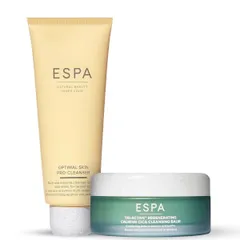
Works for:
based on ingredients and %- Cleansing
Doesn't work for:
based on ingredients and %- Exfoliation
Can it cause trouble?
- Irritation risk: high
- Comedogenic risk ingredients: 3
Key actives

Cleansing
What does the product description say?
Skin Radiance Double Cleanse
Source: From product name
This product works by removing dirt and oil from the surface of the skin. It uses a combination of mild cleansing agents (cetearyl alcohol, cocoyl hydrolyzed collagen, linolenic acid, peg-6 caprylic/capric glycerides, peg-60 almond glycerides, peg-8 beeswax, sorbitan stearate, sucrose laurate, sucrose stearate) and should be able to cleanse the skin gently. Still keep in mind that any cleansing can disrupt the skin barrier, and most people do not need to cleanse their skin more than once per day.
Helps water and oil mix together
A non-drying alcohol. Works as an emollient. Helps water and oil mix together and creates a nice product texture
An emollient that helps soften the skin and calm down inflammation
Helps dissolve other ingredients
Helps water and oil mix together while softening the upper layer of the skin. Can be an allergen (beeswax)
Helps water and oil mix together
Helps oil and water mix together. Can be used as a cleansing agent
An excellent emollient. Helps soften the skin, restore its barrier function, and can help to calm down inflammation. It can be helpful to prevent blemishes and clogged pores
Exfoliation
What does the product description say?
Optimal Skin Pro-Cleanser 100ml Combining the properties of an enzyme cleanser, exfoliator and mask, this gel-to-oil formula supports cellular surface renewal to reveal smooth, radiant skin.
Source: Lookfantastic Australia
This product does not contain effective exfoliating ingredients. It might be able to deliver physical exfoliation, that is scrub off some of the dead cells on the surface of the skin. We do not recommend physical exfoliation, because it is not uniform (some bits of skin can get exfoliated too much while others not at all). It can also traumatize the skin and aggrevate acne and other skin conditions.
How honest is this product?
| Promise | Can it deliver? |
|---|---|
| Cleansing | |
| Exfoliation |
Total Promises Fulfilled score: 50/100.
We receive a small commission for purchases made through these links at no cost for you. Thank you for your support! Learn more
Potential irritants
Comedogenic ingredients
User reviews (0)
Averages from community submissions.
No reviews yet for this product.
Be the first to share your experience!
Tried this product?
Help capture what the ingredient list can't—texture, finish, pilling, scent, and more. Answer what you can, skip the rest.
Takes ~30 seconds.
Reviews are shown in aggregate. No personal details.
Key Actives
A plant extract that has been shown to be able to reduce inflammation in skin, support restoration of skin barrier function, as well as support collagen production. Contains active compounds called centelloids: asiaticoside, madecasosside, asiatic acid and madecassic acid. Might be helpful in preventing stretch marks. It can be itself be irritating though.
Pure form of vitamin E. Can help moisturise and protect the skin from free radicals. Often used to help stabilise other ingredients or the formula itself
Pure form of vitamin E. Can help moisturise and protect the skin from free radicals. Often used to help stabilise other ingredients or the formula itself
An emollient that helps soften the skin and calm down inflammation
An excellent emollient. Helps soften the skin, restore its barrier function, and can help to calm down inflammation. It can be helpful to prevent blemishes and clogged pores
A great emollient that can also have anti-oxidant properties
A non-drying alcohol. Works as an emollient. Helps water and oil mix together and creates a nice product texture
Helps water and oil mix together while softening the upper layer of the skin. Can be an allergen (beeswax)
A plant oil that because of its high content of alpha-linolenic acid help support skin barrier function and moisturize the skin
Helps soften the upper layer of the skin
A good mix of fatty acids that forms a protective layer on the skin. Improves the shelf life of products. Derived from coconut and glycerin
Helps dissolve other ingredients
A great emollient due to its high linoleic acid content. One of the most effective plant oils in helping skin hydration and repairing skin barrier function
Helps soften the upper layer of the skin and might as well help to attract moisture to its upper layer
A good mix of fatty acids that forms a protective layer on the skin. Improves the shelf life of products. Derived from coconut and glycerin
One of the best moisturizing ingredients. Naturally present in skin. It attracts water to the upper layer of the skin working as a humectant
An emollient made of jojoba oil. Helps soften the skin and support its barrier function
Helps oil and water mix together. Can be used as a cleansing agent
An emollient that helps soften the skin and could be helpful in repairing its barrier function
A great emollient due to its high linoleic acid content. One of the most effective plant oils in helping skin hydration and repairing skin barrier function
Potential irritants
An essential oil. Potential allergen and can be irritating. It has some anti-bacterial properties
A plant extract that has some anti-oxidant and anti-bacterial properties. Can be irritating
An essential oil that can be very irritating. Has some anti-bacterial properties
An aromatic blend of unspecified and possibly irritating ingredients
An essential oil that is used as a fragrance and can be irritating. It might have some anti-oxidant effect in skin
A plant oil with high content of volatile compounds that can irritate the skin. Can be used as a fragrance. Has anti-bacterial properties and might help neutralize free radicals on the surface of the skin
A common frangrance that can easily irritate skin, especially if exposed to air, light or heat
An essentil oil from orange peel. Potential allergen and can be irritating
A plant oil with a high content of volatile compounds that can irritate the skin and lead to allergic reactions. Can lead to photosensitivity
A plant oil with high content of volatile compounds that, especially when exposed to air, can cause allergic reactions and irritate the skin
An essential oil with a lemon-like smell that is extracted from a fruit grown in Asia. Used as a fragrance
Can be helpful in reducing inflammation in skin, including inflamed acne. It can be irritating
A great emollient that can also have anti-oxidant properties
Helps water and oil mix together while softening the upper layer of the skin. Can be an allergen (beeswax)
A good mix of fatty acids that forms a protective layer on the skin. Improves the shelf life of products. Derived from coconut and glycerin
An emollient that helps soften the skin but is not effective for restoring its barrier function. Might be helpful to calm down inflammation
Helps soften the upper layer of the skin and might as well help to attract moisture to its upper layer
A plant extract that has been shown to be able to reduce inflammation in skin, support restoration of skin barrier function, as well as support collagen production. Contains active compounds called centelloids: asiaticoside, madecasosside, asiatic acid and madecassic acid. Might be helpful in preventing stretch marks. It can be itself be irritating though.
A plant oil that helps soften the upper layer of the skin. Is unlikely to be helpful in restoring skin barrier function due to the low content of linoleic acid
An emollient made of jojoba oil. Helps soften the skin and support its barrier function
An emollient that helps soften the skin and could be helpful in repairing its barrier function
An emollient that helps soften the skin
A plant oil that because of its high content of alpha-linolenic acid help support skin barrier function and moisturize the skin
A preservative that comes from radishes fermented by a bacteria. New research suggests that the preservation properties in the ingredient come from an ammonium salt that is not present naturally in radish root but used in its cultivation. Is problematic because the exact amount of the preservative agents is difficult to determine
Can work as an exfoliant but is typically used to adjust the product pH
Helps soften the upper layer of the skin and might have some antioxidant effect
An emollient that helps soften the skin and calm down inflammation
Comedogenic ingredients
A non-drying alcohol. Works as an emollient. Helps water and oil mix together and creates a nice product texture
Cottonseed oil. It is used as an emollient and occlusive in products. It is rich palmitic, oleic acid, and linoleic fatty acids.
An emollient that helps soften the skin
All ingredients
A great emollient that can also have anti-oxidant properties
A non-drying alcohol. Works as an emollient. Helps water and oil mix together and creates a nice product texture
Helps water and oil mix together while softening the upper layer of the skin. Can be an allergen (beeswax)
A good mix of fatty acids that forms a protective layer on the skin. Improves the shelf life of products. Derived from coconut and glycerin
An emollient that helps soften the skin but is not effective for restoring its barrier function. Might be helpful to calm down inflammation
A great emollient due to its high linoleic acid content. One of the most effective plant oils in helping skin hydration and repairing skin barrier function
A preservative. It helps prevent bacterial growth in cosmetic products
Helps soften the upper layer of the skin and might as well help to attract moisture to its upper layer
Pure form of vitamin E. Can help moisturise and protect the skin from free radicals. Often used to help stabilise other ingredients or the formula itself
An essential oil. Potential allergen and can be irritating. It has some anti-bacterial properties
A plant extract that has some anti-oxidant and anti-bacterial properties. Can be irritating
A plant extract that has been shown to be able to reduce inflammation in skin, support restoration of skin barrier function, as well as support collagen production. Contains active compounds called centelloids: asiaticoside, madecasosside, asiatic acid and madecassic acid. Might be helpful in preventing stretch marks. It can be itself be irritating though.
An essential oil that can be very irritating. Has some anti-bacterial properties
An aromatic blend of unspecified and possibly irritating ingredients
An essential oil that is used as a fragrance and can be irritating. It might have some anti-oxidant effect in skin
A plant oil with high content of volatile compounds that can irritate the skin. Can be used as a fragrance. Has anti-bacterial properties and might help neutralize free radicals on the surface of the skin
Works as a humectant helping to attract water to the upper layer of the skin and might be effective as an anti-oxidant.
Cottonseed oil. It is used as an emollient and occlusive in products. It is rich palmitic, oleic acid, and linoleic fatty acids.
A plant oil that helps soften the upper layer of the skin. Is unlikely to be helpful in restoring skin barrier function due to the low content of linoleic acid
A good mix of fatty acids that forms a protective layer on the skin. Improves the shelf life of products. Derived from coconut and glycerin
One of the best moisturizing ingredients. Naturally present in skin. It attracts water to the upper layer of the skin working as a humectant
An emollient made of jojoba oil. Helps soften the skin and support its barrier function
Helps oil and water mix together. Can be used as a cleansing agent
An emollient that helps soften the skin and could be helpful in repairing its barrier function
An emollient that helps soften the skin
A common frangrance that can easily irritate skin, especially if exposed to air, light or heat
An essentil oil from orange peel. Potential allergen and can be irritating
A plant oil with a high content of volatile compounds that can irritate the skin and lead to allergic reactions. Can lead to photosensitivity
A plant oil with high content of volatile compounds that, especially when exposed to air, can cause allergic reactions and irritate the skin
Helps to soften the upper layer of the skin without creating a greasy texture
A plant oil that because of its high content of alpha-linolenic acid help support skin barrier function and moisturize the skin
An excellent emollient. Helps soften the skin, restore its barrier function, and can help to calm down inflammation. It can be helpful to prevent blemishes and clogged pores
Pure form of vitamin E. Can help moisturise and protect the skin from free radicals. Often used to help stabilise other ingredients or the formula itself
A preservative that comes from radishes fermented by a bacteria. New research suggests that the preservation properties in the ingredient come from an ammonium salt that is not present naturally in radish root but used in its cultivation. Is problematic because the exact amount of the preservative agents is difficult to determine
An aromatic blend of unspecified and possibly irritating ingredients
A great emollient due to its high linoleic acid content. One of the most effective plant oils in helping skin hydration and repairing skin barrier function
Can work as an exfoliant but is typically used to adjust the product pH
Used to stabilize the product formulation and can help absorb oil
Helps soften the upper layer of the skin and might have some antioxidant effect
An essential oil with a lemon-like smell that is extracted from a fruit grown in Asia. Used as a fragrance
An emollient that helps soften the skin and calm down inflammation
A plant oil that helps soften the upper layer of the skin. Is unlikely to be helpful in restoring skin barrier function due to the low content of linoleic acid
Can be helpful in reducing inflammation in skin, including inflamed acne. It can be irritating
Ingredient list view
Vitis vinifera seed oil, Prunus amygdalus dulcis seed, Cetearyl alcohol, Peg-8 beeswax, Sorbitan stearate, Caprylic/capric triglyceride, Olea europaea fruit oil, Peg-6 caprylic/capric glycerides, Peg-60 almond glycerides, Silica, Helianthus annuus seed oil, Phenoxyethanol, Theobroma grandiflorum seed butter, Tocopherol, Cananga odorata flower oil, Cymbopogon nardus oil, Lavandula angustifolia oil, Geraniol, Calendula officinalis flower extract, Centella asiatica extract, Water, Amyris balsamifera bark oil, Citrus aurantium amara leaf/twig oil, Eucalyptus globulus leaf oil, Pelargonium graveolens oil, Linalool, Parfum, Anthemis nobilis flower oil, Rosmarinus officinalis leaf oil, Chlorophyllin-copper complex, Cocoyl hydrolyzed collagen, Eugenia caryophyllus bud oil, Alaria esculenta extract, Gossypium herbaceum seed oil, Elaeis guineensis oil, Bidens pilosa extract, Linum usitatissimum seed oil, Moringa oleifera seed oil, Caprylic/capric triglyceride, Glycerin, Jojoba esters, Lactobacillus/pumpkin fruit ferment filtrate, Water, Sucrose laurate, Persea gratissima oil, Coconut alkanes, Limonene, Citrus aurantium dulcis peel oil, Levulinic acid, Sucrose stearate, Vaccinium vitis-idaea seed oil, Citrus aurantium bergamia fruit oil, Citrus nobilis peel oil, Coco-caprylate/caprate, Echium plantagineum seed oil, Linoleic acid, Tocopherol, Sodium levulinate, Leuconostoc/radish root ferment filtrate, Parfum, Citrus aurantium amara leaf/twig oil, Cymbopogon nardus oil, Linalool, Helianthus annuus seed oil, Geraniol, Citric acid, Maltodextrin, Moringa oleifera seed extract, Jasminum officinale flower extract, Litsea cubeba fruit oil, Rosa centifolia flower extract, Linolenic acid, Moringa oleifera seed oil, Sodium hydroxide, Citrus aurantium amara flower oil, Rosa damascena flower oil, Rosmarinus officinalis leaf extract
- Use of “natural” oils for moisturization: Review of olive, coconut, and sunflower seed oil
- Effect of Olive and Sunflower Seed Oil on the Adult Skin Barrier: Implications for Neonatal Skin Care
- Topically Applied Sunflower Seed Oil Prevents Invasive Bacterial Infections in Preterm Infants in Egypt
- Effect of topically applied lipids on surfactant-irritated skin
- Impact of topical oils on the skin barrier: possible implications for neonatal health in developing countries
- Advanced Skin Care – A Novel Ingredient
- Vitamin E in dermatology
- Vitamin E and Skin Health
- Annex I: Clinical evidence regarding sensitisation to individual fragrance chemicals and to natural extracts
- Topical application of Calendula officinalis (L.): Formulation and evaluation of hydrophilic cream with antioxidant activity
- The seamy side of natural medicines: contact sensitization to arnica (Arnica montana L.) and marigold (Calendula officinalis L.)
- Final report on the safety assessment of Calendula officinalis extract and Calendula officinalis
- Contact dermatitis as an adverse reaction to some topically used European herbal medicinal products – part 1: Achillea millefolium–Curcuma longa
- Anti-Inflammatory Effect of Titrated Extract of Centella asiatica in Phthalic Anhydride-Induced Allergic Dermatitis Animal Model
- Centella asiatica in cosmetology
- Triterpene Composition and Bioactivities of Centella asiatica
- Asiaticoside induction for cell-cycle progression, proliferation and collagen synthesis in human dermal fibroblasts
- Assessment report on Centella asiatica (L.) Urban, herba
- Contact dermatitis due to Madecassol
- The Effects of a Standardized Extract of Centella asiatica on Postlaser Resurfacing Wound Healing on the Face: A Split-Face, Double-Blind, Randomized, Placebo-Controlled Trial
- Safety Assessment of Anthemis nobilis– Derived Ingredients as Used in Cosmetics
- Assessment report on Rosmarinus officinalis L., aetheroleum and Rosmarinus officinalis L., folium
- Screening of plant extracts for antimicrobial activity against bacteria and yeasts with dermatological relevance
- Occupational contact dermatitis due to essential oils
- The in vitro antimicrobial activity and chemometric modelling of 59 commercial essential oils against pathogens of dermatological relevance
- Antimicrobial and Antioxidant Properties of Rosemary and Sage (Rosmarinus officinalis L. and Salvia officinalis L., Lamiaceae) Essential Oils
- Chemical Composition, Plant Genetic Differences, Antimicrobial and Antifungal Activity Investigation of the Essential Oil of Rosmarinus officinalis L.
- Genetic Architecture of Palm Oil Fatty Acid Composition in Cultivated Oil Palm (Elaeis guineensis Jacq.) Compared to Its Wild Relative E. oleifera (H.B.K) Cortés
- Nutrient composition of Nigerian palm kernel from the dura and tenera varieties of the oil palm (Elaeis guineensis)
- Moringa oleifera seed oil: Composition, nutritional aspects and health attributes
- Moringa oleifera Seeds and Oil: Characteristics and Uses for Human Health
- Glycerol and the skin: holistic approach to its origin and functions
- Safety Assessment of Citrus-Derived Peel Oils as Used in Cosmetics
- Oxidized citrus oil (R-limonene): A frequent skin sensitizer in Europe
- Air oxidation increases skin irritation from fragrance terpenes
- Oxidized citrus oil (R-limonene): A frequent skin sensitizer in Europe
- Safety Assessment of Alkyl Esters as Used in Cosmetics
- Healing fats of the skin: the structural and immunologic roles of the omega-6 and omega-3 fatty acids
- The Permeability Barrier in Essential Fatty Acid Deficiency: Evidence for a Direct Role for Linoleic Acid in Barrier Function
- Digital image analysis of the effect of topically applied linoleic acid on acne microcomedones.
- Ethnopharmacological Properties and Medicinal Uses of Litsea cubeba
- Biological Activities and Safety of Citrus spp. Essential Oils
- Allergic contact dermatitis induced by rosemary leaf extract in a cleansing gel
- Safety Assessment of Rosmarinus officinalis (Rosemary)-Derived Ingredients as Used in Cosmetics
- Rosmarinus officinalis Extract Suppresses Propionibacterium acnes–Induced Inflammatory Responses