Works for
1 of 1 advertised claim delivered
Moisturizing12 ingredients credited for this claimGood support
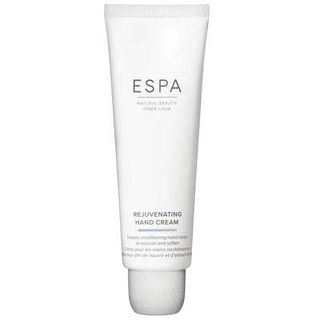
“A deeply hydrating hand cream that softens and nourishes your skin.”
This product can help improve hydration of the skin with the two types of ingredients.
The first type is called “humectants”:
these ingredients help attract water.
When humectants are on the surface of the skin, they “pull in” the moisture from the outside environment, or from
within deeper layers of the skin. The following ingredients in this product do the job:
glycerin, butylene glycol.
This product also contains ingredients called “occlusives”. They help reduce the speed with which our skin loses moisture to the outside environment. These ingredients also help soften the upper layer of the skin, so it feels less tight and nicer to the touch. The following ingredients in this product do the job: butyrospermum parkii butter, helianthus annuus seed oil.
Can it cause trouble?
Irritancy12 strong irritants: Limonene, Citrus aurantium amara leaf/twig oil + 10 more — patch-test recommendedHigh risk
Comedogenic2 ingredients rated 2 or more on the 0–5 pore-clogging scale2 flagged


User reviews
Be the first — your take helps the next person decide.
Ingredients
Filter by role to see what each ingredient is doing.
Water~45–55%
Prunus armeniaca kernel oil~4.2–5.1%
- Irritation risk
- Medium
An emollient that helps soften the skin
More about Prunus armeniaca kernel oilGlycerin~3.9–4.7%
- Irritation risk
- Low
One of the best moisturizing ingredients. Naturally present in skin. It attracts water to the upper layer of the skin working as a humectant
More about GlycerinCetyl esters~3.1–3.8%
- Irritation risk
- Low
Helps soften upper layer of the skin and can enhance penetration of other ingredients into the upper layer of the skin
More about Cetyl estersCetearyl alcohol~2.4–2.9%
- Irritation risk
- Low
- Comedogenicity
- 2/5
A non-drying alcohol. Works as an emollient. Helps water and oil mix together and creates a nice product texture
More about Cetearyl alcoholButyrospermum parkii butter~2–2.5%
- Irritation risk
- Low
- Comedogenicity
- 3/5
A great moisturising ingredient that softens the skin and reduces water loss from its upper layer. It also can be helpful in protecting skin from free radicals
More about Butyrospermum parkii butterSorbitan olivate~1.6–2%
Cetearyl olivate~1.4–1.8%
Helianthus annuus seed oil~1.3–1.6%
- Irritation risk
- Low
A great emollient due to its high linoleic acid content. One of the most effective plant oils in helping skin hydration and repairing skin barrier function
More about Helianthus annuus seed oilKaolin~1.3–1.6%
- Irritation risk
- Low
A type of clay that consists mainly of aluminum silicate. Helps absorb oil and creates a thicker product consistency. Can be used to add a white color
More about KaolinRicinus communis seed oil~0.75–1.1%
- Irritation risk
- Medium
A plant oil that can help soften the skin. It might be helpful in calming down inflammation, but solid research is lacking. Is often used in lip products to create the needed product consistency
More about Ricinus communis seed oilPhenoxyethanol~0.6–0.9%
- Irritation risk
- Low
A preservative. It helps prevent bacterial growth in cosmetic products
More about PhenoxyethanolCetyl palmitate~0.6–0.9%
- Irritation risk
- Low
An emollient that helps soften the skin and is used to improve product texture and stability
More about Cetyl palmitateSorbitan palmitate~0.55–0.8%
- Irritation risk
- Medium
Helps water and oil mix together and stabilize the product formulation
More about Sorbitan palmitateSclerotium gum~0.45–0.7%
- Irritation risk
- Low
Used to create gel-like formulas and stabilize emulsions
More about Sclerotium gumXanthan gum~0.5–0.75%
- Irritation risk
- Low
Used to create a thicker product consistency
More about Xanthan gumBenzoic acid~0.25–0.5%
Limonene~0.4–0.6%
- Irritation risk
- High
A common frangrance that can easily irritate skin, especially if exposed to air, light or heat
More about LimoneneHydrolyzed keratin~0.4–0.6%
- Irritation risk
- Low
Butylene glycol~0.35–0.6%
- Irritation risk
- Low
Used to create a nice product texture and help delivery of other ingredients. Might be somewhat helpful in attracting water to the upper layer of the skin
More about Butylene glycolPolysorbate 20~0.35–0.65%
Citrus aurantium amara leaf/twig oil~0.3–0.6%
- Irritation risk
- High
Lavandula angustifolia oil~0.3–0.5%
- Irritation risk
- High
An essential oil. Potential allergen and can be irritating. It has some anti-bacterial properties
More about Lavandula angustifolia oilNasturtium officinale extract~0.25–0.45%
- Irritation risk
- High
Used as a fragrance. Might have anti-oxidant properties
More about Nasturtium officinale extractRosa canina fruit extract~0.25–0.5%
- Irritation risk
- Medium
A plant extract that might have some anti-oxidant properties, but evidence is lacking
More about Rosa canina fruit extractDehydroacetic acid~0.3–0.5%
Parfum~0.25–0.5%
- Irritation risk
- High
An aromatic blend of unspecified and possibly irritating ingredients
More about ParfumPelargonium graveolens oil~0.25–0.5%
Lactic acid~0.25–0.5%
- Irritation risk
- Medium
An exfoliating and moisturizing alpha-hydroxy acid (AHA). Typically causes less irritation than other AHAs, for example, glycolic acid. At high concentrations (about 15%), lactic acid can help reduce lines and wrinkles. Recent studies show that lactic acid can support the "good" bacteria living on skin's surface (healthy skin microbiome)
More about Lactic acidLinalool~0.25–0.5%
Tocopherol~0.3–0.55%
- Irritation risk
- Low
Pure form of vitamin E. Can help moisturise and protect the skin from free radicals. Often used to help stabilise other ingredients or the formula itself
More about TocopherolEthylhexylglycerin~0.3–0.5%
Arctostaphylos uva-ursi leaf extract~0.25–0.5%
- Irritation risk
- Low
Citrus grandis fruit extract~0.25–0.45%
- Irritation risk
- High
Glycyrrhiza glabra root extract~0.25–0.45%
- Irritation risk
- Medium
A plant extract that can help lighten the skin and calm down inflammation. Might be helpful in neutralizing free radicals
More about Glycyrrhiza glabra root extractMorus bombycis root extract~0.25–0.45%
- Irritation risk
- High
A plant extract that might contain arbutin, a compound that has skin-lightening properties. Might have some anti-oxidant activity. Is unlikely to be effective though in the concentrations typically used in skincare products
More about Morus bombycis root extractScutellaria baicalensis root extract~0.2–0.4%
- Irritation risk
- High
A plant extract that might contain a compound baicalin that could be helpful in neutralizing free radicals and reducing inflammation in skin. The baicalin concentration in skincare products is often too low for an effective action. Can be used for its fragrant properties
More about Scutellaria baicalensis root extractPotassium sorbate~0.25–0.45%
Amyris balsamifera bark oil~0.2–0.35%
- Irritation risk
- Low
Citrus aurantium amara flower oil~0.2–0.35%
- Irritation risk
- High
Used as a fragrance. Can be irritating
More about Citrus aurantium amara flower oilCitrus aurantium dulcis peel oil~0.15–0.3%
- Irritation risk
- High
An essentil oil from orange peel. Potential allergen and can be irritating
More about Citrus aurantium dulcis peel oilSantalum album oil~0.15–0.3%
Geraniol~0.1–0.2%
Sodium benzoate~0.15–0.25%
Sodium metabisulfite~0.1–0.2%
Sodium sulfite~0.1–0.2%
Sodium hydroxide~0.1–0.15%
Ingredient list view
Water, Prunus armeniaca kernel oil, Glycerin, Cetyl esters, Cetearyl alcohol, Butyrospermum parkii butter, Sorbitan olivate, Cetearyl olivate, Helianthus annuus seed oil, Kaolin, Ricinus communis seed oil, Phenoxyethanol, Cetyl palmitate, Sorbitan palmitate, Sclerotium gum, Xanthan gum, Benzoic acid, Limonene, Hydrolyzed keratin, Butylene glycol, Polysorbate 20, Citrus aurantium amara leaf/twig oil, Lavandula angustifolia oil, Nasturtium officinale extract, Rosa canina fruit extract, Dehydroacetic acid, Parfum, Pelargonium graveolens oil, Lactic acid, Linalool, Tocopherol, Ethylhexylglycerin, Arctostaphylos uva-ursi leaf extract, Citrus grandis fruit extract, Glycyrrhiza glabra root extract, Morus bombycis root extract, Scutellaria baicalensis root extract, Potassium sorbate, Amyris balsamifera bark oil, Citrus aurantium amara flower oil, Citrus aurantium dulcis peel oil, Santalum album oil, Geraniol, Sodium benzoate, Sodium metabisulfite, Sodium sulfite, Sodium hydroxide
Compare prices
Retailers ranked by price — lowest first.
Worth comparing, line by line.
Match % combines shared ingredients, the first five ingredients, shared actives and hero ingredients, irritancy (lower counts in the alternative's favour), texture and body area. Only products in the same routine step are compared.
| ESPAHandcare Rejuvenating Hand CreamYOUR PRODUCT | KamillHand & Nail Cream - 4 Types | WeledaAlmond Hand Cream | Maria ÅkerbergFace Cream Sensitive | |
|---|---|---|---|---|
| Match | — | 56% | 54% | 51% |
| Price | $21.35 | $10.50−$10.85 | $12.50−$8.85 | — |
| Shared key ingredients | — | 2 of 8 | 1 of 8 | 3 of 8 |
| Key difference | — | Panthenol | — | Beeswax |
| Irritancy | High | Medium | Medium | Medium |
| Drying alcohol | — | — | Contains drying alcohol | — |
| View product | Shop | Shop | Shop |


Sources cited in this review
Every concentration estimate and effectiveness label is anchored to one of these 24 studies and safety reviews.
- 1
- 2
- 3
- 4
- 5
- 6Effect of topically applied lipids on surfactant-irritated skinonlinelibrary.wiley.com

Affiliate links · As an Amazon Associate, WIMJ earns from qualifying purchases.