Works for:
based on ingredients and %- Moisturizing
- Anti-aging
Doesn't work for:
based on ingredients and %- Sun protection
Can it cause trouble?
- Irritation risk: medium
- Comedogenic risk ingredients: 0
Key actives
Product Summary
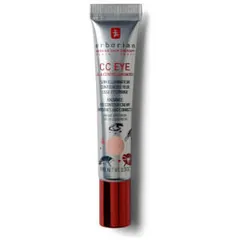
"Erborian - CC Eye Cream" does not provide enough UVA protection. UVA rays do not cause sunburn, but still damage the skin, leading to early signs of aging and pigmentation issues.
It contains good moisturizing ingredients and can double as a hydrating day cream.
Sunscreen filters
This sunscreen uses a mixture of both mineral and organic (so-called "chemical") UV filters. The organic filters in the product are: octinoxate and octisalate. As for the mineral filters, this sunscreen uses titanium dioxide.
Irritation risk
It contains actives that can be irritating. We assess the overall irritancy of this product to be medium. For a detailed overview of all potential irritants: click here
You can see the detailed formula review with the breakdown of all actives in the product and the full ingredient list with estimated concentrations in the tables below.
Price
The product retails from 30.99£ up to 34.00£ in the United Kingdom.
For a detailed price comparison: click here.
Moisturizing
What does the product description say?
Centella Asiatice strives to smooth out fine lines or wrinkles, offering intense hydration.
Source: Lookfantastic Australia
This product can help improve hydration of the skin with the two types of ingredients.
The first type is called “humectants”:
these ingredients help attract water.
When humectants are on the surface of the skin, they “pull in” the moisture from the outside environment, or from
within deeper layers of the skin. The following ingredients in this product do the job:
cyclomethicone, glycerin.
This product also contains ingredients called “occlusives”. They help reduce the speed with which our skin loses moisture to the outside environment. These ingredients also help soften the upper layer of the skin, so it feels less tight and nicer to the touch. The following ingredients in this product do the job: dimethicone, methicone.
The following ingredients in this product are especially good for supporting the skin barrier and helping with the hydration level: acetyl tetrapeptide-5
A silicone that helps to reduce water loss from the surface of the skin. Can temporarily "fill in" lines and wrinkles, absorb oil, and create a nice product finish
A type of silicone that leaves a nice silky finish on the skin and can help soften its upper layer
A silicone that works to soften the upper layer of the skin and reduce its water loss
A red algae extract that can help attract water to the upper layer of the skin and might have some antioxidant properties
A type of peptide. Peptides are excellent moisturizers and might be able support collagen production reducing fine lines and wrinkles
One of the best moisturizing ingredients. Naturally present in skin. It attracts water to the upper layer of the skin working as a humectant
A type of silicone that helps soften the upper layer of the skin and reduces the water loss from the skin surface
Enhances the product texture and makes it more spreadable. Helps reduce water loss from the outer layer of skin. Extands the shelf life by preventing bacteria growth
Helps soften the upper layer of the skin and improve the product texture
Used to create a nice product texture and help delivery of other ingredients. Might be somewhat helpful in attracting water to the upper layer of the skin
An emollient that is naturally present in skin and helps soften it
A plant extract that has been shown to be able to reduce inflammation in skin, support restoration of skin barrier function, as well as support collagen production. Contains active compounds called centelloids: asiaticoside, madecasosside, asiatic acid and madecassic acid. Might be helpful in preventing stretch marks. It can be itself be irritating though.
Helps oil and water mix together and works as an emollient
Anti-aging
What does the product description say?
Centella Asiatice strives to smooth out fine lines or wrinkles, offering intense hydration.
Source: Lookfantastic Australia
This product contains acetyl tetrapeptide-5. This ingredient might be able to help reduce and prevent fine lines and wrinkles, improve skin elasticity and firmness, but there is not enough evidence that it actually works. The biggest anti-aging effect in this product comes from sun protection. Sun damage is the main factor causing early signs of skin aging. We, however, do not recommend using this product as a sunscreen because the protection it offers is not strong enough).
A type of peptide. Peptides are excellent moisturizers and might be able support collagen production reducing fine lines and wrinkles
A plant extract that has been shown to be able to reduce inflammation in skin, support restoration of skin barrier function, as well as support collagen production. Contains active compounds called centelloids: asiaticoside, madecasosside, asiatic acid and madecassic acid. Might be helpful in preventing stretch marks. It can be itself be irritating though.
Sun protection
This product does not offer good protection against UVA rays.
Works as a UV filter when used in high concentrations. It is photostable and is effective mostly against the UVB light, with some protection in the UVA range. In small concentrations, used for its ability to improve the color of cosmetic products. Is usually well tolerated by the skin
Octinoxate. When used in higher concentrations, works as a sunscreen protecting the skin from UVB rays. When used in lower concentration, helps to preserve the product formulation. Is shown to be harmful to coral reefs - consider avoiding bathing in coral reef areas when wearing a product with this ingredient. It can be irritating
Octisalate. A UV filter. It offers some protection against the sun rays that cause sunburn (UVB), but does not protect against the most aging sun rays (UVA). It loses its effectiveness quickly when exposed to sunlight. It is an organic, or so called "chemical" sunscreen
How honest is this product?
| Promise | Can it deliver? |
|---|---|
| Sun protection | |
| Moisturizing | |
| Anti-aging |
Total Promises Fulfilled score: 75/100.
We receive a small commission for purchases made through these links at no cost for you. Thank you for your support! Learn more
Affiliate link · supports WIMJ at no cost to you
Potential irritants
Comedogenic ingredients
No comedogenic ingredients detected
User reviews (0)
Averages from community submissions.
No reviews yet for this product.
Be the first to share your experience!
Tried this product?
Help capture what the ingredient list can't—texture, finish, pilling, scent, and more. Answer what you can, skip the rest.
Takes ~30 seconds.
Reviews are shown in aggregate. No personal details.
Key Actives
A plant extract that has been shown to be able to reduce inflammation in skin, support restoration of skin barrier function, as well as support collagen production. Contains active compounds called centelloids: asiaticoside, madecasosside, asiatic acid and madecassic acid. Might be helpful in preventing stretch marks. It can be itself be irritating though.
A silicone that helps to reduce water loss from the surface of the skin. Can temporarily "fill in" lines and wrinkles, absorb oil, and create a nice product finish
A red algae extract that can help attract water to the upper layer of the skin and might have some antioxidant properties
A type of peptide. Peptides are excellent moisturizers and might be able support collagen production reducing fine lines and wrinkles
A type of silicone that leaves a nice silky finish on the skin and can help soften its upper layer
Octinoxate. When used in higher concentrations, works as a sunscreen protecting the skin from UVB rays. When used in lower concentration, helps to preserve the product formulation. Is shown to be harmful to coral reefs - consider avoiding bathing in coral reef areas when wearing a product with this ingredient. It can be irritating
Works as a UV filter when used in high concentrations. It is photostable and is effective mostly against the UVB light, with some protection in the UVA range. In small concentrations, used for its ability to improve the color of cosmetic products. Is usually well tolerated by the skin
A silicone that works to soften the upper layer of the skin and reduce its water loss
One of the best moisturizing ingredients. Naturally present in skin. It attracts water to the upper layer of the skin working as a humectant
Works as a UV filter when used in high concentrations. It is photostable and is effective mostly against the UVB light, with some protection in the UVA range. In small concentrations, used for its ability to improve the color of cosmetic products. Is usually well tolerated by the skin
A type of silicone that helps soften the upper layer of the skin and reduces the water loss from the skin surface
Potential irritants
Octinoxate. When used in higher concentrations, works as a sunscreen protecting the skin from UVB rays. When used in lower concentration, helps to preserve the product formulation. Is shown to be harmful to coral reefs - consider avoiding bathing in coral reef areas when wearing a product with this ingredient. It can be irritating
A plant extract that has been shown to be able to reduce inflammation in skin, support restoration of skin barrier function, as well as support collagen production. Contains active compounds called centelloids: asiaticoside, madecasosside, asiatic acid and madecassic acid. Might be helpful in preventing stretch marks. It can be itself be irritating though.
A more stable but less bio-available form of vitamin E compared to Tocopherol. Might help moisturize and protect the skin from free radicals, but mostly used in low concentrations to stabilize other ingredients.
Comedogenic ingredients
We couldn't find any comedogenic ingredients in this product
All ingredients
A type of silicone that leaves a nice silky finish on the skin and can help soften its upper layer
Octinoxate. When used in higher concentrations, works as a sunscreen protecting the skin from UVB rays. When used in lower concentration, helps to preserve the product formulation. Is shown to be harmful to coral reefs - consider avoiding bathing in coral reef areas when wearing a product with this ingredient. It can be irritating
Helps to dissolve other ingredients in a formulation. Slows down the rate of product drying
Works as a UV filter when used in high concentrations. It is photostable and is effective mostly against the UVB light, with some protection in the UVA range. In small concentrations, used for its ability to improve the color of cosmetic products. Is usually well tolerated by the skin
A silicone that works to soften the upper layer of the skin and reduce its water loss
A type of silicone that helps create a silky product finish and dissolve other ingredients
One of the best moisturizing ingredients. Naturally present in skin. It attracts water to the upper layer of the skin working as a humectant
Works as a UV filter when used in high concentrations. It is photostable and is effective mostly against the UVB light, with some protection in the UVA range. In small concentrations, used for its ability to improve the color of cosmetic products. Is usually well tolerated by the skin
Octisalate. A UV filter. It offers some protection against the sun rays that cause sunburn (UVB), but does not protect against the most aging sun rays (UVA). It loses its effectiveness quickly when exposed to sunlight. It is an organic, or so called "chemical" sunscreen
Enhances the product texture and makes it more spreadable. Helps reduce water loss from the outer layer of skin. Extands the shelf life by preventing bacteria growth
A silicone that helps to reduce water loss from the surface of the skin. Can temporarily "fill in" lines and wrinkles, absorb oil, and create a nice product finish
Used to create a nice product texture and help delivery of other ingredients. Might be somewhat helpful in attracting water to the upper layer of the skin
A type of clay that is used to thicken the product consistency
A type of silicone that create a smooth product finish and can create an optical soft-focus effect on the skin. Helps to thicken the product consistency
A plant extract that has been shown to be able to reduce inflammation in skin, support restoration of skin barrier function, as well as support collagen production. Contains active compounds called centelloids: asiaticoside, madecasosside, asiatic acid and madecassic acid. Might be helpful in preventing stretch marks. It can be itself be irritating though.
A red algae extract that can help attract water to the upper layer of the skin and might have some antioxidant properties
Used to stabilize product formulations and create a nice product texture
Is used to add opaque (non-transparent) appearance to formulations. Can be used to coat other ingredients for even dispersion. This is a different ingredient compared to the ones used in antipersperants (aluminium chloride and aluminium chlorohydrate)
Helps soften the upper layer of the skin and improve the product texture
Creates an illusion of smoother and more radiant skin tone. Adds shimmer to the skin by reflecting light
A type of silicone that helps soften the upper layer of the skin and reduces the water loss from the skin surface
An emollient that is naturally present in skin and helps soften it
A more stable but less bio-available form of vitamin E compared to Tocopherol. Might help moisturize and protect the skin from free radicals, but mostly used in low concentrations to stabilize other ingredients.
A type of peptide. Peptides are excellent moisturizers and might be able support collagen production reducing fine lines and wrinkles
A type of silicone that helps oil and water mix well together. Helps to disperse other ingredients, e.g. pigments, evenly in a formulation
A preservative. It helps prevent bacterial growth in cosmetic products
An umbrella term for the following three colorants: CI 77491, CI 77492, CI 77499. They might be able to offer some protection against visible light, but the degree of the protection is not clear
An umbrella term for the following three colorants: CI 77491, CI 77492, CI 77499. They might be able to offer some protection against visible light, but the degree of the protection is not clear
An umbrella term for the following three colorants: CI 77491, CI 77492, CI 77499. They might be able to offer some protection against visible light, but the degree of the protection is not clear
Ingredient list view
Water, Cyclomethicone, Ethylhexyl methoxycinnamate, Dipropylene glycol, Zinc, Ci 77891, Titanium dioxide, Peg-10 dimethicone, Methyl trimethicone, Glycerin, Titanium dioxide, Ethylhexyl salicylate, C12-15 alkyl benzoate, Dimethicone, Butylene glycol, Disteardimonium hectorite, Magnesium sulfate, Vinyl dimethicone/methicone silsesquioxane crosspolymer, Centella asiatica extract, Caesalpinia spinosa fruit extract, Kappaphycus alvarezii extract, Talc, Dimethicone/vinyl dimethicone crosspolymer, Aluminum hydroxide, Trihydroxystearin, Mica, Methicone, Palmitic acid, Stearic acid, Tocopheryl acetate, Ethylhexylglycerin, Polyester-1, Silica dimethyl silylate, Acetyl tetrapeptide-5, Triethoxycaprylylsilane, Phenoxyethanol, Ci 77499, Iron oxides, Ci 77491, Iron oxides, Ci 77492, Iron oxides
- Glycerol and the skin: holistic approach to its origin and functions
- Dimethicone as a protective ingredient in topical medications
- Final Report on the Safety Assessment of Dimethicone Copolyol
- Safety Assessment of Magnesium Sulfate as Used in Cosmetics
- Anti-Inflammatory Effect of Titrated Extract of Centella asiatica in Phthalic Anhydride-Induced Allergic Dermatitis Animal Model
- Centella asiatica in cosmetology
- Triterpene Composition and Bioactivities of Centella asiatica
- Asiaticoside induction for cell-cycle progression, proliferation and collagen synthesis in human dermal fibroblasts
- Assessment report on Centella asiatica (L.) Urban, herba
- Contact dermatitis due to Madecassol
- The Effects of a Standardized Extract of Centella asiatica on Postlaser Resurfacing Wound Healing on the Face: A Split-Face, Double-Blind, Randomized, Placebo-Controlled Trial
- Safety Assessment of Alumina and Aluminum Hydroxide as Used in Cosmetics