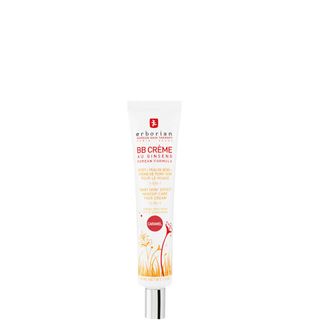
Erborian BB Cream - Caramel
Works for
1 of 2 advertised claims delivered
Sun protectionSPF 20 · 3 UV filters · Broad spectrumWeak protectionSPF under 30
This product offers broad spectrum sun protection, but it is weak. We recommend to use a broad spectrum sunscreen with at least SPF 30.
Moisturizing13 ingredients credited for this claimGood support
“This five-in-one BB Crème provides lightweight buildable coverage while also helping to moisturize for a plumping effect and illuminated skin that is protected with broad-spectrum SPF 20.”
This product can help improve hydration of the skin with the two types of ingredients.
The first type is called “humectants”:
these ingredients help attract water.
When humectants are on the surface of the skin, they “pull in” the moisture from the outside environment, or from
within deeper layers of the skin. The following ingredients in this product do the job:
betaine, cyclomethicone.
This product also contains ingredients called “occlusives”. They help reduce the speed with which our skin loses moisture to the outside environment. These ingredients also help soften the upper layer of the skin, so it feels less tight and nicer to the touch. The following ingredients in this product do the job: dimethicone, methicone.
Can it cause trouble?
Irritancy8 strong irritants: Parfum, Hexyl cinnamal + 6 more — patch-test recommendedHigh risk
ComedogenicClean of flagged comedogenic ingredientsNone flagged
User reviews
Be the first — your take helps the next person decide.
Ingredients
Filter by role to see what each ingredient is doing.
Ethylhexyl methoxycinnamate~25–30%
- Irritation risk
- High
Octinoxate. When used in higher concentrations, works as a sunscreen protecting the skin from UVB rays. When used in lower concentration, helps to preserve the product formulation. Is shown to be harmful to coral reefs - consider avoiding bathing in coral reef areas when wearing a product with this ingredient. It can be irritating
More about Ethylhexyl methoxycinnamateTitanium dioxide~7.1–8.7%
- Irritation risk
- Low
Works as a UV filter when used in high concentrations. It is photostable and is effective mostly against the UVB light, with some protection in the UVA range. In small concentrations, used for its ability to improve the color of cosmetic products. Is usually well tolerated by the skin
More about Titanium dioxideZinc oxide~5.3–6.5%
- Irritation risk
- Low
A broad spectrum sunblock (protects from both UVA and UVB rays). Is suitable for most sensitive skins. In small concentrations, can be used as a colorant
More about Zinc oxideWater~4.2–5.1%
Cyclomethicone~3.5–4.2%
- Irritation risk
- Low
A type of silicone that leaves a nice silky finish on the skin and can help soften its upper layer
More about CyclomethiconeGlycerin~2.6–3.2%
- Irritation risk
- Low
One of the best moisturizing ingredients. Naturally present in skin. It attracts water to the upper layer of the skin working as a humectant
More about GlycerinCi 77492~2–2.4%
Iron oxides~1.6–2%
- Irritation risk
- Low
An umbrella term for the following three colorants: CI 77491, CI 77492, CI 77499. They might be able to offer some protection against visible light, but the degree of the protection is not clear
More about Iron oxidesDipropylene glycol~1.2–1.5%
- Irritation risk
- Low
Helps to dissolve other ingredients in a formulation. Slows down the rate of product drying
More about Dipropylene glycolPeg-10 dimethicone~1.2–1.4%
- Irritation risk
- Low
A silicone that works to soften the upper layer of the skin and reduce its water loss
More about Peg-10 dimethiconeDimethicone~1.1–1.3%
- Irritation risk
- Low
A silicone that helps to reduce water loss from the surface of the skin. Can temporarily "fill in" lines and wrinkles, absorb oil, and create a nice product finish
More about DimethiconeIsoeicosane~0.95–1.15%
- Irritation risk
- Low
Talc~1.2–1.4%
Hexyl laurate~0.8–1.2%
- Irritation risk
- Medium
Helps soften the upper layer of the skin and create a nice product consistency
More about Hexyl laurateBetaine~0.7–1.05%
- Irritation risk
- Low
Helps attract water to the upper layer of the skin and improves the product texture
More about BetaineDisteardimonium hectorite~0.7–1.1%
- Irritation risk
- Low
A type of clay that is used to thicken the product consistency
More about Disteardimonium hectoritePanax ginseng root extract~0.75–1.1%
- Irritation risk
- High
A plant extract that might have some anti-inflammatory properties, but solid evidence is lacking. It can be irritating
More about Panax ginseng root extractKigelia africana fruit extract~0.65–0.95%
- Irritation risk
- Low
Portulaca oleracea extract~0.6–0.9%
- Irritation risk
- Medium
A plant extract that has some anti-oxidant activity, but solid research is lacking. Can help attract water to the upper layer of the skin
More about Portulaca oleracea extractGlycyrrhiza glabra root extract~0.6–0.9%
- Irritation risk
- Medium
A plant extract that can help lighten the skin and calm down inflammation. Might be helpful in neutralizing free radicals
More about Glycyrrhiza glabra root extractDioscorea villosa root extract~0.55–0.85%
- Irritation risk
- Low
Equisetum giganteum extract~0.55–0.85%
- Irritation risk
- Low
Glycosyl trehalose~0.65–0.95%
Palmitic acid~0.65–0.95%
- Irritation risk
- Low
An emollient that is naturally present in skin and helps soften it
More about Palmitic acidMagnesium sulfate~0.6–0.85%
Aluminum hydroxide~0.65–1%
- Irritation risk
- Low
Is used to add opaque (non-transparent) appearance to formulations. Can be used to coat other ingredients for even dispersion. This is a different ingredient compared to the ones used in antipersperants (aluminium chloride and aluminium chlorohydrate)
More about Aluminum hydroxideDimethicone/vinyl dimethicone crosspolymer~0.55–0.85%
- Irritation risk
- Low
Used to stabilize product formulations and create a nice product texture
More about Dimethicone/vinyl dimethicone crosspolymerAcrylates/dimethicone copolymer~0.55–0.8%
- Irritation risk
- Medium
Used to stabilize product formulation, help create an even product layer over skin (for example, in sunscreen), evenly disperse pigements and create a nice product consistency
More about Acrylates/dimethicone copolymerHydrogenated starch hydrolysate~0.5–0.8%
- Irritation risk
- Low
Helps to attract water to the upper layer of the skin. Can add sweet taste to lip products
More about Hydrogenated starch hydrolysateStearic acid~0.65–1%
- Irritation risk
- Low
Helps oil and water mix together and works as an emollient
More about Stearic acidMethicone~0.6–0.9%
- Irritation risk
- Low
A type of silicone that helps soften the upper layer of the skin and reduces the water loss from the skin surface
More about MethiconePhenoxyethanol~0.5–0.8%
- Irritation risk
- Low
A preservative. It helps prevent bacterial growth in cosmetic products
More about PhenoxyethanolTocopheryl acetate~0.45–0.65%
- Irritation risk
- Medium
A more stable but less bio-available form of vitamin E compared to Tocopherol. Might help moisturize and protect the skin from free radicals, but mostly used in low concentrations to stabilize other ingredients.
More about Tocopheryl acetateTriethoxycaprylylsilane~0.4–0.6%
- Irritation risk
- Low
A type of silicone that helps oil and water mix well together. Helps to disperse other ingredients, e.g. pigments, evenly in a formulation
More about TriethoxycaprylylsilaneParfum~0.35–0.6%
- Irritation risk
- High
An aromatic blend of unspecified and possibly irritating ingredients
More about ParfumEthylhexylglycerin~0.35–0.65%
Butylene glycol~0.45–0.65%
- Irritation risk
- Low
Used to create a nice product texture and help delivery of other ingredients. Might be somewhat helpful in attracting water to the upper layer of the skin
More about Butylene glycolHexyl cinnamal~0.4–0.6%
Citronellol~0.3–0.6%
Alpha-isomethyl ionone~0.3–0.55%
- Irritation risk
- High
A fragrance. Potential allergen and can be irritating
More about Alpha-isomethyl iononeLinalool~0.3–0.55%
Geraniol~0.25–0.45%
Eugenol~0.15–0.25%
Limonene~0.1–0.25%
- Irritation risk
- High
A common frangrance that can easily irritate skin, especially if exposed to air, light or heat
More about LimoneneCi 77499~0.15–0.25%
Iron oxides~0.1–0.2%
- Irritation risk
- Low
An umbrella term for the following three colorants: CI 77491, CI 77492, CI 77499. They might be able to offer some protection against visible light, but the degree of the protection is not clear
More about Iron oxidesCi 77491~0.1–0.2%
- Irritation risk
- Low
A red colorant made of iron oxide. Typically is not irritating
More about Ci 77491Iron oxides~0.1–0.2%
- Irritation risk
- Low
An umbrella term for the following three colorants: CI 77491, CI 77492, CI 77499. They might be able to offer some protection against visible light, but the degree of the protection is not clear
More about Iron oxidesIngredient list view
Ethylhexyl methoxycinnamate, Titanium dioxide, Zinc oxide, Water, Cyclomethicone, Glycerin, Ci 77492, Iron oxides, Dipropylene glycol, Peg-10 dimethicone, Dimethicone, Isoeicosane, Talc, Hexyl laurate, Betaine, Disteardimonium hectorite, Panax ginseng root extract, Kigelia africana fruit extract, Portulaca oleracea extract, Glycyrrhiza glabra root extract, Dioscorea villosa root extract, Equisetum giganteum extract, Glycosyl trehalose, Palmitic acid, Magnesium sulfate, Aluminum hydroxide, Dimethicone/vinyl dimethicone crosspolymer, Acrylates/dimethicone copolymer, Hydrogenated starch hydrolysate, Stearic acid, Methicone, Phenoxyethanol, Tocopheryl acetate, Triethoxycaprylylsilane, Parfum, Ethylhexylglycerin, Butylene glycol, Hexyl cinnamal, Citronellol, Alpha-isomethyl ionone, Linalool, Geraniol, Eugenol, Limonene, Ci 77499, Iron oxides, Ci 77491, Iron oxides
Compare prices
Retailers ranked by price — lowest first.
Affiliate links · prices updated regularly · As an Amazon Associate, WIMJ earns from qualifying purchases.
Worth comparing, line by line.
Match % combines shared ingredients, the first five ingredients, shared actives and hero ingredients, irritancy (lower counts in the alternative's favour), texture and body area. Only products in the same routine step are compared.
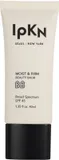
| ErborianBB Cream - CaramelYOUR PRODUCT | IPKNMoist & Firm BB Cream | |
|---|---|---|
| Match | — | 50% |
| Price | $32.20 | $20.30−$11.90 |
| Shared key ingredients | — | 9 of 10 |
| Key difference | — | Niacinamide |
| Irritancy | High | Medium |
| SPF | SPF 20 | SPF 45 |
| Drying alcohol | — | — |
| View product | Shop |

Product summary
"Erborian - BB Cream - Caramel" offers broad spectrum protection. It means that it protects from both UVA and UVB rays (you can remember UVB as "burning" sunlight - they cause sunburn. You can remember UVA rays as "aging" - they do not lead to sunburn, but they cause photodamage and contribute to early signs of skin aging and hyperpigmentation). On the negative side, the SPF of this moisturizer is not high enough. We recommend to use a sunscreen with at least SPF 30 daily.
It also works as a moisturizer, so you do not have to use an additional hydrating product.
Sunscreen filters
This is a "mixed" sunscreen in the sense that it uses both mineral and organic (so-called "chemical") sun filters. Here are the organic filters this product uses: octinoxate. As for the mineral filters, this sunscreen uses both titanium dioxide and zinc oxide.
Irritation risk
There are quite a few common irritants in this product, including ingredients without particular skin benefits. We would not recommend it for sensitive skin. We assess the overall irritancy of this moisturizer to be high. For a detailed overview of all potential irritants: click here
You can see the detailed formula review with the breakdown of all actives in the product and the full ingredient list with estimated concentrations in the tables below.
About the brand
According to Cruelty-Free Kitty "Erborian" is cruelty free, but its parent company is not.
Price
The product retails for 45.00$ in the United States.
For a detailed price comparison: click here.
Sources cited in this review
Every concentration estimate and effectiveness label is anchored to one of these 15 studies and safety reviews.
- 1A review of inorganic UV filters zinc oxide and titanium dioxideonlinelibrary.wiley.com
- 2
- 3
- 4
- 5
- 6

Affiliate links · As an Amazon Associate, WIMJ earns from qualifying purchases.