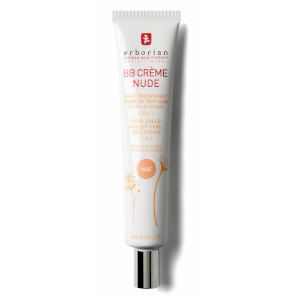
Works for
1 of 3 advertised claims delivered
Sun protectionSPF 25 · 4 UV filters · Broad spectrumWeak protectionSPF under 30
This product offers broad spectrum sun protection, but it is weak. We recommend to use a broad spectrum sunscreen with at least SPF 30.
This product can be considered "reef safe" because it does not contain the UV filters (oxybenzone and octinoxate) that can be harmful to coral reefs when present in the water in high concentrations.
MoisturizingPeg-10 dimethicone, Caprylic/capric triglyceride + 13 moreGood evidence
“Enriched with a blend of traditional Asian herbs, the cream offers intense hydration, moisturising and plumping the skin to visibly improve its appearance.”
This product can help improve hydration of the skin with the two types of ingredients.
The first type is called “humectants”:
these ingredients help attract water.
When humectants are on the surface of the skin, they “pull in” the moisture from the outside environment, or from
within deeper layers of the skin. The following ingredients in this product do the job:
betaine, glycerin.
This product also contains ingredients called “occlusives”. They help reduce the speed with which our skin loses moisture to the outside environment. These ingredients also help soften the upper layer of the skin, so it feels less tight and nicer to the touch. The following ingredients in this product do the job: caprylic/capric triglyceride, dimethicone.
Evens skin toneGlycyrrhiza glabra root extractLimited evidence
“Also formulated with Ginger, this cream invigorates and revitalises skin, while Licorice Extract targets pigmentation marks and combats dark spots.”
This product contains ingredients (glycyrrhiza glabra root extract) that could help reduce hyperpigmentation (for example, post-acne marks or age spots) in theory, but there is not enough evidence that they actually work.
The biggest effect for evening out skin tone in this product comes from sun protection. Sun damage is the main factor causing age spots, darkening of post-acne marks and other discolorations. This is why sun protection is the best strategy for maintaining an even skin tone. We, however, do not recommend using this product as a sunscreen because the protection it offers is not strong enough).
Can it cause trouble?
Irritancy7 strong irritants: Parfum, Hexyl cinnamal + 5 more — patch-test recommendedHigh risk
ComedogenicClean of flagged comedogenic ingredientsNone flagged
User reviews
Be the first — your take helps the next person decide.
Ingredients
Filter by role to see what each ingredient is doing.
Water~40–60%
Dimethicone~4.7–7.1%
- Irritation risk
- Low
A silicone that helps to reduce water loss from the surface of the skin. Can temporarily "fill in" lines and wrinkles, absorb oil, and create a nice product finish
More about DimethiconeCaprylic/capric triglyceride~4.1–6.1%
- Irritation risk
- Medium
A good mix of fatty acids that forms a protective layer on the skin. Improves the shelf life of products. Derived from coconut and glycerin
More about Caprylic/capric triglycerideIsononyl isononanoate~3–4.4%
- Irritation risk
- Low
Forms a protective film on the surface of the skin to prevent moisture loss. Gives a velvety feel to products while reducing tackiness
More about Isononyl isononanoateGlycerin~2.2–3.3%
- Irritation risk
- Low
One of the best moisturizing ingredients. Naturally present in skin. It attracts water to the upper layer of the skin working as a humectant
More about GlycerinTitanium dioxide~2.3–3.4%
- Irritation risk
- Low
Works as a UV filter when used in high concentrations. It is photostable and is effective mostly against the UVB light, with some protection in the UVA range. In small concentrations, used for its ability to improve the color of cosmetic products. Is usually well tolerated by the skin
More about Titanium dioxideButyloctyl salicylate~1.5–2.3%
- Irritation risk
- Medium
A synthetic ester of salicylic acid that is used to help disperse pigments and boost effectiveness of sunscreen ingredients. It is able to absorb UV light (working as an organic, or chemical filter), but is not approved as a sunscreen ingredient on its own
More about Butyloctyl salicylateZinc oxide~1.8–2.7%
- Irritation risk
- Low
A broad spectrum sunblock (protects from both UVA and UVB rays). Is suitable for most sensitive skins. In small concentrations, can be used as a colorant
More about Zinc oxideTitanium dioxide~1.4–2%
- Irritation risk
- Low
Works as a UV filter when used in high concentrations. It is photostable and is effective mostly against the UVB light, with some protection in the UVA range. In small concentrations, used for its ability to improve the color of cosmetic products. Is usually well tolerated by the skin
More about Titanium dioxideCetyl peg/ppg-10/1 dimethicone~0.8–1.2%
- Irritation risk
- Low
A type of silicone that helps water and oil mix together. Can help to soften upper layer of the skin
More about Cetyl peg/ppg-10/1 dimethiconeDisiloxane~0.5–1.15%
- Irritation risk
- Low
Vinyl dimethicone/methicone silsesquioxane crosspolymer~0.4–0.95%
- Irritation risk
- Low
A type of silicone that create a smooth product finish and can create an optical soft-focus effect on the skin. Helps to thicken the product consistency
More about Vinyl dimethicone/methicone silsesquioxane crosspolymerDisteardimonium hectorite~0.4–0.9%
- Irritation risk
- Low
A type of clay that is used to thicken the product consistency
More about Disteardimonium hectoriteMagnesium sulfate~0.4–0.9%
Betaine~0.3–0.7%
- Irritation risk
- Low
Helps attract water to the upper layer of the skin and improves the product texture
More about BetainePentylene glycol~0.35–0.85%
- Irritation risk
- Medium
Used to preserve products, dissolve other ingredients and create a nice product texture
More about Pentylene glycolButylene glycol~0.3–0.7%
- Irritation risk
- Low
Used to create a nice product texture and help delivery of other ingredients. Might be somewhat helpful in attracting water to the upper layer of the skin
More about Butylene glycolLauryl peg-10 tris(trimethylsiloxy)silylethyl dimethicone~0.2–0.75%
- Irritation risk
- Low
Panax ginseng root extract~0.2–0.75%
- Irritation risk
- High
A plant extract that might have some anti-inflammatory properties, but solid evidence is lacking. It can be irritating
More about Panax ginseng root extractGlycyrrhiza glabra root extract~0.15–0.6%
- Irritation risk
- Medium
A plant extract that can help lighten the skin and calm down inflammation. Might be helpful in neutralizing free radicals
More about Glycyrrhiza glabra root extractDioscorea villosa root extract~0.15–0.6%
- Irritation risk
- Low
Kigelia africana fruit extract~0.15–0.55%
- Irritation risk
- Low
Equisetum giganteum extract~0.15–0.55%
- Irritation risk
- Low
Synthetic fluorphlogopite~0.15–0.6%
- Irritation risk
- Low
A mineral that is used as an optical filter (makes the skin looks nicer through light reflection) and to improve the texture of cosmetic products
More about Synthetic fluorphlogopitePolyhydroxystearic acid~0.15–0.6%
- Irritation risk
- Medium
Used to create a thicker product consistency and stabilize the formulation
More about Polyhydroxystearic acidPolyglyceryl-4 isostearate~0.15–0.6%
- Irritation risk
- Medium
Helps water and oil mix together
More about Polyglyceryl-4 isostearatePolymethyl methacrylate~0.15–0.6%
- Irritation risk
- Low
Is used to enhance product texture and can help to optically mask skin imperfections
More about Polymethyl methacrylateDimethicone/vinyl dimethicone crosspolymer~0.15–0.55%
- Irritation risk
- Low
Used to stabilize product formulations and create a nice product texture
More about Dimethicone/vinyl dimethicone crosspolymerStearic acid~0.2–0.8%
- Irritation risk
- Low
Helps oil and water mix together and works as an emollient
More about Stearic acidAlumina~0.3–0.7%
- Irritation risk
- Low
The same compound that is used safely in dental implants and bone cements. In cosmetics, it is used to improve the consistency of products
More about AluminaPalmitic acid~0.15–0.65%
- Irritation risk
- Low
An emollient that is naturally present in skin and helps soften it
More about Palmitic acidTriethoxycaprylylsilane~0.15–0.55%
- Irritation risk
- Low
A type of silicone that helps oil and water mix well together. Helps to disperse other ingredients, e.g. pigments, evenly in a formulation
More about TriethoxycaprylylsilaneCaprylyl glycol~0.15–0.6%
- Irritation risk
- Medium
Helps preserve products and creates a nice product texture
More about Caprylyl glycolGlyceryl caprylate~0.15–0.65%
- Irritation risk
- Low
An emollient that can also help water and oil mix together, as well as prevent bacteria growth in products
More about Glyceryl caprylateAluminum hydroxide~0.15–0.65%
- Irritation risk
- Low
Is used to add opaque (non-transparent) appearance to formulations. Can be used to coat other ingredients for even dispersion. This is a different ingredient compared to the ones used in antipersperants (aluminium chloride and aluminium chlorohydrate)
More about Aluminum hydroxidePentaerythrityl tetra-di-t-butyl hydroxyhydrocinnamate~0.15–0.6%
- Irritation risk
- Low
Used to increase stability of product formulations
More about Pentaerythrityl tetra-di-t-butyl hydroxyhydrocinnamateTocopherol~0.15–0.55%
- Irritation risk
- Low
Pure form of vitamin E. Can help moisturise and protect the skin from free radicals. Often used to help stabilise other ingredients or the formula itself
More about TocopherolEthylhexylglycerin~0.15–0.55%
Parfum~0.15–0.5%
- Irritation risk
- High
An aromatic blend of unspecified and possibly irritating ingredients
More about ParfumHexyl cinnamal~0.15–0.5%
Alpha-isomethyl ionone~0.1–0.45%
- Irritation risk
- High
A fragrance. Potential allergen and can be irritating
More about Alpha-isomethyl iononeLinalool~0.15–0.5%
Citronellol~0.15–0.5%
Geraniol~0.15–0.5%
Iron oxides~0.1–0.5%
- Irritation risk
- Low
An umbrella term for the following three colorants: CI 77491, CI 77492, CI 77499. They might be able to offer some protection against visible light, but the degree of the protection is not clear
More about Iron oxidesIron oxides~0.1–0.5%
- Irritation risk
- Low
An umbrella term for the following three colorants: CI 77491, CI 77492, CI 77499. They might be able to offer some protection against visible light, but the degree of the protection is not clear
More about Iron oxidesIron oxides~0.1–0.5%
- Irritation risk
- Low
An umbrella term for the following three colorants: CI 77491, CI 77492, CI 77499. They might be able to offer some protection against visible light, but the degree of the protection is not clear
More about Iron oxidesWater~0.15–0.55%
Dimethicone~0.15–0.7%
- Irritation risk
- Low
A silicone that helps to reduce water loss from the surface of the skin. Can temporarily "fill in" lines and wrinkles, absorb oil, and create a nice product finish
More about DimethiconeCaprylic/capric triglyceride~0.15–0.7%
- Irritation risk
- Medium
A good mix of fatty acids that forms a protective layer on the skin. Improves the shelf life of products. Derived from coconut and glycerin
More about Caprylic/capric triglycerideIsononyl isononanoate~0.15–0.6%
- Irritation risk
- Low
Forms a protective film on the surface of the skin to prevent moisture loss. Gives a velvety feel to products while reducing tackiness
More about Isononyl isononanoateGlycerin~0.15–0.65%
- Irritation risk
- Low
One of the best moisturizing ingredients. Naturally present in skin. It attracts water to the upper layer of the skin working as a humectant
More about GlycerinButyloctyl salicylate~0.15–0.55%
- Irritation risk
- Medium
A synthetic ester of salicylic acid that is used to help disperse pigments and boost effectiveness of sunscreen ingredients. It is able to absorb UV light (working as an organic, or chemical filter), but is not approved as a sunscreen ingredient on its own
More about Butyloctyl salicylateZinc oxide~0.35–0.75%
- Irritation risk
- Low
A broad spectrum sunblock (protects from both UVA and UVB rays). Is suitable for most sensitive skins. In small concentrations, can be used as a colorant
More about Zinc oxideTitanium dioxide~0.2–0.75%
- Irritation risk
- Low
Works as a UV filter when used in high concentrations. It is photostable and is effective mostly against the UVB light, with some protection in the UVA range. In small concentrations, used for its ability to improve the color of cosmetic products. Is usually well tolerated by the skin
More about Titanium dioxideTitanium dioxide~0.2–0.75%
- Irritation risk
- Low
Works as a UV filter when used in high concentrations. It is photostable and is effective mostly against the UVB light, with some protection in the UVA range. In small concentrations, used for its ability to improve the color of cosmetic products. Is usually well tolerated by the skin
More about Titanium dioxideCetyl peg/ppg-10/1 dimethicone~0.15–0.55%
- Irritation risk
- Low
A type of silicone that helps water and oil mix together. Can help to soften upper layer of the skin
More about Cetyl peg/ppg-10/1 dimethiconeDisiloxane~0.15–0.55%
- Irritation risk
- Low
Iron oxides~0.1–0.5%
- Irritation risk
- Low
An umbrella term for the following three colorants: CI 77491, CI 77492, CI 77499. They might be able to offer some protection against visible light, but the degree of the protection is not clear
More about Iron oxidesVinyl dimethicone/methicone silsesquioxane crosspolymer~0.15–0.55%
- Irritation risk
- Low
A type of silicone that create a smooth product finish and can create an optical soft-focus effect on the skin. Helps to thicken the product consistency
More about Vinyl dimethicone/methicone silsesquioxane crosspolymerSynthetic fluorphlogopite~0.15–0.6%
- Irritation risk
- Low
A mineral that is used as an optical filter (makes the skin looks nicer through light reflection) and to improve the texture of cosmetic products
More about Synthetic fluorphlogopiteDisteardimonium hectorite~0.15–0.55%
- Irritation risk
- Low
A type of clay that is used to thicken the product consistency
More about Disteardimonium hectoriteMagnesium sulfate~0.15–0.6%
Betaine~0.15–0.55%
- Irritation risk
- Low
Helps attract water to the upper layer of the skin and improves the product texture
More about BetainePentylene glycol~0.15–0.65%
- Irritation risk
- Medium
Used to preserve products, dissolve other ingredients and create a nice product texture
More about Pentylene glycolButylene glycol~0.15–0.55%
- Irritation risk
- Low
Used to create a nice product texture and help delivery of other ingredients. Might be somewhat helpful in attracting water to the upper layer of the skin
More about Butylene glycolLauryl peg-10 tris(trimethylsiloxy)silylethyl dimethicone~0.15–0.55%
- Irritation risk
- Low
Panax ginseng root extract~0.15–0.6%
- Irritation risk
- High
A plant extract that might have some anti-inflammatory properties, but solid evidence is lacking. It can be irritating
More about Panax ginseng root extractGlycyrrhiza glabra root extract~0.1–0.5%
- Irritation risk
- Medium
A plant extract that can help lighten the skin and calm down inflammation. Might be helpful in neutralizing free radicals
More about Glycyrrhiza glabra root extractDioscorea villosa root extract~0.15–0.55%
- Irritation risk
- Low
Kigelia africana fruit extract~0.15–0.55%
- Irritation risk
- Low
Equisetum giganteum extract~0.15–0.55%
- Irritation risk
- Low
Polyhydroxystearic acid~0.15–0.6%
- Irritation risk
- Medium
Used to create a thicker product consistency and stabilize the formulation
More about Polyhydroxystearic acidPolyglyceryl-4 isostearate~0.15–0.6%
- Irritation risk
- Medium
Helps water and oil mix together
More about Polyglyceryl-4 isostearatePolymethyl methacrylate~0.15–0.6%
- Irritation risk
- Low
Is used to enhance product texture and can help to optically mask skin imperfections
More about Polymethyl methacrylateDimethicone/vinyl dimethicone crosspolymer~0.15–0.55%
- Irritation risk
- Low
Used to stabilize product formulations and create a nice product texture
More about Dimethicone/vinyl dimethicone crosspolymerStearic acid~0.2–0.8%
- Irritation risk
- Low
Helps oil and water mix together and works as an emollient
More about Stearic acidAlumina~0.3–0.7%
- Irritation risk
- Low
The same compound that is used safely in dental implants and bone cements. In cosmetics, it is used to improve the consistency of products
More about AluminaPalmitic acid~0.15–0.65%
- Irritation risk
- Low
An emollient that is naturally present in skin and helps soften it
More about Palmitic acidTriethoxycaprylylsilane~0.15–0.55%
- Irritation risk
- Low
A type of silicone that helps oil and water mix well together. Helps to disperse other ingredients, e.g. pigments, evenly in a formulation
More about TriethoxycaprylylsilaneCaprylyl glycol~0.15–0.6%
- Irritation risk
- Medium
Helps preserve products and creates a nice product texture
More about Caprylyl glycolGlyceryl caprylate~0.15–0.65%
- Irritation risk
- Low
An emollient that can also help water and oil mix together, as well as prevent bacteria growth in products
More about Glyceryl caprylateAluminum hydroxide~0.15–0.65%
- Irritation risk
- Low
Is used to add opaque (non-transparent) appearance to formulations. Can be used to coat other ingredients for even dispersion. This is a different ingredient compared to the ones used in antipersperants (aluminium chloride and aluminium chlorohydrate)
More about Aluminum hydroxidePentaerythrityl tetra-di-t-butyl hydroxyhydrocinnamate~0.15–0.6%
- Irritation risk
- Low
Used to increase stability of product formulations
More about Pentaerythrityl tetra-di-t-butyl hydroxyhydrocinnamateTocopherol~0.15–0.55%
- Irritation risk
- Low
Pure form of vitamin E. Can help moisturise and protect the skin from free radicals. Often used to help stabilise other ingredients or the formula itself
More about TocopherolEthylhexylglycerin~0.15–0.55%
Parfum~0.15–0.5%
- Irritation risk
- High
An aromatic blend of unspecified and possibly irritating ingredients
More about ParfumHexyl cinnamal~0.15–0.5%
Alpha-isomethyl ionone~0.1–0.45%
- Irritation risk
- High
A fragrance. Potential allergen and can be irritating
More about Alpha-isomethyl iononeLinalool~0.15–0.5%
Citronellol~0.15–0.5%
Geraniol~0.15–0.5%
Iron oxides~0.1–0.5%
- Irritation risk
- Low
An umbrella term for the following three colorants: CI 77491, CI 77492, CI 77499. They might be able to offer some protection against visible light, but the degree of the protection is not clear
More about Iron oxidesIron oxides~0.1–0.5%
- Irritation risk
- Low
An umbrella term for the following three colorants: CI 77491, CI 77492, CI 77499. They might be able to offer some protection against visible light, but the degree of the protection is not clear
More about Iron oxidesWater~0.15–0.55%
Dimethicone~0.2–0.7%
- Irritation risk
- Low
A silicone that helps to reduce water loss from the surface of the skin. Can temporarily "fill in" lines and wrinkles, absorb oil, and create a nice product finish
More about DimethiconeIron oxides~0.15–0.55%
- Irritation risk
- Low
An umbrella term for the following three colorants: CI 77491, CI 77492, CI 77499. They might be able to offer some protection against visible light, but the degree of the protection is not clear
More about Iron oxidesCaprylic/capric triglyceride~0.2–0.7%
- Irritation risk
- Medium
A good mix of fatty acids that forms a protective layer on the skin. Improves the shelf life of products. Derived from coconut and glycerin
More about Caprylic/capric triglycerideGlycerin~0.15–0.65%
- Irritation risk
- Low
One of the best moisturizing ingredients. Naturally present in skin. It attracts water to the upper layer of the skin working as a humectant
More about GlycerinEthylhexyl salicylate~0.35–0.8%
- Irritation risk
- Low
Octisalate. A UV filter. It offers some protection against the sun rays that cause sunburn (UVB), but does not protect against the most aging sun rays (UVA). It loses its effectiveness quickly when exposed to sunlight. It is an organic, or so called "chemical" sunscreen
More about Ethylhexyl salicylateButyloctyl salicylate~0.15–0.55%
- Irritation risk
- Medium
A synthetic ester of salicylic acid that is used to help disperse pigments and boost effectiveness of sunscreen ingredients. It is able to absorb UV light (working as an organic, or chemical filter), but is not approved as a sunscreen ingredient on its own
More about Butyloctyl salicylateTitanium dioxide~0.2–0.8%
- Irritation risk
- Low
Works as a UV filter when used in high concentrations. It is photostable and is effective mostly against the UVB light, with some protection in the UVA range. In small concentrations, used for its ability to improve the color of cosmetic products. Is usually well tolerated by the skin
More about Titanium dioxideIron oxides~0.15–0.55%
- Irritation risk
- Low
An umbrella term for the following three colorants: CI 77491, CI 77492, CI 77499. They might be able to offer some protection against visible light, but the degree of the protection is not clear
More about Iron oxidesHexyl laurate~0.15–0.65%
- Irritation risk
- Medium
Helps soften the upper layer of the skin and create a nice product consistency
More about Hexyl laurateDisiloxane~0.15–0.55%
- Irritation risk
- Low
Zinc oxide~0.35–0.8%
- Irritation risk
- Low
A broad spectrum sunblock (protects from both UVA and UVB rays). Is suitable for most sensitive skins. In small concentrations, can be used as a colorant
More about Zinc oxideIron oxides~0.15–0.55%
- Irritation risk
- Low
An umbrella term for the following three colorants: CI 77491, CI 77492, CI 77499. They might be able to offer some protection against visible light, but the degree of the protection is not clear
More about Iron oxidesPeg-10 dimethicone~0.15–0.7%
- Irritation risk
- Low
A silicone that works to soften the upper layer of the skin and reduce its water loss
More about Peg-10 dimethiconeDisteardimonium hectorite~0.15–0.6%
- Irritation risk
- Low
A type of clay that is used to thicken the product consistency
More about Disteardimonium hectoriteBetaine~0.15–0.55%
- Irritation risk
- Low
Helps attract water to the upper layer of the skin and improves the product texture
More about BetaineButylene glycol~0.15–0.6%
- Irritation risk
- Low
Used to create a nice product texture and help delivery of other ingredients. Might be somewhat helpful in attracting water to the upper layer of the skin
More about Butylene glycolPentylene glycol~0.15–0.7%
- Irritation risk
- Medium
Used to preserve products, dissolve other ingredients and create a nice product texture
More about Pentylene glycolMagnesium sulfate~0.15–0.65%
Titanium dioxide~0.2–0.8%
- Irritation risk
- Low
Works as a UV filter when used in high concentrations. It is photostable and is effective mostly against the UVB light, with some protection in the UVA range. In small concentrations, used for its ability to improve the color of cosmetic products. Is usually well tolerated by the skin
More about Titanium dioxidePanax ginseng root extract~0.15–0.65%
- Irritation risk
- High
A plant extract that might have some anti-inflammatory properties, but solid evidence is lacking. It can be irritating
More about Panax ginseng root extractGlycyrrhiza glabra root extract~0.15–0.5%
- Irritation risk
- Medium
A plant extract that can help lighten the skin and calm down inflammation. Might be helpful in neutralizing free radicals
More about Glycyrrhiza glabra root extractKigelia africana fruit extract~0.15–0.55%
- Irritation risk
- Low
Dioscorea villosa root extract~0.15–0.55%
- Irritation risk
- Low
Equisetum giganteum extract~0.15–0.55%
- Irritation risk
- Low
Cetyl peg/ppg-10/1 dimethicone~0.15–0.6%
- Irritation risk
- Low
A type of silicone that helps water and oil mix together. Can help to soften upper layer of the skin
More about Cetyl peg/ppg-10/1 dimethiconeDimethicone/vinyl dimethicone crosspolymer~0.15–0.6%
- Irritation risk
- Low
Used to stabilize product formulations and create a nice product texture
More about Dimethicone/vinyl dimethicone crosspolymerTriethoxycaprylylsilane~0.15–0.6%
- Irritation risk
- Low
A type of silicone that helps oil and water mix well together. Helps to disperse other ingredients, e.g. pigments, evenly in a formulation
More about TriethoxycaprylylsilaneSynthetic fluorphlogopite~0.15–0.6%
- Irritation risk
- Low
A mineral that is used as an optical filter (makes the skin looks nicer through light reflection) and to improve the texture of cosmetic products
More about Synthetic fluorphlogopiteStearic acid~0.3–0.7%
- Irritation risk
- Low
Helps oil and water mix together and works as an emollient
More about Stearic acidAlumina~0.3–0.75%
- Irritation risk
- Low
The same compound that is used safely in dental implants and bone cements. In cosmetics, it is used to improve the consistency of products
More about AluminaGlyceryl caprylate~0.15–0.7%
- Irritation risk
- Low
An emollient that can also help water and oil mix together, as well as prevent bacteria growth in products
More about Glyceryl caprylatePalmitic acid~0.15–0.65%
- Irritation risk
- Low
An emollient that is naturally present in skin and helps soften it
More about Palmitic acidCaprylyl glycol~0.15–0.6%
- Irritation risk
- Medium
Helps preserve products and creates a nice product texture
More about Caprylyl glycolAluminum hydroxide~0.15–0.65%
- Irritation risk
- Low
Is used to add opaque (non-transparent) appearance to formulations. Can be used to coat other ingredients for even dispersion. This is a different ingredient compared to the ones used in antipersperants (aluminium chloride and aluminium chlorohydrate)
More about Aluminum hydroxidePentaerythrityl tetra-di-t-butyl hydroxyhydrocinnamate~0.15–0.55%
- Irritation risk
- Low
Used to increase stability of product formulations
More about Pentaerythrityl tetra-di-t-butyl hydroxyhydrocinnamateTin oxide~0.2–0.8%
- Irritation risk
- Low
A colorant that can add a pearl-like appearance to the formulation
More about Tin oxideAlcohol~0.1–0.5%
- Irritation risk
- High
Can be drying and contribute to skin irritation. Used in formulars to dissolve other ingredients, create a thinner product consistency or for its antibacterial properties
More about AlcoholEthylhexylglycerin~0.1–0.45%
Parfum~0.1–0.35%
- Irritation risk
- High
An aromatic blend of unspecified and possibly irritating ingredients
More about ParfumHexyl cinnamal~0.1–0.3%
Alpha-isomethyl ionone~0.1–0.35%
- Irritation risk
- High
A fragrance. Potential allergen and can be irritating
More about Alpha-isomethyl iononeLinalool~0.1–0.3%
Citronellol~0.05–0.2%
Geraniol~0.05–0.2%
Ingredient list view
Water, Dimethicone, Caprylic/capric triglyceride, Isononyl isononanoate, Glycerin, Titanium dioxide, Butyloctyl salicylate, Zinc oxide, Titanium dioxide, Cetyl peg/ppg-10/1 dimethicone, Disiloxane, Vinyl dimethicone/methicone silsesquioxane crosspolymer, Disteardimonium hectorite, Magnesium sulfate, Betaine, Pentylene glycol, Butylene glycol, Lauryl peg-10 tris(trimethylsiloxy)silylethyl dimethicone, Panax ginseng root extract, Glycyrrhiza glabra root extract, Dioscorea villosa root extract, Kigelia africana fruit extract, Equisetum giganteum extract, Synthetic fluorphlogopite, Polyhydroxystearic acid, Polyglyceryl-4 isostearate, Polymethyl methacrylate, Dimethicone/vinyl dimethicone crosspolymer, Stearic acid, Alumina, Palmitic acid, Triethoxycaprylylsilane, Caprylyl glycol, Glyceryl caprylate, Aluminum hydroxide, Pentaerythrityl tetra-di-t-butyl hydroxyhydrocinnamate, Tocopherol, Ethylhexylglycerin, Parfum, Hexyl cinnamal, Alpha-isomethyl ionone, Linalool, Citronellol, Geraniol, Iron oxides, Iron oxides, Iron oxides, Water, Dimethicone, Caprylic/capric triglyceride, Isononyl isononanoate, Glycerin, Butyloctyl salicylate, Zinc oxide, Titanium dioxide, Titanium dioxide, Cetyl peg/ppg-10/1 dimethicone, Disiloxane, Iron oxides, Vinyl dimethicone/methicone silsesquioxane crosspolymer, Synthetic fluorphlogopite, Disteardimonium hectorite, Magnesium sulfate, Betaine, Pentylene glycol, Butylene glycol, Lauryl peg-10 tris(trimethylsiloxy)silylethyl dimethicone, Panax ginseng root extract, Glycyrrhiza glabra root extract, Dioscorea villosa root extract, Kigelia africana fruit extract, Equisetum giganteum extract, Polyhydroxystearic acid, Polyglyceryl-4 isostearate, Polymethyl methacrylate, Dimethicone/vinyl dimethicone crosspolymer, Stearic acid, Alumina, Palmitic acid, Triethoxycaprylylsilane, Caprylyl glycol, Glyceryl caprylate, Aluminum hydroxide, Pentaerythrityl tetra-di-t-butyl hydroxyhydrocinnamate, Tocopherol, Ethylhexylglycerin, Parfum, Hexyl cinnamal, Alpha-isomethyl ionone, Linalool, Citronellol, Geraniol, Iron oxides, Iron oxides, Water, Dimethicone, Iron oxides, Caprylic/capric triglyceride, Glycerin, Ethylhexyl salicylate, Butyloctyl salicylate, Titanium dioxide, Iron oxides, Hexyl laurate, Disiloxane, Zinc oxide, Iron oxides, Peg-10 dimethicone, Disteardimonium hectorite, Betaine, Butylene glycol, Pentylene glycol, Magnesium sulfate, Titanium dioxide, Panax ginseng root extract, Glycyrrhiza glabra root extract, Kigelia africana fruit extract, Dioscorea villosa root extract, Equisetum giganteum extract, Cetyl peg/ppg-10/1 dimethicone, Dimethicone/vinyl dimethicone crosspolymer, Triethoxycaprylylsilane, Synthetic fluorphlogopite, Stearic acid, Alumina, Glyceryl caprylate, Palmitic acid, Caprylyl glycol, Aluminum hydroxide, Pentaerythrityl tetra-di-t-butyl hydroxyhydrocinnamate, Tin oxide, Alcohol, Ethylhexylglycerin, Parfum, Hexyl cinnamal, Alpha-isomethyl ionone, Linalool, Citronellol, Geraniol
Compare prices
Retailers ranked by price — lowest first.

Sources cited in this review
Every concentration estimate and effectiveness label is anchored to one of these 18 studies and safety reviews.
- 1
- 2Final Report on the Safety Assessment of Dimethicone Copolyoljournals.sagepub.com
- 3
- 4
- 5A review of inorganic UV filters zinc oxide and titanium dioxideonlinelibrary.wiley.com
- 6

Affiliate links · As an Amazon Associate, WIMJ earns from qualifying purchases.