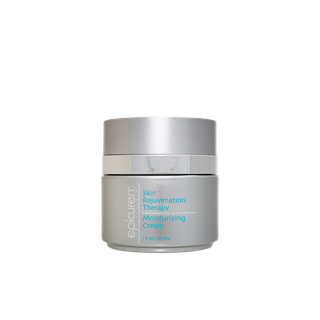
Epicuren Skin Rejuvenation Therapy Moisturizing Cream
Works for
2 of 2 advertised claims delivered
MoisturizingSh-oligopeptide-1, Oenothera biennis oil + 16 moreStrong evidence
“Skin Rejuvenation Therapy Moisturizing Cream”
This product can help soften the skin and reduce its moisture loss with emollients and occlusives: caprylic/capric triglyceride, carthamus tinctorius seed oil.
Keep in mind that this product does not contain effective ingredients to attract water to the upper layer of the skin. This is why an additional product with humectants like glycerin or hyaluronic acid can be helpful (apply it before this product for the best results).
The following ingredients in this product are especially good for supporting the skin barrier and helping with the hydration level: sh-oligopeptide-1
Anti-agingSh-oligopeptide-1, Ascorbyl palmitate + 2 moreModerate evidence
“This luxurious blend, hydrates the skin, while Epicuren ® ’s Metadermabolic ® Protein Enzyme Complex and Epidermal Growth Factor work to address the appearance of aging.”
This product contains sh-oligopeptide-1. This ingredient might be able to help reduce and prevent fine lines and wrinkles, improve skin elasticity and firmness, but there is not enough evidence that it actually works.
Can it cause trouble?
Irritancy9 strong irritants: Citrus grandis seed extract, Rosa damascena flower oil + 7 more — patch-test recommendedHigh risk
Comedogenic3 ingredients rated 2 or more on the 0–5 pore-clogging scale3 flagged

User reviews
Be the first — your take helps the next person decide.
Ingredients
Filter by role to see what each ingredient is doing.
Water~45–55%
Carthamus tinctorius seed oil~5.7–7%
- Irritation risk
- Low
An emollient that helps soften the skin and might help calm down inflammation
More about Carthamus tinctorius seed oilCaprylic/capric triglyceride~4.7–5.7%
- Irritation risk
- Medium
A good mix of fatty acids that forms a protective layer on the skin. Improves the shelf life of products. Derived from coconut and glycerin
More about Caprylic/capric triglycerideCetearyl alcohol~3–3.7%
- Irritation risk
- Low
- Comedogenicity
- 2/5
A non-drying alcohol. Works as an emollient. Helps water and oil mix together and creates a nice product texture
More about Cetearyl alcoholTocopheryl acetate~2.2–2.7%
- Irritation risk
- Medium
A more stable but less bio-available form of vitamin E compared to Tocopherol. Might help moisturize and protect the skin from free radicals, but mostly used in low concentrations to stabilize other ingredients.
More about Tocopheryl acetateCollagen amino acids~1.9–2.3%
- Irritation risk
- Low
Help attract water to the upper layer of the skin, soften it and support the skin barrier function
More about Collagen amino acidsElastin amino acids~1.6–2%
- Irritation risk
- Low
Aloe barbadensis leaf extract~1.4–1.7%
- Irritation risk
- Medium
Traditionally used to treat sunburns, dermatitis and inflammation, but evidence for its effectiveness is lacking. The extract can contain humectants that help attract water into the skin
More about Aloe barbadensis leaf extractSesamum indicum seed oil~1.1–1.3%
- Irritation risk
- Low
A good moisturizing plant oil. Due to the high linoleic acid content, it helps soften the upper layer of the skin, reduce water loss and support skin barrier function
More about Sesamum indicum seed oilEthylhexyl palmitate~0.95–1.15%
- Irritation risk
- Low
- Comedogenicity
- 3/5
An emollient that helps soften the skin and create a nice product texture
More about Ethylhexyl palmitateCitrus grandis seed extract~0.55–0.85%
- Irritation risk
- High
Chamomilla recutita extract~0.5–0.75%
- Irritation risk
- High
Plant extract that can have healing and anti-inflammatory properties. It is a potential allergen and can be irritating
More about Chamomilla recutita extractArctostaphylos uva ursi leaf extract~0.45–0.65%
- Irritation risk
- Low
Biotin~0.35–0.6%
- Irritation risk
- Low
Might have some moisturising properties. Is not effective when applied topically beyond some moisturizing effect
More about BiotinNiacin~0.3–0.6%
- Irritation risk
- High
A form of vitamin B3. It is similar in action to niacinamide, but is more likely to cause red flashes in skin as the side effect
More about NiacinRiboflavin~0.3–0.55%
- Irritation risk
- Low
Sh-oligopeptide-1~0.3–0.55%
- Irritation risk
- Low
A type of peptide. Peptides are excellent moisturizers and might be able support collagen production reducing fine lines and wrinkles
More about Sh-oligopeptide-1Rosa damascena flower oil~0.25–0.5%
- Irritation risk
- High
Used as a fragrance. Can be irritating
More about Rosa damascena flower oilVetiveria zizanoides root oil~0.2–0.4%
- Irritation risk
- Low
Citrus aurantium amara flower oil~0.2–0.4%
- Irritation risk
- High
Used as a fragrance. Can be irritating
More about Citrus aurantium amara flower oilCitrus aurantium dulcis oil~0.2–0.4%
- Irritation risk
- High
Used as a fragrance. It can be irritating and cause photosensitivity
More about Citrus aurantium dulcis oilRose extract~0.2–0.35%
Jasminum officinale oil~0.1–0.2%
- Irritation risk
- Low
Lavandula angustifolia oil~0.15–0.3%
- Irritation risk
- High
An essential oil. Potential allergen and can be irritating. It has some anti-bacterial properties
More about Lavandula angustifolia oilSimmondsia chinensis seed oil~0.25–0.45%
- Irritation risk
- Medium
Softens the upper layer of skin and helps restore the healthy skin barrier. Has shown to help calm down inflammation in skin. It is a stable oil, meaning that it retains its properties even when exposed to air.
More about Simmondsia chinensis seed oilCucurbita pepo seed oil~0.2–0.4%
- Irritation risk
- Low
Helps soften the upper layer of the skin
More about Cucurbita pepo seed oilEucalyptus globulus leaf oil~0.15–0.3%
- Irritation risk
- High
An essential oil that can be very irritating. Has some anti-bacterial properties
More about Eucalyptus globulus leaf oilHydroxyethyl acrylate/sodium acryloyldimethyl taurate copolymer~0.2–0.35%
- Irritation risk
- Medium
A gelling agent that thickens the product consistency and leaves the skin with a velvety finish
More about Hydroxyethyl acrylate/sodium acryloyldimethyl taurate copolymerAllantoin~0.15–0.3%
- Irritation risk
- Low
Helps calm down inflammation in skin and can help reduce itching. Helps to repair the skin barrier and keep skin hydrated
More about AllantoinAscorbyl palmitate~0.2–0.35%
- Irritation risk
- Medium
Being a lipid soluble form of vitamin C, it is more stable and can penetrate the skin better than L-Ascorbic acid. It is effective in protecting the skin from free radicals, as well as evening the skin tone, but is less effective in stimulating collagen production compared to L-Ascorbic acid.
More about Ascorbyl palmitateCeteareth-20~0.3–0.55%
- Irritation risk
- Medium
- Comedogenicity
- 2/5
Helps oil and water mix together. Has some emollient properties
More about Ceteareth-20Sorbitan stearate~0.2–0.4%
Retinyl palmitate~0.2–0.35%
- Irritation risk
- High
Three steps removed from the active form of vitamin A - retinoic acid. To have an effect in the skin, it first needs to be converted twice to become the retinoic acid. This means it is less potent than retinol, but could also be less irritating. Once converted to the retinoic acid in the skin, it helps against all signs of aging, improves skin cell turnover and helps fight blemishes and clogged pores. However, in many cosmetic formulations, it is used in a concentration that is too low to have the full effect
More about Retinyl palmitatePrunus armeniaca kernel oil~0.2–0.4%
- Irritation risk
- Medium
An emollient that helps soften the skin
More about Prunus armeniaca kernel oilDaucus carota sativa seed oil~0.25–0.4%
- Irritation risk
- Low
A plant oil that might help neutralize free radicals and have an anti-bacterial effect
More about Daucus carota sativa seed oilOenothera biennis oil~0.2–0.4%
- Irritation risk
- Medium
Helps soften the upper layer of the skin and can support skin barrier function
More about Oenothera biennis oilSantalum album oil~0.15–0.3%
Citrus aurantium dulcis peel oil~0.15–0.25%
- Irritation risk
- High
An essentil oil from orange peel. Potential allergen and can be irritating
More about Citrus aurantium dulcis peel oilPanthenol~0.1–0.2%
- Irritation risk
- Low
Helps attract water to the upper layer of the skin and can help improve skin barrier function
More about PanthenolLecithin~0.15–0.25%
- Irritation risk
- Low
Used mostly for creating emulsions - helping oil and water mix together. Helps soften the upper layer of the skin
More about LecithinPropanediol~0.15–0.25%
- Irritation risk
- Low
Acts as a solvent for other ingredients. Speeds up the absorption of other ingredients into the skin
More about PropanediolPhenoxyethanol~0.15–0.3%
- Irritation risk
- Low
A preservative. It helps prevent bacterial growth in cosmetic products
More about PhenoxyethanolEthylhexylglycerin~0.1–0.2%
Ingredient list view
Water, Carthamus tinctorius seed oil, Caprylic/capric triglyceride, Cetearyl alcohol, Tocopheryl acetate, Unknown, Collagen amino acids, Unknown, Elastin amino acids, Aloe barbadensis leaf extract, Sesamum indicum seed oil, Ethylhexyl palmitate, Citrus grandis seed extract, Chamomilla recutita extract, Arctostaphylos uva ursi leaf extract, Biotin, Niacin, Riboflavin, Sh-oligopeptide-1, Rosa damascena flower oil, Vetiveria zizanoides root oil, Citrus aurantium amara flower oil, Citrus aurantium dulcis oil, Rose extract, Jasminum officinale oil, Lavandula angustifolia oil, Simmondsia chinensis seed oil, Cucurbita pepo seed oil, Eucalyptus globulus leaf oil, Hydroxyethyl acrylate/sodium acryloyldimethyl taurate copolymer, Allantoin, Ascorbyl palmitate, Ceteareth-20, Sorbitan stearate, Retinyl palmitate, Prunus armeniaca kernel oil, Daucus carota sativa seed oil, Oenothera biennis oil, Santalum album oil, Citrus aurantium dulcis peel oil, Panthenol, Lecithin, Propanediol, Phenoxyethanol, Ethylhexylglycerin
Compare prices
Retailers ranked by price — lowest first.

Worth comparing, line by line.
Match % combines shared ingredients, the first five ingredients, shared actives and hero ingredients, irritancy (lower counts in the alternative's favour), texture and body area. Only products in the same routine step are compared.
| EpicurenSkin Rejuvenation Therapy Moisturizing CreamYOUR PRODUCT | TOSOWOONGCica Snail Cream | Saturday SkinMulti Peptide Repair Treatment Cream | OrjenaResponse synergy barrier cream | |
|---|---|---|---|---|
| Match | — | 56% | 56% | 54% |
| Price | $80.00 | $16.40−$63.60 | $24.90−$55.10 | $25.00−$55.00 |
| Shared key ingredients | — | 4 of 13 | 3 of 13 | 3 of 13 |
| Key difference | — | Copper Tripeptide-1 | Sh-Polypeptide-45 | Niacinamide |
| Irritancy | High | Medium | Medium | Low |
| Drying alcohol | — | — | — | — |
| View product | Shop | Shop | Shop |

Product summary
"Epicuren - Skin Rejuvenation Therapy Moisturizing Cream" is a well-rounded moisturizing product. This moisturizer uses a good combo of humectants and emollients. These both types of ingredients are essentials for improving the skin hydration and keeping the skin barrier healthy. Aloe barbadensis leaf extract in this product (humectants) attract water molecules to the upper layer of the skin (the water comes from the outside air or from the deeper layers of the skin if the air is dry). Carthamus tinctorius seed oil, cucurbita pepo seed oil, oenothera biennis oil, sesamum indicum seed oil and caprylic/capric triglyceride in this product help decrease the water evoporation from the skin, so that it stays hydrated for longer. These ingredients also soften the skin and take away the feeling of tightness and dryness.
Ingredient callouts
- this moisturizer includes a form of retinoids (vitamin A) - retinyl palmitate 0.20% - 0.35%, but this type of vitamin A is not very effective. It could in theory help with fine lines and wrinkles, but the effect is most likely minimal.
- This moistruizer also contains peptides (sh-oligopeptide-1 0.30% - 0.55%). Peptides is a very big group of ingredients. They all consist of a different combination of amino-acids. Our skin produces peptides naturally. Some of them work as natural anti-biotics, promote wound-healing and production of collagen. The scientists are still studying how effective the topical application of peptides is, but it is very likely that peptides in skincare are helpful. They might be able to support skin barrier restoration and even have an anti-aging benefit. At the very least, they certainly help attract water to the skin and support the hydration in this way.
Irritation risk
This moisturizer contains a bunch of common irritants, including ingredients that do not provide any known benefit for the skin. It might not be the best choice if your skin is sensitive. We assess the overall irritancy of this moisturizer to be high. For a detailed overview of all potential irritants: click here
You can see the detailed formula review with the breakdown of all actives in the product and the full ingredient list with estimated concentrations in the tables below.
Price
The product retails for 80.00$ in the United States, for 130.72A$ in Australia and for 234.80£ in the United Kingdom.
For a detailed price comparison: click here.
Sources cited in this review
Every concentration estimate and effectiveness label is anchored to one of these 12 studies and safety reviews.
- 1
- 2Triglyceride composition of Sesamum indicum seed oilonlinelibrary.wiley.com
- 3
- 4
- 5Biological Activities and Safety of Citrus spp. Essential Oilsncbi.nlm.nih.gov
- 6

Affiliate links · As an Amazon Associate, WIMJ earns from qualifying purchases.