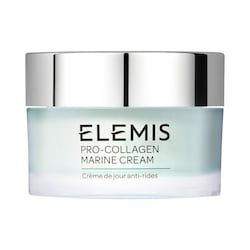
ELEMIS Mini Pro-Collagen Anti Aging Marine Cream

ELEMIS Mini Pro-Collagen Anti Aging Marine Cream

Efficacy100/100IrritancyHigh
Edit

Works for

2 of 2 advertised claims delivered

Anti-aging
Lactobionic acid, Copper gluconate + 2 more
Strong evidence
What the product description says
“What it is:  An award-winning moisturizer that’s clinically shown to deliver rapid hydration and significantly reduce the look of fine lines and wrinkles in only two weeks.”
Source: Sephora CA

This product can help reduce and prevent fine lines and wrinkles, improve skin elasticity and firmness because it contains lactobionic acid.

Keep in mind that it typically takes at least 6 weeks to notice any results because the changes that are needed to improve fine lines and elasticity happen in the deeper layers of the skin. No topical anti-aging product can “erase” wrinkles or fully reverse signs of aging.

Lactobionic acidKey activeEffect: HighA polyhydroxy acid (PHA) that helps shed dead cells from the surface of the skin revealing a smoother, more even skin. PHAs tend to be gentler on the skin compared to AHAs (for example, glycolic acid). It also has hydrating properties and helps attract water to the upper layer of the skin. It can help calm down inflammation in skin and support restoration of the barrier function. It has an anti-oxidant effect as well. It can help reduce fine line, wrinkles and improve skin elasticity~0.5–1.15%
Copper gluconateEffect: Low, below effective doseTypically used to stabilize the product formulations. It is a salt of polyhydroxy acid (PHA) and in larger concentrations, can help shed the dead cells from the skin surface revealing smoother skin. It can help attract water to the upper layer of the skin. Might to be helpful against acne and clogged pores. Could be helpful in neutralizing free radicals, but solid research is missing~0.01–0.1%
TocopherolEffect: Low, below effective dosePure form of vitamin E. Can help moisturise and protect the skin from free radicals. Often used to help stabilise other ingredients or the formula itself~0.35–0.85%
Zinc gluconateEffect: Low, below effective doseTypically used to stabilize the product formulations. It is a salt of a polyhydroxy acid (PHA) and in larger concentrations, can help shed the dead cells from the skin surface revealing smoother skin. It can help attract water to the upper layer of the skin. Might to be helpful against acne and clogged pores. Could be helpful in neutralizing free radicals, but solid research is missing. Due to the zinc content, might help calm down inflammation in skin~0.1–0.5%
Moisturizing
Lactobionic acid, Sodium acetylated hyaluronate + 10 more
Strong evidence
What the product description says
“What it is:  An award-winning moisturizer that’s clinically shown to deliver rapid hydration and significantly reduce the look of fine lines and wrinkles in only two weeks.”
Source: Sephora CA

This product can help improve hydration of the skin with the two types of ingredients.

The first type is called “humectants”:
these ingredients help attract water. When humectants are on the surface of the skin, they “pull in” the moisture from the outside environment, or from within deeper layers of the skin. The following ingredients in this product do the job: glycerin, sodium acetylated hyaluronate.

This product also contains ingredients called “occlusives”. They help reduce the speed with which our skin loses moisture to the outside environment. These ingredients also help soften the upper layer of the skin, so it feels less tight and nicer to the touch. The following ingredients in this product do the job: helianthus annuus seed oil.

The following ingredients in this product are especially good for supporting the skin barrier and helping with the hydration level: lactobionic acid

Sodium acetylated hyaluronateKey active· HumectantEffect: HighA type of hyaluronic acid that works as an excellent moisturizer by attracting water into the upper layer of the skin. Is typically feels less sticky on the skin compared to the usual hyaluronic acid~0.35–0.75%
GlycerinKey active· HumectantEffect: HighOne of the best moisturizing ingredients. Naturally present in skin. It attracts water to the upper layer of the skin working as a humectant~4.4–6.6%
Helianthus annuus seed oilKey active· Emollient, OcclusiveEffect: HighA great emollient due to its high linoleic acid content. One of the most effective plant oils in helping skin hydration and repairing skin barrier function~0.35–0.8%
Lactobionic acidHeroEffect: HighA polyhydroxy acid (PHA) that helps shed dead cells from the surface of the skin revealing a smoother, more even skin. PHAs tend to be gentler on the skin compared to AHAs (for example, glycolic acid). It also has hydrating properties and helps attract water to the upper layer of the skin. It can help calm down inflammation in skin and support restoration of the barrier function. It has an anti-oxidant effect as well. It can help reduce fine line, wrinkles and improve skin elasticity~0.5–1.15%
Collagen amino acidsKey activeEffect: HighHelp attract water to the upper layer of the skin, soften it and support the skin barrier function~0.1–0.45%
Magnesium aspartateKey activeEffect: MediumMight be helpful in restoring skin barrier function and calm down inflammation in skin~0.15–0.5%
Chlorella vulgaris extractKey activeEffect: MediumA plant extract that can help to attract water to the upper layer of the skin and might have some anti-oxidant and anti-inflammatory properties~0.1–0.45%
Propylene glycol· HumectantEffect: LowHelps oil and water mix together and can enhance the penetration of other ingredients into the skin. It can be irritating~0.2–0.8%
Zinc gluconateUnder-dosedEffect: HighTypically used to stabilize the product formulations. It is a salt of a polyhydroxy acid (PHA) and in larger concentrations, can help shed the dead cells from the skin surface revealing smoother skin. It can help attract water to the upper layer of the skin. Might to be helpful against acne and clogged pores. Could be helpful in neutralizing free radicals, but solid research is missing. Due to the zinc content, might help calm down inflammation in skin~0.1–0.5%
Copper gluconateUnder-dosedEffect: HighTypically used to stabilize the product formulations. It is a salt of polyhydroxy acid (PHA) and in larger concentrations, can help shed the dead cells from the skin surface revealing smoother skin. It can help attract water to the upper layer of the skin. Might to be helpful against acne and clogged pores. Could be helpful in neutralizing free radicals, but solid research is missing~0.01–0.1%
Padina pavonica thallus extractEffect: Low, below effective doseMight help to soften the upper layer of the skin. Is claimed to have anti-oxidant properties, but evidence in missing~0.15–0.65%
TocopherolEffect: Low, below effective dosePure form of vitamin E. Can help moisturise and protect the skin from free radicals. Often used to help stabilise other ingredients or the formula itself~0.35–0.85%
Anti-oxidation
Not advertised by the brand · Lactobionic acid, Chlorella vulgaris extract + 5 more
Strong evidence

This product contains antioxidants (lactobionic acid) that can help neutralize free radicals in skin. By doing so, they can lessen the damage the skin gets from the UV light (sun).

Lactobionic acidKey activeEffect: HighA polyhydroxy acid (PHA) that helps shed dead cells from the surface of the skin revealing a smoother, more even skin. PHAs tend to be gentler on the skin compared to AHAs (for example, glycolic acid). It also has hydrating properties and helps attract water to the upper layer of the skin. It can help calm down inflammation in skin and support restoration of the barrier function. It has an anti-oxidant effect as well. It can help reduce fine line, wrinkles and improve skin elasticity~0.5–1.15%
Chlorella vulgaris extractEffect: LowA plant extract that can help to attract water to the upper layer of the skin and might have some anti-oxidant and anti-inflammatory properties~0.1–0.45%
Acacia decurrens flower extractEffect: LowA plant extract that might have some anti-oxidant benefits but research on effectiveness in skin is lacking~0.1–0.45%
TocopherolUnder-dosedEffect: HighPure form of vitamin E. Can help moisturise and protect the skin from free radicals. Often used to help stabilise other ingredients or the formula itself~0.35–0.85%
Zinc gluconateEffect: Low, below effective doseTypically used to stabilize the product formulations. It is a salt of a polyhydroxy acid (PHA) and in larger concentrations, can help shed the dead cells from the skin surface revealing smoother skin. It can help attract water to the upper layer of the skin. Might to be helpful against acne and clogged pores. Could be helpful in neutralizing free radicals, but solid research is missing. Due to the zinc content, might help calm down inflammation in skin~0.1–0.5%
Copper gluconateEffect: Low, below effective doseTypically used to stabilize the product formulations. It is a salt of polyhydroxy acid (PHA) and in larger concentrations, can help shed the dead cells from the skin surface revealing smoother skin. It can help attract water to the upper layer of the skin. Might to be helpful against acne and clogged pores. Could be helpful in neutralizing free radicals, but solid research is missing~0.01–0.1%
Padina pavonica thallus extractEffect: Low, below effective doseMight help to soften the upper layer of the skin. Is claimed to have anti-oxidant properties, but evidence in missing~0.15–0.65%
Exfoliation
Not advertised by the brand · Lactobionic acid, Zinc gluconate + 1 more
Strong evidence

This product can help exfoliate the skin. In other words, it helps break down the bonds between dead cells on the surface of the skin and speed up the skin turnover. Skin often appears softer and brighter after exfoliation, but overdoing it can result in disrupted skin barrier. The following ingredient is doing the exfoliating job in this product: lactobionic acid.

Lactobionic acidKey activeEffect: HighA polyhydroxy acid (PHA) that helps shed dead cells from the surface of the skin revealing a smoother, more even skin. PHAs tend to be gentler on the skin compared to AHAs (for example, glycolic acid). It also has hydrating properties and helps attract water to the upper layer of the skin. It can help calm down inflammation in skin and support restoration of the barrier function. It has an anti-oxidant effect as well. It can help reduce fine line, wrinkles and improve skin elasticity~0.5–1.15%
Zinc gluconateEffect: Low, below effective doseTypically used to stabilize the product formulations. It is a salt of a polyhydroxy acid (PHA) and in larger concentrations, can help shed the dead cells from the skin surface revealing smoother skin. It can help attract water to the upper layer of the skin. Might to be helpful against acne and clogged pores. Could be helpful in neutralizing free radicals, but solid research is missing. Due to the zinc content, might help calm down inflammation in skin~0.1–0.5%
Copper gluconateEffect: Low, below effective doseTypically used to stabilize the product formulations. It is a salt of polyhydroxy acid (PHA) and in larger concentrations, can help shed the dead cells from the skin surface revealing smoother skin. It can help attract water to the upper layer of the skin. Might to be helpful against acne and clogged pores. Could be helpful in neutralizing free radicals, but solid research is missing~0.01–0.1%
Evens skin tone
Not advertised by the brand · Lactobionic acid, Copper gluconate + 1 more
Strong evidence

This product can help reduce hypepigmentation and even out the skin tone because it contains the following effective ingredients: lactobionic acid

Keep in mind that you would need to apply any topical skincare targetted at hypigmentation consistently for a couple of months to get a result. No topical skincare product can help get rid of hyperpigmentation (including post-acne marks and age spots) instantly.

Lactobionic acidKey activeEffect: HighA polyhydroxy acid (PHA) that helps shed dead cells from the surface of the skin revealing a smoother, more even skin. PHAs tend to be gentler on the skin compared to AHAs (for example, glycolic acid). It also has hydrating properties and helps attract water to the upper layer of the skin. It can help calm down inflammation in skin and support restoration of the barrier function. It has an anti-oxidant effect as well. It can help reduce fine line, wrinkles and improve skin elasticity~0.5–1.15%
Copper gluconateEffect: Low, below effective doseTypically used to stabilize the product formulations. It is a salt of polyhydroxy acid (PHA) and in larger concentrations, can help shed the dead cells from the skin surface revealing smoother skin. It can help attract water to the upper layer of the skin. Might to be helpful against acne and clogged pores. Could be helpful in neutralizing free radicals, but solid research is missing~0.01–0.1%
Zinc gluconateEffect: Low, below effective doseTypically used to stabilize the product formulations. It is a salt of a polyhydroxy acid (PHA) and in larger concentrations, can help shed the dead cells from the skin surface revealing smoother skin. It can help attract water to the upper layer of the skin. Might to be helpful against acne and clogged pores. Could be helpful in neutralizing free radicals, but solid research is missing. Due to the zinc content, might help calm down inflammation in skin~0.1–0.5%

Can it cause trouble?

Irritancy
6 strong irritants: Parfum, Limonene + 4 more — patch-test recommended
High risk
We flagged 20 ingredients with irritancy potential. Severity depends on your sensitivity threshold; the table lists the worst offenders first.
IngredientFunctionIrritationEst. amount
ParfumAn aromatic blend of unspecified and possibly irritating ingredientsHigh~0.8–1.2%est.
Propylene glycolHelps oil and water mix together and can enhance the penetration of other ingredients into the skin. It can be irritatingHigh~0.2–0.8%est.
LimoneneA common frangrance that can easily irritate skin, especially if exposed to air, light or heatHigh~0.15–0.5%est.
Acacia decurrens flower extractA plant extract that might have some anti-oxidant benefits but research on effectiveness in skin is lackingHigh~0.1–0.45%est.
Rosa centifolia flower extractContains essential oil. Can be irritatingHigh~0.1–0.4%est.
LinaloolA fragrance. Can be irritatingHigh~0.1–0.35%est.
CitronellolA fragrance. Can be irritatingHigh~0.05–0.2%est.
GeraniolA fragrance. Can be irritatingHigh~0.05–0.15%est.
Hydroxyethyl acrylate/sodium acryloyldimethyl taurate copolymerA gelling agent that thickens the product consistency and leaves the skin with a velvety finishMedium~2.7–4%est.
Peg-40 hydrogenated castor oilHelps oil and water mix togetherMedium~1.6–2.4%est.
Potassium sorbateA preservativeMedium~0.3–0.6%est.
Disodium edtaStabilizes the product formulationMedium~0.5–1%est.
Lactobionic acidA polyhydroxy acid (PHA) that helps shed dead cells from the surface of the skin revealing a smoother, more even skin. PHAs tend to be gentler on the skin compared to AHAs (for example, glycolic acid). It also has hydrating properties and helps attract water to the upper layer of the skin. It can help calm down inflammation in skin and support restoration of the barrier function. It has an anti-oxidant effect as well. It can help reduce fine line, wrinkles and improve skin elasticityMedium~0.5–1.15%est.
Polysorbate 60Helps oil and water mix togetherMedium~0.3–0.75%est.
Citric acidCan work as an exfoliant but is typically used to adjust the product pHMedium~0.15–0.65%est.
T-butyl alcoholUsed to dissolve other ingredients and to improve smell of products. It could be irritatingMedium~0.15–0.55%est.
Zinc gluconateTypically used to stabilize the product formulations. It is a salt of a polyhydroxy acid (PHA) and in larger concentrations, can help shed the dead cells from the skin surface revealing smoother skin. It can help attract water to the upper layer of the skin. Might to be helpful against acne and clogged pores. Could be helpful in neutralizing free radicals, but solid research is missing. Due to the zinc content, might help calm down inflammation in skinMedium~0.1–0.5%est.
Chlorella vulgaris extractA plant extract that can help to attract water to the upper layer of the skin and might have some anti-oxidant and anti-inflammatory propertiesMedium~0.1–0.45%est.
Leuconostoc/radish root ferment filtrateA preservative that comes from radishes fermented by a bacteria. New research suggests that the preservation properties in the ingredient come from an ammonium salt that is not present naturally in radish root but used in its cultivation. Is problematic because the exact amount of the preservative agents is difficult to determineMedium~0.05–0.3%est.
Copper gluconateTypically used to stabilize the product formulations. It is a salt of polyhydroxy acid (PHA) and in larger concentrations, can help shed the dead cells from the skin surface revealing smoother skin. It can help attract water to the upper layer of the skin. Might to be helpful against acne and clogged pores. Could be helpful in neutralizing free radicals, but solid research is missingMedium~0.01–0.1%est.
Comedogenic
2 ingredients rated 2 or more on the 0–5 pore-clogging scale
2 flagged
These ingredients have a comedogenic rating of 2 or more on a 0–5 scale; the table shows each one's rating. In leave-on products they can clog pores in acne-prone skin.
IngredientFunctionRatingEst. amount
Padina pavonica thallus extractMight help to soften the upper layer of the skin. Is claimed to have anti-oxidant properties, but evidence in missing3/5~0.15–0.65%est.
Chlorella vulgaris extractA plant extract that can help to attract water to the upper layer of the skin and might have some anti-oxidant and anti-inflammatory properties3/5~0.1–0.45%est.
Edit

User reviews

Would you recommend?
No community reviews yet.

Be the first — your take helps the next person decide.

Write a review · ~30s

Ingredients

Filter by role to see what each ingredient is doing.

Water~40–60%
Formula
Irritation risk
Low

Plain old water

More about Water
Glycerin~4.4–6.6%
Key active
Irritation risk
Low
Works for
Moisturizing

One of the best moisturizing ingredients. Naturally present in skin. It attracts water to the upper layer of the skin working as a humectant

More about Glycerin
Polyacrylate crosspolymer-6~3.6–5.4%
Formula
Hydroxyethyl acrylate/sodium acryloyldimethyl taurate copolymer~2.7–4%
Irritant · medium
Irritation risk
Medium

A gelling agent that thickens the product consistency and leaves the skin with a velvety finish

More about Hydroxyethyl acrylate/sodium acryloyldimethyl taurate copolymer
Sodium benzoate~0.25–0.5%
Formula
Irritation risk
Low

A preservative

More about Sodium benzoate
Peg-40 hydrogenated castor oil~1.6–2.4%
Irritant · medium
Irritation risk
Medium
Works for
Cleansing

Helps oil and water mix together

More about Peg-40 hydrogenated castor oil
Trideceth-9~1.4–2%
Formula
Irritation risk
Low
Works for
Cleansing
More about Trideceth-9
Potassium sorbate~0.3–0.6%
Irritant · medium
Irritation risk
Medium

A preservative

More about Potassium sorbate
Disodium edta~0.5–1%
Irritant · medium
Irritation risk
Medium

Stabilizes the product formulation

More about Disodium edta
Parfum~0.8–1.2%
Irritant · high
Irritation risk
High

An aromatic blend of unspecified and possibly irritating ingredients

More about Parfum
Lactobionic acid~0.5–1.15%
Hero · MoisturizingIrritant · medium
Irritation risk
Medium
Works for
MoisturizingAnti-oxidationAnti-agingEvens skin toneExfoliationAnti-blemishAnti-inflammatory

A polyhydroxy acid (PHA) that helps shed dead cells from the surface of the skin revealing a smoother, more even skin. PHAs tend to be gentler on the skin compared to AHAs (for example, glycolic acid). It also has hydrating properties and helps attract water to the upper layer of the skin. It can help calm down inflammation in skin and support restoration of the barrier function. It has an anti-oxidant effect as well. It can help reduce fine line, wrinkles and improve skin elasticity

More about Lactobionic acid
Maris aqua~0.4–0.95%
Formula
Irritation risk
Low

Sea water. Helps dissolve other ingredients in a product

More about Maris aqua
Tocopherol~0.35–0.85%
Under-dosed
Irritation risk
Low
Works for
Anti-oxidationMoisturizingAnti-inflammatoryAnti-aging

Pure form of vitamin E. Can help moisturise and protect the skin from free radicals. Often used to help stabilise other ingredients or the formula itself

More about Tocopherol
Sodium acetylated hyaluronate~0.35–0.75%
Key active
Irritation risk
Low
Works for
Moisturizing

A type of hyaluronic acid that works as an excellent moisturizer by attracting water into the upper layer of the skin. Is typically feels less sticky on the skin compared to the usual hyaluronic acid

More about Sodium acetylated hyaluronate
Helianthus annuus seed oil~0.35–0.8%
Key active
Irritation risk
Low
Works for
Moisturizing

A great emollient due to its high linoleic acid content. One of the most effective plant oils in helping skin hydration and repairing skin barrier function

More about Helianthus annuus seed oil
Propylene glycol~0.2–0.8%
Irritant · high
Irritation risk
High
Works for
Moisturizing

Helps oil and water mix together and can enhance the penetration of other ingredients into the skin. It can be irritating

More about Propylene glycol
Polysorbate 60~0.3–0.75%
Irritant · medium
Irritation risk
Medium
Works for
Cleansing

Helps oil and water mix together

More about Polysorbate 60
Sorbitan isostearate~0.2–0.75%
Formula
Irritation risk
Low
Works for
Cleansing

Helps oil and water mix together

More about Sorbitan isostearate
Padina pavonica thallus extract~0.15–0.65%
Comedogenic 3/5
Irritation risk
Low
Comedogenicity
3/5
Works for
MoisturizingAnti-oxidation

Might help to soften the upper layer of the skin. Is claimed to have anti-oxidant properties, but evidence in missing

More about Padina pavonica thallus extract
Citric acid~0.15–0.65%
Irritant · medium
Irritation risk
Medium

Can work as an exfoliant but is typically used to adjust the product pH

More about Citric acid
T-butyl alcohol~0.15–0.55%
Irritant · medium
Irritation risk
Medium

Used to dissolve other ingredients and to improve smell of products. It could be irritating

More about T-butyl alcohol
Limonene~0.15–0.5%
Irritant · high
Irritation risk
High

A common frangrance that can easily irritate skin, especially if exposed to air, light or heat

More about Limonene
Zinc gluconate~0.1–0.5%
Under-dosedIrritant · medium
Irritation risk
Medium
Works for
MoisturizingEvens skin toneAnti-oxidationAnti-agingAnti-blemishAnti-inflammatoryExfoliation

Typically used to stabilize the product formulations. It is a salt of a polyhydroxy acid (PHA) and in larger concentrations, can help shed the dead cells from the skin surface revealing smoother skin. It can help attract water to the upper layer of the skin. Might to be helpful against acne and clogged pores. Could be helpful in neutralizing free radicals, but solid research is missing. Due to the zinc content, might help calm down inflammation in skin

More about Zinc gluconate
Magnesium aspartate~0.15–0.5%
Key active
Irritation risk
Low
Works for
MoisturizingAnti-inflammatory

Might be helpful in restoring skin barrier function and calm down inflammation in skin

More about Magnesium aspartate
Acacia decurrens flower extract~0.1–0.45%
Irritant · high
Irritation risk
High
Works for
Anti-oxidation

A plant extract that might have some anti-oxidant benefits but research on effectiveness in skin is lacking

More about Acacia decurrens flower extract
Chlorella vulgaris extract~0.1–0.45%
Key activeComedogenic 3/5Irritant · medium
Irritation risk
Medium
Comedogenicity
3/5
Works for
MoisturizingAnti-oxidationAnti-inflammatory

A plant extract that can help to attract water to the upper layer of the skin and might have some anti-oxidant and anti-inflammatory properties

More about Chlorella vulgaris extract
Collagen amino acids~0.1–0.45%
Key active
Irritation risk
Low
Works for
Moisturizing

Help attract water to the upper layer of the skin, soften it and support the skin barrier function

More about Collagen amino acids
Rosa centifolia flower extract~0.1–0.4%
Irritant · high
Irritation risk
High

Contains essential oil. Can be irritating

More about Rosa centifolia flower extract
Linalool~0.1–0.35%
Irritant · high
Irritation risk
High

A fragrance. Can be irritating

More about Linalool
Phenoxyethanol~0.05–0.3%
Formula
Irritation risk
Low

A preservative. It helps prevent bacterial growth in cosmetic products

More about Phenoxyethanol
Leuconostoc/radish root ferment filtrate~0.05–0.3%
Irritant · medium
Irritation risk
Medium

A preservative that comes from radishes fermented by a bacteria. New research suggests that the preservation properties in the ingredient come from an ammonium salt that is not present naturally in radish root but used in its cultivation. Is problematic because the exact amount of the preservative agents is difficult to determine

More about Leuconostoc/radish root ferment filtrate
Citronellol~0.05–0.2%
Irritant · high
Irritation risk
High

A fragrance. Can be irritating

More about Citronellol
Geraniol~0.05–0.15%
Irritant · high
Irritation risk
High

A fragrance. Can be irritating

More about Geraniol
Sodium hydroxide~0.05–0.15%
Formula
Irritation risk
Low

Used to adjust the product's pH

More about Sodium hydroxide
Copper gluconate~0.01–0.1%
Under-dosedIrritant · medium
Irritation risk
Medium
Works for
MoisturizingAnti-agingEvens skin toneAnti-blemishExfoliationAnti-oxidation

Typically used to stabilize the product formulations. It is a salt of polyhydroxy acid (PHA) and in larger concentrations, can help shed the dead cells from the skin surface revealing smoother skin. It can help attract water to the upper layer of the skin. Might to be helpful against acne and clogged pores. Could be helpful in neutralizing free radicals, but solid research is missing

More about Copper gluconate
Ingredient list view

Water, Glycerin, Polyacrylate crosspolymer-6, Hydroxyethyl acrylate/sodium acryloyldimethyl taurate copolymer, Sodium benzoate, Peg-40 hydrogenated castor oil, Trideceth-9, Potassium sorbate, Disodium edta, Parfum, Lactobionic acid, Maris aqua, Tocopherol, Sodium acetylated hyaluronate, Helianthus annuus seed oil, Propylene glycol, Polysorbate 60, Sorbitan isostearate, Padina pavonica thallus extract, Citric acid, T-butyl alcohol, Limonene, Zinc gluconate, Magnesium aspartate, Acacia decurrens flower extract, Chlorella vulgaris extract, Collagen amino acids, Rosa centifolia flower extract, Linalool, Phenoxyethanol, Leuconostoc/radish root ferment filtrate, Citronellol, Geraniol, Sodium hydroxide, Copper gluconate

Compare prices

Retailers ranked by price — lowest first.

Amazon USPrice as of 10/23/2026 21:14 GMT
$75.00
Buy

Affiliate links · prices updated regularly · As an Amazon Associate, WIMJ earns from qualifying purchases.

Worth comparing, line by line.

Match % combines shared ingredients, the first five ingredients, shared actives and hero ingredients, irritancy (lower counts in the alternative's favour), texture and body area. Only products in the same routine step are compared.

Side-by-side comparison of this product against its closest alternatives
ELEMISMini Pro-Collagen Anti Aging Marine CreamYOUR PRODUCTMEDIHEALBaobab Soothing Moisture CreamDr. David JackGood Night Retinoid Night CreamExuvianceDeep Hydration Treatment
Match—58%57%56%
Price$75.00—$136.36+$61.36—
Shared key ingredients—4 of 74 of 72 of 7
Key difference—Copper Tripeptide-1NiacinamideGluconolactone
Irritancy High Medium Medium Medium
Drying alcohol————
View product Shop Shop Shop
Cheaper alternatives? See how this stacks up against similar formulas.
We compare ingredient profiles across our catalog — pick the closest match for your budget.
Open dupe finder

Sources cited in this review

Every concentration estimate and effectiveness label is anchored to one of these 26 studies and safety reviews.

  1. 1
  2. 2
  3. 3
  4. 4
  5. 5
  6. 6
ELEMIS Mini Pro-Collagen Anti Aging Marine Cream
ELEMISMini Pro-Collagen Anti Aging Marine Cream

Affiliate links · As an Amazon Associate, WIMJ earns from qualifying purchases.

As an Amazon Associate, WIMJ earns from qualifying purchases.