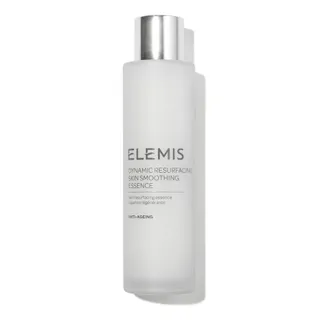
ELEMIS Dynamic Resurfacing Skin Smoothing Essence
Works for
ExfoliationMandelic acid, Papain + 1 moreWorks well
“Phytic, Lactic and Tartaric Acids gently resurface and help leave the complexion looking more even.”
This product can help exfoliate the skin. In other words, it helps break down the bonds between dead cells on the surface of the skin and speed up the skin turnover. Skin often appears softer and brighter after exfoliation, but overdoing it can result in disrupted skin barrier. The following ingredient is doing the exfoliating job in this product: mandelic acid.
Evens skin toneMandelic acid, Ellagic acid + 2 moreWorks well
“Powered by Tri-Enzyme technology to promote skin cell renewal, it helps to improve the appearance of skin tone and texture.”
This product can help reduce hypepigmentation and even out the skin tone because it contains the following effective ingredients: ellagic acid, mandelic acid
Keep in mind that you would need to apply any topical skincare targetted at hypigmentation consistently for a couple of months to get a result. No topical skincare product can help get rid of hyperpigmentation (including post-acne marks and age spots) instantly.
MoisturizingLactococcus ferment lysate, Glyceryl acrylate/acrylic acid copolymer + 9 moreWorks
“The lightweight essence hydrates and effectively preps the skin for your entire skincare routine.”
This product contains good ingredients to attract water to the upper layer of the skin. These ingredients are called "humectants": galactoarabinan, glycerin.
When humectants are on the surface of the skin, they “pull in” the moisture from the outside environment, or from within deeper layers of the skin. If the air is dry, humectants can speed up the moisture loss from the skin. This is why it is a good idea to use another product on top of this one to help "seal in" the moisture (look for ingredients like dimethicone, squalane, oils and butters).
Anti-agingLactococcus ferment lysate, Butyrospermum parkii butter + 1 moreNot delivered
“Effectively shedding dead skin cells and accelerating your skin's renewal processes in 14 days, expect pores, discolouration and fine lines to be less visible, and your radiance to be undeniable...”
This product does not contain ingredients that are able to reduce fine lines and wrinkles or help with skin elasticity, but it can improve the look of the skin temporarily through moisturization. Well-moisturized skin might also be able to repair the sun damage better.This ingredient - lactococcus ferment lysate - could be helpful for preventing or repairing signs of aging in theory, but there is no evidence that it actually works.
Can it cause trouble?
Irritancy10 strong irritants: Parfum, Menthyl lactate + 8 more — patch-test recommendedHigh risk
Comedogenic1 ingredient rated 2 or more on the 0–5 pore-clogging scale1 flagged

User reviews
Be the first — your take helps the next person decide.
Ingredients
Filter by role to see what each ingredient is doing.
Water~45–55%
Glycerin~4.9–6%
- Irritation risk
- Low
One of the best moisturizing ingredients. Naturally present in skin. It attracts water to the upper layer of the skin working as a humectant
More about GlycerinLactococcus ferment lysate~3.9–4.8%
- Irritation risk
- Low
Consists of remains of dead bacteria cells. Is likely helpful in attracting water to the upper layer of the skin. Might be helpful in reducing inflammation and neutralizing free radicals in skin
More about Lactococcus ferment lysateAmmonium acryloyldimethyltaurate/vp copolymer~3–3.6%
- Irritation risk
- Low
Increases thickness of a product. Texture enhancer for oil-in-water emulsions
More about Ammonium acryloyldimethyltaurate/vp copolymerPhenoxyethanol~0.5–1%
- Irritation risk
- Low
A preservative. It helps prevent bacterial growth in cosmetic products
More about PhenoxyethanolHydroxyacetophenone~1.8–2.2%
Hydroxypropyl starch phosphate~1.6–2%
- Irritation risk
- Medium
Helps oil and water mix together and used to stabilize product formulations
More about Hydroxypropyl starch phosphateSilica~1.6–2%
Parfum~1.1–1.3%
- Irritation risk
- High
An aromatic blend of unspecified and possibly irritating ingredients
More about ParfumBetula alba juice~0.75–1.15%
- Irritation risk
- Low
Glyceryl acrylate/acrylic acid copolymer~0.6–0.95%
- Irritation risk
- Medium
Helps attract water to the upper layer of the skin and provide a longer-lasting hydration. Can create a thicker product consistency
More about Glyceryl acrylate/acrylic acid copolymerYeast extract~0.5–0.75%
- Irritation risk
- Low
Helps attract water to the upper layer of the skin and might have some anti-oxidant and skin lightening properties. It can help calm down inflammation in skin
More about Yeast extractLactic acid~0.45–0.65%
- Irritation risk
- Medium
An exfoliating and moisturizing alpha-hydroxy acid (AHA). Typically causes less irritation than other AHAs, for example, glycolic acid. At high concentrations (about 15%), lactic acid can help reduce lines and wrinkles. Recent studies show that lactic acid can support the "good" bacteria living on skin's surface (healthy skin microbiome)
More about Lactic acidSodium benzoate~0.25–0.5%
Sodium chloride~0.45–0.65%
- Irritation risk
- Low
Used to stabilize mixtures of oil and water, and create thicker, gel-like product textures
More about Sodium chloride1,2-hexanediol~0.35–0.65%
Caprylyl glycol~0.4–0.6%
- Irritation risk
- Medium
Helps preserve products and creates a nice product texture
More about Caprylyl glycolTuber aestivum extract~0.3–0.6%
- Irritation risk
- Low
Sodium hydroxide~0.3–0.55%
Chlorphenesin~0.16–0.32%
Citric acid~0.25–0.45%
- Irritation risk
- Medium
Can work as an exfoliant but is typically used to adjust the product pH
More about Citric acidWater~0.25–0.45%
Mandelic acid~0.25–0.4%
- Irritation risk
- High
Helps shed the upper layer of dead cells from the surface of the skin revealing smoother, brighter skin. It can help to reduce hyperpigmentation. It has anti-bacterial properties, and might help to reduce blemishes, as well as fine lines and wrinkles. It is considered to be gentler than glycolic acid
More about Mandelic acidGlycerin~0.25–0.5%
- Irritation risk
- Low
One of the best moisturizing ingredients. Naturally present in skin. It attracts water to the upper layer of the skin working as a humectant
More about GlycerinPhytic acid~0.25–0.45%
- Irritation risk
- Medium
An alpha-hydroxy acid (AHA), but is mostly used to stabilize product formulations in cosmetics
More about Phytic acidBentonite~0.25–0.45%
Hydroxyethylcellulose~0.25–0.45%
- Irritation risk
- Low
Used to thicken product formulations and create gel-like textures
More about HydroxyethylcelluloseSodium hydroxide~0.2–0.4%
Menthyl lactate~0.25–0.4%
Propanediol~0.25–0.45%
- Irritation risk
- Low
Acts as a solvent for other ingredients. Speeds up the absorption of other ingredients into the skin
More about PropanediolSynthetic fluorphlogopite~0.25–0.45%
- Irritation risk
- Low
A mineral that is used as an optical filter (makes the skin looks nicer through light reflection) and to improve the texture of cosmetic products
More about Synthetic fluorphlogopitePhenoxyethanol~0.25–0.45%
- Irritation risk
- Low
A preservative. It helps prevent bacterial growth in cosmetic products
More about PhenoxyethanolHydroxyacetophenone~0.25–0.4%
Alcohol denat.~0.25–0.4%
- Irritation risk
- High
Produces temporary toning effect. Can help dissolve other ingredients or preserve products
More about Alcohol denat.Xanthan gum~0.25–0.45%
- Irritation risk
- Low
Used to create a thicker product consistency
More about Xanthan gumParfum~0.2–0.4%
- Irritation risk
- High
An aromatic blend of unspecified and possibly irritating ingredients
More about ParfumCitric acid~0.2–0.4%
- Irritation risk
- Medium
Can work as an exfoliant but is typically used to adjust the product pH
More about Citric acidDisodium edta~0.2–0.4%
Betula alba juice~0.2–0.4%
- Irritation risk
- Low
Vanillyl butyl ether~0.2–0.4%
- Irritation risk
- Low
Behenyl alcohol~0.3–0.5%
- Irritation risk
- Low
Non-drying alcohol that helps water and oil mix together. Also serves as an emollient
More about Behenyl alcoholButyrospermum parkii butter~0.25–0.5%
- Irritation risk
- Low
- Comedogenicity
- 3/5
A great moisturising ingredient that softens the skin and reduces water loss from its upper layer. It also can be helpful in protecting skin from free radicals
More about Butyrospermum parkii butterGalactoarabinan~0.25–0.45%
- Irritation risk
- Medium
Helps attract water to the upper layer of the skin
More about GalactoarabinanHexyl cinnamal~0.2–0.4%
Ellagic acid~0.2–0.4%
- Irritation risk
- Medium
Can help neutralize free radicals in skin. It can help prevent and treat hyperpigmentation and even out the skin tone
More about Ellagic acidPapain~0.2–0.4%
- Irritation risk
- High
An enzyme extracted from papaya fruit. Can have an exfoliating effect on the skin. Can be irritating
More about PapainHydrogenated castor oil~0.25–0.5%
- Irritation risk
- Medium
A plant oil that can help soften the skin. It might be helpful in calming down inflammation, but solid research is lacking. Is often used in lip products to create the needed product consistency
More about Hydrogenated castor oilBenzyl salicylate~0.2–0.35%
Stearyl alcohol~0.25–0.5%
- Irritation risk
- Low
An emollient that helps soften the skin
More about Stearyl alcoholTin oxide~0.3–0.6%
- Irritation risk
- Low
A colorant that can add a pearl-like appearance to the formulation
More about Tin oxideAlpha-isomethyl ionone~0.2–0.35%
- Irritation risk
- High
A fragrance. Potential allergen and can be irritating
More about Alpha-isomethyl iononeProtease~0.2–0.35%
- Irritation risk
- Low
Rhizobian gum~0.2–0.35%
- Irritation risk
- Medium
Can temporarily tighten the skin right after application of the product. The effect will be short-lived. Helps improve the product considtency
More about Rhizobian gumSodium hyaluronate~0.2–0.35%
- Irritation risk
- Low
One of the best moisturizing ingredients. Attracts water into the upper layer of the skin
More about Sodium hyaluronateChlorphenesin~0.15–0.25%
Coumarin~0.15–0.25%
Geraniol~0.1–0.2%
Limonene~0.1–0.15%
- Irritation risk
- High
A common frangrance that can easily irritate skin, especially if exposed to air, light or heat
More about LimoneneSubtilisin~0.1–0.25%
- Irritation risk
- Low
Tocopheryl acetate~0.1–0.25%
- Irritation risk
- Medium
A more stable but less bio-available form of vitamin E compared to Tocopherol. Might help moisturize and protect the skin from free radicals, but mostly used in low concentrations to stabilize other ingredients.
More about Tocopheryl acetateCitrus aurantium amara leaf/twig oil~0.05–0.1%
- Irritation risk
- High
Titanium dioxide~0.05–0.15%
- Irritation risk
- Low
Works as a UV filter when used in high concentrations. It is photostable and is effective mostly against the UVB light, with some protection in the UVA range. In small concentrations, used for its ability to improve the color of cosmetic products. Is usually well tolerated by the skin
More about Titanium dioxideIngredient list view
Water, Glycerin, Lactococcus ferment lysate, Ammonium acryloyldimethyltaurate/vp copolymer, Phenoxyethanol, Hydroxyacetophenone, Hydroxypropyl starch phosphate, Silica, Parfum, Betula alba juice, Glyceryl acrylate/acrylic acid copolymer, Yeast extract, Lactic acid, Sodium benzoate, Sodium chloride, 1,2-hexanediol, Caprylyl glycol, Tuber aestivum extract, Sodium hydroxide, Chlorphenesin, Citric acid, Water, Mandelic acid, Glycerin, Phytic acid, Bentonite, Hydroxyethylcellulose, Sodium hydroxide, Menthyl lactate, Propanediol, Synthetic fluorphlogopite, Phenoxyethanol, Hydroxyacetophenone, Alcohol denat., Xanthan gum, Parfum, Citric acid, Disodium edta, Betula alba juice, Vanillyl butyl ether, Behenyl alcohol, Butyrospermum parkii butter, Galactoarabinan, Hexyl cinnamal, Ellagic acid, Papain, Hydrogenated castor oil, Benzyl salicylate, Stearyl alcohol, Tin oxide, Alpha-isomethyl ionone, Protease, Rhizobian gum, Sodium hyaluronate, Chlorphenesin, Coumarin, Geraniol, Limonene, Subtilisin, Tocopheryl acetate, Citrus aurantium amara leaf/twig oil, Titanium dioxide
Compare prices
Retailers ranked by price — lowest first.

Worth comparing, line by line.
Match % combines shared ingredients, the first five ingredients, shared actives and hero ingredients, irritancy (lower counts in the alternative's favour), texture and body area. Only products in the same routine step are compared.
| ELEMISDynamic Resurfacing Skin Smoothing EssenceYOUR PRODUCT | Biologique RechercheLotion P50 PIGM 400 | ObagiEXFODERM FORTE | TulaSecret Solution Pro-Glycolic 10% Resurfacing Toner | |
|---|---|---|---|---|
| Match | — | 55% | 53% | 52% |
| Price | — | — | $101.87 | $16.00 |
| Shared key ingredients | — | 3 of 10 | 2 of 10 | 4 of 10 |
| Key difference | — | Niacinamide | Glycolic Acid | Glycolic Acid |
| Irritancy | High | Medium | Low | Low |
| Drying alcohol | Contains drying alcohol | Contains drying alcohol | — | — |
| View product | Shop | Shop | Shop |


More alternatives: Dermalogica liquid peelADVANCED CLINICALS Dark Spot Corrector
Product summary
"ELEMIS - Dynamic Resurfacing Skin Smoothing Essence" is effective for: Evens skin tone and Exfoliation
This product could be helpful for: Moisturizing, but its actives are not the most effective or are not well-studied.
Ingredient callouts
- This product contains acids (mandelic acid 0.25% - 0.40% and lactic acid 0.45% - 0.65%). Their concentration is low, and they will not have a strong exfoliating effect. Instead, they work to support the skin natural acid mantle and to attract water (as humectants). Lactic acid is particularly good in attracting water to the upper layer of the skin and improving the skin barrier.
- Humectants (sodium hyaluronate 0.20% - 0.35%, galactoarabinan 0.25% - 0.45%, glycerin 0.25% - 0.50%, glyceryl acrylate/acrylic acid copolymer 0.60% - 0.95% and glycerin 4.90% - 6.00%). These ingredients help attract water to the upper layer of the skin and improve the skin hydration.
Price
The product retails from 48.00£ up to 1296.00£ in the United Kingdom, for 90.00$ in the United States, for 92.46A$ in Australia and for 126.00CA$ in Canada.
For a detailed price comparison: click here.
Sources cited in this review
Every concentration estimate and effectiveness label is anchored to one of these 19 studies and safety reviews.
- 1
- 2
- 3
- 4Epidermal and dermal effects of topical lactic acidncbi.nlm.nih.gov
- 5Dual Effects of Alpha-Hydroxy Acids on the Skinpdfs.semanticscholar.org
- 6

Affiliate links · As an Amazon Associate, WIMJ earns from qualifying purchases.