Works for
1 of 1 advertised claim delivered
Moisturizing26 ingredients credited for this claimGood support
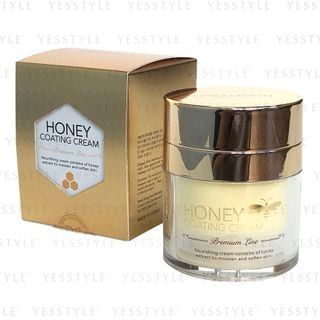
“Honey Coating Cream”
This product can help improve hydration of the skin with the two types of ingredients.
The first type is called “humectants”:
these ingredients help attract water.
When humectants are on the surface of the skin, they “pull in” the moisture from the outside environment, or from
within deeper layers of the skin. The following ingredients in this product do the job:
betaine, glycerin.
This product also contains ingredients called “occlusives”. They help reduce the speed with which our skin loses moisture to the outside environment. These ingredients also help soften the upper layer of the skin, so it feels less tight and nicer to the touch. The following ingredients in this product do the job: caprylic/capric triglyceride, helianthus annuus seed oil.
Can it cause trouble?
Irritancy1 strong irritant: ParfumMedium risk
Comedogenic2 ingredients rated 2 or more on the 0–5 pore-clogging scale2 flagged
User reviews
Be the first — your take helps the next person decide.
Ingredients
Filter by role to see what each ingredient is doing.
Honey extract~22–33%
- Irritation risk
- Medium
Helps attract water to the upper layer of the skin
More about Honey extractGlycerin~3.3–5%
- Irritation risk
- Low
One of the best moisturizing ingredients. Naturally present in skin. It attracts water to the upper layer of the skin working as a humectant
More about GlycerinMethylpropanediol~4.3–6.5%
Cyclopentasiloxane~3.5–5.3%
- Irritation risk
- Low
A silicone that helps improve the product texture and spreadability. Can absorb oil creating a short-term mattifying effect on the skin
More about Cyclopentasiloxane1,2-hexanediol~1.2–1.9%
Caprylic/capric triglyceride~2.2–3.2%
- Irritation risk
- Medium
A good mix of fatty acids that forms a protective layer on the skin. Improves the shelf life of products. Derived from coconut and glycerin
More about Caprylic/capric triglycerideCetearyl alcohol~1.6–2.3%
- Irritation risk
- Low
- Comedogenicity
- 2/5
A non-drying alcohol. Works as an emollient. Helps water and oil mix together and creates a nice product texture
More about Cetearyl alcoholCyclohexasiloxane~1.3–2%
- Irritation risk
- Low
A silicone that serves as an emollient. Helps create a nice non-greasy feels
More about CyclohexasiloxaneGlyceryl stearate~1.1–1.6%
- Irritation risk
- Low
An emollient that softens the skin and forms a protective layer on its surface. Helps water and oil mix together
More about Glyceryl stearatePolyglyceryl-3 methylglucose distearate~0.6–1.35%
- Irritation risk
- Medium
Helps water and oil mix together
More about Polyglyceryl-3 methylglucose distearateVinyl dimethicone~0.5–1.15%
- Irritation risk
- Low
A type of silicone that helps to create a nice product texture and soften the upper layer of the skin
More about Vinyl dimethiconeButyrospermum parkii butter~0.4–0.95%
- Irritation risk
- Low
- Comedogenicity
- 3/5
A great moisturising ingredient that softens the skin and reduces water loss from its upper layer. It also can be helpful in protecting skin from free radicals
More about Butyrospermum parkii butterButylene glycol~0.15–0.65%
- Irritation risk
- Low
Used to create a nice product texture and help delivery of other ingredients. Might be somewhat helpful in attracting water to the upper layer of the skin
More about Butylene glycolTriolein~0.15–0.6%
Water~0.15–0.55%
Glyceryl dioleate~0.2–0.7%
- Irritation risk
- Low
Sorbitan stearate~0.15–0.6%
Ammonium acryloyldimethyltaurate/vp copolymer~0.15–0.6%
- Irritation risk
- Low
Increases thickness of a product. Texture enhancer for oil-in-water emulsions
More about Ammonium acryloyldimethyltaurate/vp copolymerPropanediol~0.15–0.6%
- Irritation risk
- Low
Acts as a solvent for other ingredients. Speeds up the absorption of other ingredients into the skin
More about PropanediolBetaine~0.1–0.5%
- Irritation risk
- Low
Helps attract water to the upper layer of the skin and improves the product texture
More about BetaineOlea europaea fruit oil~0.15–0.55%
- Irritation risk
- Medium
An emollient that helps soften the skin but is not effective for restoring its barrier function. Might be helpful to calm down inflammation
More about Olea europaea fruit oilXanthan gum~0.1–0.45%
- Irritation risk
- Low
Used to create a thicker product consistency
More about Xanthan gumParfum~0.1–0.35%
- Irritation risk
- High
An aromatic blend of unspecified and possibly irritating ingredients
More about ParfumCanola oil~0.15–0.5%
- Irritation risk
- Medium
A plant oil that can help soften the upper layer of the skin
More about Canola oilDaucus carota sativa root extract~0.1–0.35%
- Irritation risk
- Low
Carrot extract. Might have anti-oxidant properties and be used to add orange color
More about Daucus carota sativa root extractEthylhexylglycerin~0.1–0.4%
Sodium hyaluronate crosspolymer~0.1–0.35%
- Irritation risk
- Medium
Attracts water into the upper layer of the skin
More about Sodium hyaluronate crosspolymerAllantoin~0.1–0.3%
- Irritation risk
- Low
Helps calm down inflammation in skin and can help reduce itching. Helps to repair the skin barrier and keep skin hydrated
More about AllantoinDisodium edta~0.1–0.35%
Portulaca oleracea extract~0.1–0.35%
- Irritation risk
- Medium
A plant extract that has some anti-oxidant activity, but solid research is lacking. Can help attract water to the upper layer of the skin
More about Portulaca oleracea extractDaucus carota sativa seed oil~0.15–0.5%
- Irritation risk
- Low
A plant oil that might help neutralize free radicals and have an anti-bacterial effect
More about Daucus carota sativa seed oilHydrolyzed glycosaminoglycans~0.1–0.4%
- Irritation risk
- Low
Long sugars that help attract water to the upper layer of the skin
More about Hydrolyzed glycosaminoglycansSodium hyaluronate~0.1–0.35%
- Irritation risk
- Low
One of the best moisturizing ingredients. Attracts water into the upper layer of the skin
More about Sodium hyaluronateLactobacillus ferment~0.1–0.35%
- Irritation risk
- Low
A fermentation product created by bacteria Lactobacillus. The fermented product has anti-bacterial properties and might be helpful in calming down inflammation, but studies are lacking. Helps attract water to the upper layer of the skin. Can be used as a preservative
More about Lactobacillus fermentStellaria media extract~0.1–0.4%
- Irritation risk
- Low
Benzyl glycol~0.1–0.4%
- Irritation risk
- Medium
Helps dissolve other ingredients and preserve products
More about Benzyl glycolBeta-carotene~0.1–0.45%
Helianthus annuus seed oil~0.15–0.65%
- Irritation risk
- Low
A great emollient due to its high linoleic acid content. One of the most effective plant oils in helping skin hydration and repairing skin barrier function
More about Helianthus annuus seed oilTocopheryl acetate~0.1–0.5%
- Irritation risk
- Medium
A more stable but less bio-available form of vitamin E compared to Tocopherol. Might help moisturize and protect the skin from free radicals, but mostly used in low concentrations to stabilize other ingredients.
More about Tocopheryl acetateEctoin~0.1–0.45%
- Irritation risk
- Low
Softens the upper layer of the skin and can support skin barrier function
More about EctoinHippophae rhamnoides oil~0.15–0.6%
- Irritation risk
- High
A good emollient. Contains various ingredients including vitamins and fatty acids that could work in the skin to neutralize free radicals and minimize moisture loss - if enough of these compounds is able to penetrate the skin in an active form.
More about Hippophae rhamnoides oilHydrolyzed collagen~0.3–0.7%
- Irritation risk
- Low
A typically plant-derived compound that is supposed mimic human collagen. Cannot penetrate the skin barrier so is not particularly useful in skincare products beyond attracting water to the upper layer of the skin
More about Hydrolyzed collagenHydrolyzed hyaluronic acid~0.1–0.4%
- Irritation risk
- Low
One of the best moisturizing ingredients. Attracts water into the upper layer of the skin. A version of it is naturally present in skin
More about Hydrolyzed hyaluronic acidHyaluronic acid~0.05–0.3%
- Irritation risk
- Low
One of the best moisturizing ingredients. Attracts water into the upper layer of the skin. Naturally present in skin. Typically has large molecule size unless advertised otherwise on the product label. Helps support skin's barrier function and may help to reduce inflammation
More about Hyaluronic acidRaspberry ketone~0.1–0.3%
- Irritation risk
- High
Used as a fragrance. It can reduce skin pigmentation, but it is not safe to use for these purposes in high concentrations as use of raspberry ketone and its derivative is linked to causing loss of skin pigmentation in people (leukoderma)
More about Raspberry ketoneIngredient list view
Honey extract, Glycerin, Methylpropanediol, Cyclopentasiloxane, 1,2-hexanediol, Caprylic/capric triglyceride, Cetearyl alcohol, Cyclohexasiloxane, Glyceryl stearate, Polyglyceryl-3 methylglucose distearate, Vinyl dimethicone, Butyrospermum parkii butter, Butylene glycol, Triolein, Water, Glyceryl dioleate, Sorbitan stearate, Ammonium acryloyldimethyltaurate/vp copolymer, Propanediol, Betaine, Olea europaea fruit oil, Xanthan gum, Parfum, Canola oil, Daucus carota sativa root extract, Ethylhexylglycerin, Sodium hyaluronate crosspolymer, Allantoin, Disodium edta, Portulaca oleracea extract, Daucus carota sativa seed oil, Hydrolyzed glycosaminoglycans, Sodium hyaluronate, Lactobacillus ferment, Stellaria media extract, Benzyl glycol, Beta-carotene, Helianthus annuus seed oil, Tocopheryl acetate, Ectoin, Hippophae rhamnoides oil, Hydrolyzed collagen, Hydrolyzed hyaluronic acid, Hyaluronic acid, Raspberry ketone
Compare prices
Retailers ranked by price — lowest first.

Affiliate links · prices updated regularly
Sources cited in this review
Every concentration estimate and effectiveness label is anchored to one of these 19 studies and safety reviews.
- 1
- 2
- 3Use of “natural” oils for moisturization: Review of olive, coconut, and sunflower seed oilonlinelibrary.wiley.com
- 4Canola Oilsciencedirect.com
- 5
- 6Portulaca oleracea (purslane)mdedge.com

Affiliate links · As an Amazon Associate, WIMJ earns from qualifying purchases.