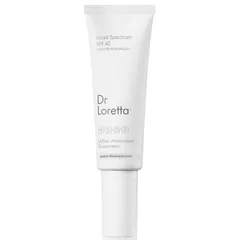
Works for:
based on ingredients and %- Moisturizing
- Anti-aging
- Anti-oxidation
Doesn't work for:
based on ingredients and %- Evens skin tone
Can it cause trouble?
- Irritation risk: high
- Comedogenic risk ingredients: 1
Key actives

Anti-oxidation
This product contains antioxidants (dimethylmethoxy chromanol) that can help neutralize free radicals in skin. By doing so, they can lessen the damage the skin gets from the UV light (sun).
Can help neutralize free radicals in skin
Helps attract water to the upper layer of the skin. Might have some anti-oxidant properties
A more stable but less bio-available form of vitamin E compared to Tocopherol. Might help moisturize and protect the skin from free radicals, but mostly used in low concentrations to stabilize other ingredients.
Anti-aging
What does the product description say?
Protect, nourish and hydrate with Dr. Loretta’s Urban Antioxidant Sunscreen, an advanced formula that seeks to defend the skin against external aggressors that can contribute to photo-ageing.
Source: Lookfantastic CA
This product contains dimethylmethoxy chromanol. This ingredient help neutralize free radicals in skin. By doing so, they might be able to prevent early signs of aging (like fine lines and wrinkles), at least to some extent. These ingredients will not be able to "reverse" signs of aging.
Traditionally used to treat sunburns, dermatitis and inflammation, but evidence for its effectiveness is lacking. The extract can contain humectants that help attract water into the skin
Moisturizing
What does the product description say?
Protect, nourish and hydrate with Dr. Loretta’s Urban Antioxidant Sunscreen, an advanced formula that seeks to defend the skin against external aggressors that can contribute to photo-ageing.
Source: Lookfantastic CA
This product can help improve hydration of the skin with the two types of ingredients.
The first type is called “humectants”:
these ingredients help attract water.
When humectants are on the surface of the skin, they “pull in” the moisture from the outside environment, or from
within deeper layers of the skin. The following ingredients in this product do the job:
fructose, glycerin.
This product also contains ingredients called “occlusives”. They help reduce the speed with which our skin loses moisture to the outside environment. These ingredients also help soften the upper layer of the skin, so it feels less tight and nicer to the touch. The following ingredients in this product do the job: cocos nucifera oil, dimethicone.
An emollient. Found to be as effective as a moisturizer for dry skin as mineral oil. Could be comedogenic
One of the best moisturizing ingredients. Naturally present in skin. It attracts water to the upper layer of the skin working as a humectant
Softens the upper layer of skin and helps restore the healthy skin barrier. Has shown to help calm down inflammation in skin. It is a stable oil, meaning that it retains its properties even when exposed to air.
Helps attract water to the upper layer of the skin
A silicone that helps to reduce water loss from the surface of the skin. Can temporarily "fill in" lines and wrinkles, absorb oil, and create a nice product finish
Enhances the product texture and makes it more spreadable. Helps reduce water loss from the outer layer of skin. Extands the shelf life by preventing bacteria growth
Helps attract water to the upper layer of the skin. Might have some anti-oxidant properties
An emollient that softens the skin and forms a protective layer on its surface. Helps water and oil mix together
Traditionally used to treat sunburns, dermatitis and inflammation, but evidence for its effectiveness is lacking. The extract can contain humectants that help attract water into the skin
Evens skin tone
What does the product description say?
Lipochroman, a supercharged antioxidant bio-inspired by Vitamin E, defends against pollution — a leading cause of fine lines and age spots — while Indian ginseng (also known as Ashwagandha!)
Source: Lookfantastic US
Effective ingredients missing or their concentration is too low
How honest is this product?
| Promise | Can it deliver? |
|---|---|
| Anti-aging | |
| Moisturizing | |
| Evens skin tone |
Total Promises Fulfilled score: 50/100.
We receive a small commission for purchases made through these links at no cost for you. Thank you for your support! Learn more
Potential irritants
Comedogenic ingredients
User reviews (0)
Averages from community submissions.
No reviews yet for this product.
Be the first to share your experience!
Tried this product?
Help capture what the ingredient list can't—texture, finish, pilling, scent, and more. Answer what you can, skip the rest.
Takes ~30 seconds.
Reviews are shown in aggregate. No personal details.
Key Actives
A silicone that helps to reduce water loss from the surface of the skin. Can temporarily "fill in" lines and wrinkles, absorb oil, and create a nice product finish
A weak sunscreen that offers some protection against the sun rays that cause sunburn (UVB), but does not offer meaningful protection against protect against the most aging sun rays (UVA). It loses its effectiveness quickly when exposed to sunlight. It is an organic, or so called "chemical" sunscreen. When used in low concentrations, helps to stabilize the product formulation
A weak sunscreen that protects against the sun rays that cause sunburn (UVB) and is somewhat effective against the UVA rays. It is quite stable and can help stabilize other, more vulnerable, sunscreen ingredients like Avobenzone. It is an organic, or so called "chemical" sunscreen
A broad spectrum sunblock (protects from both UVA and UVB rays). Is suitable for most sensitive skins. In small concentrations, can be used as a colorant
One of the best moisturizing ingredients. Naturally present in skin. It attracts water to the upper layer of the skin working as a humectant
Softens the upper layer of skin and helps restore the healthy skin barrier. Has shown to help calm down inflammation in skin. It is a stable oil, meaning that it retains its properties even when exposed to air.
Helps attract water to the upper layer of the skin
An emollient. Found to be as effective as a moisturizer for dry skin as mineral oil. Could be comedogenic
Can help neutralize free radicals in skin
Works as a UV filter when used in high concentrations. It is photostable and is effective mostly against the UVB light, with some protection in the UVA range. In small concentrations, used for its ability to improve the color of cosmetic products. Is usually well tolerated by the skin
Potential irritants
An essential oil. Potential allergen and can be irritating. It has some anti-bacterial properties
An essentil oil from orange peel. Potential allergen and can be irritating
A plant extract used as a fragrance. Can be irritating
A weak sunscreen that offers some protection against the sun rays that cause sunburn (UVB), but does not offer meaningful protection against protect against the most aging sun rays (UVA). It loses its effectiveness quickly when exposed to sunlight. It is an organic, or so called "chemical" sunscreen. When used in low concentrations, helps to stabilize the product formulation
A weak sunscreen that protects against the sun rays that cause sunburn (UVB) and is somewhat effective against the UVA rays. It is quite stable and can help stabilize other, more vulnerable, sunscreen ingredients like Avobenzone. It is an organic, or so called "chemical" sunscreen
Softens the upper layer of skin and helps restore the healthy skin barrier. Has shown to help calm down inflammation in skin. It is a stable oil, meaning that it retains its properties even when exposed to air.
Can work as an exfoliant but is typically used to adjust the product pH
A more stable but less bio-available form of vitamin E compared to Tocopherol. Might help moisturize and protect the skin from free radicals, but mostly used in low concentrations to stabilize other ingredients.
Traditionally used to treat sunburns, dermatitis and inflammation, but evidence for its effectiveness is lacking. The extract can contain humectants that help attract water into the skin
Comedogenic ingredients
An emollient. Found to be as effective as a moisturizer for dry skin as mineral oil. Could be comedogenic
All ingredients
A weak sunscreen that offers some protection against the sun rays that cause sunburn (UVB), but does not offer meaningful protection against protect against the most aging sun rays (UVA). It loses its effectiveness quickly when exposed to sunlight. It is an organic, or so called "chemical" sunscreen. When used in low concentrations, helps to stabilize the product formulation
Octisalate. A UV filter. It offers some protection against the sun rays that cause sunburn (UVB), but does not protect against the most aging sun rays (UVA). It loses its effectiveness quickly when exposed to sunlight. It is an organic, or so called "chemical" sunscreen
A weak sunscreen that protects against the sun rays that cause sunburn (UVB) and is somewhat effective against the UVA rays. It is quite stable and can help stabilize other, more vulnerable, sunscreen ingredients like Avobenzone. It is an organic, or so called "chemical" sunscreen
A broad spectrum sunblock (protects from both UVA and UVB rays). Is suitable for most sensitive skins. In small concentrations, can be used as a colorant
Enhances the product texture and makes it more spreadable. Helps reduce water loss from the outer layer of skin. Extands the shelf life by preventing bacteria growth
One of the best moisturizing ingredients. Naturally present in skin. It attracts water to the upper layer of the skin working as a humectant
Creates an illusion of smoother and more radiant skin tone. Adds shimmer to the skin by reflecting light
An emollient that softens the skin and forms a protective layer on its surface. Helps water and oil mix together
A silicone that helps to reduce water loss from the surface of the skin. Can temporarily "fill in" lines and wrinkles, absorb oil, and create a nice product finish
A preservative. It helps prevent bacterial growth in cosmetic products
Softens the upper layer of skin and helps restore the healthy skin barrier. Has shown to help calm down inflammation in skin. It is a stable oil, meaning that it retains its properties even when exposed to air.
An emollient. Found to be as effective as a moisturizer for dry skin as mineral oil. Could be comedogenic
Can work as an exfoliant but is typically used to adjust the product pH
Used to thicken product formulations and create gel-like textures
Helps attract water to the upper layer of the skin. Might have some anti-oxidant properties
A more stable but less bio-available form of vitamin E compared to Tocopherol. Might help moisturize and protect the skin from free radicals, but mostly used in low concentrations to stabilize other ingredients.
Traditionally used to treat sunburns, dermatitis and inflammation, but evidence for its effectiveness is lacking. The extract can contain humectants that help attract water into the skin
An essential oil. Potential allergen and can be irritating. It has some anti-bacterial properties
An essentil oil from orange peel. Potential allergen and can be irritating
A plant extract used as a fragrance. Can be irritating
Works as a UV filter when used in high concentrations. It is photostable and is effective mostly against the UVB light, with some protection in the UVA range. In small concentrations, used for its ability to improve the color of cosmetic products. Is usually well tolerated by the skin
An umbrella term for the following three colorants: CI 77491, CI 77492, CI 77499. They might be able to offer some protection against visible light, but the degree of the protection is not clear
Ingredient list view
Homosalate, Ethylhexyl salicylate, Octocrylene, Zinc oxide, Water, C12-15 alkyl benzoate, Glycerin, Mica, Polyglyceryl-2 stearate, Glyceryl stearate, Steareth-21, Stearyl alcohol, Dimethicone, Phenoxyethanol, Simmondsia chinensis seed oil, Steareth-2, Fructose, Cocos nucifera oil, Citric acid, Ethylhexylglycerin, Hydroxyethylcellulose, Chlorphenesin, Hydrolyzed rice protein, Tocopheryl acetate, Kaempferia galanga root extract, Aloe barbadensis leaf juice, Sodium phytate, Lavandula angustifolia oil, Withania somnifera flower extract, Citrus aurantium dulcis peel oil, Silica, Dimethylmethoxy chromanol, Vanilla planifolia fruit extract, Titanium dioxide, Ci 77891, Iron oxides
- Opinion on Homosalate - Scientific Committee on Consumer Products
- A review of inorganic UV filters zinc oxide and titanium dioxide
- Risk assessment of zinc oxide, a cosmetic ingredient used as a UV filter of sunscreens
- Characterization of the UVA protection provided by avobenzone, zinc oxide, and titanium dioxide in broad-spectrum sunscreen products
- Ultraviolet Protection Properties of Commercial Sunscreens and Sunscreens Containing Zno Nanorods
- ZnO nanoparticles and organic chemical UV-filters are equally well tolerated by human immune cells
- Glycerol and the skin: holistic approach to its origin and functions
- Safety Assessment of Polyglyceryl Fatty Acid Esters as Used in Cosmetics
- Dimethicone as a protective ingredient in topical medications
- Final Report on the Safety Assessment of Dimethicone Copolyol
- 5: Final Report on the Safety Assessment of Steareth-2,-4,-6,-7,-10,-11,-13,-15, and-20
- Protection Against Free Radicals (UVB Irradiation) of a Water-Soluble Enzymatic Extract from Rice Bran. Study Using Human Keratinocyte Monolayer and Reconstructed Human Epidermis
- Amended final report on the safety assessment of Oryza Sativa (rice) Bran Oil, Oryza Sativa (rice) Germ Oil, Rice Bran Acid,Oryza Sativa (rice) Bran Wax, Hydrogenated Rice Bran Wax, Oryza Sativa (rice)Bran Extract, Oryza Sativa (rice) Extract, Oryza Sativa (rice) Germ Powder, Oryza Sativa (rice) Starch, Oryza Sativa (rice) Bran, Hydrolyzed Rice Bran Extract, Hydrolyzed Rice Bran Protein, Hydrolyzed Rice Extract, and Hydrolyzed Rice Protein
- Singlet molecular oxygen quenching by the antioxidant dimethylmethoxy chromanol in solution and in ex vivo porcine skin