Works for
CleansingDisodium cocoamphodiacetate, Disodium cocoyl glutamate + 5 moreCleanses gently
“Cleansing Gel”
This product works by removing dirt and oil from the surface of the skin. It uses a combination of mild cleansing agents (coco-betaine, coco-glucoside, disodium cocoamphodiacetate, disodium cocoyl glutamate, glyceryl caprylate, hydrogenated lecithin, sodium methyl oleoyl taurate) and should be able to cleanse the skin gently. Still keep in mind that any cleansing can disrupt the skin barrier, and most people do not need to cleanse their skin more than once per day.
Even though this formulation is mild, the following cleansing agents could trigger an irritation or allergy for some people: coco-betaine, coco-glucoside
Can it cause trouble?
Irritancy13 flagged ingredientsLow risk
Comedogenic2 ingredients rated 2 or more on the 0–5 pore-clogging scale2 flagged
User reviews
Be the first — your take helps the next person decide.
Ingredients
Filter by role to see what each ingredient is doing.
Water~40–60%
Glycerin~4–6%
- Irritation risk
- Low
One of the best moisturizing ingredients. Naturally present in skin. It attracts water to the upper layer of the skin working as a humectant
More about GlycerinDisodium cocoamphodiacetate~4.3–6.5%
- Irritation risk
- Medium
Helps oil and water mix together and works as a cleansing agent
More about Disodium cocoamphodiacetateDisodium cocoyl glutamate~3.3–5%
- Irritation risk
- Medium
Helps water and oil mix together and works as a cleansing agent
More about Disodium cocoyl glutamateSea salt~2–3%
- Irritation risk
- Medium
Used to thicken the product formulation and might help to add minerals to the surface of the skin. It is used in scrubs as a physical exfoliant. Can increase sensitivity to other ingredients if left on the skin or used in high concentration
More about Sea saltHydroxypropyl starch phosphate~1.6–2.5%
- Irritation risk
- Medium
Helps oil and water mix together and used to stabilize product formulations
More about Hydroxypropyl starch phosphateCitric acid~1.4–2.1%
- Irritation risk
- Medium
Can work as an exfoliant but is typically used to adjust the product pH
More about Citric acidAcrylates/c10-30 alkyl acrylate crosspolymer~1.3–1.9%
- Irritation risk
- Medium
Maintains the texture of skincare products. Allows the product to spread evenly. Helps oil and water mix together
More about Acrylates/c10-30 alkyl acrylate crosspolymerCaprylyl glycol~1.1–1.6%
- Irritation risk
- Medium
Helps preserve products and creates a nice product texture
More about Caprylyl glycolCoco-betaine~1.2–1.7%
- Irritation risk
- High
Helps oil and water mix together and works as a cleansing agent. Can be allergenic
More about Coco-betaine1,2-hexanediol~0.45–1.05%
Sodium methyl oleoyl taurate~0.8–1.2%
- Irritation risk
- Medium
Helps oil and water mix together
More about Sodium methyl oleoyl taurateGlyceryl caprylate~0.4–0.95%
- Irritation risk
- Low
An emollient that can also help water and oil mix together, as well as prevent bacteria growth in products
More about Glyceryl caprylateCoco-glucoside~0.4–1%
- Irritation risk
- High
Used as a cleansing agent (surfactant) in cleansers. Helps water and oil mix together in lotions. Can be irritating
More about Coco-glucosideDisodium edta~0.2–0.8%
Butylene glycol~0.2–0.8%
- Irritation risk
- Low
Used to create a nice product texture and help delivery of other ingredients. Might be somewhat helpful in attracting water to the upper layer of the skin
More about Butylene glycolLeuconostoc/radish root ferment filtrate~0.2–0.75%
- Irritation risk
- Medium
A preservative that comes from radishes fermented by a bacteria. New research suggests that the preservation properties in the ingredient come from an ammonium salt that is not present naturally in radish root but used in its cultivation. Is problematic because the exact amount of the preservative agents is difficult to determine
More about Leuconostoc/radish root ferment filtrateLactobacillus~0.15–0.6%
- Irritation risk
- Low
A non-living ingredient made by fermentation with the bacteria Lactobacillus. It can help attract water to the upper layer of the skin and might help reduce inflammation
More about LactobacillusFructooligosaccharides~0.1–0.5%
- Irritation risk
- Low
Help attract water to the upper layer of the skin
More about FructooligosaccharidesPolyglyceryl-10 oleate~0.1–0.5%
- Irritation risk
- Low
Helps soften the upper layer of the skin
More about Polyglyceryl-10 oleateBifida ferment lysate~0.1–0.45%
- Irritation risk
- Low
Consists of remains of dead yeast bacteria cells. Helps to hydrate the skin and reduce irritation. Might has some anti-oxidant effect
More about Bifida ferment lysateStreptococcus thermophilus ferment~0.1–0.35%
- Irritation risk
- Low
Hydrogenated lecithin~0.1–0.3%
- Irritation risk
- Low
Helps to retain moisture by creating a protective barrier on the skin. Rich in fatty acids. Improves product texture and helps with the penetration of other ingredients.
More about Hydrogenated lecithinOlea europaea oil unsaponifiables~0.05–0.25%
- Irritation risk
- Low
Help soften the upper layer of the skin
More about Olea europaea oil unsaponifiablesGlycine soja oil unsaponifiables~0.1–0.3%
- Irritation risk
- Low
- Comedogenicity
- 2/5
Triticum vulgare germ oil unsaponifiables~0.05–0.25%
- Irritation risk
- Low
- Comedogenicity
- 2/5
Pollen extract~0.05–0.25%
- Irritation risk
- Low
Ingredient list view
Water, Glycerin, Disodium cocoamphodiacetate, Disodium cocoyl glutamate, Sea salt, Hydroxypropyl starch phosphate, Citric acid, Acrylates/c10-30 alkyl acrylate crosspolymer, Caprylyl glycol, Coco-betaine, 1,2-hexanediol, Sodium methyl oleoyl taurate, Glyceryl caprylate, Coco-glucoside, Disodium edta, Butylene glycol, Leuconostoc/radish root ferment filtrate, Lactobacillus, Fructooligosaccharides, Polyglyceryl-10 oleate, Bifida ferment lysate, Streptococcus thermophilus ferment, Hydrogenated lecithin, Olea europaea oil unsaponifiables, Glycine soja oil unsaponifiables, Triticum vulgare germ oil unsaponifiables, Pollen extract
Compare prices
Retailers ranked by price — lowest first.
Affiliate links · As an Amazon Associate, WIMJ earns from qualifying purchases.
Worth comparing, line by line.
Match % combines shared ingredients, the first five ingredients, shared actives and hero ingredients, irritancy (lower counts in the alternative's favour), texture and body area. Only products in the same routine step are compared.
| Dr.GCleansing GelYOUR PRODUCT | ROUND LAB1025 Dokdo Cleansing Gel | celimaxDual Barrier Mild Gel Cleanser 200ml | NaturiumNiacinamide Cleansing Gelée 3% | |
|---|---|---|---|---|
| Match | — | 35% | 33% | 33% |
| Price | — | $11.65 | $13.71 | $17.88 |
| Shared key ingredients | — | 6 of 10 | 4 of 10 | 3 of 10 |
| Key difference | — | Panthenol | Vitamin C | Niacinamide |
| Irritancy | Low | Low | Low | Low |
| Drying alcohol | — | — | — | — |
| View product | Shop | Shop | Shop |

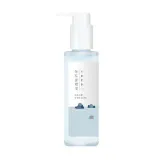


More alternatives: La Roche-Posay Toleriane Softening Foaming Gel Wash Sensitive SkinHanskin Bubblepop Cleanser
Sources cited in this review
Every concentration estimate and effectiveness label is anchored to one of these 6 studies and safety reviews.
- 1
- 2
- 3
- 4Allergen of the Year—Alkyl Glucosidepracticeupdate.com
- 5Bifidobacterium longumlysate, a new ingredient forreactive skinonlinelibrary.wiley.com
- 6Use of Probiotics for Dermal Applicationsresearchgate.net

Affiliate links · As an Amazon Associate, WIMJ earns from qualifying purchases.