Works for:
based on ingredients and %- Moisturizing
- Evens skin tone
Can it cause trouble?
- Irritation risk: high
- Comedogenic risk ingredients: 1
Key actives
Product Summary
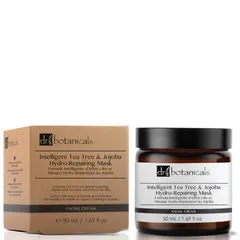
"Dr. Botanicals - Tea Tree and Jojoba Hydro-Repairing Mask" could be helpful for: Moisturizing and Evens skin tone, but its actives are not the most effective or are not well-studied.
Ingredient callouts
- Humectants (glycerin 0.40% - 0.90%). These ingredients help attract water to the upper layer of the skin and improve the skin hydration.
Price
The product retails for 47.00$ in the United States, from 31.70£ up to 34.00£ in the United Kingdom and for 59.50CA$ in Canada.
For a detailed price comparison: click here.
Works for
Evens skin tone
The following ingredient (ingredients) in this product might be helpful, but there is no evidence to confirm that it actually works: dimethylmethoxy chromanyl palmitate.
An oil-soluble compound that has been shown in laboratory studies (in a petri dish, not on human volunteers) to inhibit melanin production in skin and help even out the skin tone. More research is needed to understand if it works in real life
Moisturizing
What does the product description say?
Tea Tree and Jojoba Hydro-Repairing Mask
Source: From product name
This product can help improve hydration of the skin with the two types of ingredients.
The first type is called “humectants”:
these ingredients help attract water.
When humectants are on the surface of the skin, they “pull in” the moisture from the outside environment, or from
within deeper layers of the skin. The following ingredients in this product do the job:
glycerin, hydrolyzed wheat protein.
This product also contains ingredients called “occlusives”. They help reduce the speed with which our skin loses moisture to the outside environment. These ingredients also help soften the upper layer of the skin, so it feels less tight and nicer to the touch. The following ingredients in this product do the job: dimethiconol, cyclopentasiloxane.
A silicone that improves product texture and helps dissolve other ingredients. Can form a non-greasy film on the skin to prevent moisture loss
A silicone that makes products more spreadable and keeps skin smooth. Helps to add gloss to skin and may visually fill in fine lines/wrinkles for short time
One of the best moisturizing ingredients. Naturally present in skin. It attracts water to the upper layer of the skin working as a humectant
A silicone that helps improve the product texture and spreadability. Can absorb oil creating a short-term mattifying effect on the skin
Helps soften the upper layer of the skin
Can help attract water to the upper layer of the skin. Avoid if sensitive to gluten
Helps oil and water mix together and can enhance the penetration of other ingredients into the skin. It can be irritating
Used to create a nice product texture and help delivery of other ingredients. Might be somewhat helpful in attracting water to the upper layer of the skin
How honest is this product?
| Promise | Can it deliver? |
|---|---|
| Moisturizing |
Total Promises Fulfilled score: 75/100.
We receive a small commission for purchases made through these links at no cost for you. Thank you for your support! Learn more
Affiliate link · supports WIMJ at no cost to you
Potential irritants
Comedogenic ingredients
User reviews (0)
Averages from community submissions.
No reviews yet for this product.
Be the first to share your experience!
Tried this product?
Help capture what the ingredient list can't—texture, finish, pilling, scent, and more. Answer what you can, skip the rest.
Takes ~30 seconds.
Reviews are shown in aggregate. No personal details.
Key Actives
A silicone that helps improve the product texture and spreadability. Can absorb oil creating a short-term mattifying effect on the skin
One of the best moisturizing ingredients. Naturally present in skin. It attracts water to the upper layer of the skin working as a humectant
A silicone that makes products more spreadable and keeps skin smooth. Helps to add gloss to skin and may visually fill in fine lines/wrinkles for short time
A silicone that improves product texture and helps dissolve other ingredients. Can form a non-greasy film on the skin to prevent moisture loss
An oil-soluble compound that has been shown in laboratory studies (in a petri dish, not on human volunteers) to inhibit melanin production in skin and help even out the skin tone. More research is needed to understand if it works in real life
Potential irritants
A preservative. Can be used to mask unpleasant smell. Can be irritating
An aromatic blend of unspecified and possibly irritating ingredients
Helps oil and water mix together and can enhance the penetration of other ingredients into the skin. It can be irritating
A common frangrance that can easily irritate skin, especially if exposed to air, light or heat
A fragrance. Potential allergen and can be irritating
A fruit extract that is used to add a fragrance to the product. It might have some antioxidant properties
Helps protect the ingredients in the formulation against UV light
Can help attract water to the upper layer of the skin. Avoid if sensitive to gluten
Helps evenly disperse other ingredients in a formulation and create an even layer on the surface of the skin
A stable derivative of vitamin C. It is oil-soluble which means it is more likely to penetrate the skin compared to the pure form of vitamin C (which is water-soluble), but it is less bio-available and is way less effective in stimulating collagen and reducing wrinkles compared to the pure form of vitamin C (L-ascorbic acid) and its other derivatives (for example, magnesium ascorbyl phosphate). At the same time, this vitamin C derivative has been shown in studies to be effective in reducing acne, blemishes and clogged pores. It is less irritating then the pure form of vitamin C
An oil-soluble compound that has been shown in laboratory studies (in a petri dish, not on human volunteers) to inhibit melanin production in skin and help even out the skin tone. More research is needed to understand if it works in real life
Comedogenic ingredients
All ingredients
Used to create a nice product texture and help delivery of other ingredients. Might be somewhat helpful in attracting water to the upper layer of the skin
A preservative. It helps prevent bacterial growth in cosmetic products
A preservative. Can be used to mask unpleasant smell. Can be irritating
Helps create a thicker or gel-like product texture. It is not a surfactant but can be used in gentle cleansing formulations
Creates an illusion of smoother and more radiant skin tone. Adds shimmer to the skin by reflecting light
Used to create a silky product texture and add volume to products
One of the best moisturizing ingredients. Naturally present in skin. It attracts water to the upper layer of the skin working as a humectant
An aromatic blend of unspecified and possibly irritating ingredients
Helps protect the ingredients in the formulation against UV light
Can help attract water to the upper layer of the skin. Avoid if sensitive to gluten
Helps evenly disperse other ingredients in a formulation and create an even layer on the surface of the skin
A stable derivative of vitamin C. It is oil-soluble which means it is more likely to penetrate the skin compared to the pure form of vitamin C (which is water-soluble), but it is less bio-available and is way less effective in stimulating collagen and reducing wrinkles compared to the pure form of vitamin C (L-ascorbic acid) and its other derivatives (for example, magnesium ascorbyl phosphate). At the same time, this vitamin C derivative has been shown in studies to be effective in reducing acne, blemishes and clogged pores. It is less irritating then the pure form of vitamin C
A silicone that helps improve the product texture and spreadability. Can absorb oil creating a short-term mattifying effect on the skin
Helps oil and water mix together and can enhance the penetration of other ingredients into the skin. It can be irritating
A common frangrance that can easily irritate skin, especially if exposed to air, light or heat
A silicone that makes products more spreadable and keeps skin smooth. Helps to add gloss to skin and may visually fill in fine lines/wrinkles for short time
A silicone that improves product texture and helps dissolve other ingredients. Can form a non-greasy film on the skin to prevent moisture loss
A fragrance. Potential allergen and can be irritating
A fruit extract that is used to add a fragrance to the product. It might have some antioxidant properties
An oil-soluble compound that has been shown in laboratory studies (in a petri dish, not on human volunteers) to inhibit melanin production in skin and help even out the skin tone. More research is needed to understand if it works in real life
Does not have known skin benefits. Might help create an optical illusion of smoother skin
Works as a UV filter when used in high concentrations. It is photostable and is effective mostly against the UVB light, with some protection in the UVA range. In small concentrations, used for its ability to improve the color of cosmetic products. Is usually well tolerated by the skin
Ingredient list view
Water, Butylene glycol, Peg-40 hydrogenated castor oil, Phenoxyethanol, Benzyl alcohol, Carbomer, Mica, Hdi/trimethylol hexyllactone crosspolymer, Sodium hydroxide, Buteth-3, Glycerin, Parfum, Macrocystis pyrifera extract, Sodium benzotriazolyl butylphenol sulfonate, Hydrolyzed wheat protein, Disodium edta, Pvp, Sodium ascorbyl phosphate, Ethylhexylglycerin, Cyclopentasiloxane, Dehydroacetic acid, Propylene glycol, Benzyl salicylate, Ethylhexyl cocoate, Hexyl cinnamal, Silica, Limonene, Dimethiconol, Tributyl citrate, Polymethylsilsesquioxane, Citronellol, Alpha-isomethyl ionone, Punica granatum fruit extract, Dimethylmethoxy chromanyl palmitate, Quartz, Diamond powder, Ci 77891, Titanium dioxide, Ci 17200
- Amended Safety Assessment of PEGylated Oils as Used in Cosmetics
- Public Report: 2-Butenedioic acid (2E)-, di-C12-15-alkyl esters (INCI Name: Di-C12-15 Alkyl Fumarate)
- Glycerol and the skin: holistic approach to its origin and functions
- Wheat in skin care
- Sodium ascorbyl phosphate shows in vitro and in vivo efficacy in the prevention and treatment of acne vulgaris
- Sodium ascorbyl phosphate in topical microemulsions
- Final report of the safety assessment of L-Ascorbic Acid, Calcium Ascorbate, Magnesium Ascorbate, Magnesium Ascorbyl Phosphate, Sodium Ascorbate, and Sodium Ascorbyl Phosphate as used in cosmetics
- Regulation of collagen synthesis in human dermal fibroblasts by the sodium and magnesium salts of ascorbyl-2-phosphate
- Comparison of clinical efficacies of sodium ascorbyl phosphate, retinol and their combination in acne treatment
- Application of l-ascorbic acid and its derivatives (sodium ascorbyl phosphate and magnesium ascorbyl phosphate) in topical cosmetic formulations: stability studies
- Sodium L-ascorbyl-2-phosphate 5% lotion for the treatment of acne vulgaris: a randomized, double-blind, controlled trial
- 4 Final Report on the Safety Assessment of Sodium Dehydroacetate and Dehydroacetic Acid
- Surfactants and experimental irritant contact dermatitis
- Propylene Glycol
- Skin-sensitizing and irritant properties of propylene glycol
- Amended Safety Assessment of Cocos Nucifera (Coconut) Oil and its Derivatives
- Development of a new cosmetic active for safe skin brightening
- Skin lightening through a new natural oily composition from botanical origin