Works for:
based on ingredients and %- Cleansing
Can it cause trouble?
- Irritation risk: medium
- Comedogenic risk ingredients: 1
Key actives

Works for
Cleansing
What does the product description say?
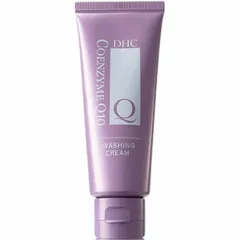
DHC CoQ10 Washing Cream is a cream formula that turns into a gentle foam to wash away dirt, oil and any other impurities for a clear and bright complexion.
Source: Lookfantastic US
This product works by removing dirt and oil from the surface of the skin. It uses a combination of mild cleansing agents (ceteth-25, glycol distearate, lauramide dea, lysolecithin, myristic acid, stearic acid) and should be able to cleanse the skin gently. Still keep in mind that any cleansing can disrupt the skin barrier, and most people do not need to cleanse their skin more than once per day.
Helps water and oil mix together
Lecithin derivative. It helps oil and water mix together and can enhance penetration of other ingredients. It helps soften the upper layer of the skin
Helps oil and water mix together. Could be comedogenic
Helps oil and water mix together and works as an emollient
How honest is this product?
| Promise | Can it deliver? |
|---|---|
| Cleansing |
Total Promises Fulfilled score: 100/100.
We receive a small commission for purchases made through these links at no cost for you. Thank you for your support! Learn more
Potential irritants
Comedogenic ingredients
User reviews (0)
Averages from community submissions.
No reviews yet for this product.
Be the first to share your experience!
Tried this product?
Help capture what the ingredient list can't—texture, finish, pilling, scent, and more. Answer what you can, skip the rest.
Takes ~30 seconds.
Reviews are shown in aggregate. No personal details.
Key Actives
A fatty acid derived from licorice. Works as an emollient and can help calm down inflammation
Pure form of vitamin E. Can help moisturise and protect the skin from free radicals. Often used to help stabilise other ingredients or the formula itself
Coenzyme Q10. It helps neutralize free radicals in skin, improves skin hydration and might be helpful agains fine lines and wrinkles. It can be an allergen
Helps attract water to the upper layer of the skin and might have some anti-oxidant and skin lightening properties
Helps oil and water mix together and works as an emollient
Lecithin derivative. It helps oil and water mix together and can enhance penetration of other ingredients. It helps soften the upper layer of the skin
Can support skin barrier function and reduce inflammation in skin
Helps oil and water mix together. Could be comedogenic
One of the best moisturizing ingredients. Naturally present in skin. It attracts water to the upper layer of the skin working as a humectant
A good mix of fatty acids that forms a protective layer on the skin. Improves the shelf life of products. Derived from coconut and glycerin
An oil naturally present in skin. Works as an emollient to soften the skin and form a protective layer on its surface without a greasy feeling.
Potential irritants
An essential oil that is used as a fragrance and can be irritating. It might have some anti-oxidant effect in skin
A plant extract that might have some anti-inflammatory properties, but solid evidence is lacking. It can be irritating
Helps oil and water mix together. Could be comedogenic
Used to preserve products, dissolve other ingredients and create a nice product texture
Helps water and oil mix together and softens the upper layer of the skin
A fatty acid derived from licorice. Works as an emollient and can help calm down inflammation
A good mix of fatty acids that forms a protective layer on the skin. Improves the shelf life of products. Derived from coconut and glycerin
A vitamin C derivative. Studies show that is might be effective in reducing hyperpigmentation, but there are no studies confirming that it is effectively converted into the bioavailable form of Vitamin C in skin. It is not clear how this derivative compares in effectiveness to the topical application of bioavailable form of vitamin C (L-ascorbic acid)
Traditionally used to treat sunburns, dermatitis and inflammation, but evidence for its effectiveness is lacking. The extract can contain humectants that help attract water into the skin
An emollient that helps soften the skin but is not effective for restoring its barrier function. Might be helpful to calm down inflammation
Can help attract water to the upper layer of the skin. Is studied as a mosquito repellent
A plant extract that might have some anti-oxidant and anti-inflammatory properties but evidence for effectiveness in skin is missing
Comedogenic ingredients
Helps oil and water mix together. Could be comedogenic
All ingredients
Helps oil and water mix together. Could be comedogenic
One of the best moisturizing ingredients. Naturally present in skin. It attracts water to the upper layer of the skin working as a humectant
Used to preserve products, dissolve other ingredients and create a nice product texture
A preservative. It helps prevent bacterial growth in cosmetic products
Used to create thicker product consistency and stabilize emulsions
Coenzyme Q10. It helps neutralize free radicals in skin, improves skin hydration and might be helpful agains fine lines and wrinkles. It can be an allergen
Helps water and oil mix together and softens the upper layer of the skin
Used to create a nice product texture and help delivery of other ingredients. Might be somewhat helpful in attracting water to the upper layer of the skin
A fatty acid derived from licorice. Works as an emollient and can help calm down inflammation
A good mix of fatty acids that forms a protective layer on the skin. Improves the shelf life of products. Derived from coconut and glycerin
Might be helpful in restoring skin barrier function and, when combined with zinc carbonate and malonic acid, reducing fine lines and wrinkles by stimulating elastin production. Also helps stabilize the product formulation
A vitamin C derivative. Studies show that is might be effective in reducing hyperpigmentation, but there are no studies confirming that it is effectively converted into the bioavailable form of Vitamin C in skin. It is not clear how this derivative compares in effectiveness to the topical application of bioavailable form of vitamin C (L-ascorbic acid)
Traditionally used to treat sunburns, dermatitis and inflammation, but evidence for its effectiveness is lacking. The extract can contain humectants that help attract water into the skin
An oil naturally present in skin. Works as an emollient to soften the skin and form a protective layer on its surface without a greasy feeling.
Lecithin derivative. It helps oil and water mix together and can enhance penetration of other ingredients. It helps soften the upper layer of the skin
An emollient that helps soften the skin but is not effective for restoring its barrier function. Might be helpful to calm down inflammation
An essential oil that is used as a fragrance and can be irritating. It might have some anti-oxidant effect in skin
Pure form of vitamin E. Can help moisturise and protect the skin from free radicals. Often used to help stabilise other ingredients or the formula itself
Can help attract water to the upper layer of the skin. Is studied as a mosquito repellent
Helps attract water to the upper layer of the skin and might have some anti-oxidant and skin lightening properties
A plant extract that might have some anti-inflammatory properties, but solid evidence is lacking. It can be irritating
Can support skin barrier function and reduce inflammation in skin
A plant extract that might have some anti-oxidant and anti-inflammatory properties but evidence for effectiveness in skin is missing
Ingredient list view
Water, Myristic acid, Glycerin, Stearic acid, Potassium hydroxide, Glycol distearate, Lauramide dea, Pentylene glycol, Ceteth-25, Phenoxyethanol, Cellulose gum, Ubiquinone, Polyglyceryl-10 oleate, Polyglyceryl-10 stearate, Butylene glycol, Stearyl glycyrrhetinate, Caprylic/capric triglyceride, Magnesium aluminum silicate, Ascorbyl tetraisopalmitate, Aloe barbadensis leaf juice, Squalane, Lysolecithin, Olea europaea fruit oil, Anthemis nobilis flower oil, Tocopherol, Sodium riboflavin phosphate, Tetrasodium etidronate, Thiamine hcl, Hydrolyzed yeast extract, Panax ginseng root extract, Cyanocobalamin, Olea europaea leaf extract
- The fatty acid profile of the skin surface lipid layer in papulopustular rosacea
- Glycerol and the skin: holistic approach to its origin and functions
- Safety Assessment of Polyglyceryl Fatty Acid Esters as Used in Cosmetics
- Final report on the safety assessment of aluminum silicate, calcium silicate, magnesium aluminum silicate, magnesium silicate, magnesium trisilicate, sodium magnesium silicate, zirconium silicate, attapulgite, bentonite, Fuller's earth, hectorite, kaolin, lithium magnesium silicate, lithium magnesium sodium silicate, montmorillonite, pyrophyllite, and zeolite
- Extracellular matrix in cutaneous ageing: the effects of 0.1% copper-zinc malonate-containing cream on elastin biosynthesis
- Assessment of penetration of Ascorbyl Tetraisopalmitate into biological membranes by molecular dynamics
- Stability evaluation of tocopheryl acetate and ascorbyl tetraisopalmitate in isolation and incorporated in cosmetic formulations using thermal analysis
- A new lipophilic pro-vitamin C, tetra-isopalmitoyl ascorbic acid (VC-IP), prevents UV-induced skin pigmentation through its anti-oxidative properties
- New lipophilic pro-vitamin C, tetra-isopalmitoyl ascorbic acid (VC-IP), suppresses senile lentigo through controlling of melanocytes-keratinocytes interaction
- Use of “natural” oils for moisturization: Review of olive, coconut, and sunflower seed oil
- Safety Assessment of Anthemis nobilis– Derived Ingredients as Used in Cosmetics
- Vitamin E in dermatology
- Vitamin E and Skin Health
- The natural yeast extract isolated by ethanol precipitation inhibits melanin synthesis by modulating tyrosinase activity and downregulating melanosome transfer
- Evaluation of dermatological effects of cosmetic formulations containing Saccharomyces cerevisiae extract and vitamins
- Ginseng in Dermatology: A Review
- Antiaging effects of the mixture of Panax ginseng and Crataegus pinnatifida in human dermal fibroblasts and healthy human skin
- Topical vitamin B12--a new therapeutic approach in atopic dermatitis-evaluation of efficacy and tolerability in a randomized placebo-controlled multicentre clinical trial
- Superiority of a vitamin B12-containing emollient compared to a standard emollient in the maintenance treatment of mild-to-moderate plaque psoriasis
- Wound Repair Potential of Olea europaea L. Leaf Extracts Revealed by In Vivo Experimental Models and Comparative Evaluation of the Extracts' Antioxidant Activity