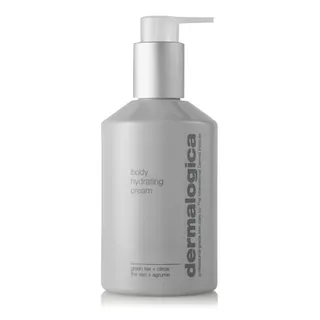
Works for
MoisturizingCetyl alcohol, Diheptyl succinate + 13 moreWorks
“Hydrates to relieve dryness”
This product can help improve hydration of the skin with the two types of ingredients.
The first type is called “humectants”:
these ingredients help attract water.
When humectants are on the surface of the skin, they “pull in” the moisture from the outside environment, or from
within deeper layers of the skin. The following ingredients in this product do the job:
glycerin, butylene glycol.
This product also contains ingredients called “occlusives”. They help reduce the speed with which our skin loses moisture to the outside environment. These ingredients also help soften the upper layer of the skin, so it feels less tight and nicer to the touch. The following ingredients in this product do the job: dimethicone, cetyl alcohol.
Anti-agingCamellia sinensis leaf extract, Tocopherol + 1 moreNot delivered
“The addition of green tea lends soothing properties, while vitamin C works to boost collagen production to promote a healthy-looking glow.”
This product does not contain ingredients that are able to reduce fine lines and wrinkles or help with skin elasticity, but it can improve the look of the skin temporarily through moisturization. Well-moisturized skin might also be able to repair the sun damage better.This ingredient - camellia sinensis leaf extract - could be helpful for preventing or repairing signs of aging in theory, but there is no evidence that it actually works.
This ingredient camellia sinensis leaf extract might be able to help neutralize free radicals in skin and help it fight off some of the sun damage.
ExfoliationLactic acidNot delivered
“Tones with gentle, naturally-derived exfoliants”
This product does not contain effective exfoliating ingredients. It might be able to deliver physical exfoliation, that is scrub off some of the dead cells on the surface of the skin. We do not recommend physical exfoliation, because it is not uniform (some bits of skin can get exfoliated too much while others not at all). It can also traumatize the skin and aggrevate acne and other skin conditions.
Anti-oxidationNot advertised by the brand · Camellia sinensis leaf extract, Symphytum officinale root extract + 3 moreMay help
This product contains antioxidants (camellia sinensis leaf extract) that might be able to help neutralize free radicals in skin to lessen the damage it gets from the UV light (sun). There is not enough evidence to confirm their effectiveness in skin though.
Can it cause trouble?
Irritancy19 strong irritants: Lavandula angustifolia oil, Cymbopogon schoenanthus oil + 17 more — patch-test recommendedHigh risk
Comedogenic1 ingredient rated 2 or more on the 0–5 pore-clogging scale1 flagged


User reviews
Be the first — your take helps the next person decide.
Ingredients
Filter by role to see what each ingredient is doing.
Water~45–55%
Cetearyl ethylhexanoate~4.7–5.7%
- Irritation risk
- Low
An emollient that helps soften the skin
More about Cetearyl ethylhexanoateCetyl caprylate~4.1–5.1%
- Irritation risk
- Low
Butylene glycol~3.1–3.7%
- Irritation risk
- Low
Used to create a nice product texture and help delivery of other ingredients. Might be somewhat helpful in attracting water to the upper layer of the skin
More about Butylene glycolCetyl alcohol~2.3–2.8%
- Irritation risk
- Low
A non-drying alcohol that works to soften the skin and stabilize product formulations helping oil and water mix together
More about Cetyl alcoholDiheptyl succinate~2–2.4%
- Irritation risk
- Low
Helps to soften the upper layer of the skin and creates a nice product finish on the skin
More about Diheptyl succinateGlyceryl stearate se~1.7–2%
- Irritation risk
- Low
- Comedogenicity
- 2/5
Used to stabilize the product formulations and works as an emollient
More about Glyceryl stearate sePeg-100 stearate~1.5–1.9%
- Irritation risk
- Low
Helps oil and water mix togehter and creates a nice product texture
More about Peg-100 stearatePotato starch modified~1.2–1.4%
- Irritation risk
- Low
Polysorbate 85~0.95–1.15%
Dimethicone~0.75–1.1%
- Irritation risk
- Low
A silicone that helps to reduce water loss from the surface of the skin. Can temporarily "fill in" lines and wrinkles, absorb oil, and create a nice product finish
More about DimethiconeSaccharum officinarum extract~0.55–0.8%
- Irritation risk
- Low
Sugar extract that helps attract water to the upper layer of the skin
More about Saccharum officinarum extractPyrus malus fruit extract~0.5–0.75%
- Irritation risk
- Medium
Can have some moisturizing properties due to its sugar content
More about Pyrus malus fruit extractCaprylic/capric triglyceride~0.5–0.8%
- Irritation risk
- Medium
A good mix of fatty acids that forms a protective layer on the skin. Improves the shelf life of products. Derived from coconut and glycerin
More about Caprylic/capric triglycerideLavandula angustifolia oil~0.4–0.6%
- Irritation risk
- High
An essential oil. Potential allergen and can be irritating. It has some anti-bacterial properties
More about Lavandula angustifolia oilLactic acid~0.4–0.6%
- Irritation risk
- Medium
An exfoliating and moisturizing alpha-hydroxy acid (AHA). Typically causes less irritation than other AHAs, for example, glycolic acid. At high concentrations (about 15%), lactic acid can help reduce lines and wrinkles. Recent studies show that lactic acid can support the "good" bacteria living on skin's surface (healthy skin microbiome)
More about Lactic acidCapryloyl glycerin/sebacic acid copolymer~0.4–0.6%
- Irritation risk
- Low
Helps soften the upper layer of the skin
More about Capryloyl glycerin/sebacic acid copolymerCymbopogon schoenanthus oil~0.3–0.6%
- Irritation risk
- High
Camellia sinensis leaf extract~0.3–0.6%
- Irritation risk
- Low
Can contain potent anti-oxidant compounds (abbreviated ECG, GCG, EGC, and EGCG) that might help protect the skin from free radicals. Can help calm down inflammation and has some anti-bacterial properties. Unfortunately, these antioxidants are unstable and lose their effectiveness very quickly in products. The concentration of the antioxidant compounds in the extract also tends to be low to be effective in topical formulation
More about Camellia sinensis leaf extractCitrus aurantium dulcis peel oil~0.25–0.5%
- Irritation risk
- High
An essentil oil from orange peel. Potential allergen and can be irritating
More about Citrus aurantium dulcis peel oilCitrus aurantium dulcis fruit extract~0.25–0.5%
- Irritation risk
- High
A plant extract that is used as a fragrance. Can be irritating and lead to photosensitivity
More about Citrus aurantium dulcis fruit extractCitrus limon peel extract~0.25–0.45%
Citrus limon peel oil~0.2–0.4%
Juniperus mexicana oil~0.25–0.45%
- Irritation risk
- Low
Litsea cubeba fruit oil~0.2–0.35%
- Irritation risk
- High
An essential oil with a lemon-like smell that is extracted from a fruit grown in Asia. Used as a fragrance
More about Litsea cubeba fruit oilPogostemon cablin oil~0.2–0.35%
- Irritation risk
- Low
Cananga odorata flower oil~0.2–0.4%
Cymbopogon citratus leaf oil~0.2–0.4%
- Irritation risk
- High
Eucalyptus globulus leaf oil~0.2–0.35%
- Irritation risk
- High
An essential oil that can be very irritating. Has some anti-bacterial properties
More about Eucalyptus globulus leaf oilMelaleuca alternifolia leaf oil~0.2–0.4%
- Irritation risk
- High
An essential oil that can be irritating. Has some anti-bacterial properties
More about Melaleuca alternifolia leaf oilRosmarinus officinalis leaf oil~0.2–0.4%
- Irritation risk
- High
A plant oil with high content of volatile compounds that can irritate the skin. Can be used as a fragrance. Has anti-bacterial properties and might help neutralize free radicals on the surface of the skin
More about Rosmarinus officinalis leaf oilSalvia sclarea oil~0.2–0.4%
- Irritation risk
- High
Santalum album oil~0.2–0.4%
Lavandula angustifolia flower/leaf/stem extract~0.2–0.4%
Tocopherol~0.2–0.4%
- Irritation risk
- Low
Pure form of vitamin E. Can help moisturise and protect the skin from free radicals. Often used to help stabilise other ingredients or the formula itself
More about TocopherolGlycerin~0.25–0.45%
- Irritation risk
- Low
One of the best moisturizing ingredients. Naturally present in skin. It attracts water to the upper layer of the skin working as a humectant
More about GlycerinXanthan gum~0.25–0.45%
- Irritation risk
- Low
Used to create a thicker product consistency
More about Xanthan gumAnthemis nobilis flower extract~0.2–0.35%
- Irritation risk
- High
A plant extract that one one hand, can contain compounds that can help calm down skin irritation, but, on the other hand, its other compounds (especially fragrant ones) can themselves be irritating
More about Anthemis nobilis flower extractSymphytum officinale root extract~0.2–0.35%
- Irritation risk
- Medium
A plant extract that might be able to help decrease inflammation in skin and have an anti-oxidant effect
More about Symphytum officinale root extractTetrasodium glutamate diacetate~0.2–0.35%
- Irritation risk
- Low
Helps stabilize the product formulation
More about Tetrasodium glutamate diacetateSodium hydroxide~0.2–0.35%
Ethylhexylglycerin~0.15–0.3%
Geraniol~0.15–0.25%
Citral~0.15–0.3%
Linalool~0.15–0.25%
Limonene~0.1–0.15%
- Irritation risk
- High
A common frangrance that can easily irritate skin, especially if exposed to air, light or heat
More about LimonenePhenoxyethanol~0.15–0.25%
- Irritation risk
- Low
A preservative. It helps prevent bacterial growth in cosmetic products
More about PhenoxyethanolIngredient list view
Water, Cetearyl ethylhexanoate, Cetyl caprylate, Butylene glycol, Cetyl alcohol, Diheptyl succinate, Glyceryl stearate se, Peg-100 stearate, Potato starch modified, Polysorbate 85, Dimethicone, Saccharum officinarum extract, Pyrus malus fruit extract, Caprylic/capric triglyceride, Lavandula angustifolia oil, Lactic acid, Capryloyl glycerin/sebacic acid copolymer, Cymbopogon schoenanthus oil, Camellia sinensis leaf extract, Citrus aurantium dulcis peel oil, Citrus aurantium dulcis fruit extract, Citrus limon peel extract, Citrus limon peel oil, Juniperus mexicana oil, Litsea cubeba fruit oil, Pogostemon cablin oil, Cananga odorata flower oil, Cymbopogon citratus leaf oil, Eucalyptus globulus leaf oil, Melaleuca alternifolia leaf oil, Rosmarinus officinalis leaf oil, Salvia sclarea oil, Santalum album oil, Lavandula angustifolia flower/leaf/stem extract, Tocopherol, Glycerin, Xanthan gum, Anthemis nobilis flower extract, Symphytum officinale root extract, Tetrasodium glutamate diacetate, Sodium hydroxide, Ethylhexylglycerin, Geraniol, Citral, Linalool, Limonene, Phenoxyethanol
Compare prices
Retailers ranked by price — lowest first.


Worth comparing, line by line.
Match % combines shared ingredients, the first five ingredients, shared actives and hero ingredients, irritancy (lower counts in the alternative's favour), texture and body area. Only products in the same routine step are compared.
| Dermalogicabody hydrating creamYOUR PRODUCT | ADVANCED CLINICALS10% Glycolic Acid, Lactic Acid, Exfoliating Body Cream | Beekman 1802Smooth Lactic Acid Willow Bark Goat Milk Whipped Body Cream | First Aid BeautyKP Smoothing Body Lotion Duo | |
|---|---|---|---|---|
| Match | — | 57% | 57% | 55% |
| Price | $39.00 | $19.99−$19.01 | — | $61.84+$22.84 |
| Shared key ingredients | — | 5 of 7 | 5 of 7 | 5 of 7 |
| Key difference | — | Glycolic Acid | Gluconolactone | Colloidal Oatmeal |
| Irritancy | High | Medium | Medium | Medium |
| Drying alcohol | — | — | — | — |
| View product | Shop | Shop | Shop |


More alternatives: Versed Skin Buff It OutDermadoctor KP Duty Dermatologist Formulated Body Scrub
Sources cited in this review
Every concentration estimate and effectiveness label is anchored to one of these 19 studies and safety reviews.
- 1
- 2Final Report on the Safety Assessment of Dimethicone Copolyoljournals.sagepub.com
- 3Epidermal and dermal effects of topical lactic acidncbi.nlm.nih.gov
- 4Dual Effects of Alpha-Hydroxy Acids on the Skinpdfs.semanticscholar.org
- 5
- 6

Affiliate links · As an Amazon Associate, WIMJ earns from qualifying purchases.