Works for:
based on ingredients and %- Cleansing
Doesn't work for:
based on ingredients and %- Exfoliation
Can it cause trouble?
- Irritation risk: high
- Comedogenic risk ingredients: 0
Key actives


Cleansing
What does the product description say?
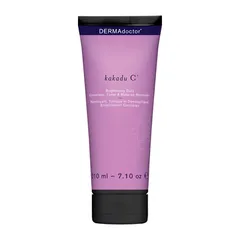
Kakadu C Brightening Daily Cleanser, Toner and Make-Up Remover
Source: From product name
This product works by removing dirt and oil from the surface of the skin.
Keep in mind that cleansing can disrupt the skin barrier, and most people do not need to cleanse their skin more than once per day.
Helps oil and water mix together
Used to create a thicker product consistency
Exfoliation
What does the product description say?
Formulated with vitamins C and A and AHAs, it works to exfoliate and brighten your skin, soothing, hydrating and improving the overall tone—leaving your complexion looking and feeling healthy and radiant.
Source: Dermstore
This product does not contain effective exfoliating ingredients. It might be able to deliver physical exfoliation, that is scrub off some of the dead cells on the surface of the skin. We do not recommend physical exfoliation, because it is not uniform (some bits of skin can get exfoliated too much while others not at all). It can also traumatize the skin and aggrevate acne and other skin conditions.
An exfoliating and moisturizing alpha-hydroxy acid (AHA). Typically causes less irritation than other AHAs, for example, glycolic acid. At high concentrations (about 15%), lactic acid can help reduce lines and wrinkles. Recent studies show that lactic acid can support the "good" bacteria living on skin's surface (healthy skin microbiome)
How honest is this product?
| Promise | Can it deliver? |
|---|---|
| Cleansing | |
| Exfoliation |
Total Promises Fulfilled score: 37/100.
We receive a small commission for purchases made through these links at no cost for you. Thank you for your support! Learn more
Potential irritants
Comedogenic ingredients
No comedogenic ingredients detected
User reviews (0)
Averages from community submissions.
No reviews yet for this product.
Be the first to share your experience!
Tried this product?
Help capture what the ingredient list can't—texture, finish, pilling, scent, and more. Answer what you can, skip the rest.
Takes ~30 seconds.
Reviews are shown in aggregate. No personal details.
| Product | Similarity | Price | Irritancy |
|---|---|---|---|
 Dermadoctor Kakadu C Brightening Daily Cleanser, Toner and Make-Up Remover | Current | ≈ $23.93 | |
 Victoria Beckham Daily Lactic Acid Gel Cleanser | 53% | - | |
 Victoria Beckham Beauty Daily Lactic Acid Gel Cleanser Nettoyant | 53% | $76.00 | |
 PRIORI Skincare Gentle Cleanser LCA fx110 | 51% | ≈ $40.80 | |
CeraVe Gel Moussant Anti-Imperfections | 51% | - | |
Sanex Zero % Sensitive Skin Shower Gel | 50% | ≈ $1.51 |
Key Actives
An exfoliating and moisturizing alpha-hydroxy acid (AHA). Typically causes less irritation than other AHAs, for example, glycolic acid. At high concentrations (about 15%), lactic acid can help reduce lines and wrinkles. Recent studies show that lactic acid can support the "good" bacteria living on skin's surface (healthy skin microbiome)
A synthetic version of green tea polyphenol that helps neutralize free radicals in skin
One of the best moisturizing ingredients. Naturally present in skin. It attracts water to the upper layer of the skin working as a humectant
Used to create a thicker product consistency
One of the best moisturizing ingredients. Attracts water into the upper layer of the skin
Potential irritants
A plant extract that can help calm down inflammation in skin. Can, however, itself be irritating
A plant extract that is used as a fragrance. Can be irritating and lead to photosensitivity
A plant extract used as a fragrance. Can be irritating
A preservative. Can be used to mask unpleasant smell. Can be irritating
Can be drying and contribute to skin irritation. Used in formulars to dissolve other ingredients, create a thinner product consistency or for its antibacterial properties
Traditionally used to treat sunburns, dermatitis and inflammation, but evidence for its effectiveness is lacking. The extract can contain humectants that help attract water into the skin
An exfoliating and moisturizing alpha-hydroxy acid (AHA). Typically causes less irritation than other AHAs, for example, glycolic acid. At high concentrations (about 15%), lactic acid can help reduce lines and wrinkles. Recent studies show that lactic acid can support the "good" bacteria living on skin's surface (healthy skin microbiome)
A plant extract that might have some anti-oxidant effect in skin, but evidence is lacking
A derivative of vitamin C that is more stable, but less bioavailable than the pure form of vitamin C. It does not penetrate the skin well, but has been shown to convert to pure vitamin C once in skin. It can be helpful in stimulating collagen production and lightening the skin tone, but the required concentration is likely to be very high
A more stable but less bio-available form of vitamin E compared to Tocopherol. Might help moisturize and protect the skin from free radicals, but mostly used in low concentrations to stabilize other ingredients.
A fruit extract that might help attract water to the upper layer of the skin. There is no evidence of other benefits in skin
Can have some moisturizing properties due to its sugar content
A fruit extract that might have some antioxidant properties and might help attract water to the skin, but evidence of effectiveness is lacking
A plant extract that might have some anti-oxidant properties but evidence of effectiveness in skin is lacking
A good mix of fatty acids that forms a protective layer on the skin. Improves the shelf life of products. Derived from coconut and glycerin
Helps preserve product formulations and can mask the smell of other ingredients in a product
Comedogenic ingredients
We couldn't find any comedogenic ingredients in this product
All ingredients
Helps attract water to the upper layer of the skin. Could be helpful in restoring the skin barrier function
One of the best moisturizing ingredients. Naturally present in skin. It attracts water to the upper layer of the skin working as a humectant
Traditionally used to treat sunburns, dermatitis and inflammation, but evidence for its effectiveness is lacking. The extract can contain humectants that help attract water into the skin
An exfoliating and moisturizing alpha-hydroxy acid (AHA). Typically causes less irritation than other AHAs, for example, glycolic acid. At high concentrations (about 15%), lactic acid can help reduce lines and wrinkles. Recent studies show that lactic acid can support the "good" bacteria living on skin's surface (healthy skin microbiome)
A plant extract that can help calm down inflammation in skin. Can, however, itself be irritating
A plant extract that might have some anti-oxidant effect in skin, but evidence is lacking
A derivative of vitamin C that is more stable, but less bioavailable than the pure form of vitamin C. It does not penetrate the skin well, but has been shown to convert to pure vitamin C once in skin. It can be helpful in stimulating collagen production and lightening the skin tone, but the required concentration is likely to be very high
A more stable but less bio-available form of vitamin E compared to Tocopherol. Might help moisturize and protect the skin from free radicals, but mostly used in low concentrations to stabilize other ingredients.
One of the best moisturizing ingredients. Attracts water into the upper layer of the skin
A plant extract that is used as a fragrance. Can be irritating and lead to photosensitivity
A fruit extract that might help attract water to the upper layer of the skin. There is no evidence of other benefits in skin
Can have some moisturizing properties due to its sugar content
A fruit extract that might have some antioxidant properties and might help attract water to the skin, but evidence of effectiveness is lacking
A plant extract used as a fragrance. Can be irritating
A plant extract that might have some anti-oxidant properties but evidence of effectiveness in skin is lacking
A good mix of fatty acids that forms a protective layer on the skin. Improves the shelf life of products. Derived from coconut and glycerin
Helps preserve product formulations and can mask the smell of other ingredients in a product
A synthetic version of green tea polyphenol that helps neutralize free radicals in skin
Helps attract water to the upper layer of the skin and improves the product texture
A preservative. Can be used to mask unpleasant smell. Can be irritating
Can be drying and contribute to skin irritation. Used in formulars to dissolve other ingredients, create a thinner product consistency or for its antibacterial properties
A preservative. It helps prevent bacterial growth in cosmetic products
Ingredient list view
Water, Lauryl glucoside, Unknown, Glucose, Glycerin, Aloe barbadensis leaf extract, Lactic acid, Hamamelis virginiana water, Xanthan gum, Terminalia ferdinandiana fruit extract, Magnesium ascorbyl phosphate, Malic acid, Tocopheryl acetate, Sodium hyaluronate, Citrus grandis fruit extract, Citrus aurantium dulcis fruit extract, Citrus aurantifolia peel extract, Mangifera indica fruit extract, Pyrus malus fruit extract, Prunus armeniaca fruit extract, Vanilla planifolia fruit extract, Rubus idaeus leaf extract, Lavandula angustifolia flower/leaf/stem extract, Ethylhexylglycerin, Caprylic/capric triglyceride, Sodium phytate, Propyl gallate, Gallyl glucoside, Epigallocatechin gallatyl glucoside, Dehydroacetic acid, Sorbitol, Benzyl alcohol, Alcohol, Phenoxyethanol
- Topical Glucose Induces Claudin-1 and Filaggrin Expression in a Mouse Model of Atopic Dermatitis and in Keratinocyte Culture, Exerting Anti-inflammatory Effects by Repairing Skin Barrier Function
- Glycerol and the skin: holistic approach to its origin and functions
- Epidermal and dermal effects of topical lactic acid
- Dual Effects of Alpha-Hydroxy Acids on the Skin
- The chemotherapeutic potential of Terminalia ferdinandiana: Phytochemistry and bioactivity
- Stability, transdermal penetration, and cutaneous effects of ascorbic acid and its derivatives
- Topical L-ascorbic acid: percutaneous absorption studies
- Hyaluronic acid: A key molecule in skin aging
- Hyaluronan (Hyaluronic Acid): a natural moisturizer for skin care
- Safety Assessment of Citrus Fruit-Derived Ingredients as Used in Cosmetics
- Photosensitivity in children: An approach to diagnosis and management
- 4 Final Report on the Safety Assessment of Sodium Dehydroacetate and Dehydroacetic Acid