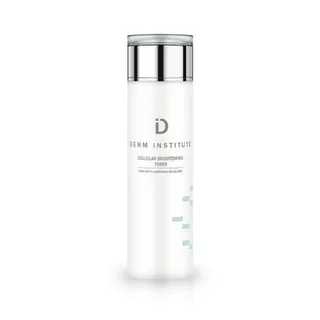
Derm Institute Cellular Brightening Toner

Derm Institute Cellular Brightening Toner

Efficacy100/100IrritancyHigh

Works for

Evens skin tone
Niacinamide, Ascorbyl glucoside + 2 more
Works well
What the product description says
“Reduce the appearance of unwanted dark spots while hydrating the skin with the Derm Institute Cellular Brightening Toner, a skincare treatment with an innovative moisture complex to help support the skin’s protective barrier against environmental stressors and UV damage.”
Source: SpaceNK US

This product can help reduce hypepigmentation and even out the skin tone because it contains the following effective ingredients: niacinamide, salicylic acid

The following ingredient (ingredients) in this product might be helpful, but there is no evidence to confirm that it actually can help even out the skin tone: ascorbyl glucoside.

Keep in mind that you would need to apply any topical skincare targetted at hypigmentation consistently for a couple of months to get a result. No topical skincare product can help get rid of hyperpigmentation (including post-acne marks and age spots) instantly.

NiacinamideKey activeEffect: HighIs proven to be effective in reducing blemishes, evening out skin tone and helping to improve lines and wrinkles. It helps the skin to repair sun damage, calm down inflammation and keep maintain good levels of moisture. The concentration of about 2% is effective for supporting the skin barrier and evening out the skin tone. Concentration of 4-6% is better for helping with acne and balancing the sebum production~4.1–5%
Ascorbyl glucosideKey activeEffect: MediumA vitamin C derivative that is more stable but less potent than pure form of vitamin C. Has a potential to boost collagen production, nutralise free radicals and reduce hyperpigmentation, but the required concentration is likely to be much higher than for the pure form of vitamin C, limiting the ingredient's effectiveness in products~1.5–1.8%
Salicylic acidEffect: LowUsed for skin exfoliation. It has an anti-inflammatory and anti-bacterial effect, helps to unclog pores, prevent blemishes and speed up healing of the existing ones. Sometimes referred to as a BHA (beta-hydroxy acid)~0.3–0.55%
Morus bombycis root extractEffect: Low, below effective doseA plant extract that might contain arbutin, a compound that has skin-lightening properties. Might have some anti-oxidant activity. Is unlikely to be effective though in the concentrations typically used in skincare products~0.25–0.45%
Moisturizing
Niacinamide, Panthenol + 21 more
Works well
What the product description says
“Reduce the appearance of unwanted dark spots while hydrating the skin with the Derm Institute Cellular Brightening Toner, a skincare treatment with an innovative moisture complex to help support the skin’s protective barrier against environmental stressors and UV damage.”
Source: SpaceNK US

This product can help improve hydration of the skin with the two types of ingredients.

The first type is called “humectants”:
these ingredients help attract water. When humectants are on the surface of the skin, they “pull in” the moisture from the outside environment, or from within deeper layers of the skin. The following ingredients in this product do the job: glycerin, sodium hyaluronate.

This product also contains ingredients called “occlusives”. They help reduce the speed with which our skin loses moisture to the outside environment. These ingredients also help soften the upper layer of the skin, so it feels less tight and nicer to the touch. The following ingredients in this product do the job: cholesterol, glycine soja oil.

The following ingredients in this product are especially good for supporting the skin barrier and helping with the hydration level: ceramide ap, ceramide eop, ceramide np, niacinamide, oligopeptide-68, panthenol, phytosphingosine

NiacinamideHeroEffect: HighIs proven to be effective in reducing blemishes, evening out skin tone and helping to improve lines and wrinkles. It helps the skin to repair sun damage, calm down inflammation and keep maintain good levels of moisture. The concentration of about 2% is effective for supporting the skin barrier and evening out the skin tone. Concentration of 4-6% is better for helping with acne and balancing the sebum production~4.1–5%
PanthenolHero· HumectantEffect: HighHelps attract water to the upper layer of the skin and can help improve skin barrier function~1.6–1.9%
Ceramide npHero· EmollientEffect: HighA type of lipid similar to ceramides naturally present in skin. Helps to soften the upper layer of the skin and supports the skin barrier function to keep it hydrated. Can help to prevent inflammation in skin~0.35–0.65%
Ceramide apHero· EmollientEffect: HighA type of lipid similar to ceramides naturally present in skin. Helps to soften the upper layer of the skin and supports the skin barrier function to keep it hydrated. Can help to prevent inflammation in skin~0.35–0.6%
PhytosphingosineHero· EmollientEffect: HighA type of lipid that is naturally present in skin. It might help in repairing skin barrier function and has anti-bacterial effect~0.35–0.65%
Oligopeptide-68HeroEffect: HighA type of peptide. Peptides are excellent moisturizers and might be able support collagen production reducing fine lines and wrinkles~0.3–0.55%
Ceramide eopHero· EmollientEffect: HighA type of lipid similar to ceramides naturally present in skin. Helps to soften the upper layer of the skin and supports the skin barrier function to keep it hydrated. Can help to prevent inflammation in skin~0.2–0.35%
Sodium hyaluronateKey active· HumectantEffect: HighOne of the best moisturizing ingredients. Attracts water into the upper layer of the skin~0.55–0.8%
CholesterolKey active· EmollientEffect: HighAn emollient that is naturally found in skin~0.4–0.6%
Cetearyl alcoholKey active· EmollientEffect: MediumA non-drying alcohol. Works as an emollient. Helps water and oil mix together and creates a nice product texture~0.4–0.65%
Vitis vinifera seed oilKey active· EmollientEffect: HighA great emollient that can also have anti-oxidant properties~0.35–0.65%
GlycerinKey active· HumectantEffect: HighOne of the best moisturizing ingredients. Naturally present in skin. It attracts water to the upper layer of the skin working as a humectant~0.35–0.65%
Cetyl palmitateKey active· EmollientEffect: MediumAn emollient that helps soften the skin and is used to improve product texture and stability~0.35–0.65%
Glycine soja oilKey active· EmollientEffect: HighA good emollient that helps soften the skin and helps repair its barrier function. It can clog pores if used in high concentrations.~0.3–0.6%
Butylene glycol· HumectantEffect: LowUsed to create a nice product texture and help delivery of other ingredients. Might be somewhat helpful in attracting water to the upper layer of the skin~3–3.6%
Pentylene glycol· EmollientEffect: LowUsed to preserve products, dissolve other ingredients and create a nice product texture~2–2.4%
Hydrogenated polyisobutene· Emollient, OcclusiveEffect: LowUsed to improve the product consistency and soften the upper layer of the skin~1–1.2%
Glyceryl stearate· EmollientEffect: LowAn emollient that softens the skin and forms a protective layer on its surface. Helps water and oil mix together~0.6–0.9%
Propylene glycol· HumectantEffect: LowHelps oil and water mix together and can enhance the penetration of other ingredients into the skin. It can be irritating~0.5–0.7%
Ananas sativus fruit extractEffect: LowA fruit extract that might help to attract water to the upper layer of the skin, but there is no evidence for any other benefits to the skin~0.45–0.65%
Scutellaria baicalensis root extract· HumectantEffect: LowA plant extract that might contain a compound baicalin that could be helpful in neutralizing free radicals and reducing inflammation in skin. The baicalin concentration in skincare products is often too low for an effective action. Can be used for its fragrant properties~0.2–0.4%
Aloe barbadensis leaf juiceEffect: Low, below effective doseTraditionally used to treat sunburns, dermatitis and inflammation, but evidence for its effectiveness is lacking. The extract can contain humectants that help attract water into the skin~0.7–1.1%
AllantoinUnder-dosedHelps calm down inflammation in skin and can help reduce itching. Helps to repair the skin barrier and keep skin hydrated~0.3–0.5%
Exfoliation
Salicylic acid, Allantoin
Works well
What the product description says
“Salicylic acid provides gentle exfoliation without irritating the complexion, helping maintain an even skin tone and texture.”
Source: SpaceNK US

This product can help exfoliate the skin. In other words, it helps break down the bonds between dead cells on the surface of the skin and speed up the skin turnover. Skin often appears softer and brighter after exfoliation, but overdoing it can result in disrupted skin barrier. The following ingredient is doing the exfoliating job in this product: salicylic acid.

Salicylic acidKey activeEffect: HighUsed for skin exfoliation. It has an anti-inflammatory and anti-bacterial effect, helps to unclog pores, prevent blemishes and speed up healing of the existing ones. Sometimes referred to as a BHA (beta-hydroxy acid)~0.3–0.55%
AllantoinEffect: Low, below effective doseHelps calm down inflammation in skin and can help reduce itching. Helps to repair the skin barrier and keep skin hydrated~0.3–0.5%
Anti-aging
Side benefit · Niacinamide, Ascorbyl glucoside + 2 more
Works well

This product can help reduce and prevent fine lines and wrinkles, improve skin elasticity and firmness because it contains niacinamide.

These ingredients in the product can also be helpful, even though there is less evidence for their effectiveness: ascorbyl glucoside, oligopeptide-68.

Keep in mind that it typically takes at least 6 weeks to notice any results because the changes that are needed to improve fine lines and elasticity happen in the deeper layers of the skin. No topical anti-aging product can “erase” wrinkles or fully reverse signs of aging.

NiacinamideKey activeEffect: HighIs proven to be effective in reducing blemishes, evening out skin tone and helping to improve lines and wrinkles. It helps the skin to repair sun damage, calm down inflammation and keep maintain good levels of moisture. The concentration of about 2% is effective for supporting the skin barrier and evening out the skin tone. Concentration of 4-6% is better for helping with acne and balancing the sebum production~4.1–5%
Ascorbyl glucosideKey activeEffect: MediumA vitamin C derivative that is more stable but less potent than pure form of vitamin C. Has a potential to boost collagen production, nutralise free radicals and reduce hyperpigmentation, but the required concentration is likely to be much higher than for the pure form of vitamin C, limiting the ingredient's effectiveness in products~1.5–1.8%
Oligopeptide-68Key activeEffect: MediumA type of peptide. Peptides are excellent moisturizers and might be able support collagen production reducing fine lines and wrinkles~0.3–0.55%
Aloe barbadensis leaf juiceEffect: Low, below effective doseTraditionally used to treat sunburns, dermatitis and inflammation, but evidence for its effectiveness is lacking. The extract can contain humectants that help attract water into the skin~0.7–1.1%
Anti-blemish
Side benefit · Niacinamide, Salicylic acid + 3 more
Works well

This product can help reduce breakouts and clogged pores because it contains the following ingredient: niacinamide, salicylic acid. These ingredients is used for treating acne and can have a noticeable effect.

NiacinamideHeroEffect: HighIs proven to be effective in reducing blemishes, evening out skin tone and helping to improve lines and wrinkles. It helps the skin to repair sun damage, calm down inflammation and keep maintain good levels of moisture. The concentration of about 2% is effective for supporting the skin barrier and evening out the skin tone. Concentration of 4-6% is better for helping with acne and balancing the sebum production~4.1–5%
Salicylic acidHeroEffect: HighUsed for skin exfoliation. It has an anti-inflammatory and anti-bacterial effect, helps to unclog pores, prevent blemishes and speed up healing of the existing ones. Sometimes referred to as a BHA (beta-hydroxy acid)~0.3–0.55%
PhytosphingosineEffect: LowA type of lipid that is naturally present in skin. It might help in repairing skin barrier function and has anti-bacterial effect~0.35–0.65%
Aloe barbadensis leaf juiceEffect: Low, below effective doseTraditionally used to treat sunburns, dermatitis and inflammation, but evidence for its effectiveness is lacking. The extract can contain humectants that help attract water into the skin~0.7–1.1%
AllantoinEffect: Low, below effective doseHelps calm down inflammation in skin and can help reduce itching. Helps to repair the skin barrier and keep skin hydrated~0.3–0.5%
Anti-oxidation
Side benefit · Ascorbyl glucoside, Bisabolol + 3 more
May help

This product contains antioxidants (ascorbyl glucoside) that might be able to help neutralize free radicals in skin to lessen the damage it gets from the UV light (sun). There is not enough evidence to confirm their effectiveness in skin though.

Ascorbyl glucosideKey activeEffect: MediumA vitamin C derivative that is more stable but less potent than pure form of vitamin C. Has a potential to boost collagen production, nutralise free radicals and reduce hyperpigmentation, but the required concentration is likely to be much higher than for the pure form of vitamin C, limiting the ingredient's effectiveness in products~1.5–1.8%
BisabololEffect: LowAn active component of chamomile plant that historically has been used to calm down irritated skin. A recent study shows that bisabolol indeed can have some anti-inflammatory effect on skin, even though conclusive data is lacking. Bisabolol has a sweet floral scent and can be added to products for its aromatic properties~1.1–1.4%
Vitis vinifera seed oilEffect: LowA great emollient that can also have anti-oxidant properties~0.35–0.65%
Scutellaria baicalensis root extractEffect: LowA plant extract that might contain a compound baicalin that could be helpful in neutralizing free radicals and reducing inflammation in skin. The baicalin concentration in skincare products is often too low for an effective action. Can be used for its fragrant properties~0.2–0.4%
ErgothioneineUnder-dosedCan help neutralize free radicals in skin. Preliminary studies show that it can be more effective than coenzyme Q10 but studies on effective concentration for topical applications are lacking~0.15–0.3%

Can it cause trouble?

Irritancy
5 strong irritants: Parfum, Citral + 3 more — patch-test recommended
High risk
We flagged 30 ingredients with irritancy potential. Severity depends on your sensitivity threshold; the table lists the worst offenders first.
IngredientFunctionIrritationEst. amount
Propylene glycolHelps oil and water mix together and can enhance the penetration of other ingredients into the skin. It can be irritatingHigh~0.5–0.7%est.
Salicylic acidUsed for skin exfoliation. It has an anti-inflammatory and anti-bacterial effect, helps to unclog pores, prevent blemishes and speed up healing of the existing ones. Sometimes referred to as a BHA (beta-hydroxy acid)High~0.3–0.55%est.
ParfumAn aromatic blend of unspecified and possibly irritating ingredientsHigh~0.3–0.55%est.
Morus bombycis root extractA plant extract that might contain arbutin, a compound that has skin-lightening properties. Might have some anti-oxidant activity. Is unlikely to be effective though in the concentrations typically used in skincare productsHigh~0.25–0.45%est.
Scutellaria baicalensis root extractA plant extract that might contain a compound baicalin that could be helpful in neutralizing free radicals and reducing inflammation in skin. The baicalin concentration in skincare products is often too low for an effective action. Can be used for its fragrant propertiesHigh~0.2–0.4%est.
CitralA fragrance with a lemon scent. A likely irritantHigh~0.15–0.25%est.
GeraniolA fragrance. Can be irritatingHigh~0.1–0.25%est.
Hexyl cinnamalA fragrance with jasmine smell. A likely irritantHigh~0.1–0.15%est.
LimoneneA common frangrance that can easily irritate skin, especially if exposed to air, light or heatHigh~0.05–0.15%est.
Leuconostoc/radish root ferment filtrateA preservative that comes from radishes fermented by a bacteria. New research suggests that the preservation properties in the ingredient come from an ammonium salt that is not present naturally in radish root but used in its cultivation. Is problematic because the exact amount of the preservative agents is difficult to determineMedium~2.3–2.8%est.
Pentylene glycolUsed to preserve products, dissolve other ingredients and create a nice product textureMedium~2–2.4%est.
Ascorbyl glucosideA vitamin C derivative that is more stable but less potent than pure form of vitamin C. Has a potential to boost collagen production, nutralise free radicals and reduce hyperpigmentation, but the required concentration is likely to be much higher than for the pure form of vitamin C, limiting the ingredient's effectiveness in productsMedium~1.5–1.8%est.
Aloe barbadensis leaf juiceTraditionally used to treat sunburns, dermatitis and inflammation, but evidence for its effectiveness is lacking. The extract can contain humectants that help attract water into the skinMedium~0.7–1.1%est.
Peg-40 hydrogenated castor oilHelps oil and water mix togetherMedium~0.5–0.8%est.
Sodium lauroyl lactylateHelps water and oil mix togetherMedium~0.5–0.75%est.
Ananas sativus fruit extractA fruit extract that might help to attract water to the upper layer of the skin, but there is no evidence for any other benefits to the skinMedium~0.45–0.65%est.
Ceteareth-20Helps oil and water mix together. Has some emollient propertiesMedium~0.5–0.75%est.
Ceteareth-12Helps water and oil mix togetherMedium~0.35–0.65%est.
Acacia senegal gumHelps mask the small of other ingredients and improve the product textureMedium~0.35–0.6%est.
ChlorphenesinA preservativeMedium~0.16–0.32%est.
Vitis vinifera seed oilA great emollient that can also have anti-oxidant propertiesMedium~0.35–0.65%est.
Sigesbeckia orientalis extractA plant extract that can contain an anti-inflammatory compoundMedium~0.3–0.55%est.
Potassium hydroxideUsed to adjust the pH level of productsMedium~0.3–0.6%est.
Disodium edtaStabilizes the product formulationMedium~0.3–0.55%est.
Glycine soja oilA good emollient that helps soften the skin and helps repair its barrier function. It can clog pores if used in high concentrations.Medium~0.3–0.6%est.
Sodium oleateHelps oil and water mix together and create a thicker product consistencyMedium~0.75–1.1%est.
EthylhexylglycerinA preservativeMedium~0.3–0.55%est.
Sodium metabisulfiteA preservativeMedium~0.1–0.2%est.
Sodium sulfiteHelps stabilize and preserve a product formulationMedium~0.1–0.2%est.
Potassium sorbateA preservativeMedium~0.15–0.3%est.
Comedogenic
3 ingredients rated 2 or more on the 0–5 pore-clogging scale
3 flagged
These ingredients have a comedogenic rating of 2 or more on a 0–5 scale; the table shows each one's rating. In leave-on products they can clog pores in acne-prone skin.
IngredientFunctionRatingEst. amount
Ceteareth-20Helps oil and water mix together. Has some emollient properties2/5~0.5–0.75%est.
Cetearyl alcoholA non-drying alcohol. Works as an emollient. Helps water and oil mix together and creates a nice product texture2/5~0.4–0.65%est.
Glycine soja oilA good emollient that helps soften the skin and helps repair its barrier function. It can clog pores if used in high concentrations.2/5~0.3–0.6%est.

User reviews

Would you recommend?
No community reviews yet.

Be the first — your take helps the next person decide.

Ingredients

Filter by role to see what each ingredient is doing.

Water~45–55%
Formula
Irritation risk
Low

Plain old water

More about Water
Propanediol~4.8–5.9%
Formula
Irritation risk
Low

Acts as a solvent for other ingredients. Speeds up the absorption of other ingredients into the skin

More about Propanediol
Niacinamide~4.1–5%
Hero · Moisturizing, Anti-blemish
Irritation risk
Low
Works for
MoisturizingAnti-blemishEvens skin toneAnti-agingReduces irritationAnti-inflammatoryAntibacterialReduces redness

Is proven to be effective in reducing blemishes, evening out skin tone and helping to improve lines and wrinkles. It helps the skin to repair sun damage, calm down inflammation and keep maintain good levels of moisture. The concentration of about 2% is effective for supporting the skin barrier and evening out the skin tone. Concentration of 4-6% is better for helping with acne and balancing the sebum production

More about Niacinamide
Butylene glycol~3–3.6%
Formula
Irritation risk
Low
Works for
Moisturizing

Used to create a nice product texture and help delivery of other ingredients. Might be somewhat helpful in attracting water to the upper layer of the skin

More about Butylene glycol
Leuconostoc/radish root ferment filtrate~2.3–2.8%
Irritant · medium
Irritation risk
Medium

A preservative that comes from radishes fermented by a bacteria. New research suggests that the preservation properties in the ingredient come from an ammonium salt that is not present naturally in radish root but used in its cultivation. Is problematic because the exact amount of the preservative agents is difficult to determine

More about Leuconostoc/radish root ferment filtrate
Pentylene glycol~2–2.4%
Irritant · medium
Irritation risk
Medium
Works for
Moisturizing

Used to preserve products, dissolve other ingredients and create a nice product texture

More about Pentylene glycol
Panthenol~1.6–1.9%
Hero · Moisturizing
Irritation risk
Low
Works for
Reduces rednessMoisturizingReduces irritation

Helps attract water to the upper layer of the skin and can help improve skin barrier function

More about Panthenol
Ascorbyl glucoside~1.5–1.8%
Key activeIrritant · medium
Irritation risk
Medium
Works for
Anti-oxidationAnti-agingEvens skin tone

A vitamin C derivative that is more stable but less potent than pure form of vitamin C. Has a potential to boost collagen production, nutralise free radicals and reduce hyperpigmentation, but the required concentration is likely to be much higher than for the pure form of vitamin C, limiting the ingredient's effectiveness in products

More about Ascorbyl glucoside
Bisabolol~1.1–1.4%
Formula
Irritation risk
Low
Works for
Reduces irritationAnti-inflammatoryAnti-oxidation

An active component of chamomile plant that historically has been used to calm down irritated skin. A recent study shows that bisabolol indeed can have some anti-inflammatory effect on skin, even though conclusive data is lacking. Bisabolol has a sweet floral scent and can be added to products for its aromatic properties

More about Bisabolol
Hydrogenated polyisobutene~1–1.2%
Formula
Irritation risk
Low
Works for
Moisturizing

Used to improve the product consistency and soften the upper layer of the skin

More about Hydrogenated polyisobutene
Aloe barbadensis leaf juice~0.7–1.1%
Irritant · medium
Irritation risk
Medium
Works for
MoisturizingReduces irritationReduces rednessAntibacterialAnti-inflammatoryAnti-blemishAnti-aging

Traditionally used to treat sunburns, dermatitis and inflammation, but evidence for its effectiveness is lacking. The extract can contain humectants that help attract water into the skin

More about Aloe barbadensis leaf juice
Sclerotium gum~0.6–0.9%
Formula
Irritation risk
Low

Used to create gel-like formulas and stabilize emulsions

More about Sclerotium gum
Glyceryl stearate~0.6–0.9%
Formula
Irritation risk
Low
Works for
CleansingMoisturizing

An emollient that softens the skin and forms a protective layer on its surface. Helps water and oil mix together

More about Glyceryl stearate
Sodium hyaluronate~0.55–0.8%
Key active
Irritation risk
Low
Works for
Moisturizing

One of the best moisturizing ingredients. Attracts water into the upper layer of the skin

More about Sodium hyaluronate
Propylene glycol~0.5–0.7%
Irritant · high
Irritation risk
High
Works for
Moisturizing

Helps oil and water mix together and can enhance the penetration of other ingredients into the skin. It can be irritating

More about Propylene glycol
Peg-40 hydrogenated castor oil~0.5–0.8%
Irritant · medium
Irritation risk
Medium
Works for
Cleansing

Helps oil and water mix together

More about Peg-40 hydrogenated castor oil
Sodium lauroyl lactylate~0.5–0.75%
Irritant · medium
Irritation risk
Medium
Works for
Cleansing

Helps water and oil mix together

More about Sodium lauroyl lactylate
Ananas sativus fruit extract~0.45–0.65%
Irritant · medium
Irritation risk
Medium
Works for
Moisturizing

A fruit extract that might help to attract water to the upper layer of the skin, but there is no evidence for any other benefits to the skin

More about Ananas sativus fruit extract
Ceteareth-20~0.5–0.75%
Comedogenic 2/5Irritant · medium
Irritation risk
Medium
Comedogenicity
2/5
Works for
Cleansing

Helps oil and water mix together. Has some emollient properties

More about Ceteareth-20
Phenoxyethanol~0.4–0.6%
Formula
Irritation risk
Low

A preservative. It helps prevent bacterial growth in cosmetic products

More about Phenoxyethanol
Ceteareth-12~0.35–0.65%
Irritant · medium
Irritation risk
Medium
Works for
Cleansing

Helps water and oil mix together

More about Ceteareth-12
Cetearyl alcohol~0.4–0.65%
Key activeComedogenic 2/5
Irritation risk
Low
Comedogenicity
2/5
Works for
CleansingMoisturizing

A non-drying alcohol. Works as an emollient. Helps water and oil mix together and creates a nice product texture

More about Cetearyl alcohol
Cetyl palmitate~0.35–0.65%
Key active
Irritation risk
Low
Works for
Moisturizing

An emollient that helps soften the skin and is used to improve product texture and stability

More about Cetyl palmitate
Salicylic acid~0.3–0.55%
Hero · Anti-blemishIrritant · high
Irritation risk
High
Works for
ExfoliationAnti-blemishAnti-inflammatoryAntibacterialEvens skin tone

Used for skin exfoliation. It has an anti-inflammatory and anti-bacterial effect, helps to unclog pores, prevent blemishes and speed up healing of the existing ones. Sometimes referred to as a BHA (beta-hydroxy acid)

More about Salicylic acid
Acacia senegal gum~0.35–0.6%
Irritant · medium
Irritation risk
Medium

Helps mask the small of other ingredients and improve the product texture

More about Acacia senegal gum
Chlorphenesin~0.16–0.32%
Irritant · medium
Irritation risk
Medium

A preservative

More about Chlorphenesin
Allantoin~0.3–0.5%
Under-dosed
Irritation risk
Low
Works for
Anti-inflammatoryMoisturizingReduces irritationAnti-blemishReduces rednessExfoliation

Helps calm down inflammation in skin and can help reduce itching. Helps to repair the skin barrier and keep skin hydrated

More about Allantoin
Parfum~0.3–0.55%
Irritant · high
Irritation risk
High

An aromatic blend of unspecified and possibly irritating ingredients

More about Parfum
Xanthan gum~0.3–0.6%
Formula
Irritation risk
Low
Works for
Cleansing

Used to create a thicker product consistency

More about Xanthan gum
Saxifraga sarmentosa extract~0.3–0.55%
Formula
Vitis vinifera seed oil~0.35–0.65%
Key activeIrritant · medium
Irritation risk
Medium
Works for
MoisturizingAnti-oxidation

A great emollient that can also have anti-oxidant properties

More about Vitis vinifera seed oil
Sigesbeckia orientalis extract~0.3–0.55%
Irritant · medium
Irritation risk
Medium
Works for
Anti-inflammatory

A plant extract that can contain an anti-inflammatory compound

More about Sigesbeckia orientalis extract
Ceramide np~0.35–0.65%
Hero · Moisturizing
Irritation risk
Low
Works for
MoisturizingAnti-inflammatoryReduces irritation

A type of lipid similar to ceramides naturally present in skin. Helps to soften the upper layer of the skin and supports the skin barrier function to keep it hydrated. Can help to prevent inflammation in skin

More about Ceramide np
Potassium hydroxide~0.3–0.6%
Irritant · medium
Irritation risk
Medium

Used to adjust the pH level of products

More about Potassium hydroxide
Rabdosia rubescens extract~0.3–0.55%
Formula
Disodium edta~0.3–0.55%
Irritant · medium
Irritation risk
Medium

Stabilizes the product formulation

More about Disodium edta
Ceramide ap~0.35–0.6%
Hero · Moisturizing
Irritation risk
Low
Works for
Reduces irritationMoisturizingAnti-inflammatory

A type of lipid similar to ceramides naturally present in skin. Helps to soften the upper layer of the skin and supports the skin barrier function to keep it hydrated. Can help to prevent inflammation in skin

More about Ceramide ap
Phytosphingosine~0.35–0.65%
Hero · Moisturizing
Irritation risk
Low
Works for
MoisturizingAnti-blemishAnti-inflammatory

A type of lipid that is naturally present in skin. It might help in repairing skin barrier function and has anti-bacterial effect

More about Phytosphingosine
Cholesterol~0.4–0.6%
Key active
Irritation risk
Low
Works for
CleansingMoisturizing

An emollient that is naturally found in skin

More about Cholesterol
Glycerin~0.35–0.65%
Key active
Irritation risk
Low
Works for
Moisturizing

One of the best moisturizing ingredients. Naturally present in skin. It attracts water to the upper layer of the skin working as a humectant

More about Glycerin
Hydrogenated lecithin~0.3–0.6%
Formula
Irritation risk
Low
Works for
Cleansing

Helps to retain moisture by creating a protective barrier on the skin. Rich in fatty acids. Improves product texture and helps with the penetration of other ingredients.

More about Hydrogenated lecithin
Glycine soja oil~0.3–0.6%
Key activeComedogenic 2/5Irritant · medium
Irritation risk
Medium
Comedogenicity
2/5
Works for
Moisturizing

A good emollient that helps soften the skin and helps repair its barrier function. It can clog pores if used in high concentrations.

More about Glycine soja oil
Oligopeptide-68~0.3–0.55%
Hero · Moisturizing
Irritation risk
Low
Works for
MoisturizingAnti-aging

A type of peptide. Peptides are excellent moisturizers and might be able support collagen production reducing fine lines and wrinkles

More about Oligopeptide-68
Sodium oleate~0.75–1.1%
Irritant · medium
Irritation risk
Medium
Works for
Cleansing

Helps oil and water mix together and create a thicker product consistency

More about Sodium oleate
Carbomer~0.3–0.55%
Formula
Irritation risk
Low
Works for
Cleansing

Helps create a thicker or gel-like product texture. It is not a surfactant but can be used in gentle cleansing formulations

More about Carbomer
Ethylhexylglycerin~0.3–0.55%
Irritant · medium
Irritation risk
Medium

A preservative

More about Ethylhexylglycerin
Sodium metabisulfite~0.1–0.2%
Irritant · medium
Irritation risk
Medium

A preservative

More about Sodium metabisulfite
Sodium sulfite~0.1–0.2%
Irritant · medium
Irritation risk
Medium

Helps stabilize and preserve a product formulation

More about Sodium sulfite
Malpighia emarginata fruit extract~0.25–0.5%
Formula
Morus bombycis root extract~0.25–0.45%
Irritant · high
Irritation risk
High
Works for
Evens skin tone

A plant extract that might contain arbutin, a compound that has skin-lightening properties. Might have some anti-oxidant activity. Is unlikely to be effective though in the concentrations typically used in skincare products

More about Morus bombycis root extract
Scutellaria baicalensis root extract~0.2–0.4%
Irritant · high
Irritation risk
High
Works for
AntibacterialAnti-oxidationMoisturizingReduces irritationAnti-inflammatory

A plant extract that might contain a compound baicalin that could be helpful in neutralizing free radicals and reducing inflammation in skin. The baicalin concentration in skincare products is often too low for an effective action. Can be used for its fragrant properties

More about Scutellaria baicalensis root extract
Sodium benzoate~0.2–0.35%
Formula
Irritation risk
Low

A preservative

More about Sodium benzoate
Potassium sorbate~0.15–0.3%
Irritant · medium
Irritation risk
Medium

A preservative

More about Potassium sorbate
Ergothioneine~0.15–0.3%
Under-dosed
Irritation risk
Low
Works for
Anti-oxidation

Can help neutralize free radicals in skin. Preliminary studies show that it can be more effective than coenzyme Q10 but studies on effective concentration for topical applications are lacking

More about Ergothioneine
Ceramide eop~0.2–0.35%
Hero · Moisturizing
Irritation risk
Low
Works for
Reduces irritationMoisturizingAnti-inflammatory

A type of lipid similar to ceramides naturally present in skin. Helps to soften the upper layer of the skin and supports the skin barrier function to keep it hydrated. Can help to prevent inflammation in skin

More about Ceramide eop
Citral~0.15–0.25%
Irritant · high
Irritation risk
High

A fragrance with a lemon scent. A likely irritant

More about Citral
Geraniol~0.1–0.25%
Irritant · high
Irritation risk
High

A fragrance. Can be irritating

More about Geraniol
Hexyl cinnamal~0.1–0.15%
Irritant · high
Irritation risk
High

A fragrance with jasmine smell. A likely irritant

More about Hexyl cinnamal
Limonene~0.05–0.15%
Irritant · high
Irritation risk
High

A common frangrance that can easily irritate skin, especially if exposed to air, light or heat

More about Limonene
Ingredient list view

Water, Propanediol, Niacinamide, Butylene glycol, Leuconostoc/radish root ferment filtrate, Pentylene glycol, Panthenol, Ascorbyl glucoside, Bisabolol, Hydrogenated polyisobutene, Aloe barbadensis leaf juice, Sclerotium gum, Glyceryl stearate, Sodium hyaluronate, Propylene glycol, Peg-40 hydrogenated castor oil, Sodium lauroyl lactylate, Ananas sativus fruit extract, Ceteareth-20, Phenoxyethanol, Ceteareth-12, Cetearyl alcohol, Cetyl palmitate, Salicylic acid, Acacia senegal gum, Chlorphenesin, Allantoin, Parfum, Xanthan gum, Saxifraga sarmentosa extract, Vitis vinifera seed oil, Sigesbeckia orientalis extract, Ceramide np, Potassium hydroxide, Rabdosia rubescens extract, Disodium edta, Ceramide ap, Phytosphingosine, Cholesterol, Glycerin, Hydrogenated lecithin, Glycine soja oil, Oligopeptide-68, Sodium oleate, Carbomer, Ethylhexylglycerin, Sodium metabisulfite, Sodium sulfite, Malpighia emarginata fruit extract, Morus bombycis root extract, Scutellaria baicalensis root extract, Sodium benzoate, Potassium sorbate, Ergothioneine, Ceramide eop, Citral, Geraniol, Hexyl cinnamal, Limonene

Compare prices

Retailers ranked by price — lowest first.

SpaceNK US
$80.00 Out of stock
Check

Affiliate links · As an Amazon Associate, WIMJ earns from qualifying purchases.

Worth comparing, line by line.

Match % combines shared ingredients, the first five ingredients, shared actives and hero ingredients, irritancy (lower counts in the alternative's favour), texture and body area. Only products in the same routine step are compared.

Side-by-side comparison of this product against its closest alternatives
Derm InstituteCellular Brightening TonerYOUR PRODUCTCeraVeBlemish Control Gel Moisturiser with 2% Salicylic Acid & Niacinamide for Blemish-Prone SkinBe MinimalistPolyhydroxy Acid 03% TonerCreightonsSalicylic Acid Exfoliating Tonic 1
Match—79%75%74%
Price—$11.89$7.92$3.18
Shared key ingredients—9 of 176 of 175 of 17
Key difference—Glycolic AcidAnhydroxylitol—
Irritancy High Low Medium Medium
Drying alcohol——— Contains drying alcohol
View product Shop Shop Shop

More alternatives: ARZTIN A-Cera Barrier Ampoule TonerPaula's choice Pore-Reducing Toner

Cheaper alternatives? See how this stacks up against similar formulas.
We compare ingredient profiles across our catalog — pick the closest match for your budget.
Open dupe finder

Product summary

"Derm Institute - Cellular Brightening Toner" is effective for: Anti-aging, Anti-oxidation, Anti-inflammatory, Moisturizing, Evens skin tone and Anti-blemish

Ingredient callouts

  • A good concentration of Niacinamide (4.10% - 5.00%). Niacinamide is a well-studied multi-tasking active. It is stable, and can work well in almost any hydrating formulation. There is solid evidence that Niacinamide can help support skin barrier, regulate oil production and reduce acne and clogged pores. It also helps to fight photodamage and improve the skin tone, reducing pigmentation marks.
  • Ceramides (ceramide eop 0.20% - 0.35%, phytosphingosine 0.35% - 0.65%, ceramide ap 0.30% - 0.55% and ceramide np 0.35% - 0.65%). Ceramides are a type of lipids that our skin produces itself. They are a building block of the skin's barrier. Ceramides used in skincare are synthetic or extracted from plants. They work well for softening the skin surface and "patch holes" in the skin's barrier.
  • Peptides (oligopeptide-68 0.30% - 0.55%). Peptides are a very big group of ingredients. They all consist of a different combination of aminoacids. Our skin produces Peptides naturally. Some of them work as natural antibiotics, promote wound-healing and production of collagen. The scientists are still studying how effective the topical application of Peptides is, but it is very likely that theynare helpful. Peptides might be able to support skin barrier restoration and even have an anti-aging benefit. At the very least, they certainly help attract water to the skin and support the hydration in this way.
  • Panthenol (pro-vitamin B5) at about 1.60% - 1.90% concentration. In this concentration, Panthenol works effectively to improve the skin barrier and reduce inflammation.
  • Humectants (glycerin 0.35% - 0.65%, sodium hyaluronate 0.55% - 0.80% and panthenol 1.60% - 1.90%). These ingredients help attract water to the upper layer of the skin and improve the skin hydration.

Price

The product retails from 65.00£ up to 467.00£ in the United Kingdom and for 80.00$ in the United States.

For a detailed price comparison: click here.

Sources cited in this review

Every concentration estimate and effectiveness label is anchored to one of these 33 studies and safety reviews.

  1. 1
  2. 2
  3. 3
  4. 4
  5. 5
  6. 6
Derm Institute Cellular Brightening Toner
Derm InstituteCellular Brightening Toner

Affiliate links · As an Amazon Associate, WIMJ earns from qualifying purchases.

As an Amazon Associate, WIMJ earns from qualifying purchases.