Works for
2 of 2 advertised claims delivered
Moisturizing24 ingredients credited for this claimStrong support
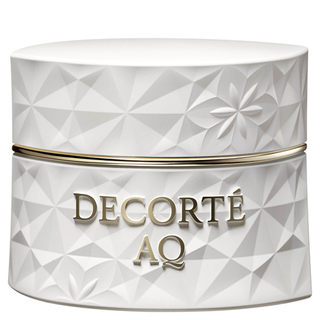
“AQ Night Cream”
This product can help improve hydration of the skin with the two types of ingredients.
The first type is called “humectants”:
these ingredients help attract water.
When humectants are on the surface of the skin, they “pull in” the moisture from the outside environment, or from
within deeper layers of the skin. The following ingredients in this product do the job:
glycerin, hydrolyzed collagen.
This product also contains ingredients called “occlusives”. They help reduce the speed with which our skin loses moisture to the outside environment. These ingredients also help soften the upper layer of the skin, so it feels less tight and nicer to the touch. The following ingredients in this product do the job: beeswax, cera alba.
The following ingredients in this product are especially good for supporting the skin barrier and helping with the hydration level: palmitoyl pentapeptide-4, paraffinum liquidum
Anti-aging5 ingredients credited for this claimStrong support
This product can help reduce and prevent fine lines and wrinkles, improve skin elasticity and firmness because it contains adenosine.
These ingredients in the product can also be helpful, even though there is less evidence for their effectiveness: palmitoyl pentapeptide-4, tocotrienols.
Keep in mind that it typically takes at least 6 weeks to notice any results because the changes that are needed to improve fine lines and elasticity happen in the deeper layers of the skin. No topical anti-aging product can “erase” wrinkles or fully reverse signs of aging.
Can it cause trouble?
Irritancy5 strong irritants: Achillea millefolium extract, Santalum album wood extract + 3 more — patch-test recommendedHigh risk
Comedogenic4 ingredients rated 2 or more on the 0–5 pore-clogging scale4 flagged

User reviews
Be the first — your take helps the next person decide.
Ingredients
Filter by role to see what each ingredient is doing.
Water~45–55%
Butylene glycol~6.4–7.8%
- Irritation risk
- Low
Used to create a nice product texture and help delivery of other ingredients. Might be somewhat helpful in attracting water to the upper layer of the skin
More about Butylene glycolGlycerin~4.6–5.6%
- Irritation risk
- Low
One of the best moisturizing ingredients. Naturally present in skin. It attracts water to the upper layer of the skin working as a humectant
More about GlycerinParaffinum liquidum~3.5–4.2%
- Irritation risk
- Low
Mineral oil. One of the most effective and well studied occlusive and emollient moisturizing ingredients. Helps reduce moisture loss in skin and repair skin barrier function
More about Paraffinum liquidumTriethylhexanoin~2.2–2.6%
- Irritation risk
- Medium
Helps soften the upper layer of the skin
More about TriethylhexanoinHydrogenated coconut oil~2–2.4%
- Irritation risk
- Low
- Comedogenicity
- 3/5
Hydrogenated polydecene~1.5–1.9%
- Irritation risk
- Low
Helps to soften the upper layer of the skin and create a nice product texture
More about Hydrogenated polydecenePhytosteryl/isostearyl/cetyl/stearyl/behenyl dimer dilinoleate~1.4–1.7%
- Irritation risk
- Low
Helps soften the upper layer of the skin and create a nice product consistency
More about Phytosteryl/isostearyl/cetyl/stearyl/behenyl dimer dilinoleateCetearyl alcohol~1.2–1.5%
- Irritation risk
- Low
- Comedogenicity
- 2/5
A non-drying alcohol. Works as an emollient. Helps water and oil mix together and creates a nice product texture
More about Cetearyl alcoholBeeswax~0.8–1.2%
- Irritation risk
- Low
Forms a protective barrier that holds water and keeps dry skin hydrated. Keeps an emulsion from separating into its oil and liquid components, and increases the thickness of a product. Can be an allergen
More about BeeswaxCera alba~0.75–1.1%
- Irritation risk
- Medium
Forms a protective barrier that holds water and keeps dry skin hydrated. Keeps an emulsion from separating into its oil and liquid components, and increases the thickness of a product. Can be an allergen
More about Cera albaBeeswax~0.55–0.85%
- Irritation risk
- Low
Forms a protective barrier that holds water and keeps dry skin hydrated. Keeps an emulsion from separating into its oil and liquid components, and increases the thickness of a product. Can be an allergen
More about BeeswaxPetrolatum~0.45–0.7%
- Irritation risk
- Low
One of the most effective and the most studied occlusive ingredients that creates a protective layer on top of the skin preventing moisture loss
More about PetrolatumAchillea millefolium extract~0.4–0.6%
- Irritation risk
- High
Plant extract that can help neutralize free radicals in skin. Can be used as a fragrance. Can be irritating
More about Achillea millefolium extractAdenosine~0.3–0.55%
- Irritation risk
- Low
Might help improve cell turnover and reduce inflammation in skin. One study shows that the ingredients might be able to help reduce dynamic wrinkles (for example, in the corners of the eyes or on the forehead)
More about AdenosineBetula platyphylla japonica bark extract~0.3–0.55%
- Irritation risk
- Low
Betula platyphylla japonica juice~0.3–0.5%
- Irritation risk
- Low
Hydrolyzed collagen~0.3–0.6%
- Irritation risk
- Low
A typically plant-derived compound that is supposed mimic human collagen. Cannot penetrate the skin barrier so is not particularly useful in skincare products beyond attracting water to the upper layer of the skin
More about Hydrolyzed collagenJania rubens extract~0.25–0.45%
- Irritation risk
- Low
Mucuna birdwoodiana stem extract~0.2–0.4%
- Irritation risk
- Low
Palmitoyl pentapeptide-4~0.2–0.4%
- Irritation risk
- Low
A type of peptide. Peptides are excellent moisturizers and might be able support collagen production reducing fine lines and wrinkles
More about Palmitoyl pentapeptide-4Polygonum bistorta root extract~0.2–0.4%
- Irritation risk
- Medium
A plant extract that might have some anti-oxidant properties and is claimed by its manufacturer to be able to decrease lines and wrinkles but evidence is lacking
More about Polygonum bistorta root extractSantalum album wood extract~0.15–0.3%
Soluble proteoglycan~0.2–0.35%
- Irritation risk
- Low
Tocopherol~0.2–0.35%
- Irritation risk
- Low
Pure form of vitamin E. Can help moisturise and protect the skin from free radicals. Often used to help stabilise other ingredients or the formula itself
More about TocopherolTocotrienols~0.2–0.35%
- Irritation risk
- Low
A type of vitamin E that is more powerful in neutralizing free radicals compared to its other forms
More about TocotrienolsAlcohol~0.2–0.35%
- Irritation risk
- High
Can be drying and contribute to skin irritation. Used in formulars to dissolve other ingredients, create a thinner product consistency or for its antibacterial properties
More about AlcoholAlgin~0.2–0.35%
- Irritation risk
- Low
- Comedogenicity
- 3/5
Used to thicken product formulation. Can help attract water to the upper layer of the skin
More about AlginAluminum hydroxide~0.25–0.45%
- Irritation risk
- Low
Is used to add opaque (non-transparent) appearance to formulations. Can be used to coat other ingredients for even dispersion. This is a different ingredient compared to the ones used in antipersperants (aluminium chloride and aluminium chlorohydrate)
More about Aluminum hydroxideCarbomer~0.2–0.4%
- Irritation risk
- Low
Helps create a thicker or gel-like product texture. It is not a surfactant but can be used in gentle cleansing formulations
More about CarbomerCholesterol~0.25–0.45%
- Irritation risk
- Low
An emollient that is naturally found in skin
More about CholesterolDimethicone~0.25–0.5%
- Irritation risk
- Low
A silicone that helps to reduce water loss from the surface of the skin. Can temporarily "fill in" lines and wrinkles, absorb oil, and create a nice product finish
More about DimethiconeDisodium succinate~0.2–0.4%
Elaeis guineensis oil~0.25–0.5%
- Irritation risk
- Low
Helps soften the upper layer of the skin
More about Elaeis guineensis oilEthyl oleate~0.25–0.45%
- Irritation risk
- Medium
Ethyl oleate is a long-chain fatty acid ethyl ester resulting from the formal condensation of the carboxy group of oleic acid with the hydroxy group of ethanol. It derives from an oleic acid. In skincare, it is used to soften the upper layer of the skin, improve the product texture and smell
More about Ethyl oleateHydrogenated lecithin~0.25–0.45%
- Irritation risk
- Low
Helps to retain moisture by creating a protective barrier on the skin. Rich in fatty acids. Improves product texture and helps with the penetration of other ingredients.
More about Hydrogenated lecithinHydrogenated palm oil~0.25–0.5%
- Irritation risk
- Low
Helps soften the upper layer of the skin
More about Hydrogenated palm oilHydroxyethylcellulose~0.25–0.5%
- Irritation risk
- Low
Used to thicken product formulations and create gel-like textures
More about HydroxyethylcelluloseLecithin~0.25–0.5%
- Irritation risk
- Low
Used mostly for creating emulsions - helping oil and water mix together. Helps soften the upper layer of the skin
More about LecithinOleyl alcohol~0.25–0.45%
Oryza sativa bran oil~0.25–0.5%
- Irritation risk
- Low
Helps soften the upper layer of the skin and might have some anti-oxidant properties
More about Oryza sativa bran oilPeg-30 phytosterol~0.25–0.5%
Pentylene glycol~0.3–0.5%
- Irritation risk
- Medium
Used to preserve products, dissolve other ingredients and create a nice product texture
More about Pentylene glycolPhytosteryl/behenyl/octyldodecyl lauroyl glutamate~0.25–0.45%
- Irritation risk
- Low
Polysorbate 20~0.25–0.5%
Polysorbate 80~0.25–0.5%
Sodium hydroxide~0.25–0.45%
Sodium lactate~0.25–0.45%
- Irritation risk
- Medium
Helps attract water to the upper layer of the skin. Is often used to adjust the pH level of the product
More about Sodium lactateSodium methyl stearoyl taurate~0.6–0.85%
Sorbitan sesquioleate~0.25–0.45%
- Irritation risk
- High
Used to help oil and water mix together. Can be irritating
More about Sorbitan sesquioleateSuccinic acid~0.25–0.45%
- Irritation risk
- Low
Synthetic fluorphlogopite~0.25–0.5%
- Irritation risk
- Low
A mineral that is used as an optical filter (makes the skin looks nicer through light reflection) and to improve the texture of cosmetic products
More about Synthetic fluorphlogopiteTriceteareth-4 phosphate~0.25–0.5%
- Irritation risk
- Medium
Helps oil and water mix together
More about Triceteareth-4 phosphateXanthan gum~0.25–0.45%
- Irritation risk
- Low
Used to create a thicker product consistency
More about Xanthan gumPhenoxyethanol~0.25–0.4%
- Irritation risk
- Low
A preservative. It helps prevent bacterial growth in cosmetic products
More about PhenoxyethanolParfum~0.2–0.35%
- Irritation risk
- High
An aromatic blend of unspecified and possibly irritating ingredients
More about ParfumIron oxides~0.15–0.3%
- Irritation risk
- Low
An umbrella term for the following three colorants: CI 77491, CI 77492, CI 77499. They might be able to offer some protection against visible light, but the degree of the protection is not clear
More about Iron oxidesCi 77491~0.15–0.3%
- Irritation risk
- Low
A red colorant made of iron oxide. Typically is not irritating
More about Ci 77491Iron oxides~0.15–0.3%
- Irritation risk
- Low
An umbrella term for the following three colorants: CI 77491, CI 77492, CI 77499. They might be able to offer some protection against visible light, but the degree of the protection is not clear
More about Iron oxidesCi 77492~0.15–0.3%
Titanium dioxide~0.1–0.2%
- Irritation risk
- Low
Works as a UV filter when used in high concentrations. It is photostable and is effective mostly against the UVB light, with some protection in the UVA range. In small concentrations, used for its ability to improve the color of cosmetic products. Is usually well tolerated by the skin
More about Titanium dioxideCi 77891~0.1–0.2%
- Irritation risk
- Low
Ingredient list view
Water, Butylene glycol, Glycerin, Paraffinum liquidum, Triethylhexanoin, Hydrogenated coconut oil, Hydrogenated polydecene, Phytosteryl/isostearyl/cetyl/stearyl/behenyl dimer dilinoleate, Cetearyl alcohol, Beeswax, Cera alba, Beeswax, Petrolatum, Achillea millefolium extract, Adenosine, Betula platyphylla japonica bark extract, Betula platyphylla japonica juice, Hydrolyzed collagen, Jania rubens extract, Mucuna birdwoodiana stem extract, Palmitoyl pentapeptide-4, Polygonum bistorta root extract, Santalum album wood extract, Soluble proteoglycan, Tocopherol, Tocotrienols, Alcohol, Algin, Aluminum hydroxide, Carbomer, Cholesterol, Dimethicone, Disodium succinate, Elaeis guineensis oil, Ethyl oleate, Hydrogenated lecithin, Hydrogenated palm oil, Hydroxyethylcellulose, Lecithin, Oleyl alcohol, Oryza sativa bran oil, Peg-30 phytosterol, Pentylene glycol, Phytosteryl/behenyl/octyldodecyl lauroyl glutamate, Polysorbate 20, Polysorbate 80, Sodium hydroxide, Sodium lactate, Sodium methyl stearoyl taurate, Sorbitan sesquioleate, Succinic acid, Synthetic fluorphlogopite, Triceteareth-4 phosphate, Xanthan gum, Phenoxyethanol, Parfum, Iron oxides, Ci 77491, Iron oxides, Ci 77492, Titanium dioxide, Ci 77891
Compare prices
Retailers ranked by price — lowest first.

Affiliate links · prices updated regularly
Worth comparing, line by line.
Match % combines shared ingredients, the first five ingredients, shared actives and hero ingredients, irritancy (lower counts in the alternative's favour), texture and body area. Only products in the same routine step are compared.
| DecortéAQ Night CreamYOUR PRODUCT | SkinfoodGold Caviar Cream | |
|---|---|---|
| Match | — | 55% |
| Price | $152.00 | $38.00−$114.00 |
| Shared key ingredients | — | 6 of 15 |
| Key difference | — | Ceramide Np |
| Irritancy | High | Medium |
| Drying alcohol | Contains drying alcohol | Contains drying alcohol |
| View product | Shop |

Product summary
"Decorté - AQ Night Cream" has a good moisturizing formula. As we expect from a proper moisturizer, the formula includes a combo of effective humectants and emollients. These are the two different types of ingredients that are essential for improving the skin hydration and supporting a healthy skin barrier. Humectants in this product (glycerin, hydrolyzed collagen, sodium lactate and butylene glycol) help to increase the water content in the upper layer of the skin. (These ingredients do so by "capturing" water molecules from the outside air or from within the deeper layers of the skin). Paraffinum liquidum, cholesterol, hydrolyzed collagen, oryza sativa bran oil and beeswax in this product help decrease the water evoporation from the skin, so that it stays hydrated for longer. These ingredients also soften the skin and take away the feeling of tightness and dryness.
Ingredient callouts
- We like that this moisturizer contains peptides (palmitoyl pentapeptide-4 0.20% - 0.40%). There are many different kind of peptides and they are naturally present in our skin. They all are a combination of amino-acids. Some of them work as natural anti-biotics, promote wound-healing and production of collagen. The science is still not settled on how effective peptides in skincare are, but it is very likely that they have a benefit. Peptides might help restore the skin barrier and fight the signs of aging. At the very least, peptides work as humectants: they attract water to the upper layer of the skin and improve its hydration.
- Adenosine 0.30% - 0.55% in this moisturizer adds an anti-aging benefit. Adenosine is a compound that in involved in many biological processes inside the skin cells. According one high-quality clinical trial, topical adenosine in low concentrations can help improve "deep wrinkles" - the wrinkles that appear with age in places where our faces are most dynamic (for example, on the forehead or in the corners of the eyes).
Irritation risk
We assess the overall irritancy of this moisturizer to be high. For a detailed overview of all potential irritants: click here
You can see the detailed formula review with the breakdown of all actives in the product and the full ingredient list with estimated concentrations in the tables below.
Price
The product retails from 152.00$ up to 190.00$ in the United States and for 266.00CA$ in Canada.
For a detailed price comparison: click here.
Sources cited in this review
Every concentration estimate and effectiveness label is anchored to one of these 23 studies and safety reviews.
- 1
- 2A review on the extensive skin benefits of mineral oilncbi.nlm.nih.gov
- 3
- 4Safety Assessment of Polyene Group as Used in Cosmeticscir-safety.org
- 5
- 6

Affiliate links · As an Amazon Associate, WIMJ earns from qualifying purchases.