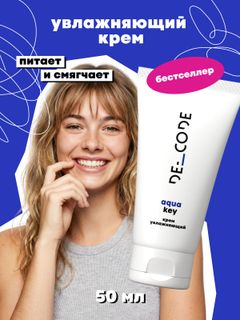
Decode Крем увлажняющий для лица, с церамидами
Works for
1 of 2 advertised claims delivered
Moisturizing27 ingredients credited for this claimStrong support
“Крем для лица DE_CODE — сбалансированный увлажняющий и питательный крем для лица.”
This product can help improve hydration of the skin with the two types of ingredients.
The first type is called “humectants”:
these ingredients help attract water.
When humectants are on the surface of the skin, they “pull in” the moisture from the outside environment, or from
within deeper layers of the skin. The following ingredients in this product do the job:
glycerin, hydroxyethyl urea.
This product also contains ingredients called “occlusives”. They help reduce the speed with which our skin loses moisture to the outside environment. These ingredients also help soften the upper layer of the skin, so it feels less tight and nicer to the touch. The following ingredients in this product do the job: butyrospermum parkii butter, caprylic/capric triglyceride.
The following ingredients in this product are especially good for supporting the skin barrier and helping with the hydration level: ceramide ap, ceramide eop, ceramide np, panthenol, phytosphingosine, tetraacetylphytosphingosine
Anti-aging2 ingredients credited for this claimLimited support
“Эффективен от морщин, в том числе работает как pre-age для подростков.”
This product does not contain ingredients that are able to reduce fine lines and wrinkles or help with skin elasticity, but it can improve the look of the skin temporarily through moisturization. Well-moisturized skin might also be able to repair the sun damage better.This ingredient - butyrospermum parkii butter - could be helpful for preventing or repairing signs of aging in theory, but there is no evidence that it actually works.
This ingredient squalene might be able to help neutralize free radicals in skin and help it fight off some of the sun damage.
ExfoliationNot advertised by the brand · 2 ingredients credited for this claimStrong support
This product can help exfoliate the skin. In other words, it helps break down the bonds between dead cells on the surface of the skin and speed up the skin turnover. Skin often appears softer and brighter after exfoliation, but overdoing it can result in disrupted skin barrier. The following ingredient is doing the exfoliating job in this product: hydroxyethyl urea.
Anti-oxidationNot advertised by the brand · 3 ingredients credited for this claimModerate support
This product contains antioxidants (squalene) that might be able to help neutralize free radicals in skin to lessen the damage it gets from the UV light (sun). There is not enough evidence to confirm their effectiveness in skin though.
Can it cause trouble?
Irritancy1 strong irritant: ParfumMedium risk
Comedogenic3 ingredients rated 2 or more on the 0–5 pore-clogging scale3 flagged
User reviews
Be the first — your take helps the next person decide.
Ingredients
Filter by role to see what each ingredient is doing.
Water~45–55%
Cetearyl alcohol~5.8–7%
- Irritation risk
- Low
- Comedogenicity
- 2/5
A non-drying alcohol. Works as an emollient. Helps water and oil mix together and creates a nice product texture
More about Cetearyl alcoholOryza sativa bran oil~4.2–5.1%
- Irritation risk
- Low
Helps soften the upper layer of the skin and might have some anti-oxidant properties
More about Oryza sativa bran oilButyrospermum parkii butter~3.3–4%
- Irritation risk
- Low
- Comedogenicity
- 3/5
A great moisturising ingredient that softens the skin and reduces water loss from its upper layer. It also can be helpful in protecting skin from free radicals
More about Butyrospermum parkii butterCaprylic/capric triglyceride~2.5–3%
- Irritation risk
- Medium
A good mix of fatty acids that forms a protective layer on the skin. Improves the shelf life of products. Derived from coconut and glycerin
More about Caprylic/capric triglycerideIsononyl isononanoate~2.1–2.6%
- Irritation risk
- Low
Forms a protective film on the surface of the skin to prevent moisture loss. Gives a velvety feel to products while reducing tackiness
More about Isononyl isononanoateCaprylyl methicone~1.7–2.1%
- Irritation risk
- Low
A type of silicone that helps to soften the upper layer of the skin and create a nice product finish on the skin
More about Caprylyl methiconeHydroxyethyl urea~1.5–1.8%
- Irritation risk
- Low
A derivative of urea, a compound that is naturally present in skin. Attracts water to the upper layer of the skin. Can enhance penetration of other ingredients
More about Hydroxyethyl ureaPanthenol~1.2–1.5%
- Irritation risk
- Low
Helps attract water to the upper layer of the skin and can help improve skin barrier function
More about PanthenolIsopentyldiol~1–1.2%
Glycerin~0.75–1.1%
- Irritation risk
- Low
One of the best moisturizing ingredients. Naturally present in skin. It attracts water to the upper layer of the skin working as a humectant
More about GlycerinPotassium cetyl phosphate~0.6–0.9%
- Irritation risk
- Medium
Helps oil and water mix together
More about Potassium cetyl phosphateTrehalose~0.5–0.8%
- Irritation risk
- Low
A sugar that attracts water to the upper layer of the skin
More about TrehaloseSodium hyaluronate~0.45–0.7%
- Irritation risk
- Low
One of the best moisturizing ingredients. Attracts water into the upper layer of the skin
More about Sodium hyaluronateCeramide eop~0.45–0.7%
- Irritation risk
- Low
A type of lipid similar to ceramides naturally present in skin. Helps to soften the upper layer of the skin and supports the skin barrier function to keep it hydrated. Can help to prevent inflammation in skin
More about Ceramide eopCeramide np~0.45–0.7%
- Irritation risk
- Low
A type of lipid similar to ceramides naturally present in skin. Helps to soften the upper layer of the skin and supports the skin barrier function to keep it hydrated. Can help to prevent inflammation in skin
More about Ceramide npCeramide ap~0.4–0.6%
- Irritation risk
- Low
A type of lipid similar to ceramides naturally present in skin. Helps to soften the upper layer of the skin and supports the skin barrier function to keep it hydrated. Can help to prevent inflammation in skin
More about Ceramide apPhytosphingosine~0.45–0.65%
- Irritation risk
- Low
A type of lipid that is naturally present in skin. It might help in repairing skin barrier function and has anti-bacterial effect
More about PhytosphingosineGlycosphingolipids~0.35–0.6%
- Irritation risk
- Low
A type of lipids naturally present in skin. They can be converted to ceramides in skin
More about GlycosphingolipidsHydrogenated lecithin~0.3–0.55%
- Irritation risk
- Low
Helps to retain moisture by creating a protective barrier on the skin. Rich in fatty acids. Improves product texture and helps with the penetration of other ingredients.
More about Hydrogenated lecithinTetraacetylphytosphingosine~0.25–0.45%
Cholesterol~0.3–0.55%
- Irritation risk
- Low
An emollient that is naturally found in skin
More about CholesterolAllantoin~0.2–0.4%
- Irritation risk
- Low
Helps calm down inflammation in skin and can help reduce itching. Helps to repair the skin barrier and keep skin hydrated
More about AllantoinTocopherol~0.25–0.45%
- Irritation risk
- Low
Pure form of vitamin E. Can help moisturise and protect the skin from free radicals. Often used to help stabilise other ingredients or the formula itself
More about TocopherolBeta-sitosterol~0.25–0.45%
- Irritation risk
- Low
A phytosterol that can support skin's barrier function and help the skin stay hydrated
More about Beta-sitosterolDimethicone/vinyl dimethicone crosspolymer~0.25–0.4%
- Irritation risk
- Low
Used to stabilize product formulations and create a nice product texture
More about Dimethicone/vinyl dimethicone crosspolymerDimethicone~0.3–0.5%
- Irritation risk
- Low
A silicone that helps to reduce water loss from the surface of the skin. Can temporarily "fill in" lines and wrinkles, absorb oil, and create a nice product finish
More about DimethiconeIsohexadecane~0.3–0.6%
- Irritation risk
- Low
Improves the texture of the product and helps soften the skin. Helps oil and water mix together and can be used as a cleansing agent
More about IsohexadecaneCetearyl methicone~0.2–0.4%
- Irritation risk
- Low
Hydrogenated polydecene~0.2–0.4%
- Irritation risk
- Low
Helps to soften the upper layer of the skin and create a nice product texture
More about Hydrogenated polydeceneGlyceryl stearate~0.25–0.5%
- Irritation risk
- Low
An emollient that softens the skin and forms a protective layer on its surface. Helps water and oil mix together
More about Glyceryl stearateSqualene~0.25–0.5%
- Irritation risk
- Low
- Comedogenicity
- 2/5
An oil that is naturally part of skin sebum that helps to soften its upper layer, reduce water loss and neutralize free radicals. It might be comedogenic. Avoid applying large concentrations (or pure oil) before sun exposure as oxidized squalene can clog pores and lead to skin irritation. Today squalene is mostly derived from vegetable oils or synthetized by yeast
More about SqualeneCarbomer~0.2–0.35%
- Irritation risk
- Low
Helps create a thicker or gel-like product texture. It is not a surfactant but can be used in gentle cleansing formulations
More about CarbomerXanthan gum~0.2–0.35%
- Irritation risk
- Low
Used to create a thicker product consistency
More about Xanthan gumStearic acid~0.3–0.55%
- Irritation risk
- Low
Helps oil and water mix together and works as an emollient
More about Stearic acidParfum~0.15–0.25%
- Irritation risk
- High
An aromatic blend of unspecified and possibly irritating ingredients
More about ParfumPhenoxyethanol~0.15–0.3%
- Irritation risk
- Low
A preservative. It helps prevent bacterial growth in cosmetic products
More about PhenoxyethanolEthylhexylglycerin~0.15–0.25%
1,2-hexanediol~0.1–0.2%
Sodium hydroxide~0.1–0.2%
Disodium edta~0.1–0.15%
Ingredient list view
Water, Cetearyl alcohol, Oryza sativa bran oil, Butyrospermum parkii butter, Caprylic/capric triglyceride, Isononyl isononanoate, Caprylyl methicone, Hydroxyethyl urea, Panthenol, Isopentyldiol, Glycerin, Potassium cetyl phosphate, Trehalose, Sodium hyaluronate, Ceramide eop, Ceramide np, Ceramide ap, Phytosphingosine, Glycosphingolipids, Hydrogenated lecithin, Tetraacetylphytosphingosine, Cholesterol, Allantoin, Tocopherol, Beta-sitosterol, Dimethicone/vinyl dimethicone crosspolymer, Dimethicone, Isohexadecane, Cetearyl methicone, Hydrogenated polydecene, Glyceryl stearate, Squalene, Carbomer, Xanthan gum, Stearic acid, Parfum, Phenoxyethanol, Ethylhexylglycerin, 1,2-hexanediol, Sodium hydroxide, Disodium edta
Compare prices
Retailers ranked by price — lowest first.

Affiliate links · prices updated regularly
Worth comparing, line by line.
Match % combines shared ingredients, the first five ingredients, shared actives and hero ingredients, irritancy (lower counts in the alternative's favour), texture and body area. Only products in the same routine step are compared.
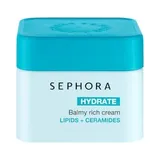
| DecodeКрем увлажняющий для лица, с церамидамиYOUR PRODUCT | DermaticaNourishing Ceramide + Peptides | DR. JETSKE ULTEERepair Cream | SEPHORA COLLECTIONHYDRATE - Hydrating Balmy Rich Cream Moisturizer with Lipids + Ceramides | |
|---|---|---|---|---|
| Match | — | 59% | 59% | 59% |
| Price | — | $21.09 | — | $35.70 |
| Shared key ingredients | — | 10 of 20 | 10 of 20 | 10 of 20 |
| Key difference | — | Niacinamide | Ceramide Ns | Squalane |
| Irritancy | Medium | Low | Low | Low |
| Drying alcohol | — | — | — | — |
| View product | Shop | Shop | Shop |


Product summary
"Decode - Крем увлажняющий для лица, с церамидами" is effective for: Moisturizing and Exfoliation
Ingredient callouts
- Ceramides (tetraacetylphytosphingosine 0.25% - 0.45%, phytosphingosine 0.45% - 0.65%, ceramide ap 0.40% - 0.60%, ceramide np 0.45% - 0.70% and ceramide eop 0.45% - 0.70%). Ceramides are a type of lipids that our skin produces itself. They are a building block of the skin's barrier. Ceramides used in skincare are synthetic or extracted from plants. They work well for softening the skin surface and "patch holes" in the skin's barrier.
- An effective concentration of Panthenol (pro-vitamin B5) - about 1.20% - 1.50%. Panthenol helps strengthen the skin barrier, improve hydration and reduce inflammation in skin.
- Humectants (sodium hyaluronate 0.45% - 0.70%, trehalose 0.50% - 0.80%, glycerin 0.75% - 1.10%, panthenol 1.20% - 1.50% and hydroxyethyl urea 1.50% - 1.80%). These ingredients help attract water to the upper layer of the skin and improve the skin hydration.
Sources cited in this review
Every concentration estimate and effectiveness label is anchored to one of these 22 studies and safety reviews.
- 1
- 2
- 3Skin moisturizing effects of panthenol-based formulationspdfs.semanticscholar.org
- 4
- 5
- 6Hyaluronic acid: A key molecule in skin agingncbi.nlm.nih.gov

Affiliate links · As an Amazon Associate, WIMJ earns from qualifying purchases.