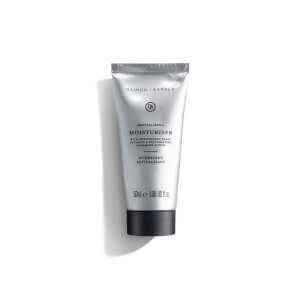
Daimon Barber Revitalising Moisturiser
Works for
1 of 2 advertised claims delivered
MoisturizingAstrocaryum murumuru seed butter, Cocos nucifera oil + 10 moreGood evidence
“Revitalising Moisturiser”
This product can help soften the skin and reduce its moisture loss with emollients and occlusives: cocos nucifera oil, astrocaryum murumuru seed butter.
Keep in mind that this product does not contain effective ingredients to attract water to the upper layer of the skin. This is why an additional product with humectants like glycerin or hyaluronic acid can be helpful (apply it before this product for the best results).
Anti-blemishNo ingredient credited for this claimNo evidence
“Propolis, a natural substance made by bees to preserve their hives bring powerful antibacterial properties to leave breakouts and irritation out of the scene.”
Effective ingredients missing or their concentration is too low.
Can it cause trouble?
Irritancy9 strong irritants: Citrus aurantifolia seed oil, Parfum + 7 more — patch-test recommendedHigh risk
Comedogenic4 ingredients rated 2 or more on the 0–5 pore-clogging scale4 flagged
User reviews
Be the first — your take helps the next person decide.
Ingredients
Filter by role to see what each ingredient is doing.
Water~45–55%
Cocos nucifera oil~5.1–6.3%
- Irritation risk
- Low
- Comedogenicity
- 3/5
An emollient. Found to be as effective as a moisturizer for dry skin as mineral oil. Could be comedogenic
More about Cocos nucifera oilCetearyl alcohol~3.7–4.6%
- Irritation risk
- Low
- Comedogenicity
- 2/5
A non-drying alcohol. Works as an emollient. Helps water and oil mix together and creates a nice product texture
More about Cetearyl alcoholCandelilla/jojoba/rice bran polyglyceryl-3 esters~2.7–3.2%
- Irritation risk
- Medium
Help oil and water mix together
More about Candelilla/jojoba/rice bran polyglyceryl-3 estersGlyceryl stearate~2.4–2.9%
- Irritation risk
- Low
An emollient that softens the skin and forms a protective layer on its surface. Helps water and oil mix together
More about Glyceryl stearatePropanediol~2–2.4%
- Irritation risk
- Low
Acts as a solvent for other ingredients. Speeds up the absorption of other ingredients into the skin
More about PropanediolAstrocaryum murumuru seed butter~1.7–2.1%
- Irritation risk
- Medium
Helps soften the upper layer of the skin. Could be comedogenic due to the myrisic acid content
More about Astrocaryum murumuru seed butterCamellia oleifera seed oil~1.5–1.8%
- Irritation risk
- Medium
An emollient that does not leave a greasy finish
More about Camellia oleifera seed oilCetearyl glucoside~1.2–1.4%
- Irritation risk
- Medium
Helps water and oil in the product mix well together and improves product texture
More about Cetearyl glucosideRosa canina fruit oil~1–1.2%
- Irritation risk
- Medium
A great emollient. Contains vitamin E (tocopherol) which may give it some anti-oxidant properties. Can contain volatile compounds and can be irritating
More about Rosa canina fruit oilPhenoxyethanol~0.65–1%
- Irritation risk
- Low
A preservative. It helps prevent bacterial growth in cosmetic products
More about PhenoxyethanolCitrus aurantifolia seed oil~0.55–0.8%
- Irritation risk
- High
Nigella sativa seed oil~0.5–0.75%
- Irritation risk
- Medium
Helps soften the upper layer of the skin and support the skin's barrier due to the high content of linoleic acid
More about Nigella sativa seed oilPyrus malus seed oil~0.5–0.75%
- Irritation risk
- High
Can contain essential oil that can be irritating. Can help to soften the upper layer of the skin. Might be helpful in neutralizing free radicals
More about Pyrus malus seed oilPropolis extract~0.45–0.65%
- Irritation risk
- High
A complex substance produced by honey bees. Can have anti-bacterial and some anti-oxidant effect. Is an allergen and can be irritating
More about Propolis extractPropylene glycol~0.4–0.6%
- Irritation risk
- High
Helps oil and water mix together and can enhance the penetration of other ingredients into the skin. It can be irritating
More about Propylene glycolOlea europaea oil unsaponifiables~0.35–0.65%
- Irritation risk
- Low
Help soften the upper layer of the skin
More about Olea europaea oil unsaponifiablesSodium stearoyl lactylate~0.35–0.65%
- Irritation risk
- Medium
Helps oil and water mix together
More about Sodium stearoyl lactylateCarbomer~0.3–0.55%
- Irritation risk
- Low
Helps create a thicker or gel-like product texture. It is not a surfactant but can be used in gentle cleansing formulations
More about CarbomerParfum~0.25–0.5%
- Irritation risk
- High
An aromatic blend of unspecified and possibly irritating ingredients
More about ParfumGlycine soja oil unsaponifiables~0.3–0.55%
- Irritation risk
- Low
- Comedogenicity
- 2/5
Triticum vulgare germ oil unsaponifiables~0.3–0.5%
- Irritation risk
- Low
- Comedogenicity
- 2/5
Disodium edta~0.25–0.45%
Ethylhexylglycerin~0.25–0.45%
Tocopherol~0.25–0.45%
- Irritation risk
- Low
Pure form of vitamin E. Can help moisturise and protect the skin from free radicals. Often used to help stabilise other ingredients or the formula itself
More about TocopherolMyrothamnus flabellifolia extract~0.25–0.4%
- Irritation risk
- High
A fragrant plant extract with some antibacterial properties. Can be irritating
More about Myrothamnus flabellifolia extractPollen extract~0.3–0.5%
- Irritation risk
- Low
Ascorbic acid~0.2–0.4%
- Irritation risk
- High
The most well-researched antioxidant that works in skin. Helps neutralize free radicals supporting collagen production, helping to even out the skin tone and preventing early signs of aging
More about Ascorbic acidCitric acid~0.2–0.4%
- Irritation risk
- Medium
Can work as an exfoliant but is typically used to adjust the product pH
More about Citric acidSodium benzoate~0.2–0.35%
Triethanolamine~0.2–0.4%
- Irritation risk
- Medium
Used to adjust pH of the product and can help improve the product's smell
More about TriethanolamineLimonene~0.15–0.3%
- Irritation risk
- High
A common frangrance that can easily irritate skin, especially if exposed to air, light or heat
More about LimoneneButylphenyl methylpropional~0.15–0.25%
- Irritation risk
- High
A fragrance. Can trigger allergic reactions and be irritating
More about Butylphenyl methylpropionalCoumarin~0.15–0.25%
Alpha-isomethyl ionone~0.1–0.2%
- Irritation risk
- High
A fragrance. Potential allergen and can be irritating
More about Alpha-isomethyl iononeHydroxycitronellal~0.1–0.15%
- Irritation risk
- High
A fragrance. A likely allergen and can be irritating
More about HydroxycitronellalLinalool~0.05–0.1%
Ingredient list view
Water, Cocos nucifera oil, Cetearyl alcohol, Candelilla/jojoba/rice bran polyglyceryl-3 esters, Glyceryl stearate, Propanediol, Astrocaryum murumuru seed butter, Camellia oleifera seed oil, Cetearyl glucoside, Rosa canina fruit oil, Phenoxyethanol, Citrus aurantifolia seed oil, Nigella sativa seed oil, Pyrus malus seed oil, Propolis extract, Propylene glycol, Olea europaea oil unsaponifiables, Sodium stearoyl lactylate, Carbomer, Parfum, Glycine soja oil unsaponifiables, Triticum vulgare germ oil unsaponifiables, Disodium edta, Ethylhexylglycerin, Tocopherol, Myrothamnus flabellifolia extract, Pollen extract, Ascorbic acid, Citric acid, Sodium benzoate, Triethanolamine, Limonene, Butylphenyl methylpropional, Coumarin, Alpha-isomethyl ionone, Hydroxycitronellal, Linalool
Compare prices
Retailers ranked by price — lowest first.

.png)
Sources cited in this review
Every concentration estimate and effectiveness label is anchored to one of these 8 studies and safety reviews.
- 1
- 2
- 3
- 4Surfactants and experimental irritant contact dermatitisncbi.nlm.nih.gov
- 5Propylene Glycolpubmed.ncbi.nlm.nih.gov
- 6Skin-sensitizing and irritant properties of propylene glycolonlinelibrary.wiley.com

Affiliate links · As an Amazon Associate, WIMJ earns from qualifying purchases.