Works for
ExfoliationLactic acidWorks well
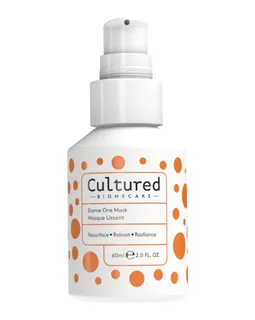
“Like a ‘restart’ button for skin, the pH-perfect Biome One Mask works to resurface, reboot and brighten dulling complexions.”
This product can help exfoliate the skin. In other words, it helps break down the bonds between dead cells on the surface of the skin and speed up the skin turnover. Skin often appears softer and brighter after exfoliation, but overdoing it can result in disrupted skin barrier. The following ingredient is doing the exfoliating job in this product: lactic acid.
Evens skin toneLactic acid, Potassium azeloyl diglycinateWorks well
“Coming in a satisfying, jelly-like texture, this mask lifts away dead cells, reducing the look of oiliness, pores and hyperpigmentation to reveal instantly clearer, brighter and rejuvenated skin.”
This product can help reduce hypepigmentation and even out the skin tone because it contains the following effective ingredients: lactic acid, potassium azeloyl diglycinate
Keep in mind that you would need to apply any topical skincare targetted at hypigmentation consistently for a couple of months to get a result. No topical skincare product can help get rid of hyperpigmentation (including post-acne marks and age spots) instantly.
Anti-agingSide benefit · Lactic acid, Lactococcus ferment lysateMay help
This product contains lactic acid. There is some human evidence that this ingredient helps reduce and prevent fine lines and wrinkles and improve skin elasticity and firmness, though it is smaller or less consistent than the evidence for the best anti-aging ingredients.
Anti-blemishSide benefit · Potassium azeloyl diglycinate, InulinMay help
This product might be able to help reduce blemishes and clogged pores because it contains potassium azeloyl diglycinate.
MoisturizingSide benefit · Glycerin, Lactic acid + 9 moreWorks
This product contains good ingredients to attract water to the upper layer of the skin. These ingredients are called "humectants": fructose, glycerin.
When humectants are on the surface of the skin, they “pull in” the moisture from the outside environment, or from within deeper layers of the skin. If the air is dry, humectants can speed up the moisture loss from the skin. This is why it is a good idea to use another product on top of this one to help "seal in" the moisture (look for ingredients like dimethicone, squalane, oils and butters).
Can it cause trouble?
Irritancy7 flagged ingredientsLow risk
ComedogenicClean of flagged comedogenic ingredientsNone flagged


User reviews
Be the first — your take helps the next person decide.
Ingredients
Filter by role to see what each ingredient is doing.
Water~40–60%
Glycerin~4–6.1%
- Irritation risk
- Low
One of the best moisturizing ingredients. Naturally present in skin. It attracts water to the upper layer of the skin working as a humectant
More about GlycerinLactic acid~3.4–5.2%
- Irritation risk
- Medium
An exfoliating and moisturizing alpha-hydroxy acid (AHA). Typically causes less irritation than other AHAs, for example, glycolic acid. At high concentrations (about 15%), lactic acid can help reduce lines and wrinkles. Recent studies show that lactic acid can support the "good" bacteria living on skin's surface (healthy skin microbiome)
More about Lactic acidPropanediol~2.6–4%
- Irritation risk
- Low
Acts as a solvent for other ingredients. Speeds up the absorption of other ingredients into the skin
More about PropanediolPentylene glycol~2.1–3.1%
- Irritation risk
- Medium
Used to preserve products, dissolve other ingredients and create a nice product texture
More about Pentylene glycolSodium lactate~1.6–2.4%
- Irritation risk
- Medium
Helps attract water to the upper layer of the skin. Is often used to adjust the pH level of the product
More about Sodium lactateSaccharomyces ferment filtrate~1.4–2%
- Irritation risk
- Low
A product of yeast fermentation. Helps attract water to the upper layer of the skin
More about Saccharomyces ferment filtrateSuccinic acid~1.2–1.8%
- Irritation risk
- Low
Inulin~0.95–1.45%
- Irritation risk
- Low
Helps attract water to the upper layer of the skin. Is claimed to support the growth of "good" bacteria in skin (as a "prebiotic"), but the research is lacking
More about InulinLactococcus ferment lysate~0.6–1.35%
- Irritation risk
- Low
Consists of remains of dead bacteria cells. Is likely helpful in attracting water to the upper layer of the skin. Might be helpful in reducing inflammation and neutralizing free radicals in skin
More about Lactococcus ferment lysatePotassium azeloyl diglycinate~0.45–1.1%
- Irritation risk
- Low
A derivative of azelaic acid. It is obtained by reacting the chloride of azelaic acid with two molecules of glycine (an amino acid) and potassium hydroxide. It is less studied than azelaic acid, but the available research suggests that it also can be effective in reducing skin redness, hyperpigmentation and blemishes. There are claims that it is more bio-available and more effective than azelaic acid, but no comparison study is available. Potassium azeloyl diglycinate is better soluble in water compared with azelaic acid. Because of this property, products with potassium azeloyl digclycinate can have a nicer texture
More about Potassium azeloyl diglycinateSaccharomyces/xylinum/black tea ferment~0.4–0.9%
- Irritation risk
- Low
A fermented sweet black tea. There is no studies on particular benefits of this ingredient in skin. It can help attract water to the upper layer of the skin, and might have some anti-oxidant effect. It is used in skincare for mostly marketing purposes because of the popularity of kombucha drinks
More about Saccharomyces/xylinum/black tea fermentMalic acid~0.35–0.8%
Albatrellus confluens extract~0.3–0.7%
- Irritation risk
- Low
Cellulose gum~0.2–0.8%
- Irritation risk
- Low
Used to create thicker product consistency and stabilize emulsions
More about Cellulose gumXanthan gum~0.2–0.75%
- Irritation risk
- Low
Used to create a thicker product consistency
More about Xanthan gumCellulose~0.2–0.7%
- Irritation risk
- Low
Can be used to help absorb oil as well as add volume and imporve texture of products.
More about CelluloseFructose~0.1–0.5%
- Irritation risk
- Low
Helps attract water to the upper layer of the skin
More about FructoseGlucose~0.1–0.45%
- Irritation risk
- Low
Helps attract water to the upper layer of the skin. Could be helpful in restoring the skin barrier function
More about GlucoseSodium chloride~0.1–0.5%
- Irritation risk
- Low
Used to stabilize mixtures of oil and water, and create thicker, gel-like product textures
More about Sodium chlorideCaramel~0.1–0.3%
- Irritation risk
- Low
Hydroxyacetophenone~0.05–0.3%
Benzyl alcohol~0.05–0.2%
- Irritation risk
- High
A preservative. Can be used to mask unpleasant smell. Can be irritating
More about Benzyl alcoholSodium benzoate~0.05–0.2%
Potassium sorbate~0.05–0.2%
Dehydroacetic acid~0.05–0.1%
Ingredient list view
Water, Glycerin, Lactic acid, Propanediol, Pentylene glycol, Sodium lactate, Saccharomyces ferment filtrate, Succinic acid, Inulin, Lactococcus ferment lysate, Potassium azeloyl diglycinate, Saccharomyces/xylinum/black tea ferment, Malic acid, Albatrellus confluens extract, Cellulose gum, Xanthan gum, Cellulose, Fructose, Glucose, Sodium chloride, Caramel, Hydroxyacetophenone, Benzyl alcohol, Sodium benzoate, Potassium sorbate, Dehydroacetic acid
Compare prices
Retailers ranked by price — lowest first.

Worth comparing, line by line.
Match % combines shared ingredients, the first five ingredients, shared actives and hero ingredients, irritancy (lower counts in the alternative's favour), texture and body area. Only products in the same routine step are compared.
| Cultured SkincareBiome One MaskYOUR PRODUCT | NassifMD DermaceuticalsOvernight Illuminating Masque with Elasta-Derm C | Ren SkincareMini Radiance Ready Steady Glow Daily AHA Tonic | Dr. BrandtDark Spots No More Triple Acid Spot Minimising Concentrate | |
|---|---|---|---|---|
| Match | — | 66% | 66% | 65% |
| Price | — | $52.00 | $15.87 | $62.42 |
| Shared key ingredients | — | 3 of 9 | 3 of 9 | 2 of 9 |
| Key difference | — | Acetyl Glucosamine | — | Niacinamide |
| Irritancy | Low | Medium | High | Low |
| Drying alcohol | — | — | — | — |
| View product | Shop | Shop | Shop |


More alternatives: MZ Skin Micro Peeling Glow EssenceSkintech Peel2Glow Brightening and Filling 2
Sources cited in this review
Every concentration estimate and effectiveness label is anchored to one of these 10 studies and safety reviews.
- 1
- 2Epidermal and dermal effects of topical lactic acidncbi.nlm.nih.gov
- 3Dual Effects of Alpha-Hydroxy Acids on the Skinpdfs.semanticscholar.org
- 4
- 5
- 6

Affiliate links · As an Amazon Associate, WIMJ earns from qualifying purchases.