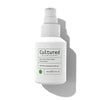
Cultured Biomecare Biome One Rich Cream
Works for
1 of 1 advertised claim delivered
Moisturizing22 ingredients credited for this claimStrong support
“Biome One Rich Cream”
This product can help improve hydration of the skin with the two types of ingredients.
The first type is called “humectants”:
these ingredients help attract water.
When humectants are on the surface of the skin, they “pull in” the moisture from the outside environment, or from
within deeper layers of the skin. The following ingredients in this product do the job:
glycerin, lactobacillus ferment.
This product also contains ingredients called “occlusives”. They help reduce the speed with which our skin loses moisture to the outside environment. These ingredients also help soften the upper layer of the skin, so it feels less tight and nicer to the touch. The following ingredients in this product do the job: caprylic/capric triglyceride, helianthus annuus seed oil unsaponifiables.
The following ingredients in this product are especially good for supporting the skin barrier and helping with the hydration level: salicyloyl phytosphingosine
Can it cause trouble?
Irritancy11 flagged ingredientsMedium risk
Comedogenic2 ingredients rated 2 or more on the 0–5 pore-clogging scale2 flagged
User reviews
Be the first — your take helps the next person decide.
Ingredients
Filter by role to see what each ingredient is doing.
Water~45–55%
Coco-caprylate/caprate~5.2–6.3%
- Irritation risk
- Low
Helps to soften the upper layer of the skin without creating a greasy texture
More about Coco-caprylate/capratePentylene glycol~4.4–5.4%
- Irritation risk
- Medium
Used to preserve products, dissolve other ingredients and create a nice product texture
More about Pentylene glycolCaprylic/capric triglyceride~3.3–4%
- Irritation risk
- Medium
A good mix of fatty acids that forms a protective layer on the skin. Improves the shelf life of products. Derived from coconut and glycerin
More about Caprylic/capric triglycerideGlycerin~2.4–2.9%
- Irritation risk
- Low
One of the best moisturizing ingredients. Naturally present in skin. It attracts water to the upper layer of the skin working as a humectant
More about GlycerinOctyldodecanol~1.8–2.3%
- Irritation risk
- Low
An emollient that helps to soften the skin and create a pleasant product texture and stabilize the formulation
More about OctyldodecanolAvena sativa kernel oil~1.6–2%
- Irritation risk
- Low
An effective moisturizing and skin barrier repair ingredient. Helps calm down inflammation and has some anti-oxidant properties
More about Avena sativa kernel oilLactococcus ferment lysate~1.4–1.7%
- Irritation risk
- Low
Consists of remains of dead bacteria cells. Is likely helpful in attracting water to the upper layer of the skin. Might be helpful in reducing inflammation and neutralizing free radicals in skin
More about Lactococcus ferment lysateBehenyl alcohol~1.3–1.6%
- Irritation risk
- Low
Non-drying alcohol that helps water and oil mix together. Also serves as an emollient
More about Behenyl alcoholInulin~0.95–1.15%
- Irritation risk
- Low
Helps attract water to the upper layer of the skin. Is claimed to support the growth of "good" bacteria in skin (as a "prebiotic"), but the research is lacking
More about InulinCetearyl alcohol~0.75–1.15%
- Irritation risk
- Low
- Comedogenicity
- 2/5
A non-drying alcohol. Works as an emollient. Helps water and oil mix together and creates a nice product texture
More about Cetearyl alcoholHelianthus annuus seed oil unsaponifiables~0.6–0.9%
- Irritation risk
- Low
A great emollient due to its high linoleic acid content. One of the most effective plant oils in helping skin hydration and repairing skin barrier function
More about Helianthus annuus seed oil unsaponifiablesSaccharomyces/xylinum/black tea ferment~0.5–0.75%
- Irritation risk
- Low
A fermented sweet black tea. There is no studies on particular benefits of this ingredient in skin. It can help attract water to the upper layer of the skin, and might have some anti-oxidant effect. It is used in skincare for mostly marketing purposes because of the popularity of kombucha drinks
More about Saccharomyces/xylinum/black tea fermentMicrocrystalline cellulose~0.6–0.9%
Hydrogenated rapeseed oil~0.45–0.7%
- Irritation risk
- Low
Hydroxyacetophenone~0.45–0.65%
Glyceryl stearate~0.45–0.7%
- Irritation risk
- Low
An emollient that softens the skin and forms a protective layer on its surface. Helps water and oil mix together
More about Glyceryl stearateJojoba esters~0.4–0.65%
- Irritation risk
- Medium
An emollient made of jojoba oil. Helps soften the skin and support its barrier function
More about Jojoba estersDisteardimonium hectorite~0.3–0.6%
- Irritation risk
- Low
A type of clay that is used to thicken the product consistency
More about Disteardimonium hectoriteMaltodextrin~0.3–0.55%
- Irritation risk
- Low
Used to stabilize the product formulation and can help absorb oil
More about MaltodextrinXanthan gum~0.3–0.5%
- Irritation risk
- Low
Used to create a thicker product consistency
More about Xanthan gumHelianthus annuus seed wax~0.3–0.55%
- Irritation risk
- Low
Helps soften the upper layer of the skin and support skin's barrier function while creating a thicker product consistency
More about Helianthus annuus seed waxSodium stearoyl glutamate~0.3–0.55%
- Irritation risk
- Medium
Helps oil and water mix together
More about Sodium stearoyl glutamatePropylene carbonate~0.3–0.5%
- Irritation risk
- Low
Is used to dissolve other ingredients and create nice product texture
More about Propylene carbonateCellulose gum~0.25–0.5%
- Irritation risk
- Low
Used to create thicker product consistency and stabilize emulsions
More about Cellulose gumSodium hyaluronate~0.25–0.45%
- Irritation risk
- Low
One of the best moisturizing ingredients. Attracts water into the upper layer of the skin
More about Sodium hyaluronateSalicyloyl phytosphingosine~0.25–0.45%
- Irritation risk
- Low
Helps attract water to the upper layer of the skin. Might have anti-aging benefits but solid study data is lacking
More about Salicyloyl phytosphingosineTocopheryl acetate~0.25–0.45%
- Irritation risk
- Medium
A more stable but less bio-available form of vitamin E compared to Tocopherol. Might help moisturize and protect the skin from free radicals, but mostly used in low concentrations to stabilize other ingredients.
More about Tocopheryl acetatePropanediol~0.25–0.45%
- Irritation risk
- Low
Acts as a solvent for other ingredients. Speeds up the absorption of other ingredients into the skin
More about PropanediolCitric acid~0.2–0.4%
- Irritation risk
- Medium
Can work as an exfoliant but is typically used to adjust the product pH
More about Citric acidLactobacillus ferment~0.2–0.4%
- Irritation risk
- Low
A fermentation product created by bacteria Lactobacillus. The fermented product has anti-bacterial properties and might be helpful in calming down inflammation, but studies are lacking. Helps attract water to the upper layer of the skin. Can be used as a preservative
More about Lactobacillus fermentLactic acid~0.2–0.35%
- Irritation risk
- Medium
An exfoliating and moisturizing alpha-hydroxy acid (AHA). Typically causes less irritation than other AHAs, for example, glycolic acid. At high concentrations (about 15%), lactic acid can help reduce lines and wrinkles. Recent studies show that lactic acid can support the "good" bacteria living on skin's surface (healthy skin microbiome)
More about Lactic acidPolyglycerin-3~0.2–0.35%
- Irritation risk
- Low
Helps to attract water to the upper layer of the skin
More about Polyglycerin-3Anthemis nobilis flower oil~0.15–0.25%
- Irritation risk
- High
An essential oil that is used as a fragrance and can be irritating. It might have some anti-oxidant effect in skin
More about Anthemis nobilis flower oilSodium benzoate~0.1–0.2%
Sodium chloride~0.15–0.25%
- Irritation risk
- Low
Used to stabilize mixtures of oil and water, and create thicker, gel-like product textures
More about Sodium chlorideChlorella vulgaris extract~0.1–0.2%
- Irritation risk
- Medium
- Comedogenicity
- 3/5
A plant extract that can help to attract water to the upper layer of the skin and might have some anti-oxidant and anti-inflammatory properties
More about Chlorella vulgaris extractPotassium sorbate~0.1–0.2%
Sodium hydroxide~0.05–0.1%
Ingredient list view
Water, Coco-caprylate/caprate, Pentylene glycol, Caprylic/capric triglyceride, Glycerin, Octyldodecanol, Avena sativa kernel oil, Lactococcus ferment lysate, Behenyl alcohol, Inulin, Cetearyl alcohol, Helianthus annuus seed oil unsaponifiables, Saccharomyces/xylinum/black tea ferment, Microcrystalline cellulose, Hydrogenated rapeseed oil, Hydroxyacetophenone, Glyceryl stearate, Jojoba esters, Disteardimonium hectorite, Maltodextrin, Xanthan gum, Helianthus annuus seed wax, Sodium stearoyl glutamate, Propylene carbonate, Cellulose gum, Sodium hyaluronate, Salicyloyl phytosphingosine, Tocopheryl acetate, Propanediol, Unknown, Citric acid, Lactobacillus ferment, Lactic acid, Polyglycerin-3, Anthemis nobilis flower oil, Sodium benzoate, Sodium chloride, Chlorella vulgaris extract, Potassium sorbate, Sodium hydroxide
Compare prices
Retailers ranked by price — lowest first.

Affiliate links · prices updated regularly
Product summary
Judging from the ingredient list, "Cultured Biomecare - Biome One Rich Cream" works well for improving skin hydration To work well, any moisturizer needs to include a combination of water-binding and emollient ingredients. Cultured Biomecare - Biome One Rich Cream ticks this box. Humectants in this product (salicyloyl phytosphingosine, glycerin, lactobacillus ferment, polyglycerin-3 and sodium hyaluronate) help to increase the water content in the upper layer of the skin. (These ingredients do so by "capturing" water molecules from the outside air or from within the deeper layers of the skin). Helianthus annuus seed oil unsaponifiables, helianthus annuus seed wax, jojoba esters, caprylic/capric triglyceride and cetearyl alcohol in this product help decrease the water evoporation from the skin, so that it stays hydrated for longer. These ingredients also soften the skin and take away the feeling of tightness and dryness.
Ingredient callouts
- Another benefit is that this moisturizer contain ceramides (salicyloyl phytosphingosine 0.25% - 0.45%). Ceramides are an important part of our natural skin barrier. The Ceramides used in skincare are synthetic or come from plants. They help soften the skin and can help "fill the gaps" in the skin barrier, keeping the skin hydrated and resilient for longer.
Irritation risk
This formulation includes some common irritants, including ingredients that do not provide a benefit for the skin. We assess the overall irritancy of this moisturizer to be medium. For a detailed overview of all potential irritants: click here
You can see the detailed formula review with the breakdown of all actives in the product and the full ingredient list with estimated concentrations in the tables below.
Price
The product retails for 55.00£ in the United Kingdom.
For a detailed price comparison: click here.
Sources cited in this review
Every concentration estimate and effectiveness label is anchored to one of these 14 studies and safety reviews.
- 1Safety Assessment of Alkyl Esters as Used in Cosmeticscir-safety.org
- 2
- 3
- 4
- 5Hyaluronic acid: A key molecule in skin agingncbi.nlm.nih.gov
- 6

Affiliate links · As an Amazon Associate, WIMJ earns from qualifying purchases.