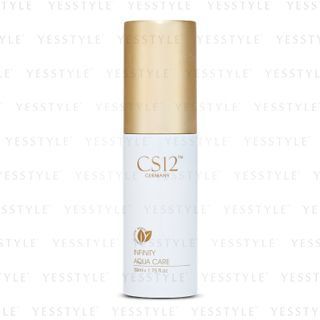
Works for
1 of 1 advertised claim delivered
Moisturizing4 ingredients credited for this claimGood support
“Or, you may apply generous amount as your daily sleeping mask to achieve skin's hydration at its optimum level.”
This product contains good ingredients to attract water to the upper layer of the skin. These ingredients are called "humectants": hyaluronic acid, polyglutamic acid.
When humectants are on the surface of the skin, they “pull in” the moisture from the outside environment, or from within deeper layers of the skin. If the air is dry, humectants can speed up the moisture loss from the skin. This is why it is a good idea to use another product on top of this one to help "seal in" the moisture (look for ingredients like dimethicone, squalane, oils and butters).
Anti-oxidationNot advertised by the brand · 3 ingredients credited for this claimModerate support
This product contains antioxidants (ginkgo biloba leaf extract) that might be able to help neutralize free radicals in skin to lessen the damage it gets from the UV light (sun). There is not enough evidence to confirm their effectiveness in skin though.
Can it cause trouble?
Irritancy1 strong irritant: AlcoholMedium risk
ComedogenicClean of flagged comedogenic ingredientsNone flagged
User reviews
Be the first — your take helps the next person decide.
Ingredients
Filter by role to see what each ingredient is doing.
Tocopheryl acetate~26–39%
- Irritation risk
- Medium
A more stable but less bio-available form of vitamin E compared to Tocopherol. Might help moisturize and protect the skin from free radicals, but mostly used in low concentrations to stabilize other ingredients.
More about Tocopheryl acetateAloe barbadensis leaf juice~7–10.6%
- Irritation risk
- Medium
Traditionally used to treat sunburns, dermatitis and inflammation, but evidence for its effectiveness is lacking. The extract can contain humectants that help attract water into the skin
More about Aloe barbadensis leaf juiceSodium hyaluronate~4.5–6.7%
- Irritation risk
- Low
One of the best moisturizing ingredients. Attracts water into the upper layer of the skin
More about Sodium hyaluronateCarbomer~3.2–4.8%
- Irritation risk
- Low
Helps create a thicker or gel-like product texture. It is not a surfactant but can be used in gentle cleansing formulations
More about CarbomerPotassium hydroxide~2.1–3.1%
Ginkgo biloba leaf extract~1.6–2.4%
- Irritation risk
- High
A plant extract that might help neutralize free radicals and reduce inflammation in skin. It can be irritating
More about Ginkgo biloba leaf extractHyaluronic acid~1.1–1.7%
- Irritation risk
- Low
One of the best moisturizing ingredients. Attracts water into the upper layer of the skin. Naturally present in skin. Typically has large molecule size unless advertised otherwise on the product label. Helps support skin's barrier function and may help to reduce inflammation
More about Hyaluronic acidAlcohol~0.5–1.2%
- Irritation risk
- High
Can be drying and contribute to skin irritation. Used in formulars to dissolve other ingredients, create a thinner product consistency or for its antibacterial properties
More about AlcoholPolyglutamic acid~0.4–0.95%
- Irritation risk
- Low
Helps attract water to the upper layer of the skin.
More about Polyglutamic acidMagnesium ascorbyl phosphate~0.1–0.4%
- Irritation risk
- Medium
A derivative of vitamin C that is more stable, but less bioavailable than the pure form of vitamin C. It does not penetrate the skin well, but has been shown to convert to pure vitamin C once in skin. It can be helpful in stimulating collagen production and lightening the skin tone, but the required concentration is likely to be very high
More about Magnesium ascorbyl phosphateDisodium edta~0.05–0.3%
Ingredient list view
Tocopheryl acetate, Aloe barbadensis leaf juice, Sodium hyaluronate, Carbomer, Potassium hydroxide, Ginkgo biloba leaf extract, Hyaluronic acid, Alcohol, Polyglutamic acid, Magnesium ascorbyl phosphate, Disodium edta
Compare prices
Retailers ranked by price — lowest first.

Affiliate links · prices updated regularly
Sources cited in this review
Every concentration estimate and effectiveness label is anchored to one of these 10 studies and safety reviews.
- 1Hyaluronic acid: A key molecule in skin agingncbi.nlm.nih.gov
- 2
- 3
- 4Cosmeceutical Critique: Ginkgo Bilobamdedge.com
- 5Efficacy of a New Topical Nano-hyaluronic Acid in Humansncbi.nlm.nih.gov
- 6Physiochemical properties and application of hyaluronic acid: a systematic reviewonlinelibrary.wiley.com

Affiliate links · As an Amazon Associate, WIMJ earns from qualifying purchases.