Works for
ExfoliationGlycolic acid, Gluconolactone + 1 moreWorks well
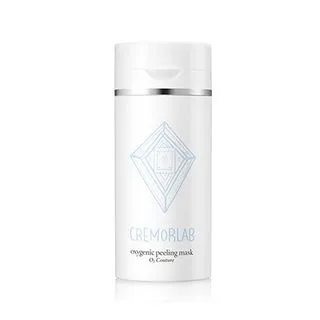
“Product name: O2 Couture Oxygenic Peeling Mask”
This product can help exfoliate the skin. In other words, it helps break down the bonds between dead cells on the surface of the skin and speed up the skin turnover. Skin often appears softer and brighter after exfoliation, but overdoing it can result in disrupted skin barrier. The following ingredient is doing the exfoliating job in this product: glycolic acid.
MoisturizingGlycerin, Carnitine + 12 moreWorks
“O2 Couture® skincare line infused with hydrating care solution that hydrate deeply to create oxygen spa skin.”
This product contains good ingredients to attract water to the upper layer of the skin. These ingredients are called "humectants": betaine, glycerin.
When humectants are on the surface of the skin, they “pull in” the moisture from the outside environment, or from within deeper layers of the skin. If the air is dry, humectants can speed up the moisture loss from the skin. This is why it is a good idea to use another product on top of this one to help "seal in" the moisture (look for ingredients like dimethicone, squalane, oils and butters).
Anti-agingSide benefit · Glycolic acid, GluconolactoneWorks well
This product can help reduce and prevent fine lines and wrinkles, improve skin elasticity and firmness because it contains glycolic acid.
Keep in mind that it typically takes at least 6 weeks to notice any results because the changes that are needed to improve fine lines and elasticity happen in the deeper layers of the skin. No topical anti-aging product can “erase” wrinkles or fully reverse signs of aging.
Evens skin toneSide benefit · Glycolic acid, Salicylic acid + 1 moreWorks well
This product can help reduce hypepigmentation and even out the skin tone because it contains the following effective ingredients: glycolic acid
Keep in mind that you would need to apply any topical skincare targetted at hypigmentation consistently for a couple of months to get a result. No topical skincare product can help get rid of hyperpigmentation (including post-acne marks and age spots) instantly.
Can it cause trouble?
Irritancy8 strong irritants: Parfum, Gaultheria procumbens leaf extract + 6 more — patch-test recommendedHigh risk
Comedogenic3 ingredients rated 2 or more on the 0–5 pore-clogging scale3 flagged


User reviews
Be the first — your take helps the next person decide.
Ingredients
Filter by role to see what each ingredient is doing.
Water~45–55%
Cocamidopropyl betaine~7.8–9.6%
- Irritation risk
- High
Helps water and oil mix together. Used as a cleansing ingredient. Could be an allergen
More about Cocamidopropyl betaineDisodium cocoamphodiacetate~5.1–6.2%
- Irritation risk
- Medium
Helps oil and water mix together and works as a cleansing agent
More about Disodium cocoamphodiacetateAcrylates copolymer~3.2–3.9%
- Irritation risk
- Medium
Used to stabilize product formulation, help create an even product layer over skin (for example, in sunscreen) and create a thicker product consistency
More about Acrylates copolymerCocamide dea~2.3–2.8%
Sodium chloride~2–2.4%
- Irritation risk
- Low
Used to stabilize mixtures of oil and water, and create thicker, gel-like product textures
More about Sodium chlorideGlycerin~1.7–2%
- Irritation risk
- Low
One of the best moisturizing ingredients. Naturally present in skin. It attracts water to the upper layer of the skin working as a humectant
More about GlycerinDisiloxane~1.4–1.7%
- Irritation risk
- Low
Ethyl perfluoroisobutyl ether~1.1–1.3%
- Irritation risk
- Low
Methyl perfluorobutyl ether~0.7–1.05%
- Irritation risk
- Low
Methyl perfluoroisobutyl ether~0.55–0.8%
- Irritation risk
- Low
Peg-7 glyceryl cocoate~0.45–0.7%
- Irritation risk
- Medium
Helps oils and water mix together and works as a cleansing agent
More about Peg-7 glyceryl cocoatePentylene glycol~0.45–0.65%
- Irritation risk
- Medium
Used to preserve products, dissolve other ingredients and create a nice product texture
More about Pentylene glycolPeg-400~0.4–0.6%
- Irritation risk
- Low
Hydroxyethylcellulose~0.35–0.65%
- Irritation risk
- Low
Used to thicken product formulations and create gel-like textures
More about HydroxyethylcelluloseXanthan gum~0.3–0.6%
- Irritation risk
- Low
Used to create a thicker product consistency
More about Xanthan gumEthyl perfluorobutyl ether~0.3–0.55%
- Irritation risk
- Low
Phenoxyethanol~0.3–0.5%
- Irritation risk
- Low
A preservative. It helps prevent bacterial growth in cosmetic products
More about PhenoxyethanolParfum~0.25–0.4%
- Irritation risk
- High
An aromatic blend of unspecified and possibly irritating ingredients
More about ParfumGlycolic acid~0.25–0.4%
- Irritation risk
- High
An alpha-hydroxy acid (AHA) that helps to remove the dead skin cells on the surface of the skin reveling a more even, smoother complexation. It is also able to stimulate collagen production with long-term use. Could help to reduce pore congestion. It can be irritating to the skin. Apply sunscreen daily if using products with glycolic acid
More about Glycolic acidEthylhexylglycerin~0.25–0.4%
Ethylhexyl isononanoate~0.25–0.45%
- Irritation risk
- Low
Helps soften the upper layer of the skin and improve the product consistency
More about Ethylhexyl isononanoateIsononyl isononanoate~0.25–0.4%
- Irritation risk
- Low
Forms a protective film on the surface of the skin to prevent moisture loss. Gives a velvety feel to products while reducing tackiness
More about Isononyl isononanoatePolyhydroxystearic acid~0.25–0.45%
- Irritation risk
- Medium
Used to create a thicker product consistency and stabilize the formulation
More about Polyhydroxystearic acidTrifluoropropyl dimethicone~0.2–0.35%
- Irritation risk
- Low
Melia azadirachta leaf extract~0.2–0.35%
- Irritation risk
- High
A plant extract that has anti-bacterial properties. Can be used to preserve the product. Can be irritating
More about Melia azadirachta leaf extractPerfluorohexane~0.2–0.4%
- Irritation risk
- Medium
Used in products to help dissolve oxygen and enhance oxygen molecule penetration into the skin. There is no evidence for benefits of the oxygen emulsion in topical creams, lotions or serums. There is a study available confirming a positive impact of oxygen therapy for skin wound healing, but it used an oxygen emulsion stored under high pressure using special equipment
More about PerfluorohexaneSalicylic acid~0.2–0.35%
- Irritation risk
- High
Used for skin exfoliation. It has an anti-inflammatory and anti-bacterial effect, helps to unclog pores, prevent blemishes and speed up healing of the existing ones. Sometimes referred to as a BHA (beta-hydroxy acid)
More about Salicylic acidGaultheria procumbens leaf extract~0.15–0.3%
- Irritation risk
- High
Gluconolactone~0.2–0.35%
- Irritation risk
- Medium
A polyhydroxy acid (PHA) that helps shed the dead cells from the skin surface revealing smoother skin. Is believed to be genter than AHAs. It helps attract water to the upper layer of the skin and can stimulate production of skin's own hyaluronic acid resulting in improved hydration levels. It has been shown to be helpful against acne and clogged pores if used consistently (e.g over a period of 12 weeks) in high enough concentration. It can help reduce fine lines and wrinkles and improve skin tone with long-term application. Can help neutralize free radicals
More about GluconolactoneTea-cocoyl glutamate~0.3–0.55%
Melia azadirachta flower extract~0.2–0.35%
- Irritation risk
- Medium
A plant extract that might be helpful to neutralize free radicals in skin
More about Melia azadirachta flower extractButylene glycol~0.2–0.35%
- Irritation risk
- Low
Used to create a nice product texture and help delivery of other ingredients. Might be somewhat helpful in attracting water to the upper layer of the skin
More about Butylene glycolC12-15 alkyl benzoate~0.2–0.4%
- Irritation risk
- Low
Enhances the product texture and makes it more spreadable. Helps reduce water loss from the outer layer of skin. Extands the shelf life by preventing bacteria growth
More about C12-15 alkyl benzoateEthylhexyl hydroxystearate benzoate~0.2–0.4%
- Irritation risk
- Low
Isopentane~0.2–0.4%
- Irritation risk
- Low
Sodium cocamidopropyl pg-dimonium chloride phosphate~0.3–0.55%
- Irritation risk
- Low
Citrus aurantium dulcis oil~0.2–0.4%
- Irritation risk
- High
Used as a fragrance. It can be irritating and cause photosensitivity
More about Citrus aurantium dulcis oilDiethylhexyl sebacate~0.25–0.5%
- Irritation risk
- Low
Coccinia indica fruit extract~0.2–0.35%
- Irritation risk
- Medium
A plant extract that might have some anti-oxidant effect helping neutralize free radicals in skin
More about Coccinia indica fruit extractHexylene glycol~0.2–0.35%
- Irritation risk
- Medium
Helps create a more spreadable product texture
More about Hexylene glycolPolysorbate 80~0.25–0.45%
Lavandula angustifolia oil~0.2–0.35%
- Irritation risk
- High
An essential oil. Potential allergen and can be irritating. It has some anti-bacterial properties
More about Lavandula angustifolia oilAlcohol~0.2–0.4%
- Irritation risk
- High
Can be drying and contribute to skin irritation. Used in formulars to dissolve other ingredients, create a thinner product consistency or for its antibacterial properties
More about AlcoholCitrus nobilis peel oil~0.2–0.35%
- Irritation risk
- High
A plant oil with high content of volatile compounds that, especially when exposed to air, can cause allergic reactions and irritate the skin
More about Citrus nobilis peel oilAloe barbadensis flower extract~0.2–0.4%
- Irritation risk
- High
A plant extract that might have some anti-oxidant effect
More about Aloe barbadensis flower extractSolanum melongena fruit extract~0.2–0.35%
- Irritation risk
- Medium
Eggplant fruit extract. Might have some anti-oxidant effect
More about Solanum melongena fruit extractBetaine~0.2–0.35%
- Irritation risk
- Low
Helps attract water to the upper layer of the skin and improves the product texture
More about BetaineOcimum sanctum leaf extract~0.2–0.35%
- Irritation risk
- High
A plant extract that is rich in a fragrance compound eugenol that is a frequent allergen and can be irritating. It might also contain anti-oxidants to help neutralize free radicals
More about Ocimum sanctum leaf extractCaprylyl glycol~0.2–0.4%
- Irritation risk
- Medium
Helps preserve products and creates a nice product texture
More about Caprylyl glycol1,2-hexanediol~0.2–0.35%
Litsea cubeba fruit oil~0.15–0.3%
- Irritation risk
- High
An essential oil with a lemon-like smell that is extracted from a fruit grown in Asia. Used as a fragrance
More about Litsea cubeba fruit oilCarnitine~0.7–1.1%
Curcuma longa root extract~0.15–0.25%
- Irritation risk
- High
A plant extract that can contain an active compound curcumin, that may have some anti-inflammatory properties when applied to the skin, but solid research is lacking and the typical concentration used in skincare products is too low. Can be an irritant
More about Curcuma longa root extractCorallina officinalis extract~0.15–0.3%
- Irritation risk
- Low
- Comedogenicity
- 3/5
Red algae extract that helps attract water to the upper layer of the skin and might contain antioxidants
More about Corallina officinalis extractChlorphenesin~0.1–0.25%
Undaria pinnatifida extract~0.15–0.25%
- Irritation risk
- Low
A seaweed extract that helps attract water to the upper layer of the skin and might have an anti-oxidant effect
More about Undaria pinnatifida extractPlankton extract~0.1–0.25%
- Irritation risk
- Medium
- Comedogenicity
- 3/5
Can help attract water to the upper layer of the skin
More about Plankton extractCaffeine~0.1–0.15%
- Irritation risk
- Medium
Might be helpful in neutralizing free radicals. Can have a dehydration effect that might somewhat decrease the look of puffy eyes
More about CaffeineSoy isoflavones~0.15–0.25%
- Irritation risk
- Low
Arginine ferulate~0.15–0.25%
- Irritation risk
- Low
Spirulina platensis extract~0.1–0.15%
- Irritation risk
- Low
- Comedogenicity
- 3/5
An algae extract. Might help to attract water to the upper layer of the skin and have an anti-oxidant effect
More about Spirulina platensis extractOxygen~0.1–0.15%
- Irritation risk
- Low
Oxygen molecules that are abundant in normal air. In cosmetic formulas typically comes as a perfluorohexane oxygen emulsion. There is no evidence for benefits of the oxygen emulsion in topical creams, lotions or serums. There is a study available confirming a positive impact of oxygen therapy for skin wound healing, but it used an emulsion stored under high pressure using special equipment
More about OxygenIngredient list view
Water, Cocamidopropyl betaine, Disodium cocoamphodiacetate, Acrylates copolymer, Cocamide dea, Sodium chloride, Glycerin, Disiloxane, Ethyl perfluoroisobutyl ether, Methyl perfluorobutyl ether, Methyl perfluoroisobutyl ether, Peg-7 glyceryl cocoate, Pentylene glycol, Peg-400, Hydroxyethylcellulose, Xanthan gum, Ethyl perfluorobutyl ether, Phenoxyethanol, Parfum, Glycolic acid, Ethylhexylglycerin, Ethylhexyl isononanoate, Isononyl isononanoate, Polyhydroxystearic acid, Trifluoropropyl dimethicone, Melia azadirachta leaf extract, Perfluorohexane, Salicylic acid, Gaultheria procumbens leaf extract, Gluconolactone, Unknown, Tea-cocoyl glutamate, Melia azadirachta flower extract, Butylene glycol, C12-15 alkyl benzoate, Ethylhexyl hydroxystearate benzoate, Isopentane, Sodium cocamidopropyl pg-dimonium chloride phosphate, Citrus aurantium dulcis oil, Diethylhexyl sebacate, Coccinia indica fruit extract, Hexylene glycol, Polysorbate 80, Lavandula angustifolia oil, Alcohol, Citrus nobilis peel oil, Aloe barbadensis flower extract, Solanum melongena fruit extract, Betaine, Ocimum sanctum leaf extract, Caprylyl glycol, 1,2-hexanediol, Litsea cubeba fruit oil, Carnitine, Curcuma longa root extract, Corallina officinalis extract, Chlorphenesin, Undaria pinnatifida extract, Plankton extract, Caffeine, Soy isoflavones, Arginine ferulate, Spirulina platensis extract, Oxygen
Compare prices
Retailers ranked by price — lowest first.

Affiliate links
Worth comparing, line by line.
Match % combines shared ingredients, the first five ingredients, shared actives and hero ingredients, irritancy (lower counts in the alternative's favour), texture and body area. Only products in the same routine step are compared.
| CREMORLABO2 Couture Oxygenic Peeling MaskYOUR PRODUCT | Skin ControlPeel Pads | BeautyBioSwipe & Glow Peel Pads | Zombie BeautyBloody Peel | |
|---|---|---|---|---|
| Match | — | 87% | 87% | 87% |
| Price | — | $6.52 | — | $17.78 |
| Shared key ingredients | — | 5 of 10 | 4 of 10 | 4 of 10 |
| Key difference | — | Panthenol | Niacinamide | Niacinamide |
| Irritancy | High | Low | Medium | Medium |
| Drying alcohol | Contains drying alcohol | — | — | — |
| View product | Shop | Shop | Shop |

More alternatives: ISANA 2-Step Liquid Peeling MaskEcooking Peeling Mask
Product summary
"CREMORLAB - O2 Couture Oxygenic Peeling Mask" is effective for: Anti-aging, Evens skin tone and Exfoliation
This product could be helpful for: Moisturizing, but its actives are not the most effective or are not well-studied.
Ingredient callouts
- Humectants (betaine 0.20% - 0.35% and glycerin 1.70% - 2.00%). These ingredients help attract water to the upper layer of the skin and improve the skin hydration.
Price
The product retails for 65.00A$ in Australia and for 23.60$ in the United States.
For a detailed price comparison: click here.
Sources cited in this review
Every concentration estimate and effectiveness label is anchored to one of these 33 studies and safety reviews.
- 1
- 2
- 3
- 4
- 5Glycolic acid peel therapy – a current reviewncbi.nlm.nih.gov
- 6

Affiliate links · As an Amazon Associate, WIMJ earns from qualifying purchases.