Works for
1 of 1 advertised claim delivered
Anti-aging6 ingredients credited for this claimModerate support
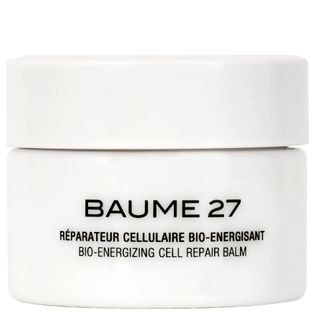
“The Skinlab Baume from Cosmetics 27 by ME is a bio-energising cell repair balm which works to reduce the signs of ageing and restore your skin's radiance.”
This product contains arginine/lysine polypeptide, asiaticoside, madecassoside. These ingredients might be able to help reduce and prevent fine lines and wrinkles, improve skin elasticity and firmness, but there is not enough evidence that it actually works.
MoisturizingNot advertised by the brand · 31 ingredients credited for this claimStrong support
This product can help improve hydration of the skin with the two types of ingredients.
The first type is called “humectants”:
these ingredients help attract water.
When humectants are on the surface of the skin, they “pull in” the moisture from the outside environment, or from
within deeper layers of the skin. The following ingredients in this product do the job:
betaine, glycerin.
This product also contains ingredients called “occlusives”. They help reduce the speed with which our skin loses moisture to the outside environment. These ingredients also help soften the upper layer of the skin, so it feels less tight and nicer to the touch. The following ingredients in this product do the job: beeswax, butyrospermum parkii butter.
The following ingredients in this product are especially good for supporting the skin barrier and helping with the hydration level: arginine/lysine polypeptide, madecassoside
Anti-oxidationNot advertised by the brand · 9 ingredients credited for this claimStrong support
This product contains antioxidants (asiaticoside, madecassoside) that can help neutralize free radicals in skin. By doing so, they can lessen the damage the skin gets from the UV light (sun).
Anti-blemishNot advertised by the brand · 2 ingredients credited for this claimGood support
This product might be able to help reduce blemishes and clogged pores because it contains ethyl linoleate.
Can it cause trouble?
Irritancy6 strong irritants: Citrus limon fruit water, Parfum + 4 more — patch-test recommendedHigh risk
Comedogenic2 ingredients rated 2 or more on the 0–5 pore-clogging scale2 flagged
User reviews
Be the first — your take helps the next person decide.
Ingredients
Filter by role to see what each ingredient is doing.
Citrus limon fruit water~23–34%
- Irritation risk
- High
Glycerin~3.7–5.5%
- Irritation risk
- Low
One of the best moisturizing ingredients. Naturally present in skin. It attracts water to the upper layer of the skin working as a humectant
More about GlycerinWater~4.1–6.1%
Butylene glycol~2.7–4.1%
- Irritation risk
- Low
Used to create a nice product texture and help delivery of other ingredients. Might be somewhat helpful in attracting water to the upper layer of the skin
More about Butylene glycolOctyldodecyl myristate~2.3–3.4%
- Irritation risk
- Low
Helps soften the upper layer of the skin
More about Octyldodecyl myristateSesamum indicum seed oil~1.7–2.6%
- Irritation risk
- Low
A good moisturizing plant oil. Due to the high linoleic acid content, it helps soften the upper layer of the skin, reduce water loss and support skin barrier function
More about Sesamum indicum seed oilPropylheptyl caprylate~1.6–2.3%
- Irritation risk
- Low
Helps soften the upper layer of the skin
More about Propylheptyl caprylateSucrose polystearate~1.3–2%
- Irritation risk
- Medium
Helps oil and water mix together
More about Sucrose polystearateBetaine~1.1–1.7%
- Irritation risk
- Low
Helps attract water to the upper layer of the skin and improves the product texture
More about BetaineButyrospermum parkii butter~1.1–1.6%
- Irritation risk
- Low
- Comedogenicity
- 3/5
A great moisturising ingredient that softens the skin and reduces water loss from its upper layer. It also can be helpful in protecting skin from free radicals
More about Butyrospermum parkii butterRhus verniciflua peel wax~0.6–1.35%
- Irritation risk
- Low
Dipropylene glycol~0.5–1.2%
- Irritation risk
- Low
Helps to dissolve other ingredients in a formulation. Slows down the rate of product drying
More about Dipropylene glycolSodium stearoyl glutamate~0.55–1.25%
- Irritation risk
- Medium
Helps oil and water mix together
More about Sodium stearoyl glutamateEthyl linoleate~0.5–1.2%
- Irritation risk
- Medium
Helps reduce acne and blemishes. Helps to soften the upper layer of the skin and reduce inflammation. Might be helpful in reducing hyperpigmentation and evening out the skin tone, but evidence of effectiveness in skin are lacking
More about Ethyl linoleateBeeswax~0.55–1.3%
- Irritation risk
- Low
Forms a protective barrier that holds water and keeps dry skin hydrated. Keeps an emulsion from separating into its oil and liquid components, and increases the thickness of a product. Can be an allergen
More about BeeswaxEuphorbia cerifera wax~0.8–1.25%
- Irritation risk
- Low
Cetyl alcohol~0.55–1.25%
- Irritation risk
- Low
A non-drying alcohol that works to soften the skin and stabilize product formulations helping oil and water mix together
More about Cetyl alcoholSesamum indicum oil unsaponifiables~0.45–1.1%
- Irritation risk
- Low
Shorea robusta seed butter~0.45–1.05%
- Irritation risk
- Low
Helps to softent the upper layer of the skin
More about Shorea robusta seed butterVegetable oil~0.45–1%
- Irritation risk
- Low
An oil from a mixture of different vegetables. Helps soften the upper layer of the skin
More about Vegetable oilSilica~0.45–1.05%
Trihydroxystearin~0.35–0.8%
- Irritation risk
- Low
Helps soften the upper layer of the skin and improve the product texture
More about TrihydroxystearinHydrogenated polyisobutene~0.4–0.9%
- Irritation risk
- Low
Used to improve the product consistency and soften the upper layer of the skin
More about Hydrogenated polyisobuteneAloe barbadensis leaf juice powder~0.35–0.8%
- Irritation risk
- Medium
Traditionally used to treat sunburns, dermatitis and inflammation, but evidence for its effectiveness is lacking. The extract can contain humectants that help attract water into the skin
More about Aloe barbadensis leaf juice powderBoron nitride~0.35–0.85%
- Irritation risk
- Low
Helps to absord oil and evenly disperse other ingredients (for example, pigment) in product formulation
More about Boron nitrideGlucosyl hesperidin~0.35–0.75%
- Irritation risk
- Low
Might be able to neutralize free radicals in skin. Also works as a humectant
More about Glucosyl hesperidinPongamia glabra seed oil~0.35–0.8%
- Irritation risk
- Low
A plant oil that helps soften the upper layer of the skin
More about Pongamia glabra seed oilEthyl oleate~0.4–0.9%
- Irritation risk
- Medium
Ethyl oleate is a long-chain fatty acid ethyl ester resulting from the formal condensation of the carboxy group of oleic acid with the hydroxy group of ethanol. It derives from an oleic acid. In skincare, it is used to soften the upper layer of the skin, improve the product texture and smell
More about Ethyl oleateChlorphenesin~0.16–0.32%
Citric acid~0.35–0.8%
- Irritation risk
- Medium
Can work as an exfoliant but is typically used to adjust the product pH
More about Citric acidArginine/lysine polypeptide~0.35–0.8%
- Irritation risk
- Low
A type of peptide. Peptides are excellent moisturizers and might be able support collagen production reducing fine lines and wrinkles
More about Arginine/lysine polypeptideAsiaticoside~0.3–0.7%
- Irritation risk
- Medium
An active compound of Centella Asiatica plant extract. In combination with other active compounds of Centella Asiatica extract (madecasosside, asiatic acid and madecassic acid), asiaticoside has been shown to be helpful in wound-healing, restoring skin barrier function and supporting collagen production in skin. It can, however, itself be irritating
More about AsiaticosideMadecassoside~0.35–0.8%
- Irritation risk
- Medium
An antioxidant that is typically derived from plant Centella Asiatica. It can help neutralize free radicals in skin and support skin barrier function. It could, however, itself be irritating. It is often unstable in formulations
More about MadecassosideMelia azadirachta seed oil~0.4–0.9%
- Irritation risk
- Low
Helps soften the upper layer of the skin and can support skin barrier function due to the high linoleic acid content
More about Melia azadirachta seed oilOryza sativa hull powder~0.4–0.95%
- Irritation risk
- Low
Xanthan gum~0.35–0.8%
- Irritation risk
- Low
Used to create a thicker product consistency
More about Xanthan gumParfum~0.3–0.75%
- Irritation risk
- High
An aromatic blend of unspecified and possibly irritating ingredients
More about ParfumTocopherol~0.35–0.8%
- Irritation risk
- Low
Pure form of vitamin E. Can help moisturise and protect the skin from free radicals. Often used to help stabilise other ingredients or the formula itself
More about TocopherolBetula alba bark extract~0.3–0.75%
- Irritation risk
- High
Has astringent properties. Creates a tightening and drying effect on the skin. Can be irritating
More about Betula alba bark extractChitosan succinamide~0.4–0.95%
- Irritation risk
- Low
Dextrin~0.35–0.8%
- Irritation risk
- Low
A sugar that is used to stabilize the product formulation. Can help attract water to the upper layer of the skin
More about DextrinHydrolyzed hibiscus esculentus extract~0.35–0.8%
- Irritation risk
- Medium
A plant extract that might contain a peptide (Myoxinol). It could be helpful in attracting water to the upper layer of the skin and might have some anti-aging effect, but the research is lacking and it is rarely used in a high enough concentration
More about Hydrolyzed hibiscus esculentus extractScrophularia nodosa extract~0.3–0.7%
- Irritation risk
- High
A plant extract that might have an anti-oxidant effect. Used as a fragrance
More about Scrophularia nodosa extractAsiatic acid~0.35–0.8%
- Irritation risk
- Medium
An active compound of Centella Asiatica plant extract. In combination with other active compounds of Centella Asiatica extract (asiaticoside, madecasosside and madecassic acid) asiatic acid has been shown to be helpful in wound-healing, restoring skin barrier function and supporting collagen production in skin. It can, however, itself be irritating
More about Asiatic acidHydrogenated vegetable oil~0.4–0.9%
- Irritation risk
- Low
- Comedogenicity
- 2/5
An oil from a mixture of different vegetables. Helps soften the upper layer of the skin
More about Hydrogenated vegetable oilPentylene glycol~0.4–0.9%
- Irritation risk
- Medium
Used to preserve products, dissolve other ingredients and create a nice product texture
More about Pentylene glycolSclerotium gum~0.3–0.75%
- Irritation risk
- Low
Used to create gel-like formulas and stabilize emulsions
More about Sclerotium gumGlyceryl acrylate/acrylic acid copolymer~0.3–0.75%
- Irritation risk
- Medium
Helps attract water to the upper layer of the skin and provide a longer-lasting hydration. Can create a thicker product consistency
More about Glyceryl acrylate/acrylic acid copolymerO-cymen-5-ol~0.05–0.1%
Helianthus annuus seed oil~0.2–0.8%
- Irritation risk
- Low
A great emollient due to its high linoleic acid content. One of the most effective plant oils in helping skin hydration and repairing skin barrier function
More about Helianthus annuus seed oilPueraria lobata root extract~0.15–0.65%
- Irritation risk
- Low
Ethyl linolenate~0.3–0.7%
- Irritation risk
- Low
Rosmarinus officinalis leaf extract~0.15–0.55%
- Irritation risk
- High
Can be helpful in reducing inflammation in skin, including inflamed acne. It can be irritating
More about Rosmarinus officinalis leaf extractSodium citrate~0.15–0.6%
- Irritation risk
- Medium
Helps to control the skin's pH level. Maintains the skin's natural film of amino-lactic acids and oils. Helps to preserve products
More about Sodium citrateSodium phytate~0.15–0.6%
Sodium acetate~0.15–0.55%
- Irritation risk
- Low
Potassium sorbate~0.15–0.5%
Sodium benzoate~0.1–0.45%
Hedychium spicatum extract~0.1–0.5%
- Irritation risk
- Low
Phenethyl alcohol~0.1–0.4%
Sorbic acid~0.05–0.3%
Linalool~0.1–0.3%
Propyl gallate~0.1–0.35%
- Irritation risk
- Medium
Helps preserve product formulations and can mask the smell of other ingredients in a product
More about Propyl gallateBht~0.05–0.15%
Alcohol~0.05–0.2%
- Irritation risk
- High
Can be drying and contribute to skin irritation. Used in formulars to dissolve other ingredients, create a thinner product consistency or for its antibacterial properties
More about AlcoholIngredient list view
Citrus limon fruit water, Glycerin, Water, Butylene glycol, Octyldodecyl myristate, Sesamum indicum seed oil, Propylheptyl caprylate, Sucrose polystearate, Betaine, Butyrospermum parkii butter, Rhus verniciflua peel wax, Dipropylene glycol, Sodium stearoyl glutamate, Ethyl linoleate, Beeswax, Euphorbia cerifera wax, Cetyl alcohol, Sesamum indicum oil unsaponifiables, Shorea robusta seed butter, Vegetable oil, Silica, Trihydroxystearin, Hydrogenated polyisobutene, Aloe barbadensis leaf juice powder, Boron nitride, Glucosyl hesperidin, Pongamia glabra seed oil, Ethyl oleate, Chlorphenesin, Citric acid, Arginine/lysine polypeptide, Asiaticoside, Madecassoside, Melia azadirachta seed oil, Oryza sativa hull powder, Xanthan gum, Parfum, Tocopherol, Betula alba bark extract, Chitosan succinamide, Dextrin, Hydrolyzed hibiscus esculentus extract, Scrophularia nodosa extract, Asiatic acid, Hydrogenated vegetable oil, Pentylene glycol, Sclerotium gum, Glyceryl acrylate/acrylic acid copolymer, O-cymen-5-ol, Helianthus annuus seed oil, Pueraria lobata root extract, Ethyl linolenate, Rosmarinus officinalis leaf extract, Sodium citrate, Sodium phytate, Sodium acetate, Potassium sorbate, Sodium benzoate, Hedychium spicatum extract, Phenethyl alcohol, Sorbic acid, Linalool, Propyl gallate, Bht, Alcohol
Compare prices
Retailers ranked by price — lowest first.

Affiliate links · prices updated regularly
Product summary
"Cosmetics 27 - by ME - Skinlab Baume" is a well-rounded moisturizing product. The formulation is based on a combination of good humectants and emollients. Both are needed to increase the skin hydration level. Humectants in this product (betaine, glycerin, glyceryl acrylate/acrylic acid copolymer, glucosyl hesperidin and butylene glycol) help to increase the water content in the upper layer of the skin. (These ingredients do so by "capturing" water molecules from the outside air or from within the deeper layers of the skin). Ethyl linoleate, melia azadirachta seed oil, sesamum indicum seed oil, beeswax and butyrospermum parkii butter in this product help decrease the water evoporation from the skin, so that it stays hydrated for longer. These ingredients also soften the skin and take away the feeling of tightness and dryness.
Ingredient callouts
- This moisturizer also contains Peptides (arginine/lysine polypeptide 0.35% - 0.80%). Peptides are a very big group of ingredients. They all consist of a different combination of aminoacids. Our skin produces Peptides naturally. Some of them work as natural antibiotics, promote wound-healing and production of collagen. The scientists are still studying how effective the topical application of Peptides is, but it is very likely that they are helpful. Peptides might be able to support skin barrier restoration and even have an anti-aging benefit. At the very least, they certainly help attract water to the skin and support the hydration in this way.
- Actives derived from an extract of the Centella Asiatica plant (also known as Gotu Kola) - madecassoside 0.35% - 0.80%, asiatic acid 0.35% - 0.80% and asiaticoside 0.30% - 0.70% The Centella Asiatica Actives, even in low concentration, can help reduce inflammation in skin, strengthen the skin barrier and reduce photodamage. They can also help to decrease scarring.
Irritation risk
There are quite a few common irritants in this product, including ingredients without particular skin benefits. We would not recommend it for sensitive skin. We assess the overall irritancy of this moisturizer to be high. For a detailed overview of all potential irritants: click here
You can see the detailed formula review with the breakdown of all actives in the product and the full ingredient list with estimated concentrations in the tables below.
Price
The product retails for 165.00$ in the United States.
For a detailed price comparison: click here.
Sources cited in this review
Every concentration estimate and effectiveness label is anchored to one of these 35 studies and safety reviews.
- 1
- 2
- 3Triglyceride composition of Sesamum indicum seed oilonlinelibrary.wiley.com
- 4
- 5
- 6

Affiliate links · As an Amazon Associate, WIMJ earns from qualifying purchases.