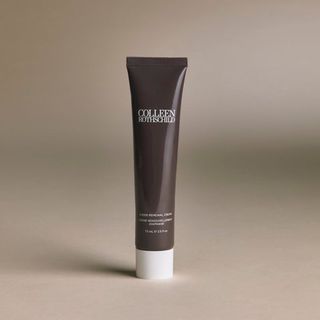
Colleen Rothschild Beauty Sheer Renewal Cream
Works for
1 of 1 advertised claim delivered
MoisturizingPalmitoyl dipeptide-5 diaminobutyroyl hydroxythreonine, Anhydroxylitol + 20 moreStrong evidence
“Sheer Renewal Cream is a lightweight, oil-free moisturizer that preps, hydrates and supports the skin’s delicate barrier while promoting healthy cell turnover for smoother, healthier-looking skin.”
This product can help improve hydration of the skin with the two types of ingredients.
The first type is called “humectants”:
these ingredients help attract water.
When humectants are on the surface of the skin, they “pull in” the moisture from the outside environment, or from
within deeper layers of the skin. The following ingredients in this product do the job:
anhydroxylitol, glycerin.
This product also contains ingredients called “occlusives”. They help reduce the speed with which our skin loses moisture to the outside environment. These ingredients also help soften the upper layer of the skin, so it feels less tight and nicer to the touch. The following ingredients in this product do the job: cera alba, dimethicone.
The following ingredients in this product are especially good for supporting the skin barrier and helping with the hydration level: palmitoyl dipeptide-5 diaminobutyroyl hydroxythreonine
Anti-agingNot advertised by the brand · Palmitoyl dipeptide-5 diaminobutyroyl hydroxythreonine, Camellia sinensis leaf extract + 3 moreModerate evidence
This product contains palmitoyl dipeptide-5 diaminobutyroyl hydroxythreonine. This ingredient might be able to help reduce and prevent fine lines and wrinkles, improve skin elasticity and firmness, but there is not enough evidence that it actually works.
Anti-oxidationNot advertised by the brand · Camellia sinensis leaf extract, Imperata cylindrica root extract + 6 moreModerate evidence
This product contains antioxidants (camellia sinensis leaf extract, imperata cylindrica root extract) that might be able to help neutralize free radicals in skin to lessen the damage it gets from the UV light (sun). There is not enough evidence to confirm their effectiveness in skin though.
Can it cause trouble?
Irritancy5 strong irritants: Citrus aurantium dulcis fruit extract, Parfum + 3 more — patch-test recommendedHigh risk
Comedogenic1 ingredient rated 2 or more on the 0–5 pore-clogging scale1 flagged
User reviews
Be the first — your take helps the next person decide.
Ingredients
Filter by role to see what each ingredient is doing.
Water~45–55%
Tridecyl stearate~6.2–7.6%
- Irritation risk
- Medium
Used to create a thicker product consistency and soften the upper layer of the skin
More about Tridecyl stearateStearic acid~5.1–6.2%
- Irritation risk
- Low
Helps oil and water mix together and works as an emollient
More about Stearic acidNeopentyl glycol dicaprylate/dicaprate~3.7–4.5%
- Irritation risk
- Low
Tridecyl trimellitate~2.8–3.4%
- Irritation risk
- Medium
Used to create a thicker product consistency and soften the upper layer of the skin
More about Tridecyl trimellitateXylitylglucoside~2.3–2.8%
- Irritation risk
- Low
Helps attract water to the upper layer of the skin and repair the skin barrier function
More about XylitylglucosideSilybum marianum ethyl ester~2–2.5%
- Irritation risk
- Medium
Helps to create a nice product texture. Used to substitute silicones
More about Silybum marianum ethyl esterPalmitoyl dipeptide-5 diaminohydroxybutyrate~1.7–2.1%
- Irritation risk
- Low
Palmitoyl dipeptide-5 diaminobutyroyl hydroxythreonine~1.4–1.7%
- Irritation risk
- Low
Lactic acid~1.2–1.5%
- Irritation risk
- Medium
An exfoliating and moisturizing alpha-hydroxy acid (AHA). Typically causes less irritation than other AHAs, for example, glycolic acid. At high concentrations (about 15%), lactic acid can help reduce lines and wrinkles. Recent studies show that lactic acid can support the "good" bacteria living on skin's surface (healthy skin microbiome)
More about Lactic acidMalic acid~1–1.2%
Citric acid~0.75–1.15%
- Irritation risk
- Medium
Can work as an exfoliant but is typically used to adjust the product pH
More about Citric acidImperata cylindrica root extract~0.7–1.05%
- Irritation risk
- Medium
A plat extract that might help neutralize free radicals in skin and attract water to its upper layer
More about Imperata cylindrica root extractVaccinium myrtillus fruit extract~0.65–1%
- Irritation risk
- Medium
A plant extract that might help neutralize free radicals in skin, but research on its efficacy in skin is lacking
More about Vaccinium myrtillus fruit extractSaccharum officinarum extract~0.65–0.95%
- Irritation risk
- Low
Sugar extract that helps attract water to the upper layer of the skin
More about Saccharum officinarum extractCitrus aurantium dulcis fruit extract~0.65–0.95%
- Irritation risk
- High
A plant extract that is used as a fragrance. Can be irritating and lead to photosensitivity
More about Citrus aurantium dulcis fruit extractLepidium sativum sprout extract~0.65–0.95%
- Irritation risk
- Low
Lecithin~0.65–0.95%
- Irritation risk
- Low
Used mostly for creating emulsions - helping oil and water mix together. Helps soften the upper layer of the skin
More about LecithinCarbomer~0.6–0.85%
- Irritation risk
- Low
Helps create a thicker or gel-like product texture. It is not a surfactant but can be used in gentle cleansing formulations
More about CarbomerPeg-8/smdi copolymer~0.6–0.9%
- Irritation risk
- Low
Glycine soja extract~0.55–0.8%
- Irritation risk
- Low
Hydrogenated lecithin~0.55–0.8%
- Irritation risk
- Low
Helps to retain moisture by creating a protective barrier on the skin. Rich in fatty acids. Improves product texture and helps with the penetration of other ingredients.
More about Hydrogenated lecithinButyrospermum parkii butter~0.55–0.85%
- Irritation risk
- Low
- Comedogenicity
- 3/5
A great moisturising ingredient that softens the skin and reduces water loss from its upper layer. It also can be helpful in protecting skin from free radicals
More about Butyrospermum parkii butterGlycerin~0.55–0.8%
- Irritation risk
- Low
One of the best moisturizing ingredients. Naturally present in skin. It attracts water to the upper layer of the skin working as a humectant
More about GlycerinBisabolol~0.5–0.7%
- Irritation risk
- Low
An active component of chamomile plant that historically has been used to calm down irritated skin. A recent study shows that bisabolol indeed can have some anti-inflammatory effect on skin, even though conclusive data is lacking. Bisabolol has a sweet floral scent and can be added to products for its aromatic properties
More about BisabololCamellia sinensis leaf extract~0.55–0.8%
- Irritation risk
- Low
Can contain potent anti-oxidant compounds (abbreviated ECG, GCG, EGC, and EGCG) that might help protect the skin from free radicals. Can help calm down inflammation and has some anti-bacterial properties. Unfortunately, these antioxidants are unstable and lose their effectiveness very quickly in products. The concentration of the antioxidant compounds in the extract also tends to be low to be effective in topical formulation
More about Camellia sinensis leaf extractGlycyrrhiza glabra root extract~0.45–0.7%
- Irritation risk
- Medium
A plant extract that can help lighten the skin and calm down inflammation. Might be helpful in neutralizing free radicals
More about Glycyrrhiza glabra root extractAloe barbadensis leaf extract~0.55–0.85%
- Irritation risk
- Medium
Traditionally used to treat sunburns, dermatitis and inflammation, but evidence for its effectiveness is lacking. The extract can contain humectants that help attract water into the skin
More about Aloe barbadensis leaf extractAvena sativa kernel extract~0.55–0.8%
- Irritation risk
- Low
An effective moisturizing and skin barrier repair ingredient. Helps calm down inflammation and has some anti-oxidant properties
More about Avena sativa kernel extractZingiber officinale extract~0.45–0.7%
- Irritation risk
- Low
Smithsonite extract~0.5–0.75%
- Irritation risk
- Low
Acer saccharum extract~0.5–0.75%
- Irritation risk
- Medium
A plant extract that contains small percentage of AHAs. Is unlikely to have any skin benefit due the small concentration of the active compounds
More about Acer saccharum extractPolysorbate 80~0.55–0.8%
Anhydroxylitol~0.5–0.75%
- Irritation risk
- Low
Helps attract water to the upper layer of the skin and repair the skin barrir function
More about AnhydroxylitolXylitol~0.5–0.75%
- Irritation risk
- Low
Helps attract water to the upper layer of the skin and repair the skin barrier function
More about XylitolIsohexadecane~0.6–0.95%
- Irritation risk
- Low
Improves the texture of the product and helps soften the skin. Helps oil and water mix together and can be used as a cleansing agent
More about IsohexadecaneSodium acrylate/sodium acryloyldimethyl taurate/acrylamide copolymer~0.5–0.8%
Dimethicone~0.55–0.85%
- Irritation risk
- Low
A silicone that helps to reduce water loss from the surface of the skin. Can temporarily "fill in" lines and wrinkles, absorb oil, and create a nice product finish
More about DimethiconeGlyceryl stearate~0.55–0.85%
- Irritation risk
- Low
An emollient that softens the skin and forms a protective layer on its surface. Helps water and oil mix together
More about Glyceryl stearateNylon-12~0.5–0.75%
Triethanolamine~0.5–0.8%
- Irritation risk
- Medium
Used to adjust pH of the product and can help improve the product's smell
More about TriethanolamineCetyl palmitate~0.55–0.8%
- Irritation risk
- Low
An emollient that helps soften the skin and is used to improve product texture and stability
More about Cetyl palmitateChlorphenesin~0.16–0.32%
Steareth-21~0.6–0.85%
Cera alba~0.55–0.85%
- Irritation risk
- Medium
Forms a protective barrier that holds water and keeps dry skin hydrated. Keeps an emulsion from separating into its oil and liquid components, and increases the thickness of a product. Can be an allergen
More about Cera albaZinc pca~0.45–0.65%
- Irritation risk
- Low
A compound that combines zinc with a hydrating ingredient PCA. Might to be helpful against acne and clogged pores. Can help calm down inflammation in skin. Could be helpful in reducing the formation of free radicals in skin. Might help to reduce fine lines in wrinkles, but solid evidence is missing
More about Zinc pcaParfum~0.35–0.6%
- Irritation risk
- High
An aromatic blend of unspecified and possibly irritating ingredients
More about ParfumBenzyl alcohol~0.3–0.55%
- Irritation risk
- High
A preservative. Can be used to mask unpleasant smell. Can be irritating
More about Benzyl alcoholDehydroacetic acid~0.3–0.55%
Linalool~0.25–0.45%
Limonene~0.2–0.4%
- Irritation risk
- High
A common frangrance that can easily irritate skin, especially if exposed to air, light or heat
More about LimoneneCitronellol~0.2–0.4%
Sodium hydroxide~0.2–0.4%
Peg-8~0.15–0.3%
- Irritation risk
- Medium
Used to create a nice product consistency
More about Peg-8Phenoxyethanol~0.2–0.4%
- Irritation risk
- Low
A preservative. It helps prevent bacterial growth in cosmetic products
More about PhenoxyethanolIngredient list view
Water, Tridecyl stearate, Stearic acid, Neopentyl glycol dicaprylate/dicaprate, Tridecyl trimellitate, Xylitylglucoside, Silybum marianum ethyl ester, Palmitoyl dipeptide-5 diaminohydroxybutyrate, Palmitoyl dipeptide-5 diaminobutyroyl hydroxythreonine, Lactic acid, Malic acid, Citric acid, Imperata cylindrica root extract, Vaccinium myrtillus fruit extract, Saccharum officinarum extract, Citrus aurantium dulcis fruit extract, Lepidium sativum sprout extract, Lecithin, Carbomer, Peg-8/smdi copolymer, Glycine soja extract, Hydrogenated lecithin, Butyrospermum parkii butter, Glycerin, Bisabolol, Camellia sinensis leaf extract, Glycyrrhiza glabra root extract, Aloe barbadensis leaf extract, Avena sativa kernel extract, Zingiber officinale extract, Smithsonite extract, Acer saccharum extract, Polysorbate 80, Anhydroxylitol, Xylitol, Isohexadecane, Sodium acrylate/sodium acryloyldimethyl taurate/acrylamide copolymer, Dimethicone, Glyceryl stearate, Nylon-12, Triethanolamine, Cetyl palmitate, Chlorphenesin, Steareth-21, Cera alba, Zinc pca, Parfum, Benzyl alcohol, Dehydroacetic acid, Linalool, Limonene, Citronellol, Sodium hydroxide, Peg-8, Phenoxyethanol
Compare prices
Retailers ranked by price — lowest first.

Sources cited in this review
Every concentration estimate and effectiveness label is anchored to one of these 16 studies and safety reviews.
- 1
- 2Epidermal and dermal effects of topical lactic acidncbi.nlm.nih.gov
- 3Dual Effects of Alpha-Hydroxy Acids on the Skinpdfs.semanticscholar.org
- 4Allergic contact dermatitis from grassespubmed.ncbi.nlm.nih.gov
- 5
- 6Herbal Medicine: Biomolecular and Clinical Aspects. 2nd edition.ncbi.nlm.nih.gov

Affiliate links · As an Amazon Associate, WIMJ earns from qualifying purchases.