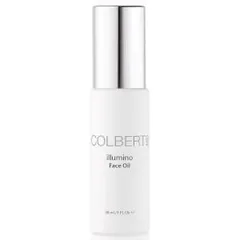
Works for:
based on ingredients and %- Moisturizing
Doesn't work for:
based on ingredients and %- Anti-aging
Can it cause trouble?
- Irritation risk: high
- Comedogenic risk ingredients: 0
Key actives

Moisturizing
What does the product description say?
The facial oil contains a cocktail of Yangu, Marula and Passionfruit Oil, which work in synergy to visibly improve skin’s elasticity, suppleness and moisture.
Source: Lookfantastic
This product can help soften the skin and reduce its moisture loss with emollients and occlusives: caprylic/capric triglyceride, argania spinosa kernel oil.
Keep in mind that this product does not contain effective ingredients to attract water to the upper layer of the skin. This is why an additional product with humectants like glycerin or hyaluronic acid can be helpful (apply it before this product for the best results).
A great emollient that can also have anti-oxidant properties
A plant oil that is effective in reducing irritation in skin, restore the barrier function and support its hydration
An emollient that helps soften the upper layer of the skin. Might have some weak anti-oxidant properties
A good mix of fatty acids that forms a protective layer on the skin. Improves the shelf life of products. Derived from coconut and glycerin
An emollient that helps to soften the skin. It has a high contetn of oleic acid that might weaken the skin barrier. Might have some anti-oxidant properties. It might be somewhat helpful against hyperpigmentation.
An emollient that helps soften the skin but is not effective for restoring its barrier function. Might be helpful to calm down inflammation
A plant oil that can help soften the upper layer of the skin. Contains essential oil that can be irritating
Anti-aging
What does the product description say?
Expect a youthful complexion that is luminous.
Source: Lookfantastic
Effective ingredients missing or their concentration is too low.
Three steps removed from the active form of vitamin A - retinoic acid. To have an effect in the skin, it first needs to be converted twice to become the retinoic acid. This means it is less potent than retinol, but could also be less irritating. Once converted to the retinoic acid in the skin, it helps against all signs of aging, improves skin cell turnover and helps fight blemishes and clogged pores. However, in many cosmetic formulations, it is used in a concentration that is too low to have the full effect
Being a lipid soluble form of vitamin C, it is more stable and can penetrate the skin better than L-Ascorbic acid. It is effective in protecting the skin from free radicals, as well as evening the skin tone, but is less effective in stimulating collagen production compared to L-Ascorbic acid.
How honest is this product?
| Promise | Can it deliver? |
|---|---|
| Moisturizing | |
| Anti-aging |
Total Promises Fulfilled score: 37/100.
We receive a small commission for purchases made through these links at no cost for you. Thank you for your support! Learn more
Potential irritants
Comedogenic ingredients
No comedogenic ingredients detected
User reviews (0)
Averages from community submissions.
No reviews yet for this product.
Be the first to share your experience!
Tried this product?
Help capture what the ingredient list can't—texture, finish, pilling, scent, and more. Answer what you can, skip the rest.
Takes ~30 seconds.
Reviews are shown in aggregate. No personal details.
| Product | Similarity | Price | Irritancy |
|---|---|---|---|
 Colbert MD Illumino Face Oil | Current | - | |
 TanOrganic Moisturising Multi-Use Dry Oil | 41% | - | |
 Radical Skincare Rejuvafirm CBD Oil | 40% | ≈ $53.31 | |
 e.l.f. Cosmetics 100 MG CBD Facial Oil | 40% | - | |
 Derma: B Intensive Barrier Multi Oil | 40% | $11.41 | |
 SheaMoisture 100% Virgin Coconut Oil Overnight Face Oil | 40% | $10.49 |
Key Actives
A plant oil that is effective in reducing irritation in skin, restore the barrier function and support its hydration
Three steps removed from the active form of vitamin A - retinoic acid. To have an effect in the skin, it first needs to be converted twice to become the retinoic acid. This means it is less potent than retinol, but could also be less irritating. Once converted to the retinoic acid in the skin, it helps against all signs of aging, improves skin cell turnover and helps fight blemishes and clogged pores. However, in many cosmetic formulations, it is used in a concentration that is too low to have the full effect
An emollient that helps soften the upper layer of the skin. Might have some weak anti-oxidant properties
A great emollient that can also have anti-oxidant properties
A good mix of fatty acids that forms a protective layer on the skin. Improves the shelf life of products. Derived from coconut and glycerin
Potential irritants
A plant oil that can help soften the upper layer of the skin. Contains essential oil that can be irritating
An aromatic blend of unspecified and possibly irritating ingredients
Three steps removed from the active form of vitamin A - retinoic acid. To have an effect in the skin, it first needs to be converted twice to become the retinoic acid. This means it is less potent than retinol, but could also be less irritating. Once converted to the retinoic acid in the skin, it helps against all signs of aging, improves skin cell turnover and helps fight blemishes and clogged pores. However, in many cosmetic formulations, it is used in a concentration that is too low to have the full effect
A good mix of fatty acids that forms a protective layer on the skin. Improves the shelf life of products. Derived from coconut and glycerin
An emollient that helps soften the skin but is not effective for restoring its barrier function. Might be helpful to calm down inflammation
An emollient that helps to soften the skin. It has a high contetn of oleic acid that might weaken the skin barrier. Might have some anti-oxidant properties. It might be somewhat helpful against hyperpigmentation.
An emollient that helps soften the upper layer of the skin. Might have some weak anti-oxidant properties
A great emollient that can also have anti-oxidant properties
Being a lipid soluble form of vitamin C, it is more stable and can penetrate the skin better than L-Ascorbic acid. It is effective in protecting the skin from free radicals, as well as evening the skin tone, but is less effective in stimulating collagen production compared to L-Ascorbic acid.
Comedogenic ingredients
We couldn't find any comedogenic ingredients in this product
All ingredients
A good mix of fatty acids that forms a protective layer on the skin. Improves the shelf life of products. Derived from coconut and glycerin
An emollient that helps soften the skin but is not effective for restoring its barrier function. Might be helpful to calm down inflammation
An emollient that helps to soften the skin. It has a high contetn of oleic acid that might weaken the skin barrier. Might have some anti-oxidant properties. It might be somewhat helpful against hyperpigmentation.
An emollient that helps soften the upper layer of the skin. Might have some weak anti-oxidant properties
A great emollient that can also have anti-oxidant properties
A plant oil that can help soften the upper layer of the skin. Contains essential oil that can be irritating
A plant oil that is effective in reducing irritation in skin, restore the barrier function and support its hydration
An aromatic blend of unspecified and possibly irritating ingredients
Three steps removed from the active form of vitamin A - retinoic acid. To have an effect in the skin, it first needs to be converted twice to become the retinoic acid. This means it is less potent than retinol, but could also be less irritating. Once converted to the retinoic acid in the skin, it helps against all signs of aging, improves skin cell turnover and helps fight blemishes and clogged pores. However, in many cosmetic formulations, it is used in a concentration that is too low to have the full effect
Being a lipid soluble form of vitamin C, it is more stable and can penetrate the skin better than L-Ascorbic acid. It is effective in protecting the skin from free radicals, as well as evening the skin tone, but is less effective in stimulating collagen production compared to L-Ascorbic acid.
Ingredient list view
Caprylic/capric triglyceride, Olea europaea fruit oil, Sclerocarya birrea seed oil, Argania spinosa kernel oil, Vitis vinifera seed oil, Passiflora incarnata seed oil, Calodendrum capense nut oil, Peg-12 glyceryl dimyristate, Borago officinalis seed oil, Parfum, Retinyl palmitate, Ascorbyl palmitate
- Use of “natural” oils for moisturization: Review of olive, coconut, and sunflower seed oil
- Anti-aging potential of extracts from Sclerocarya birrea (A. Rich.) Hochst and its chemical profiling by UPLC-Q-TOF-MS
- Physico-chemical composition and characterisation of the seed and seed oil of Sclerocarya birrea
- Assessment of the potential irritancy of oleic acid on human skin: Evaluation in vitro and in vivo
- Natural vegetable fats in the prevention of irritant contact dermatitis
- Chemical composition of essential oils of Passiflora edulis f. flavicarpa agroindustrial waste
- Dermatology News - Commentary: Borage Seed Oil
- Undershirts coated with borage oil alleviate the symptoms of atopic dermatitis in children