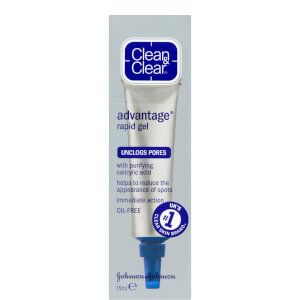
Works for
2 of 2 advertised claims delivered
Anti-blemish1 ingredient credited for this claimStrong support
“A gentle exfoliation process is encouraged, helping to eliminate spot-causing bacteria.”
This product can help reduce breakouts and clogged pores because it contains the following ingredient: salicylic acid. This ingredient is used for treating acne and can have a noticeable effect.
Exfoliation2 ingredients credited for this claimStrong support
“A gentle exfoliation process is encouraged, helping to eliminate spot-causing bacteria.”
This product can help exfoliate the skin. In other words, it helps break down the bonds between dead cells on the surface of the skin and speed up the skin turnover. Skin often appears softer and brighter after exfoliation, but overdoing it can result in disrupted skin barrier. The following ingredient is doing the exfoliating job in this product: salicylic acid.
MoisturizingNot advertised by the brand · 8 ingredients credited for this claimGood support
This product contains good ingredients to attract water to the upper layer of the skin. These ingredients are called "humectants": glycerin, sarcosine.
When humectants are on the surface of the skin, they “pull in” the moisture from the outside environment, or from within deeper layers of the skin. If the air is dry, humectants can speed up the moisture loss from the skin. This is why it is a good idea to use another product on top of this one to help "seal in" the moisture (look for ingredients like dimethicone, squalane, oils and butters).
Can it cause trouble?
Irritancy5 strong irritants: Alcohol denat., Cinnamomum zeylanicum bark extract + 3 more — patch-test recommendedHigh risk
ComedogenicClean of flagged comedogenic ingredientsNone flagged


User reviews
Be the first — your take helps the next person decide.
Ingredients
Filter by role to see what each ingredient is doing.
Water~45–55%
Alcohol denat.~8.1–9.9%
- Irritation risk
- High
Produces temporary toning effect. Can help dissolve other ingredients or preserve products
More about Alcohol denat.Glycerin~4.1–5%
- Irritation risk
- Low
One of the best moisturizing ingredients. Naturally present in skin. It attracts water to the upper layer of the skin working as a humectant
More about GlycerinPolyacrylate-13~3.1–3.7%
- Irritation risk
- Low
Used to create a thicker product consistency and stabilize the product formulation
More about Polyacrylate-13Salicylic acid~1.9–2.4%
- Irritation risk
- High
Used for skin exfoliation. It has an anti-inflammatory and anti-bacterial effect, helps to unclog pores, prevent blemishes and speed up healing of the existing ones. Sometimes referred to as a BHA (beta-hydroxy acid)
More about Salicylic acidCyclopentasiloxane~1.9–2.3%
- Irritation risk
- Low
A silicone that helps improve the product texture and spreadability. Can absorb oil creating a short-term mattifying effect on the skin
More about CyclopentasiloxanePolyisobutene~1.6–2%
C12-15 alkyl lactate~1.4–1.7%
- Irritation risk
- Low
Propylene glycol~1.1–1.3%
- Irritation risk
- High
Helps oil and water mix together and can enhance the penetration of other ingredients into the skin. It can be irritating
More about Propylene glycolCedrus atlantica bark extract~0.75–1.1%
- Irritation risk
- Low
Portulaca oleracea extract~0.6–0.95%
- Irritation risk
- Medium
A plant extract that has some anti-oxidant activity, but solid research is lacking. Can help attract water to the upper layer of the skin
More about Portulaca oleracea extractCinnamomum zeylanicum bark extract~0.5–0.75%
- Irritation risk
- High
Sarcosine~0.45–0.65%
- Irritation risk
- Low
Helps to enhance the penetration of other ingredients and attract water to the upper layer of the skin
More about SarcosineHamamelis virginiana water~0.35–0.6%
- Irritation risk
- High
A plant extract that can help calm down inflammation in skin. Can, however, itself be irritating
More about Hamamelis virginiana waterPpg-2 isoceteth-20 acetate~0.35–0.65%
- Irritation risk
- Medium
Helps water and oil mix together
More about Ppg-2 isoceteth-20 acetateDipropylene glycol~0.3–0.6%
- Irritation risk
- Low
Helps to dissolve other ingredients in a formulation. Slows down the rate of product drying
More about Dipropylene glycolAlcohol~0.3–0.6%
- Irritation risk
- High
Can be drying and contribute to skin irritation. Used in formulars to dissolve other ingredients, create a thinner product consistency or for its antibacterial properties
More about AlcoholButylene glycol~0.3–0.55%
- Irritation risk
- Low
Used to create a nice product texture and help delivery of other ingredients. Might be somewhat helpful in attracting water to the upper layer of the skin
More about Butylene glycolLactic acid~0.25–0.5%
- Irritation risk
- Medium
An exfoliating and moisturizing alpha-hydroxy acid (AHA). Typically causes less irritation than other AHAs, for example, glycolic acid. At high concentrations (about 15%), lactic acid can help reduce lines and wrinkles. Recent studies show that lactic acid can support the "good" bacteria living on skin's surface (healthy skin microbiome)
More about Lactic acidHexylene glycol~0.25–0.45%
- Irritation risk
- Medium
Helps create a more spreadable product texture
More about Hexylene glycolIsoceteth-20~0.25–0.45%
Cetyl lactate~0.25–0.45%
- Irritation risk
- Low
Phenethyl dimethicone~0.25–0.5%
- Irritation risk
- Low
Capryloyl glycine~0.3–0.5%
- Irritation risk
- Low
Helps oil and water mix together, preserve cosmetic products, and attract water to the upper layer of the skin
More about Capryloyl glycinePolysorbate 20~0.25–0.45%
Sodium chloride~0.25–0.45%
- Irritation risk
- Low
Used to stabilize mixtures of oil and water, and create thicker, gel-like product textures
More about Sodium chlorideCocamidopropyl pg-dimonium chloride phosphate~0.2–0.35%
- Irritation risk
- Low
Hydroxyethylcellulose~0.2–0.4%
- Irritation risk
- Low
Used to thicken product formulations and create gel-like textures
More about HydroxyethylcelluloseDehydroxanthan gum~0.2–0.35%
- Irritation risk
- Low
Helps create thicker product formulations and stabilize emulsions
More about Dehydroxanthan gumDisodium edta~0.15–0.3%
Acetic acid~0.15–0.25%
- Irritation risk
- Low
Sodium hydroxide~0.15–0.25%
Phenoxyethanol~0.1–0.2%
- Irritation risk
- Low
A preservative. It helps prevent bacterial growth in cosmetic products
More about PhenoxyethanolBenzalkonium chloride~0.05–0.1%
- Irritation risk
- High
Helps water and oil mix together and works as a cleansing agent (detergent). Also used as a preservative. Can be irritating
More about Benzalkonium chlorideParfum~0.05–0.1%
- Irritation risk
- High
An aromatic blend of unspecified and possibly irritating ingredients
More about ParfumBenzyl alcohol~0.05–0.1%
- Irritation risk
- High
A preservative. Can be used to mask unpleasant smell. Can be irritating
More about Benzyl alcoholIngredient list view
Water, Alcohol denat., Glycerin, Polyacrylate-13, Salicylic acid, Cyclopentasiloxane, Polyisobutene, C12-15 alkyl lactate, Propylene glycol, Cedrus atlantica bark extract, Portulaca oleracea extract, Cinnamomum zeylanicum bark extract, Sarcosine, Hamamelis virginiana water, Ppg-2 isoceteth-20 acetate, Dipropylene glycol, Alcohol, Butylene glycol, Lactic acid, Hexylene glycol, Isoceteth-20, Cetyl lactate, Phenethyl dimethicone, Capryloyl glycine, Polysorbate 20, Sodium chloride, Cocamidopropyl pg-dimonium chloride phosphate, Hydroxyethylcellulose, Dehydroxanthan gum, Disodium edta, Acetic acid, Sodium hydroxide, Phenoxyethanol, Benzalkonium chloride, Parfum, Benzyl alcohol
Compare prices
Retailers ranked by price — lowest first.

Worth comparing, line by line.
Match % combines shared ingredients, the first five ingredients, shared actives and hero ingredients, irritancy (lower counts in the alternative's favour), texture and body area. Only products in the same routine step are compared.
| Clean & ClearAdvantage Rapid GelYOUR PRODUCT | PRIORI SkincareGel Perfector LCA fx120 | CeraVeBlemish Control Gel Moisturiser with 2% Salicylic Acid & Niacinamide for Blemish-Prone Skin | bioClarityTreat Acne Clearing Gel | |
|---|---|---|---|---|
| Match | — | 95% | 94% | 94% |
| Price | $5.94 | $43.72+$37.78 | $14.54+$8.60 | $14.00+$8.06 |
| Shared key ingredients | — | 3 of 5 | 3 of 5 | 3 of 5 |
| Key difference | — | Retinyl Palmitate | Niacinamide | Oatmeal Extract |
| Irritancy | High | Medium | Low | Low |
| Drying alcohol | Contains drying alcohol | — | — | — |
| View product | Shop | Shop | Shop |


Sources cited in this review
Every concentration estimate and effectiveness label is anchored to one of these 13 studies and safety reviews.
- 1
- 2Salicylic acid as a peeling agent: a comprehensive reviewncbi.nlm.nih.gov
- 3Beta Hydroxy Acidsfda.gov
- 4A review of toxicity from topical salicylic acid preparationssciencedirect.com
- 5
- 6

Affiliate links · As an Amazon Associate, WIMJ earns from qualifying purchases.