Works for
1 of 1 advertised claim delivered
Moisturizing13 ingredients credited for this claimGood support
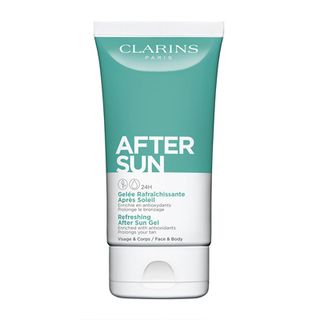
“Containing Aloe Vera and Watermelon, the smooth gel texture soothes and hydrates skin after sun exposure.”
This product can help improve hydration of the skin with the two types of ingredients.
The first type is called “humectants”:
these ingredients help attract water.
When humectants are on the surface of the skin, they “pull in” the moisture from the outside environment, or from
within deeper layers of the skin. The following ingredients in this product do the job:
glycerin, mannitol.
This product also contains ingredients called “occlusives”. They help reduce the speed with which our skin loses moisture to the outside environment. These ingredients also help soften the upper layer of the skin, so it feels less tight and nicer to the touch. The following ingredients in this product do the job: helianthus annuus seed oil, c12-15 alkyl benzoate.
Can it cause trouble?
Irritancy1 strong irritant: ParfumMedium risk
ComedogenicClean of flagged comedogenic ingredientsNone flagged
User reviews
Be the first — your take helps the next person decide.
Ingredients
Filter by role to see what each ingredient is doing.
Water~45–55%
Dibutyl adipate~5.9–7.3%
- Irritation risk
- Low
Helps soften the upper layer of the skin and create a nice product consistency
More about Dibutyl adipateDiethylamino hydroxybenzoyl hexyl benzoate~4.4–5.4%
- Irritation risk
- Medium
Uvinul A Plus. A new generation broad spectrum sunscreen that offers an effective protection especially in the UVA range. It is stable in formulations. Unfortunately, is not approved by the FDA (US) yet
More about Diethylamino hydroxybenzoyl hexyl benzoateHomosalate~3.6–4.4%
- Irritation risk
- Medium
A weak sunscreen that offers some protection against the sun rays that cause sunburn (UVB), but does not offer meaningful protection against protect against the most aging sun rays (UVA). It loses its effectiveness quickly when exposed to sunlight. It is an organic, or so called "chemical" sunscreen. When used in low concentrations, helps to stabilize the product formulation
More about HomosalateButylene glycol~2.3–2.9%
- Irritation risk
- Low
Used to create a nice product texture and help delivery of other ingredients. Might be somewhat helpful in attracting water to the upper layer of the skin
More about Butylene glycolButyloctyl salicylate~1.9–2.4%
- Irritation risk
- Medium
A synthetic ester of salicylic acid that is used to help disperse pigments and boost effectiveness of sunscreen ingredients. It is able to absorb UV light (working as an organic, or chemical filter), but is not approved as a sunscreen ingredient on its own
More about Butyloctyl salicylateC12-15 alkyl benzoate~1.7–2%
- Irritation risk
- Low
Enhances the product texture and makes it more spreadable. Helps reduce water loss from the outer layer of skin. Extands the shelf life by preventing bacteria growth
More about C12-15 alkyl benzoateEthylhexyl salicylate~2–2.4%
- Irritation risk
- Low
Octisalate. A UV filter. It offers some protection against the sun rays that cause sunburn (UVB), but does not protect against the most aging sun rays (UVA). It loses its effectiveness quickly when exposed to sunlight. It is an organic, or so called "chemical" sunscreen
More about Ethylhexyl salicylateEthylhexyl triazone~1.7–2.1%
- Irritation risk
- Medium
Uvinul T. A UV filter. Effective against UVB rays. It is photostable. Can increase water resistance properties of the sunscreen. Unfortunately, not approved by the FDA (US) yet
More about Ethylhexyl triazoneGlycerin~1–1.2%
- Irritation risk
- Low
One of the best moisturizing ingredients. Naturally present in skin. It attracts water to the upper layer of the skin working as a humectant
More about GlycerinPolysilicone-15~1–1.2%
- Irritation risk
- Medium
A UV filter. Effective against UVB rays, but does not protect against the most aging UVA light
More about Polysilicone-15Bis-ethylhexyloxyphenol methoxyphenyl triazine~0.75–1.15%
- Irritation risk
- Medium
Tinosorb S. One of the most effective broad spectrum sunscreen ingredients. Protects from both UVA and UVB rays. It is photostable. Unfortunately, not approved by FDA (US) yet.
More about Bis-ethylhexyloxyphenol methoxyphenyl triazineMethylene bis-benzotriazolyl tetramethylbutylphenol~0.65–1%
- Irritation risk
- Medium
Tinosorb M. A UV filter. Is effective against both UVA and UVB rays. It also provides some protection against visible light. It is photostable and can also be used to improve photostability of other sunscreen ingredients. Its physical properties help to create lightweight sunscreen formulations. It can leave a slight white cast. Unfortunately, it is not approved by the FDA (US) yet
More about Methylene bis-benzotriazolyl tetramethylbutylphenolHydrogenated polyisobutene~0.45–0.65%
- Irritation risk
- Low
Used to improve the product consistency and soften the upper layer of the skin
More about Hydrogenated polyisobutenePolyester-7~0.4–0.6%
- Irritation risk
- Low
Neopentyl glycol diheptanoate~0.4–0.6%
- Irritation risk
- Low
Helps soften the upper layer of the skin and create a nice product consistency
More about Neopentyl glycol diheptanoateParfum~0.3–0.55%
- Irritation risk
- High
An aromatic blend of unspecified and possibly irritating ingredients
More about ParfumAloe barbadensis leaf juice~0.3–0.55%
- Irritation risk
- Medium
Traditionally used to treat sunburns, dermatitis and inflammation, but evidence for its effectiveness is lacking. The extract can contain humectants that help attract water into the skin
More about Aloe barbadensis leaf juiceInulin lauryl carbamate~0.25–0.5%
Mannitol~0.25–0.4%
- Irritation risk
- Low
Helps to attract water to the upper layer of the skin
More about MannitolPhenoxyethanol~0.25–0.45%
- Irritation risk
- Low
A preservative. It helps prevent bacterial growth in cosmetic products
More about PhenoxyethanolPotassium cetyl phosphate~0.25–0.45%
- Irritation risk
- Medium
Helps oil and water mix together
More about Potassium cetyl phosphateAmmonium acryloyldimethyltaurate/vp copolymer~0.2–0.35%
- Irritation risk
- Low
Increases thickness of a product. Texture enhancer for oil-in-water emulsions
More about Ammonium acryloyldimethyltaurate/vp copolymerDecyl glucoside~0.25–0.45%
- Irritation risk
- High
Helps oil and water mix together. Can be irritating
More about Decyl glucosideTocopheryl acetate~0.2–0.35%
- Irritation risk
- Medium
A more stable but less bio-available form of vitamin E compared to Tocopherol. Might help moisturize and protect the skin from free radicals, but mostly used in low concentrations to stabilize other ingredients.
More about Tocopheryl acetatePotassium sorbate~0.2–0.35%
Disodium edta~0.15–0.3%
Tocopherol~0.2–0.35%
- Irritation risk
- Low
Pure form of vitamin E. Can help moisturise and protect the skin from free radicals. Often used to help stabilise other ingredients or the formula itself
More about TocopherolCyclodextrin~0.2–0.35%
- Irritation risk
- Low
A type of sugar that is used to support delivery of active ingredients and can enhance their penetration into the skin without disrupting the skin's barrier
More about CyclodextrinPisum sativum extract~0.2–0.35%
- Irritation risk
- Medium
Might be helpful in protecting skin collagen and elastin from breaking down but solid research is lacking
More about Pisum sativum extractCassia alata leaf extract~0.2–0.35%
- Irritation risk
- Medium
Might have some anti-oxidant properties. Can be used as a fragrance. Can be irritating
More about Cassia alata leaf extractFaex extract~0.2–0.35%
- Irritation risk
- Low
Yeast extract. Helps attract water to the upper layer of the skin
More about Faex extractYeast extract~0.2–0.35%
- Irritation risk
- Low
Helps attract water to the upper layer of the skin and might have some anti-oxidant and skin lightening properties. It can help calm down inflammation in skin
More about Yeast extractPropylene glycol~0.2–0.35%
- Irritation risk
- High
Helps oil and water mix together and can enhance the penetration of other ingredients into the skin. It can be irritating
More about Propylene glycolXanthan gum~0.2–0.35%
- Irritation risk
- Low
Used to create a thicker product consistency
More about Xanthan gumDextrin~0.2–0.35%
- Irritation risk
- Low
A sugar that is used to stabilize the product formulation. Can help attract water to the upper layer of the skin
More about DextrinHydrolyzed adansonia digitata extract~0.2–0.4%
- Irritation risk
- Low
Helianthus annuus seed oil~0.2–0.35%
- Irritation risk
- Low
A great emollient due to its high linoleic acid content. One of the most effective plant oils in helping skin hydration and repairing skin barrier function
More about Helianthus annuus seed oilOlea europaea leaf extract~0.15–0.25%
- Irritation risk
- Medium
A plant extract that might have some anti-oxidant and anti-inflammatory properties but evidence for effectiveness in skin is missing
More about Olea europaea leaf extractPlatanus occidentalis bark extract~0.15–0.3%
- Irritation risk
- Low
Citric acid~0.1–0.15%
- Irritation risk
- Medium
Can work as an exfoliant but is typically used to adjust the product pH
More about Citric acidSodium benzoate~0.15–0.25%
Ingredient list view
Water, Dibutyl adipate, Diethylamino hydroxybenzoyl hexyl benzoate, Homosalate, Butylene glycol, Butyloctyl salicylate, C12-15 alkyl benzoate, Ethylhexyl salicylate, Ethylhexyl triazone, Glycerin, Polysilicone-15, Bis-ethylhexyloxyphenol methoxyphenyl triazine, Methylene bis-benzotriazolyl tetramethylbutylphenol, Hydrogenated polyisobutene, Polyester-7, Neopentyl glycol diheptanoate, Parfum, Aloe barbadensis leaf juice, Inulin lauryl carbamate, Mannitol, Phenoxyethanol, Potassium cetyl phosphate, Ammonium acryloyldimethyltaurate/vp copolymer, Decyl glucoside, Tocopheryl acetate, Potassium sorbate, Disodium edta, Tocopherol, Cyclodextrin, Pisum sativum extract, Cassia alata leaf extract, Faex extract, Yeast extract, Propylene glycol, Xanthan gum, Dextrin, Hydrolyzed adansonia digitata extract, Helianthus annuus seed oil, Olea europaea leaf extract, Platanus occidentalis bark extract, Citric acid, Sodium benzoate
Compare prices
Retailers ranked by price — lowest first.

Sources cited in this review
Every concentration estimate and effectiveness label is anchored to one of these 18 studies and safety reviews.
- 1
- 2
- 3
- 4
- 5
- 6Vitamin E in dermatologyncbi.nlm.nih.gov

Affiliate links · As an Amazon Associate, WIMJ earns from qualifying purchases.