Works for:
based on ingredients and %- Anti-aging
- Sun protection
- Evens skin tone
- Moisturizing
Can it cause trouble?
- Irritation risk: medium
- Comedogenic risk ingredients: 0
Key actives
Product Summary
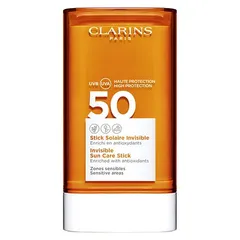
We believe that "Clarins - Invisible Sun Care Stick SPF50" can provide reliable sun protection based on the ingredients listed. We love that it can protect from both UVA and UVB rays (not all sunscreens with SPF ratings give UVA protection. UVA rays do not cause sunburn, but still damage our skin and lead to early aging).
Because it includes good moisturizing ingredients, it can also work as a hydrating day cream. Like all broad-spectrum sunscreens, this product has an anti-aging benefit.
Sunscreen filters
This is a so-called "chemical" sunscreen. It means that it uses organic UV filters. They typically offer good sun protection and rarely leave a white cast, but they can be irritating for some people with sensitive skin. The UV filters in this sunscreen are: tinosorb s 1.10% - 1.60%, uvinul a plus 4.80% - 7.20%, octisalate 1.90% - 2.90%, uvinul t 1.80% - 2.60%, homosalate 4.00% - 6.00%, octocrylene 3.40% - 5.10% and polysilicone-15 1.40% - 2.10%.
Irritation risk
This sunscreen contains some common irritants, including those without a benefit for the skin. We assess the overall irritancy of it to be medium. For a detailed overview of all potential irritants: click here
You can see the detailed formula review with the breakdown of all actives in the product and the full ingredient list with estimated concentrations in the tables below.
What our users say
Based on 1 review 0% recommend this product- As for the white cast, it did not leave a noticeable white residue for the reviewer.
- When it comes to using this sunscreen under makeup, the user found that it pills under a foundation.
- As for using this sunscreen in the eye area, the reviewer reported that it stings eyes.
Price
The product retails from 18.15£ up to 21.00£ in the United Kingdom.
For a detailed price comparison: click here.
Anti-aging
What does the product description say?
The non-sticky, non-heavy formula contains Plane Tree that protects skin against photo-ageing.
Source: Boots
This product can help prevent early signs of skin aging because it offers a good level of broad spectrum sun protection. Sun damage is the main cause of premature skin aging, and protecting your skin from the sun is the best anti-aging strategy.
Pure form of vitamin E. Can help moisturise and protect the skin from free radicals. Often used to help stabilise other ingredients or the formula itself
Traditionally used to treat sunburns, dermatitis and inflammation, but evidence for its effectiveness is lacking. The extract can contain humectants that help attract water into the skin
Evens skin tone
This product offers broad spectrum sun protection. It means that it can prevent hyperpigmentation and help keep the skin tone even (sun damage is the main factor causing age spots, darkening of post-acne marks and other discolorations).
Sun protection
What does the product description say?
Invisible Sun Care Stick SPF50
Source: Clarins UK
This product offers a good level of protection against both UVB and UVA rays.
This sunscreen uses organic (so-called "chemical") sunscreen filters. Organic, or "chemical" filters usually provide reliable sun protection and rarely leave a white cast. Sunscreens with organic filters can sting eyes.
This product can be considered "reef safe" because it does not contain the UV filters (oxybenzone and octinoxate) that can be harmful to coral reefs when present in the water in high concentrations.
Tinosorb S. One of the most effective broad spectrum sunscreen ingredients. Protects from both UVA and UVB rays. It is photostable. Unfortunately, not approved by FDA (US) yet.
Uvinul A Plus. A new generation broad spectrum sunscreen that offers an effective protection especially in the UVA range. It is stable in formulations. Unfortunately, is not approved by the FDA (US) yet
A weak sunscreen that protects against the sun rays that cause sunburn (UVB) and is somewhat effective against the UVA rays. It is quite stable and can help stabilize other, more vulnerable, sunscreen ingredients like Avobenzone. It is an organic, or so called "chemical" sunscreen
Uvinul T. A UV filter. Effective against UVB rays. It is photostable. Can increase water resistance properties of the sunscreen. Unfortunately, not approved by the FDA (US) yet
A weak sunscreen that offers some protection against the sun rays that cause sunburn (UVB), but does not offer meaningful protection against protect against the most aging sun rays (UVA). It loses its effectiveness quickly when exposed to sunlight. It is an organic, or so called "chemical" sunscreen. When used in low concentrations, helps to stabilize the product formulation
A UV filter. Effective against UVB rays, but does not protect against the most aging UVA light
Octisalate. A UV filter. It offers some protection against the sun rays that cause sunburn (UVB), but does not protect against the most aging sun rays (UVA). It loses its effectiveness quickly when exposed to sunlight. It is an organic, or so called "chemical" sunscreen
Moisturizing
What does the product description say?
Enriched with plant extracts such as organic cocoa, aloe vera and organic argan oil to help support hydration and provide antioxidant care.
Source: Allbeauty
This product can help soften the skin and reduce its moisture loss with emollients and occlusives: helianthus annuus seed oil, diisopropyl adipate.
Keep in mind that this product does not contain effective ingredients to attract water to the upper layer of the skin. This is why an additional product with humectants like glycerin or hyaluronic acid can be helpful (apply it before this product for the best results).
A great emollient due to its high linoleic acid content. One of the most effective plant oils in helping skin hydration and repairing skin barrier function
Helps soften the upper layer of the skin
Helps soften the upper layer of the skin and create a nice product consistency
Helps improve the product texture and soften the upper layer of the skin
An emollient that helps to soften the skin and create a pleasant product texture and stabilize the formulation
Used to create a nice product texture and help delivery of other ingredients. Might be somewhat helpful in attracting water to the upper layer of the skin
Helps soften the upper layer of the skin and create a nice product consistency
Pure form of vitamin E. Can help moisturise and protect the skin from free radicals. Often used to help stabilise other ingredients or the formula itself
Traditionally used to treat sunburns, dermatitis and inflammation, but evidence for its effectiveness is lacking. The extract can contain humectants that help attract water into the skin
How honest is this product?
| Promise | Can it deliver? |
|---|---|
| Sun protection | |
| Anti-aging |
Total Promises Fulfilled score: 90/100.
We receive a small commission for purchases made through these links at no cost for you. Thank you for your support! Learn more
Affiliate link · supports WIMJ at no cost to you
Potential irritants
Comedogenic ingredients
No comedogenic ingredients detected
User reviews (1)
Averages from community submissions.
How would you describe the finish?
How much white cast does it leave?
How much does it sting eyes?
How much does it pill under makeup?
Tried this product?
Help capture what the ingredient list can't—texture, finish, pilling, scent, and more. Answer what you can, skip the rest.
Takes ~30 seconds.
Reviews are shown in aggregate. No personal details.
| Product | Similarity | Price | Irritancy |
|---|---|---|---|
 Clarins Invisible Sun Care Stick SPF50 | Current | ≈ $24.06 | |
 Abib Quick Sunstick Protection Bar | 36% | ≈ $13.19 | |
 Sunplay Sport Screen SPF120 PA++ | 35% | - | |
 Garnier Ambre Solaire Kids Sensitive Advanced Sun Cream Lotion SPF50+ | 35% | ≈ $6.67 | |
 Ambre Solaire Kids Sensitive Sand Resistant Sun Cream SPF50+ | 35% | - | |
 Bioderma Photoderm Crème SPF 50+ for Dry Sensitive Skin | 35% | ≈ $21.39 |
Key Actives
Pure form of vitamin E. Can help moisturise and protect the skin from free radicals. Often used to help stabilise other ingredients or the formula itself
Uvinul A Plus. A new generation broad spectrum sunscreen that offers an effective protection especially in the UVA range. It is stable in formulations. Unfortunately, is not approved by the FDA (US) yet
A weak sunscreen that offers some protection against the sun rays that cause sunburn (UVB), but does not offer meaningful protection against protect against the most aging sun rays (UVA). It loses its effectiveness quickly when exposed to sunlight. It is an organic, or so called "chemical" sunscreen. When used in low concentrations, helps to stabilize the product formulation
A weak sunscreen that protects against the sun rays that cause sunburn (UVB) and is somewhat effective against the UVA rays. It is quite stable and can help stabilize other, more vulnerable, sunscreen ingredients like Avobenzone. It is an organic, or so called "chemical" sunscreen
Uvinul T. A UV filter. Effective against UVB rays. It is photostable. Can increase water resistance properties of the sunscreen. Unfortunately, not approved by the FDA (US) yet
A UV filter. Effective against UVB rays, but does not protect against the most aging UVA light
Tinosorb S. One of the most effective broad spectrum sunscreen ingredients. Protects from both UVA and UVB rays. It is photostable. Unfortunately, not approved by FDA (US) yet.
A great emollient due to its high linoleic acid content. One of the most effective plant oils in helping skin hydration and repairing skin barrier function
Potential irritants
An aromatic blend of unspecified and possibly irritating ingredients
Can be helpful in reducing inflammation in skin, including inflamed acne. It can be irritating
Uvinul A Plus. A new generation broad spectrum sunscreen that offers an effective protection especially in the UVA range. It is stable in formulations. Unfortunately, is not approved by the FDA (US) yet
A weak sunscreen that offers some protection against the sun rays that cause sunburn (UVB), but does not offer meaningful protection against protect against the most aging sun rays (UVA). It loses its effectiveness quickly when exposed to sunlight. It is an organic, or so called "chemical" sunscreen. When used in low concentrations, helps to stabilize the product formulation
A weak sunscreen that protects against the sun rays that cause sunburn (UVB) and is somewhat effective against the UVA rays. It is quite stable and can help stabilize other, more vulnerable, sunscreen ingredients like Avobenzone. It is an organic, or so called "chemical" sunscreen
Helps improve the product texture and soften the upper layer of the skin
Uvinul T. A UV filter. Effective against UVB rays. It is photostable. Can increase water resistance properties of the sunscreen. Unfortunately, not approved by the FDA (US) yet
A UV filter. Effective against UVB rays, but does not protect against the most aging UVA light
Helps improve the product texture and soften the upper layer of the skin
Tinosorb S. One of the most effective broad spectrum sunscreen ingredients. Protects from both UVA and UVB rays. It is photostable. Unfortunately, not approved by FDA (US) yet.
A more stable but less bio-available form of vitamin E compared to Tocopherol. Might help moisturize and protect the skin from free radicals, but mostly used in low concentrations to stabilize other ingredients.
Pepper extract. Might be able to help neutralize free radicals
Traditionally used to treat sunburns, dermatitis and inflammation, but evidence for its effectiveness is lacking. The extract can contain humectants that help attract water into the skin
Can work as an exfoliant but is typically used to adjust the product pH
Comedogenic ingredients
We couldn't find any comedogenic ingredients in this product
All ingredients
An emollient that helps to soften the skin and create a pleasant product texture and stabilize the formulation
Uvinul A Plus. A new generation broad spectrum sunscreen that offers an effective protection especially in the UVA range. It is stable in formulations. Unfortunately, is not approved by the FDA (US) yet
A weak sunscreen that offers some protection against the sun rays that cause sunburn (UVB), but does not offer meaningful protection against protect against the most aging sun rays (UVA). It loses its effectiveness quickly when exposed to sunlight. It is an organic, or so called "chemical" sunscreen. When used in low concentrations, helps to stabilize the product formulation
A weak sunscreen that protects against the sun rays that cause sunburn (UVB) and is somewhat effective against the UVA rays. It is quite stable and can help stabilize other, more vulnerable, sunscreen ingredients like Avobenzone. It is an organic, or so called "chemical" sunscreen
Helps improve the product texture and soften the upper layer of the skin
Octisalate. A UV filter. It offers some protection against the sun rays that cause sunburn (UVB), but does not protect against the most aging sun rays (UVA). It loses its effectiveness quickly when exposed to sunlight. It is an organic, or so called "chemical" sunscreen
Uvinul T. A UV filter. Effective against UVB rays. It is photostable. Can increase water resistance properties of the sunscreen. Unfortunately, not approved by the FDA (US) yet
A UV filter. Effective against UVB rays, but does not protect against the most aging UVA light
Helps improve the product texture and soften the upper layer of the skin
Tinosorb S. One of the most effective broad spectrum sunscreen ingredients. Protects from both UVA and UVB rays. It is photostable. Unfortunately, not approved by FDA (US) yet.
Helps soften the upper layer of the skin and create a nice product consistency
Helps soften the upper layer of the skin and create a nice product consistency
An aromatic blend of unspecified and possibly irritating ingredients
A more stable but less bio-available form of vitamin E compared to Tocopherol. Might help moisturize and protect the skin from free radicals, but mostly used in low concentrations to stabilize other ingredients.
Pure form of vitamin E. Can help moisturise and protect the skin from free radicals. Often used to help stabilise other ingredients or the formula itself
Pepper extract. Might be able to help neutralize free radicals
Traditionally used to treat sunburns, dermatitis and inflammation, but evidence for its effectiveness is lacking. The extract can contain humectants that help attract water into the skin
Used to create a nice product texture and help delivery of other ingredients. Might be somewhat helpful in attracting water to the upper layer of the skin
A great emollient due to its high linoleic acid content. One of the most effective plant oils in helping skin hydration and repairing skin barrier function
Can be helpful in reducing inflammation in skin, including inflamed acne. It can be irritating
Can work as an exfoliant but is typically used to adjust the product pH
Ingredient list view
Octyldodecanol, Diisopropyl adipate, Diethylamino hydroxybenzoyl hexyl benzoate, Homosalate, Octocrylene, Dibutyl lauroyl glutamide, Ethylhexyl salicylate, Ethylhexyl triazone, Polysilicone-15, Dibutyl ethylhexanoyl glutamide, Bis-ethylhexyloxyphenol methoxyphenyl triazine, Polyester-7, Dibutyl adipate, Neopentyl glycol diheptanoate, Parfum, Calophyllum inophyllum seed oil, Silica silylate, Tocopheryl acetate, Tocopherol, Capsicum annuum fruit extract, Aloe barbadensis leaf juice, Butylene glycol, Water, Helianthus annuus seed oil, Rosmarinus officinalis leaf extract, Platanus occidentalis bark extract, Citric acid, Potassium sorbate, Sodium benzoate
- Opinion on Homosalate - Scientific Committee on Consumer Products
- Vitamin E in dermatology
- Vitamin E and Skin Health
- Effect of Olive and Sunflower Seed Oil on the Adult Skin Barrier: Implications for Neonatal Skin Care
- Topically Applied Sunflower Seed Oil Prevents Invasive Bacterial Infections in Preterm Infants in Egypt
- Effect of topically applied lipids on surfactant-irritated skin
- Impact of topical oils on the skin barrier: possible implications for neonatal health in developing countries
- Allergic contact dermatitis induced by rosemary leaf extract in a cleansing gel
- Safety Assessment of Rosmarinus officinalis (Rosemary)-Derived Ingredients as Used in Cosmetics
- Rosmarinus officinalis Extract Suppresses Propionibacterium acnes–Induced Inflammatory Responses