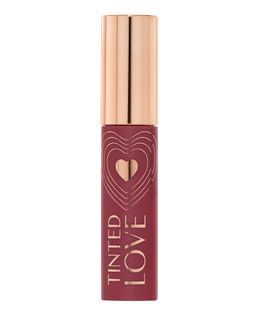
Charlotte Tilbury Tinted Love Santa Euphoria
Works for
1 of 1 advertised claim delivered
MoisturizingGlycerin, Sodium hyaluronate + 3 moreGood evidence
“Enriched with hyaluronic acid an industry lauded humectant that pulls moisture into skin and nourishing vitamin E, these dew-boosting and long-lasting tints ensure soft and supple lips or cheeks with a fresh, satin-like finish.”
This product can help improve hydration of the skin with the two types of ingredients.
The first type is called “humectants”:
these ingredients help attract water.
When humectants are on the surface of the skin, they “pull in” the moisture from the outside environment, or from
within deeper layers of the skin. The following ingredients in this product do the job:
glycerin, sodium hyaluronate.
This product also contains ingredients called “occlusives”. They help reduce the speed with which our skin loses moisture to the outside environment. These ingredients also help soften the upper layer of the skin, so it feels less tight and nicer to the touch. The following ingredients in this product do the job: squalane.
Can it cause trouble?
Irritancy1 strong irritant: Aroma — patch-test recommendedHigh risk
Comedogenic15 ingredients rated 2 or more on the 0–5 pore-clogging scale15 flagged
User reviews
Be the first — your take helps the next person decide.
Ingredients
Filter by role to see what each ingredient is doing.
Water~40–60%
Propanediol~4–6%
- Irritation risk
- Low
Acts as a solvent for other ingredients. Speeds up the absorption of other ingredients into the skin
More about PropanediolEthylhexyl polyhydroxystearate~3.6–5.4%
- Irritation risk
- Low
Polyglyceryl-2 triisostearate~2.4–3.6%
- Irritation risk
- Low
Helps to soften the upper layer of the skin and create a nice product texture
More about Polyglyceryl-2 triisostearatePolyglyceryl-4 isostearate~2–3%
- Irritation risk
- Medium
Helps water and oil mix together
More about Polyglyceryl-4 isostearateHydroxyethyl acrylate/sodium acryloyldimethyl taurate copolymer~1.7–2.5%
- Irritation risk
- Medium
A gelling agent that thickens the product consistency and leaves the skin with a velvety finish
More about Hydroxyethyl acrylate/sodium acryloyldimethyl taurate copolymerSqualane~1.5–2.2%
- Irritation risk
- Low
An oil naturally present in skin. Works as an emollient to soften the skin and form a protective layer on its surface without a greasy feeling.
More about SqualaneTrimethylolpropane triisostearate~1.3–1.9%
- Irritation risk
- Low
Phenoxyethanol~0.5–1%
- Irritation risk
- Low
A preservative. It helps prevent bacterial growth in cosmetic products
More about PhenoxyethanolAroma~0.8–1.2%
Ethylhexylglycerin~0.5–1.2%
Polysorbate 60~0.45–1.05%
Glycerin~0.4–1%
- Irritation risk
- Low
One of the best moisturizing ingredients. Naturally present in skin. It attracts water to the upper layer of the skin working as a humectant
More about GlycerinSodium hyaluronate~0.35–0.85%
- Irritation risk
- Low
One of the best moisturizing ingredients. Attracts water into the upper layer of the skin
More about Sodium hyaluronateTocopheryl acetate~0.35–0.8%
- Irritation risk
- Medium
A more stable but less bio-available form of vitamin E compared to Tocopherol. Might help moisturize and protect the skin from free radicals, but mostly used in low concentrations to stabilize other ingredients.
More about Tocopheryl acetateSodium citrate~0.35–0.8%
- Irritation risk
- Medium
Helps to control the skin's pH level. Maintains the skin's natural film of amino-lactic acids and oils. Helps to preserve products
More about Sodium citrateXanthan gum~0.35–0.8%
- Irritation risk
- Low
Used to create a thicker product consistency
More about Xanthan gumTocopherol~0.3–0.75%
- Irritation risk
- Low
Pure form of vitamin E. Can help moisturise and protect the skin from free radicals. Often used to help stabilise other ingredients or the formula itself
More about TocopherolTitanium dioxide~0.35–0.85%
- Irritation risk
- Low
Works as a UV filter when used in high concentrations. It is photostable and is effective mostly against the UVB light, with some protection in the UVA range. In small concentrations, used for its ability to improve the color of cosmetic products. Is usually well tolerated by the skin
More about Titanium dioxideIron oxides~0.3–0.7%
- Irritation risk
- Low
An umbrella term for the following three colorants: CI 77491, CI 77492, CI 77499. They might be able to offer some protection against visible light, but the degree of the protection is not clear
More about Iron oxidesCi 77499~0.15–0.7%
Ci 45410~0.15–0.65%
Ci 45380~0.15–0.65%
Ci 17200~0.15–0.65%
Ci 16035~0.15–0.65%
Ci 19140~0.15–0.65%
Ci 15985~0.15–0.65%
Blue 1 lake~0.15–0.65%
Ci 42090~0.15–0.65%
Water~0.15–0.6%
Propanediol~0.15–0.65%
- Irritation risk
- Low
Acts as a solvent for other ingredients. Speeds up the absorption of other ingredients into the skin
More about PropanediolEthylhexyl polyhydroxystearate~0.15–0.65%
- Irritation risk
- Low
Polyglyceryl-2 triisostearate~0.15–0.7%
- Irritation risk
- Low
Helps to soften the upper layer of the skin and create a nice product texture
More about Polyglyceryl-2 triisostearatePolyglyceryl-4 isostearate~0.15–0.7%
- Irritation risk
- Medium
Helps water and oil mix together
More about Polyglyceryl-4 isostearateHydroxyethyl acrylate/sodium acryloyldimethyl taurate copolymer~0.15–0.65%
- Irritation risk
- Medium
A gelling agent that thickens the product consistency and leaves the skin with a velvety finish
More about Hydroxyethyl acrylate/sodium acryloyldimethyl taurate copolymerSqualane~0.2–0.75%
- Irritation risk
- Low
An oil naturally present in skin. Works as an emollient to soften the skin and form a protective layer on its surface without a greasy feeling.
More about SqualaneTrimethylolpropane triisostearate~0.15–0.65%
- Irritation risk
- Low
Phenoxyethanol~0.15–0.65%
- Irritation risk
- Low
A preservative. It helps prevent bacterial growth in cosmetic products
More about PhenoxyethanolAroma~0.15–0.65%
Ethylhexylglycerin~0.15–0.65%
Polysorbate 60~0.15–0.7%
Glycerin~0.15–0.7%
- Irritation risk
- Low
One of the best moisturizing ingredients. Naturally present in skin. It attracts water to the upper layer of the skin working as a humectant
More about GlycerinSodium hyaluronate~0.15–0.6%
- Irritation risk
- Low
One of the best moisturizing ingredients. Attracts water into the upper layer of the skin
More about Sodium hyaluronateTocopheryl acetate~0.15–0.65%
- Irritation risk
- Medium
A more stable but less bio-available form of vitamin E compared to Tocopherol. Might help moisturize and protect the skin from free radicals, but mostly used in low concentrations to stabilize other ingredients.
More about Tocopheryl acetateSodium citrate~0.15–0.6%
- Irritation risk
- Medium
Helps to control the skin's pH level. Maintains the skin's natural film of amino-lactic acids and oils. Helps to preserve products
More about Sodium citrateXanthan gum~0.15–0.65%
- Irritation risk
- Low
Used to create a thicker product consistency
More about Xanthan gumTocopherol~0.15–0.65%
- Irritation risk
- Low
Pure form of vitamin E. Can help moisturise and protect the skin from free radicals. Often used to help stabilise other ingredients or the formula itself
More about TocopherolTitanium dioxide~0.3–0.75%
- Irritation risk
- Low
Works as a UV filter when used in high concentrations. It is photostable and is effective mostly against the UVB light, with some protection in the UVA range. In small concentrations, used for its ability to improve the color of cosmetic products. Is usually well tolerated by the skin
More about Titanium dioxideIron oxides~0.15–0.55%
- Irritation risk
- Low
An umbrella term for the following three colorants: CI 77491, CI 77492, CI 77499. They might be able to offer some protection against visible light, but the degree of the protection is not clear
More about Iron oxidesCi 77499~0.15–0.65%
Ci 45410~0.15–0.65%
Ci 45380~0.15–0.65%
Ci 17200~0.15–0.65%
Ci 16035~0.15–0.65%
Ci 19140~0.15–0.65%
Ci 15985~0.15–0.65%
Blue 1 lake~0.15–0.65%
Ci 42090~0.15–0.65%
Water~0.15–0.6%
Propanediol~0.15–0.65%
- Irritation risk
- Low
Acts as a solvent for other ingredients. Speeds up the absorption of other ingredients into the skin
More about PropanediolEthylhexyl polyhydroxystearate~0.15–0.65%
- Irritation risk
- Low
Polyglyceryl-2 triisostearate~0.15–0.7%
- Irritation risk
- Low
Helps to soften the upper layer of the skin and create a nice product texture
More about Polyglyceryl-2 triisostearatePolyglyceryl-4 isostearate~0.15–0.7%
- Irritation risk
- Medium
Helps water and oil mix together
More about Polyglyceryl-4 isostearateHydroxyethyl acrylate/sodium acryloyldimethyl taurate copolymer~0.15–0.65%
- Irritation risk
- Medium
A gelling agent that thickens the product consistency and leaves the skin with a velvety finish
More about Hydroxyethyl acrylate/sodium acryloyldimethyl taurate copolymerSqualane~0.2–0.75%
- Irritation risk
- Low
An oil naturally present in skin. Works as an emollient to soften the skin and form a protective layer on its surface without a greasy feeling.
More about SqualaneTrimethylolpropane triisostearate~0.15–0.65%
- Irritation risk
- Low
Phenoxyethanol~0.15–0.65%
- Irritation risk
- Low
A preservative. It helps prevent bacterial growth in cosmetic products
More about PhenoxyethanolAroma~0.15–0.65%
Ethylhexylglycerin~0.15–0.65%
Polysorbate 60~0.15–0.7%
Glycerin~0.15–0.7%
- Irritation risk
- Low
One of the best moisturizing ingredients. Naturally present in skin. It attracts water to the upper layer of the skin working as a humectant
More about GlycerinSodium hyaluronate~0.15–0.6%
- Irritation risk
- Low
One of the best moisturizing ingredients. Attracts water into the upper layer of the skin
More about Sodium hyaluronateTocopheryl acetate~0.15–0.65%
- Irritation risk
- Medium
A more stable but less bio-available form of vitamin E compared to Tocopherol. Might help moisturize and protect the skin from free radicals, but mostly used in low concentrations to stabilize other ingredients.
More about Tocopheryl acetateSodium citrate~0.15–0.6%
- Irritation risk
- Medium
Helps to control the skin's pH level. Maintains the skin's natural film of amino-lactic acids and oils. Helps to preserve products
More about Sodium citrateXanthan gum~0.15–0.65%
- Irritation risk
- Low
Used to create a thicker product consistency
More about Xanthan gumTocopherol~0.15–0.65%
- Irritation risk
- Low
Pure form of vitamin E. Can help moisturise and protect the skin from free radicals. Often used to help stabilise other ingredients or the formula itself
More about TocopherolTitanium dioxide~0.3–0.75%
- Irritation risk
- Low
Works as a UV filter when used in high concentrations. It is photostable and is effective mostly against the UVB light, with some protection in the UVA range. In small concentrations, used for its ability to improve the color of cosmetic products. Is usually well tolerated by the skin
More about Titanium dioxideIron oxides~0.15–0.55%
- Irritation risk
- Low
An umbrella term for the following three colorants: CI 77491, CI 77492, CI 77499. They might be able to offer some protection against visible light, but the degree of the protection is not clear
More about Iron oxidesCi 77499~0.15–0.65%
Ci 45410~0.15–0.65%
Ci 45380~0.15–0.65%
Ci 17200~0.15–0.65%
Ci 16035~0.15–0.65%
Ci 19140~0.15–0.65%
Ci 15985~0.15–0.65%
Blue 1 lake~0.15–0.65%
Ci 42090~0.15–0.65%
Water~0.15–0.6%
Propanediol~0.15–0.65%
- Irritation risk
- Low
Acts as a solvent for other ingredients. Speeds up the absorption of other ingredients into the skin
More about PropanediolEthylhexyl polyhydroxystearate~0.15–0.65%
- Irritation risk
- Low
Polyglyceryl-2 triisostearate~0.15–0.7%
- Irritation risk
- Low
Helps to soften the upper layer of the skin and create a nice product texture
More about Polyglyceryl-2 triisostearatePolyglyceryl-4 isostearate~0.15–0.7%
- Irritation risk
- Medium
Helps water and oil mix together
More about Polyglyceryl-4 isostearateHydroxyethyl acrylate/sodium acryloyldimethyl taurate copolymer~0.15–0.65%
- Irritation risk
- Medium
A gelling agent that thickens the product consistency and leaves the skin with a velvety finish
More about Hydroxyethyl acrylate/sodium acryloyldimethyl taurate copolymerSqualane~0.2–0.75%
- Irritation risk
- Low
An oil naturally present in skin. Works as an emollient to soften the skin and form a protective layer on its surface without a greasy feeling.
More about SqualaneTrimethylolpropane triisostearate~0.15–0.65%
- Irritation risk
- Low
Phenoxyethanol~0.15–0.65%
- Irritation risk
- Low
A preservative. It helps prevent bacterial growth in cosmetic products
More about PhenoxyethanolAroma~0.15–0.65%
Ethylhexylglycerin~0.15–0.65%
Polysorbate 60~0.15–0.7%
Glycerin~0.15–0.7%
- Irritation risk
- Low
One of the best moisturizing ingredients. Naturally present in skin. It attracts water to the upper layer of the skin working as a humectant
More about GlycerinSodium hyaluronate~0.15–0.6%
- Irritation risk
- Low
One of the best moisturizing ingredients. Attracts water into the upper layer of the skin
More about Sodium hyaluronateTocopheryl acetate~0.15–0.65%
- Irritation risk
- Medium
A more stable but less bio-available form of vitamin E compared to Tocopherol. Might help moisturize and protect the skin from free radicals, but mostly used in low concentrations to stabilize other ingredients.
More about Tocopheryl acetateSodium citrate~0.15–0.6%
- Irritation risk
- Medium
Helps to control the skin's pH level. Maintains the skin's natural film of amino-lactic acids and oils. Helps to preserve products
More about Sodium citrateXanthan gum~0.15–0.65%
- Irritation risk
- Low
Used to create a thicker product consistency
More about Xanthan gumTocopherol~0.15–0.65%
- Irritation risk
- Low
Pure form of vitamin E. Can help moisturise and protect the skin from free radicals. Often used to help stabilise other ingredients or the formula itself
More about TocopherolTitanium dioxide~0.3–0.75%
- Irritation risk
- Low
Works as a UV filter when used in high concentrations. It is photostable and is effective mostly against the UVB light, with some protection in the UVA range. In small concentrations, used for its ability to improve the color of cosmetic products. Is usually well tolerated by the skin
More about Titanium dioxideIron oxides~0.15–0.55%
- Irritation risk
- Low
An umbrella term for the following three colorants: CI 77491, CI 77492, CI 77499. They might be able to offer some protection against visible light, but the degree of the protection is not clear
More about Iron oxidesCi 77499~0.15–0.65%
Ci 45410~0.15–0.65%
Ci 45380~0.15–0.65%
Ci 17200~0.15–0.65%
Ci 16035~0.15–0.65%
Ci 19140~0.15–0.65%
Ci 15985~0.15–0.65%
Blue 1 lake~0.15–0.65%
Ci 42090~0.15–0.65%
Water~0.15–0.6%
Propanediol~0.15–0.65%
- Irritation risk
- Low
Acts as a solvent for other ingredients. Speeds up the absorption of other ingredients into the skin
More about PropanediolEthylhexyl polyhydroxystearate~0.15–0.65%
- Irritation risk
- Low
Polyglyceryl-2 triisostearate~0.15–0.7%
- Irritation risk
- Low
Helps to soften the upper layer of the skin and create a nice product texture
More about Polyglyceryl-2 triisostearatePolyglyceryl-4 isostearate~0.15–0.7%
- Irritation risk
- Medium
Helps water and oil mix together
More about Polyglyceryl-4 isostearateHydroxyethyl acrylate/sodium acryloyldimethyl taurate copolymer~0.15–0.65%
- Irritation risk
- Medium
A gelling agent that thickens the product consistency and leaves the skin with a velvety finish
More about Hydroxyethyl acrylate/sodium acryloyldimethyl taurate copolymerSqualane~0.2–0.75%
- Irritation risk
- Low
An oil naturally present in skin. Works as an emollient to soften the skin and form a protective layer on its surface without a greasy feeling.
More about SqualaneTrimethylolpropane triisostearate~0.15–0.65%
- Irritation risk
- Low
Phenoxyethanol~0.15–0.65%
- Irritation risk
- Low
A preservative. It helps prevent bacterial growth in cosmetic products
More about PhenoxyethanolAroma~0.15–0.65%
Ethylhexylglycerin~0.15–0.65%
Polysorbate 60~0.15–0.65%
Glycerin~0.15–0.7%
- Irritation risk
- Low
One of the best moisturizing ingredients. Naturally present in skin. It attracts water to the upper layer of the skin working as a humectant
More about GlycerinSodium hyaluronate~0.15–0.6%
- Irritation risk
- Low
One of the best moisturizing ingredients. Attracts water into the upper layer of the skin
More about Sodium hyaluronateTocopheryl acetate~0.15–0.65%
- Irritation risk
- Medium
A more stable but less bio-available form of vitamin E compared to Tocopherol. Might help moisturize and protect the skin from free radicals, but mostly used in low concentrations to stabilize other ingredients.
More about Tocopheryl acetateSodium citrate~0.15–0.6%
- Irritation risk
- Medium
Helps to control the skin's pH level. Maintains the skin's natural film of amino-lactic acids and oils. Helps to preserve products
More about Sodium citrateXanthan gum~0.15–0.6%
- Irritation risk
- Low
Used to create a thicker product consistency
More about Xanthan gumTocopherol~0.15–0.6%
- Irritation risk
- Low
Pure form of vitamin E. Can help moisturise and protect the skin from free radicals. Often used to help stabilise other ingredients or the formula itself
More about TocopherolTitanium dioxide~0.2–0.75%
- Irritation risk
- Low
Works as a UV filter when used in high concentrations. It is photostable and is effective mostly against the UVB light, with some protection in the UVA range. In small concentrations, used for its ability to improve the color of cosmetic products. Is usually well tolerated by the skin
More about Titanium dioxideIron oxides~0.1–0.45%
- Irritation risk
- Low
An umbrella term for the following three colorants: CI 77491, CI 77492, CI 77499. They might be able to offer some protection against visible light, but the degree of the protection is not clear
More about Iron oxidesCi 77499~0.1–0.45%
Ci 45410~0.1–0.4%
Ci 45380~0.1–0.35%
Ci 17200~0.05–0.3%
Ci 16035~0.05–0.25%
Ci 19140~0.05–0.3%
Ci 15985~0.05–0.25%
Blue 1 lake~0.05–0.15%
Ci 42090~0.05–0.1%
Ingredient list view
Water, Propanediol, Ethylhexyl polyhydroxystearate, Polyglyceryl-2 triisostearate, Polyglyceryl-4 isostearate, Hydroxyethyl acrylate/sodium acryloyldimethyl taurate copolymer, Squalane, Trimethylolpropane triisostearate, Phenoxyethanol, Aroma, Ethylhexylglycerin, Polysorbate 60, Glycerin, Sodium hyaluronate, Tocopheryl acetate, Sodium citrate, Xanthan gum, Tocopherol, Titanium dioxide, Iron oxides, Ci 77499, Ci 45410, Ci 45380, Ci 17200, Ci 16035, Ci 19140, Ci 15985, Blue 1 lake, Ci 42090, Water, Propanediol, Ethylhexyl polyhydroxystearate, Polyglyceryl-2 triisostearate, Polyglyceryl-4 isostearate, Hydroxyethyl acrylate/sodium acryloyldimethyl taurate copolymer, Squalane, Trimethylolpropane triisostearate, Phenoxyethanol, Aroma, Ethylhexylglycerin, Polysorbate 60, Glycerin, Sodium hyaluronate, Tocopheryl acetate, Sodium citrate, Xanthan gum, Tocopherol, Titanium dioxide, Iron oxides, Ci 77499, Ci 45410, Ci 45380, Ci 17200, Ci 16035, Ci 19140, Ci 15985, Blue 1 lake, Ci 42090, Water, Propanediol, Ethylhexyl polyhydroxystearate, Polyglyceryl-2 triisostearate, Polyglyceryl-4 isostearate, Hydroxyethyl acrylate/sodium acryloyldimethyl taurate copolymer, Squalane, Trimethylolpropane triisostearate, Phenoxyethanol, Aroma, Ethylhexylglycerin, Polysorbate 60, Glycerin, Sodium hyaluronate, Tocopheryl acetate, Sodium citrate, Xanthan gum, Tocopherol, Titanium dioxide, Iron oxides, Ci 77499, Ci 45410, Ci 45380, Ci 17200, Ci 16035, Ci 19140, Ci 15985, Blue 1 lake, Ci 42090, Water, Propanediol, Ethylhexyl polyhydroxystearate, Polyglyceryl-2 triisostearate, Polyglyceryl-4 isostearate, Hydroxyethyl acrylate/sodium acryloyldimethyl taurate copolymer, Squalane, Trimethylolpropane triisostearate, Phenoxyethanol, Aroma, Ethylhexylglycerin, Polysorbate 60, Glycerin, Sodium hyaluronate, Tocopheryl acetate, Sodium citrate, Xanthan gum, Tocopherol, Titanium dioxide, Iron oxides, Ci 77499, Ci 45410, Ci 45380, Ci 17200, Ci 16035, Ci 19140, Ci 15985, Blue 1 lake, Ci 42090, Unknown, Water, Propanediol, Ethylhexyl polyhydroxystearate, Polyglyceryl-2 triisostearate, Polyglyceryl-4 isostearate, Hydroxyethyl acrylate/sodium acryloyldimethyl taurate copolymer, Squalane, Trimethylolpropane triisostearate, Phenoxyethanol, Aroma, Ethylhexylglycerin, Polysorbate 60, Glycerin, Sodium hyaluronate, Tocopheryl acetate, Sodium citrate, Xanthan gum, Tocopherol, Titanium dioxide, Iron oxides, Ci 77499, Ci 45410, Ci 45380, Ci 17200, Ci 16035, Ci 19140, Ci 15985, Blue 1 lake, Ci 42090
Compare prices
Retailers ranked by price — lowest first.

Sources cited in this review
Every concentration estimate and effectiveness label is anchored to one of these 8 studies and safety reviews.
- 1
- 2
- 3Hyaluronic acid: A key molecule in skin agingncbi.nlm.nih.gov
- 4
- 5Vitamin E in dermatologyncbi.nlm.nih.gov
- 6Vitamin E and Skin Healthlpi.oregonstate.edu

Affiliate links · As an Amazon Associate, WIMJ earns from qualifying purchases.