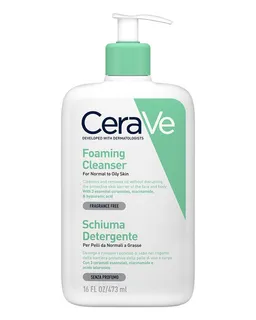
Works for
CleansingCoco-betaine, Sodium cocoyl glycinate + 6 moreCleanses gently
This product works by removing dirt and oil from the surface of the skin. It uses a combination of mild cleansing agents (capryloyl glycine, carbomer, cholesterol, coco-betaine, peg-120 methyl glucose dioleate, sodium cocoyl glycinate, sodium lauroyl lactylate, xanthan gum) and should be able to cleanse the skin gently. Still keep in mind that any cleansing can disrupt the skin barrier, and most people do not need to cleanse their skin more than once per day.
Even though this formulation is mild, the following cleansing agents could trigger an irritation or allergy for some people: coco-betaine
Can it cause trouble?
Irritancy9 flagged ingredientsLow risk
ComedogenicClean of flagged comedogenic ingredientsNone flagged

User reviews
Be the first — your take helps the next person decide.
Ingredients
Filter by role to see what each ingredient is doing.
Water~40–60%
Glycerin~4.2–6.3%
- Irritation risk
- Low
One of the best moisturizing ingredients. Naturally present in skin. It attracts water to the upper layer of the skin working as a humectant
More about GlycerinCoco-betaine~4.6–6.9%
- Irritation risk
- High
Helps oil and water mix together and works as a cleansing agent. Can be allergenic
More about Coco-betainePropylene glycol~2.6–3.9%
- Irritation risk
- High
Helps oil and water mix together and can enhance the penetration of other ingredients into the skin. It can be irritating
More about Propylene glycolSodium cocoyl glycinate~2.1–3.2%
- Irritation risk
- Medium
Helps oil and water mix together
More about Sodium cocoyl glycinatePeg-120 methyl glucose dioleate~1.6–2.5%
Sodium chloride~1.4–2.2%
- Irritation risk
- Low
Used to stabilize mixtures of oil and water, and create thicker, gel-like product textures
More about Sodium chlorideAcrylates copolymer~1.2–1.8%
- Irritation risk
- Medium
Used to stabilize product formulation, help create an even product layer over skin (for example, in sunscreen) and create a thicker product consistency
More about Acrylates copolymerCitric acid~0.95–1.45%
- Irritation risk
- Medium
Can work as an exfoliant but is typically used to adjust the product pH
More about Citric acidCapryloyl glycine~0.85–1.25%
- Irritation risk
- Low
Helps oil and water mix together, preserve cosmetic products, and attract water to the upper layer of the skin
More about Capryloyl glycineCaprylyl glycol~0.5–1.15%
- Irritation risk
- Medium
Helps preserve products and creates a nice product texture
More about Caprylyl glycolSodium hydroxide~0.4–0.9%
Niacinamide~0.35–0.8%
- Irritation risk
- Low
Is proven to be effective in reducing blemishes, evening out skin tone and helping to improve lines and wrinkles. It helps the skin to repair sun damage, calm down inflammation and keep maintain good levels of moisture. The concentration of about 2% is effective for supporting the skin barrier and evening out the skin tone. Concentration of 4-6% is better for helping with acne and balancing the sebum production
More about NiacinamideDisodium edta~0.3–0.7%
Sodium hyaluronate~0.2–0.75%
- Irritation risk
- Low
One of the best moisturizing ingredients. Attracts water into the upper layer of the skin
More about Sodium hyaluronateSodium lauroyl lactylate~0.15–0.65%
- Irritation risk
- Medium
Helps water and oil mix together
More about Sodium lauroyl lactylateCeramide np~0.15–0.65%
- Irritation risk
- Low
A type of lipid similar to ceramides naturally present in skin. Helps to soften the upper layer of the skin and supports the skin barrier function to keep it hydrated. Can help to prevent inflammation in skin
More about Ceramide npPhenoxyethanol~0.1–0.45%
- Irritation risk
- Low
A preservative. It helps prevent bacterial growth in cosmetic products
More about PhenoxyethanolCeramide ap~0.1–0.45%
- Irritation risk
- Low
A type of lipid similar to ceramides naturally present in skin. Helps to soften the upper layer of the skin and supports the skin barrier function to keep it hydrated. Can help to prevent inflammation in skin
More about Ceramide apPhytosphingosine~0.1–0.5%
- Irritation risk
- Low
A type of lipid that is naturally present in skin. It might help in repairing skin barrier function and has anti-bacterial effect
More about PhytosphingosineCholesterol~0.1–0.4%
- Irritation risk
- Low
An emollient that is naturally found in skin
More about CholesterolXanthan gum~0.05–0.25%
- Irritation risk
- Low
Used to create a thicker product consistency
More about Xanthan gumCarbomer~0.05–0.2%
- Irritation risk
- Low
Helps create a thicker or gel-like product texture. It is not a surfactant but can be used in gentle cleansing formulations
More about CarbomerEthylhexylglycerin~0.05–0.15%
Ceramide eop~0.05–0.2%
- Irritation risk
- Low
A type of lipid similar to ceramides naturally present in skin. Helps to soften the upper layer of the skin and supports the skin barrier function to keep it hydrated. Can help to prevent inflammation in skin
More about Ceramide eopIngredient list view
Water, Glycerin, Coco-betaine, Propylene glycol, Sodium cocoyl glycinate, Peg-120 methyl glucose dioleate, Sodium chloride, Acrylates copolymer, Citric acid, Capryloyl glycine, Caprylyl glycol, Sodium hydroxide, Niacinamide, Disodium edta, Sodium hyaluronate, Sodium lauroyl lactylate, Ceramide np, Phenoxyethanol, Ceramide ap, Phytosphingosine, Cholesterol, Xanthan gum, Carbomer, Ethylhexylglycerin, Ceramide eop
Worth comparing, line by line.
Match % combines shared ingredients, the first five ingredients, shared actives and hero ingredients, irritancy (lower counts in the alternative's favour), texture and body area. Only products in the same routine step are compared.
| CeraVeSCHIUMA DETERGENTEYOUR PRODUCT | La Roche-PosayEffaclar Medicated Gel Cleanser | Face factsCeramide Blemish Foaming Cleanser | MixaAnti-Imperfection Comfort Cleanser | |
|---|---|---|---|---|
| Match | — | 84% | 79% | 75% |
| Price | — | $18.99 | $7.79 | $7.10 |
| Shared key ingredients | — | 7 of 15 | 7 of 15 | 3 of 15 |
| Key difference | — | — | Salicylic Acid | Salicylic Acid |
| Irritancy | Low | Low | Low | Low |
| Drying alcohol | — | — | — | — |
| View product | Shop | Shop | Shop |
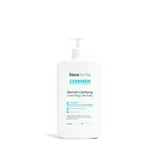

More alternatives: Skincare by Dr V Micellar Gel WashREVOLUTION SKINCARE Purifying Facial Gel Cleanser with Niacinamide
Sources cited in this review
Every concentration estimate and effectiveness label is anchored to one of these 13 studies and safety reviews.
- 1
- 2Surfactants and experimental irritant contact dermatitisncbi.nlm.nih.gov
- 3Propylene Glycolpubmed.ncbi.nlm.nih.gov
- 4Skin-sensitizing and irritant properties of propylene glycolonlinelibrary.wiley.com
- 5
- 6
