Works for
1 of 1 advertised claim delivered
Moisturizing15 ingredients credited for this claimStrong support
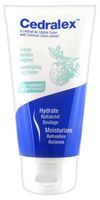
“Cedralex Light Legs Cream 150ml hydrates, refreshes and relieves the legs, also offering an immediate freshening effect.”
This product can help improve hydration of the skin with the two types of ingredients.
The first type is called “humectants”:
these ingredients help attract water.
When humectants are on the surface of the skin, they “pull in” the moisture from the outside environment, or from
within deeper layers of the skin. The following ingredients in this product do the job:
biosaccharide gum-1, glycerin.
This product also contains ingredients called “occlusives”. They help reduce the speed with which our skin loses moisture to the outside environment. These ingredients also help soften the upper layer of the skin, so it feels less tight and nicer to the touch. The following ingredients in this product do the job: dimethicone, phenyl trimethicone.
The following ingredients in this product are especially good for supporting the skin barrier and helping with the hydration level: urea
ExfoliationNot advertised by the brand · 3 ingredients credited for this claimStrong support
This product can help exfoliate the skin. In other words, it helps break down the bonds between dead cells on the surface of the skin and speed up the skin turnover. Skin often appears softer and brighter after exfoliation, but overdoing it can result in disrupted skin barrier. The following ingredient is doing the exfoliating job in this product: hydroxyethyl urea.
Anti-oxidationNot advertised by the brand · 4 ingredients credited for this claimModerate support
This product contains antioxidants (squalene) that might be able to help neutralize free radicals in skin to lessen the damage it gets from the UV light (sun). There is not enough evidence to confirm their effectiveness in skin though.
Can it cause trouble?
Irritancy11 strong irritants: Alcohol denat., Menthol + 9 more — patch-test recommendedHigh risk
Comedogenic2 ingredients rated 2 or more on the 0–5 pore-clogging scale2 flagged
User reviews
Be the first — your take helps the next person decide.
Ingredients
Filter by role to see what each ingredient is doing.
Water~45–55%
Alcohol denat.~7.2–8.8%
- Irritation risk
- High
Produces temporary toning effect. Can help dissolve other ingredients or preserve products
More about Alcohol denat.Glycerin~4.1–5%
- Irritation risk
- Low
One of the best moisturizing ingredients. Naturally present in skin. It attracts water to the upper layer of the skin working as a humectant
More about GlycerinDimethicone~3.1–3.8%
- Irritation risk
- Low
A silicone that helps to reduce water loss from the surface of the skin. Can temporarily "fill in" lines and wrinkles, absorb oil, and create a nice product finish
More about DimethiconePolyacrylamide~2.3–2.8%
- Irritation risk
- Medium
Used to improve product texture and help oil and water mix together
More about PolyacrylamidePhenyl trimethicone~1.9–2.3%
- Irritation risk
- Low
A type of silicone that can decrease loss of moisture from the skin surface. It helps create a nice product texture
More about Phenyl trimethiconeC13-14 isoparaffin~1.5–1.8%
- Irritation risk
- Low
Helps soften the upper layer of the skin, dissolve other ingredients and create a thicker product consistency
More about C13-14 isoparaffinMenthol~1.2–1.5%
- Irritation risk
- High
Parfum~0.95–1.15%
- Irritation risk
- High
An aromatic blend of unspecified and possibly irritating ingredients
More about ParfumSqualane~0.75–1.15%
- Irritation risk
- Low
An oil naturally present in skin. Works as an emollient to soften the skin and form a protective layer on its surface without a greasy feeling.
More about SqualanePropanediol~0.55–0.85%
- Irritation risk
- Low
Acts as a solvent for other ingredients. Speeds up the absorption of other ingredients into the skin
More about PropanediolOlive oil decyl esters~0.45–0.7%
- Irritation risk
- Low
Oryza sativa~0.45–0.65%
- Irritation risk
- Low
Roe extract~0.3–0.55%
- Irritation risk
- Low
Bis-peg/ppg-20/5 peg/ppg-20/5 dimethicone~0.3–0.55%
Methoxy peg/ppg-25/4 dimethicone~0.3–0.55%
Hydroxyethyl acrylate/sodium acryloyldimethyl taurate copolymer~0.3–0.55%
- Irritation risk
- Medium
A gelling agent that thickens the product consistency and leaves the skin with a velvety finish
More about Hydroxyethyl acrylate/sodium acryloyldimethyl taurate copolymerHydroxyethyl urea~0.25–0.5%
- Irritation risk
- Low
A derivative of urea, a compound that is naturally present in skin. Attracts water to the upper layer of the skin. Can enhance penetration of other ingredients
More about Hydroxyethyl ureaCaprylic/capric triglyceride~0.3–0.55%
- Irritation risk
- Medium
A good mix of fatty acids that forms a protective layer on the skin. Improves the shelf life of products. Derived from coconut and glycerin
More about Caprylic/capric triglycerideLaureth-7~0.25–0.45%
Diphenyl dimethicone~0.25–0.45%
Tocopheryl acetate~0.2–0.4%
- Irritation risk
- Medium
A more stable but less bio-available form of vitamin E compared to Tocopherol. Might help moisturize and protect the skin from free radicals, but mostly used in low concentrations to stabilize other ingredients.
More about Tocopheryl acetateCitrus medica vulgaris fruit extract~0.2–0.35%
- Irritation risk
- High
Tetrasodium glutamate diacetate~0.2–0.35%
- Irritation risk
- Low
Helps stabilize the product formulation
More about Tetrasodium glutamate diacetateSqualene~0.25–0.45%
- Irritation risk
- Low
- Comedogenicity
- 2/5
An oil that is naturally part of skin sebum that helps to soften its upper layer, reduce water loss and neutralize free radicals. It might be comedogenic. Avoid applying large concentrations (or pure oil) before sun exposure as oxidized squalene can clog pores and lead to skin irritation. Today squalene is mostly derived from vegetable oils or synthetized by yeast
More about SqualeneCitric acid~0.2–0.4%
- Irritation risk
- Medium
Can work as an exfoliant but is typically used to adjust the product pH
More about Citric acidGlycine soja oil~0.2–0.4%
- Irritation risk
- Medium
- Comedogenicity
- 2/5
A good emollient that helps soften the skin and helps repair its barrier function. It can clog pores if used in high concentrations.
More about Glycine soja oilPolysorbate 60~0.25–0.45%
Sorbitan stearate~0.2–0.4%
Phenoxyethanol~0.2–0.4%
- Irritation risk
- Low
A preservative. It helps prevent bacterial growth in cosmetic products
More about PhenoxyethanolUrea~0.2–0.35%
- Irritation risk
- Low
Naturally present in skin (urea makes up about 7% of natural moisturizing factors in skin). Attracts water to the upper layer of the skin. Also has a positive effect on the skin barrier beyond the humectant action. Can enhance penetration of other ingredients. Is an exfoliating ingredient when used in high concentrations
More about UreaBiosaccharide gum-1~0.2–0.4%
- Irritation risk
- Low
Helps attract water to the upper layer of the skin and is claimed to provide a longer-lasting hydration because of its ability to create a water-binding film on the surface of the skin
More about Biosaccharide gum-1Ammonium lactate~0.2–0.35%
- Irritation risk
- Low
Gluconolactone~0.2–0.35%
- Irritation risk
- Medium
A polyhydroxy acid (PHA) that helps shed the dead cells from the skin surface revealing smoother skin. Is believed to be genter than AHAs. It helps attract water to the upper layer of the skin and can stimulate production of skin's own hyaluronic acid resulting in improved hydration levels. It has been shown to be helpful against acne and clogged pores if used consistently (e.g over a period of 12 weeks) in high enough concentration. It can help reduce fine lines and wrinkles and improve skin tone with long-term application. Can help neutralize free radicals
More about GluconolactoneCaesalpinia spinosa gum~0.25–0.45%
Ethanolamine~0.2–0.4%
- Irritation risk
- Low
Sodium benzoate~0.2–0.4%
Sodium hydroxide~0.2–0.4%
Tocopherol~0.25–0.4%
- Irritation risk
- Low
Pure form of vitamin E. Can help moisturise and protect the skin from free radicals. Often used to help stabilise other ingredients or the formula itself
More about TocopherolCi 19140~0.2–0.4%
Ci 42090~0.2–0.4%
Pentaerythrityl tetra-di-t-butyl hydroxyhydrocinnamate~0.2–0.4%
- Irritation risk
- Low
Used to increase stability of product formulations
More about Pentaerythrityl tetra-di-t-butyl hydroxyhydrocinnamateCalcium gluconate~0.25–0.4%
- Irritation risk
- Low
Helps attract water to the upper layer of the skin and helps to improve appearance of the product
More about Calcium gluconateAlpha-isomethyl ionone~0.15–0.3%
- Irritation risk
- High
A fragrance. Potential allergen and can be irritating
More about Alpha-isomethyl iononeBenzyl salicylate~0.15–0.25%
Citral~0.1–0.2%
Geraniol~0.15–0.25%
Hexyl cinnamal~0.1–0.25%
Limonene~0.05–0.15%
- Irritation risk
- High
A common frangrance that can easily irritate skin, especially if exposed to air, light or heat
More about LimoneneLinalool~0.05–0.15%
Ingredient list view
Water, Alcohol denat., Glycerin, Dimethicone, Polyacrylamide, Phenyl trimethicone, C13-14 isoparaffin, Menthol, Parfum, Squalane, Propanediol, Olive oil decyl esters, Unknown, Oryza sativa, Roe extract, Bis-peg/ppg-20/5 peg/ppg-20/5 dimethicone, Methoxy peg/ppg-25/4 dimethicone, Hydroxyethyl acrylate/sodium acryloyldimethyl taurate copolymer, Hydroxyethyl urea, Caprylic/capric triglyceride, Laureth-7, Diphenyl dimethicone, Tocopheryl acetate, Citrus medica vulgaris fruit extract, Tetrasodium glutamate diacetate, Squalene, Citric acid, Glycine soja oil, Polysorbate 60, Sorbitan stearate, Phenoxyethanol, Urea, Biosaccharide gum-1, Ammonium lactate, Gluconolactone, Caesalpinia spinosa gum, Ethanolamine, Sodium benzoate, Sodium hydroxide, Tocopherol, Ci 19140, Ci 42090, Pentaerythrityl tetra-di-t-butyl hydroxyhydrocinnamate, Calcium gluconate, Alpha-isomethyl ionone, Benzyl salicylate, Citral, Geraniol, Hexyl cinnamal, Limonene, Linalool
Compare prices
Retailers ranked by price — lowest first.
Product summary
Based on the ingredient list, "Cedralex - Light Legs Cream" can work well for skin moisturization. This moisturizer uses a good combo of humectants and emollients. These both types of ingredients are essentials for improving the skin hydration and keeping the skin barrier healthy. Urea, biosaccharide gum-1, glycerin, hydroxyethyl urea and calcium gluconate in this product (humectants) attract water molecules to the upper layer of the skin (the water comes from the outside air or from the deeper layers of the skin if the air is dry). Emollients in this formulation (glycine soja oil, dimethicone, phenyl trimethicone, squalane and squalene) help to reduce the moisture loss from the skin. They also soften the skin surface and relieve the feeling of dryness and tightness.
This product contains ingredients that could be beneficial, but their concentrations are too low in this formulation: vitamin e, gluconolactone and caprylic/capric triglycerideIrritation risk
There are quite a few common irritants in this product, including ingredients without particular skin benefits. We would not recommend it for sensitive skin. We assess the overall irritancy of this moisturizer to be high. For a detailed overview of all potential irritants: click here
You can see the detailed formula review with the breakdown of all actives in the product and the full ingredient list with estimated concentrations in the tables below.
Sources cited in this review
Every concentration estimate and effectiveness label is anchored to one of these 26 studies and safety reviews.
- 1
- 2
- 3Final Report on the Safety Assessment of Dimethicone Copolyoljournals.sagepub.com
- 4Safety Assessment of Isoparaffins as Used in Cosmeticsjournals.sagepub.com
- 5
- 6Squalene and its potential clinical useseuropepmc.org

Affiliate links · As an Amazon Associate, WIMJ earns from qualifying purchases.