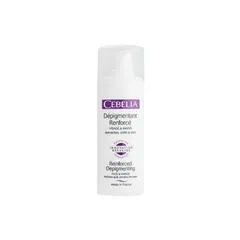
Works for:
based on ingredients and %- Evens skin tone
- Anti-aging
- Exfoliation
- Moisturizing
Can it cause trouble?
- Irritation risk: medium
- Comedogenic risk ingredients: 0
Key actives
Anti-aging
This product can help reduce and prevent fine lines and wrinkles, improve skin elasticity and firmness because it contains glycolic acid, niacinamide.
These ingredients in the product can also be helpful, even though there is less evidence for their effectiveness: ascorbyl glucoside.
Keep in mind that it typically takes at least 6 weeks to notice any results because the changes that are needed to improve fine lines and elasticity happen in the deeper layers of the skin. No topical anti-aging product can “erase” wrinkles or fully reverse signs of aging.
Is proven to be effective in reducing blemishes, evening out skin tone and helping to improve lines and wrinkles. It helps the skin to repair sun damage, calm down inflammation and keep maintain good levels of moisture. The concentration of about 2% is effective for supporting the skin barrier and evening out the skin tone. Concentration of 4-6% is better for helping with acne and balancing the sebum production
An alpha-hydroxy acid (AHA) that helps to remove the dead skin cells on the surface of the skin reveling a more even, smoother complexation. It is also able to stimulate collagen production with long-term use. Could help to reduce pore congestion. It can be irritating to the skin. Apply sunscreen daily if using products with glycolic acid
A vitamin C derivative that is more stable but less potent than pure form of vitamin C. Has a potential to boost collagen production, nutralise free radicals and reduce hyperpigmentation, but the required concentration is likely to be much higher than for the pure form of vitamin C, limiting the ingredient's effectiveness in products
Pure form of vitamin E. Can help moisturise and protect the skin from free radicals. Often used to help stabilise other ingredients or the formula itself
Evens skin tone
What does the product description say?
Read More Reduce the appearance of pigmentation and achieve a brighter skin tone with Cebelia Reinforced Depigmenting, now available at Face the Future Advanced Skin Clinic and Online Shop.
Source: Face the future
This product can help reduce hypepigmentation and even out the skin tone because it contains the following effective ingredients: glycolic acid, niacinamide
The following ingredient (ingredients) in this product might be helpful, but there is no evidence to confirm that it actually can help even out the skin tone: ascorbyl glucoside.
Keep in mind that you would need to apply any topical skincare targetted at hypigmentation consistently for a couple of months to get a result. No topical skincare product can help get rid of hyperpigmentation (including post-acne marks and age spots) instantly.
An alpha-hydroxy acid (AHA) that helps to remove the dead skin cells on the surface of the skin reveling a more even, smoother complexation. It is also able to stimulate collagen production with long-term use. Could help to reduce pore congestion. It can be irritating to the skin. Apply sunscreen daily if using products with glycolic acid
Is proven to be effective in reducing blemishes, evening out skin tone and helping to improve lines and wrinkles. It helps the skin to repair sun damage, calm down inflammation and keep maintain good levels of moisture. The concentration of about 2% is effective for supporting the skin barrier and evening out the skin tone. Concentration of 4-6% is better for helping with acne and balancing the sebum production
A vitamin C derivative that is more stable but less potent than pure form of vitamin C. Has a potential to boost collagen production, nutralise free radicals and reduce hyperpigmentation, but the required concentration is likely to be much higher than for the pure form of vitamin C, limiting the ingredient's effectiveness in products
Exfoliation
This product can help exfoliate the skin. In other words, it helps break down the bonds between dead cells on the surface of the skin and speed up the skin turnover. Skin often appears softer and brighter after exfoliation, but overdoing it can result in disrupted skin barrier. The following ingredient is doing the exfoliating job in this product: glycolic acid.
An alpha-hydroxy acid (AHA) that helps to remove the dead skin cells on the surface of the skin reveling a more even, smoother complexation. It is also able to stimulate collagen production with long-term use. Could help to reduce pore congestion. It can be irritating to the skin. Apply sunscreen daily if using products with glycolic acid
Moisturizing
This product can help improve hydration of the skin with the two types of ingredients.
The first type is called “humectants”:
these ingredients help attract water.
When humectants are on the surface of the skin, they “pull in” the moisture from the outside environment, or from
within deeper layers of the skin. The following ingredients in this product do the job:
sodium hyaluronate, caprylyl glycol.
This product also contains ingredients called “occlusives”. They help reduce the speed with which our skin loses moisture to the outside environment. These ingredients also help soften the upper layer of the skin, so it feels less tight and nicer to the touch. The following ingredients in this product do the job: squalane, caprylyl glycol.
The following ingredients in this product are especially good for supporting the skin barrier and helping with the hydration level: niacinamide
An oil naturally present in skin. Works as an emollient to soften the skin and form a protective layer on its surface without a greasy feeling.
One of the best moisturizing ingredients. Attracts water into the upper layer of the skin
Is proven to be effective in reducing blemishes, evening out skin tone and helping to improve lines and wrinkles. It helps the skin to repair sun damage, calm down inflammation and keep maintain good levels of moisture. The concentration of about 2% is effective for supporting the skin barrier and evening out the skin tone. Concentration of 4-6% is better for helping with acne and balancing the sebum production
Used to preserve products, dissolve other ingredients and create a nice product texture
Helps products spread more easily and works as an emollient to soften skin
An emollient that softens the skin and forms a protective layer on its surface. Helps water and oil mix together
Helps preserve products and creates a nice product texture
Is used to dissolve other ingredients and create nice product texture
Pure form of vitamin E. Can help moisturise and protect the skin from free radicals. Often used to help stabilise other ingredients or the formula itself
Anti-blemish
This product might be able to help reduce blemishes and clogged pores because it contains niacinamide.
The following ingredient (ingredients) in this product might be helpful, but there is no evidence to confirm that it actually works: glycolic acid
Is proven to be effective in reducing blemishes, evening out skin tone and helping to improve lines and wrinkles. It helps the skin to repair sun damage, calm down inflammation and keep maintain good levels of moisture. The concentration of about 2% is effective for supporting the skin barrier and evening out the skin tone. Concentration of 4-6% is better for helping with acne and balancing the sebum production
An alpha-hydroxy acid (AHA) that helps to remove the dead skin cells on the surface of the skin reveling a more even, smoother complexation. It is also able to stimulate collagen production with long-term use. Could help to reduce pore congestion. It can be irritating to the skin. Apply sunscreen daily if using products with glycolic acid
Anti-oxidation
This product contains antioxidants (ascorbyl glucoside) that might be able to help neutralize free radicals in skin to lessen the damage it gets from the UV light (sun). There is not enough evidence to confirm their effectiveness in skin though.
A vitamin C derivative that is more stable but less potent than pure form of vitamin C. Has a potential to boost collagen production, nutralise free radicals and reduce hyperpigmentation, but the required concentration is likely to be much higher than for the pure form of vitamin C, limiting the ingredient's effectiveness in products
Pure form of vitamin E. Can help moisturise and protect the skin from free radicals. Often used to help stabilise other ingredients or the formula itself
How honest is this product?
| Promise | Can it deliver? |
|---|---|
| Evens skin tone |
Total Promises Fulfilled score: 100/100.
We receive a small commission for purchases made through these links at no cost for you. Thank you for your support! Learn more
Affiliate link · supports WIMJ at no cost to you
Potential irritants
Comedogenic ingredients
No comedogenic ingredients detected
User reviews (0)
Averages from community submissions.
No reviews yet for this product.
Be the first to share your experience!
Tried this product?
Help capture what the ingredient list can't—texture, finish, pilling, scent, and more. Answer what you can, skip the rest.
Takes ~30 seconds.
Reviews are shown in aggregate. No personal details.
| Product | Similarity | Price | Irritancy |
|---|---|---|---|
 Cebelia Reinforced Depigmenting | Current | ≈ $52.70 | |
REMEDY SCIENCE REMEDY for healthy aging | 92% | $35.00 | |
COSRX AHA 7 Whitehead Power Liquid | 92% | ≈ $13.67 | |
 VT Cosmetics Azelaic Acid AHA Red Micro Bubble Serum 70ml | 92% | ≈ $17.49 | |
 Instytutum Resurfacing Glow Toner | 91% | $78.00 | |
 Nuture Facial Treatment Serum | 91% | ≈ $21.39 |
Key Actives
Is proven to be effective in reducing blemishes, evening out skin tone and helping to improve lines and wrinkles. It helps the skin to repair sun damage, calm down inflammation and keep maintain good levels of moisture. The concentration of about 2% is effective for supporting the skin barrier and evening out the skin tone. Concentration of 4-6% is better for helping with acne and balancing the sebum production
An alpha-hydroxy acid (AHA) that helps to remove the dead skin cells on the surface of the skin reveling a more even, smoother complexation. It is also able to stimulate collagen production with long-term use. Could help to reduce pore congestion. It can be irritating to the skin. Apply sunscreen daily if using products with glycolic acid
A vitamin C derivative that is more stable but less potent than pure form of vitamin C. Has a potential to boost collagen production, nutralise free radicals and reduce hyperpigmentation, but the required concentration is likely to be much higher than for the pure form of vitamin C, limiting the ingredient's effectiveness in products
Helps thicken the product consistency
One of the best moisturizing ingredients. Attracts water into the upper layer of the skin
An oil naturally present in skin. Works as an emollient to soften the skin and form a protective layer on its surface without a greasy feeling.
Potential irritants
An alpha-hydroxy acid (AHA) that helps to remove the dead skin cells on the surface of the skin reveling a more even, smoother complexation. It is also able to stimulate collagen production with long-term use. Could help to reduce pore congestion. It can be irritating to the skin. Apply sunscreen daily if using products with glycolic acid
An aromatic blend of unspecified and possibly irritating ingredients
Used to adjust pH of the product and can help improve the product's smell
A vitamin C derivative that is more stable but less potent than pure form of vitamin C. Has a potential to boost collagen production, nutralise free radicals and reduce hyperpigmentation, but the required concentration is likely to be much higher than for the pure form of vitamin C, limiting the ingredient's effectiveness in products
Used to preserve products, dissolve other ingredients and create a nice product texture
Helps preserve products and creates a nice product texture
Comedogenic ingredients
We couldn't find any comedogenic ingredients in this product
All ingredients
Helps products spread more easily and works as an emollient to soften skin
An alpha-hydroxy acid (AHA) that helps to remove the dead skin cells on the surface of the skin reveling a more even, smoother complexation. It is also able to stimulate collagen production with long-term use. Could help to reduce pore congestion. It can be irritating to the skin. Apply sunscreen daily if using products with glycolic acid
Is proven to be effective in reducing blemishes, evening out skin tone and helping to improve lines and wrinkles. It helps the skin to repair sun damage, calm down inflammation and keep maintain good levels of moisture. The concentration of about 2% is effective for supporting the skin barrier and evening out the skin tone. Concentration of 4-6% is better for helping with acne and balancing the sebum production
An emollient that softens the skin and forms a protective layer on its surface. Helps water and oil mix together
Helps oil and water mix togehter and creates a nice product texture
Used to adjust pH of the product and can help improve the product's smell
A vitamin C derivative that is more stable but less potent than pure form of vitamin C. Has a potential to boost collagen production, nutralise free radicals and reduce hyperpigmentation, but the required concentration is likely to be much higher than for the pure form of vitamin C, limiting the ingredient's effectiveness in products
Used to preserve products, dissolve other ingredients and create a nice product texture
Increases thickness of a product. Texture enhancer for oil-in-water emulsions
Helps preserve products and creates a nice product texture
Is used to dissolve other ingredients and create nice product texture
One of the best moisturizing ingredients. Attracts water into the upper layer of the skin
An oil naturally present in skin. Works as an emollient to soften the skin and form a protective layer on its surface without a greasy feeling.
An aromatic blend of unspecified and possibly irritating ingredients
Pure form of vitamin E. Can help moisturise and protect the skin from free radicals. Often used to help stabilise other ingredients or the formula itself
Ingredient list view
Water, Dicaprylyl carbonate, Glycolic acid, Niacinamide, Glyceryl stearate, Peg-100 stearate, Triethanolamine, Ascorbyl glucoside, Methyl methacrylate crosspolymer, Pentylene glycol, Ammonium acryloyldimethyltaurate/vp copolymer, Sclerotium gum, Caprylyl glycol, Stearalkonium hectorite, Propylene carbonate, Sodium hydroxide, Sodium hyaluronate, Squalane, Parfum, Bromophenyl propenaminoethyl isoquinolinesulfonamide hcl, Tocopherol, Disodium edta, Potassium sorbate
- Photoprotective and antiinflammatory effects of topical glycolic acid
- Glycolic acid peel therapy – a current review
- Dual Effects of Alpha-Hydroxy Acids on the Skin
- Niacinamide - mechanisms of action and its topical use in dermatology
- Gehring, W. (2004). Nicotinic acid/niacinamide and the skin. Journal of Cosmetic Dermatology, 3(2), 88–93. doi:10.1111/j.1473-2130.2004.00115.x
- The Roles of Vitamin C in Skin Health