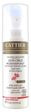
Cattier Touche Veloutée Eye and Lip Contour Cream Organic
Works for
0 of 1 advertised claim delivered
Anti-aging3 ingredients credited for this claimLimited support
“Cattier Touche Veloutée Eye and Lip Contour Cream Organic 15ml is an ultra-complete redensifying care, specially developed for fragile areas around the eyes and lips.With its smooth and creamy formula, this care nourishes intensely and fights against the signs of fatigue.”
This product does not contain ingredients that are able to reduce fine lines and wrinkles or help with skin elasticity, but it can improve the look of the skin temporarily through moisturization. Well-moisturized skin might also be able to repair the sun damage better.This ingredient - butyrospermum parkii butter - could be helpful for preventing or repairing signs of aging in theory, but there is no evidence that it actually works.
This ingredient squalene might be able to help neutralize free radicals in skin and help it fight off some of the sun damage.
Anti-oxidationNot advertised by the brand · 6 ingredients credited for this claimModerate support
This product contains antioxidants (squalene) that might be able to help neutralize free radicals in skin to lessen the damage it gets from the UV light (sun). There is not enough evidence to confirm their effectiveness in skin though.
MoisturizingNot advertised by the brand · 21 ingredients credited for this claimGood support
This product can help improve hydration of the skin with the two types of ingredients.
The first type is called “humectants”:
these ingredients help attract water.
When humectants are on the surface of the skin, they “pull in” the moisture from the outside environment, or from
within deeper layers of the skin. The following ingredients in this product do the job:
glycerin, sucrose.
This product also contains ingredients called “occlusives”. They help reduce the speed with which our skin loses moisture to the outside environment. These ingredients also help soften the upper layer of the skin, so it feels less tight and nicer to the touch. The following ingredients in this product do the job: butyrospermum parkii butter, caprylic/capric triglyceride.
Can it cause trouble?
Irritancy12 flagged ingredientsMedium risk
Comedogenic7 ingredients rated 2 or more on the 0–5 pore-clogging scale7 flagged
User reviews
Be the first — your take helps the next person decide.
Ingredients
Filter by role to see what each ingredient is doing.
Prunus cerasus fruit water~25–37%
- Irritation risk
- Low
Water~11–17%
Squalane~5–7.5%
- Irritation risk
- Low
An oil naturally present in skin. Works as an emollient to soften the skin and form a protective layer on its surface without a greasy feeling.
More about SqualaneGlycerin~3.2–4.7%
- Irritation risk
- Low
One of the best moisturizing ingredients. Naturally present in skin. It attracts water to the upper layer of the skin working as a humectant
More about GlycerinCaprylic/capric triglyceride~2.7–4.1%
- Irritation risk
- Medium
A good mix of fatty acids that forms a protective layer on the skin. Improves the shelf life of products. Derived from coconut and glycerin
More about Caprylic/capric triglycerideGlyceryl stearate se~1.9–2.8%
- Irritation risk
- Low
- Comedogenicity
- 2/5
Used to stabilize the product formulations and works as an emollient
More about Glyceryl stearate seLauryl laurate~1.5–2.2%
- Irritation risk
- Medium
Helps soften the upper layer of the skin
More about Lauryl laurateButyrospermum parkii butter~1.5–2.2%
- Irritation risk
- Low
- Comedogenicity
- 3/5
A great moisturising ingredient that softens the skin and reduces water loss from its upper layer. It also can be helpful in protecting skin from free radicals
More about Butyrospermum parkii butterPolyglyceryl-3 dicitrate/stearate~1.1–1.7%
Oleyl erucate~1–1.45%
- Irritation risk
- Low
Helps soften the upper layer of the skin and create a nice product texture
More about Oleyl erucateBehenyl alcohol~0.8–1.2%
- Irritation risk
- Low
Non-drying alcohol that helps water and oil mix together. Also serves as an emollient
More about Behenyl alcoholStearyl alcohol~0.55–1.3%
- Irritation risk
- Low
An emollient that helps soften the skin
More about Stearyl alcoholPentylene glycol~0.5–1.1%
- Irritation risk
- Medium
Used to preserve products, dissolve other ingredients and create a nice product texture
More about Pentylene glycolMaris aqua~0.4–0.95%
Bentonite~0.4–0.9%
Octyldodecanol~0.4–0.9%
- Irritation risk
- Low
An emollient that helps to soften the skin and create a pleasant product texture and stabilize the formulation
More about OctyldodecanolCera alba~0.5–1.2%
- Irritation risk
- Medium
Forms a protective barrier that holds water and keeps dry skin hydrated. Keeps an emulsion from separating into its oil and liquid components, and increases the thickness of a product. Can be an allergen
More about Cera albaSodium benzoate~0.25–0.5%
Glyceryl undecylenate~0.35–0.85%
- Irritation risk
- Medium
Helps oil and water mix together and helps preserve the product formulation
More about Glyceryl undecylenateCitric acid~0.2–0.8%
- Irritation risk
- Medium
Can work as an exfoliant but is typically used to adjust the product pH
More about Citric acidXanthan gum~0.2–0.7%
- Irritation risk
- Low
Used to create a thicker product consistency
More about Xanthan gumIllite~0.3–0.7%
- Irritation risk
- Low
Benzoic acid~0.25–0.5%
Olive oil decyl esters~0.15–0.6%
- Irritation risk
- Low
Tocopherol~0.15–0.65%
- Irritation risk
- Low
Pure form of vitamin E. Can help moisturise and protect the skin from free radicals. Often used to help stabilise other ingredients or the formula itself
More about TocopherolHydrated silica~0.2–0.75%
Chlorella vulgaris extract~0.15–0.55%
- Irritation risk
- Medium
- Comedogenicity
- 3/5
A plant extract that can help to attract water to the upper layer of the skin and might have some anti-oxidant and anti-inflammatory properties
More about Chlorella vulgaris extractKaolin~0.2–0.75%
- Irritation risk
- Low
A type of clay that consists mainly of aluminum silicate. Helps absorb oil and creates a thicker product consistency. Can be used to add a white color
More about KaolinHydrolyzed algin~0.15–0.5%
- Irritation risk
- Low
- Comedogenicity
- 3/5
Derived from brown algae. Helps attract water to the upper layer of the skin
More about Hydrolyzed alginUndaria pinnatifida extract~0.15–0.5%
- Irritation risk
- Low
A seaweed extract that helps attract water to the upper layer of the skin and might have an anti-oxidant effect
More about Undaria pinnatifida extractMontmorillonite~0.1–0.45%
- Irritation risk
- Low
A clay mineral. Can absorb oil from the surface of the skin
More about MontmorillonitePhenethyl alcohol~0.1–0.45%
Lactic acid~0.1–0.35%
- Irritation risk
- Medium
An exfoliating and moisturizing alpha-hydroxy acid (AHA). Typically causes less irritation than other AHAs, for example, glycolic acid. At high concentrations (about 15%), lactic acid can help reduce lines and wrinkles. Recent studies show that lactic acid can support the "good" bacteria living on skin's surface (healthy skin microbiome)
More about Lactic acidSucrose~0.05–0.3%
- Irritation risk
- Low
Can help attract water to the upper layer of the skin. In crystal form, it can work as a gentle exfoliant, gentler than the salt scrub. Helps stabilize the emulsion
More about SucrosePalmaria palmata extract~0.05–0.3%
- Irritation risk
- Low
- Comedogenicity
- 3/5
Red algae extract that helps attract water to the upper layer of the skin
More about Palmaria palmata extractSqualene~0.1–0.45%
- Irritation risk
- Low
- Comedogenicity
- 2/5
An oil that is naturally part of skin sebum that helps to soften its upper layer, reduce water loss and neutralize free radicals. It might be comedogenic. Avoid applying large concentrations (or pure oil) before sun exposure as oxidized squalene can clog pores and lead to skin irritation. Today squalene is mostly derived from vegetable oils or synthetized by yeast
More about SqualeneGlycine soja oil~0.05–0.25%
- Irritation risk
- Medium
- Comedogenicity
- 2/5
A good emollient that helps soften the skin and helps repair its barrier function. It can clog pores if used in high concentrations.
More about Glycine soja oilMaris sal~0.05–0.15%
- Irritation risk
- Medium
Used to thicken the product formulation and might help to add minerals to the surface of the skin. It is used in scrubs as a physical exfoliant. Can increase sensitivity to other ingredients if left on the skin or used in high concentration
More about Maris salIngredient list view
Prunus cerasus fruit water, Water, Squalane, Glycerin, Caprylic/capric triglyceride, Glyceryl stearate se, Lauryl laurate, Butyrospermum parkii butter, Polyglyceryl-3 dicitrate/stearate, Oleyl erucate, Behenyl alcohol, Stearyl alcohol, Pentylene glycol, Maris aqua, Bentonite, Octyldodecanol, Cera alba, Sodium benzoate, Glyceryl undecylenate, Citric acid, Xanthan gum, Illite, Benzoic acid, Olive oil decyl esters, Tocopherol, Hydrated silica, Chlorella vulgaris extract, Kaolin, Hydrolyzed algin, Undaria pinnatifida extract, Montmorillonite, Phenethyl alcohol, Lactic acid, Sucrose, Palmaria palmata extract, Squalene, Glycine soja oil, Maris sal
Compare prices
Retailers ranked by price — lowest first.
Affiliate links · prices updated regularly · As an Amazon Associate, WIMJ earns from qualifying purchases.
Sources cited in this review
Every concentration estimate and effectiveness label is anchored to one of these 11 studies and safety reviews.
- 1
- 2
- 3Vitamin E in dermatologyncbi.nlm.nih.gov
- 4Vitamin E and Skin Healthlpi.oregonstate.edu
- 5
- 6Final Report on the Safety Assessment of Phenethyl Alcoholsemanticscholar.org

Affiliate links · As an Amazon Associate, WIMJ earns from qualifying purchases.