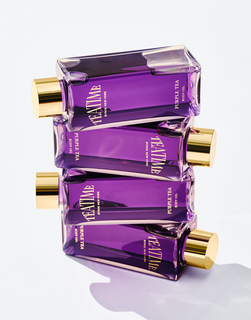
Works for
1 of 3 advertised claims delivered
Moisturizing15 ingredients credited for this claimGood support
“Locks in moisture and boosts cell turnover for a glossy, enviable glow Lavender Tea.”
This product can help soften the skin and reduce its moisture loss with emollients and occlusives: helianthus annuus seed oil, isopropyl myristate.
Keep in mind that this product does not contain effective ingredients to attract water to the upper layer of the skin. This is why an additional product with humectants like glycerin or hyaluronic acid can be helpful (apply it before this product for the best results).
Evens skin tone3 ingredients credited for this claimWeak support
“Calms and improves moisture retention PURPLE FRUIT INFUSION A combination of antioxidant-rich purple-hued fruits like Acai, Black Cherry, Grape, and Plum that naturally hydrate and help to visibly minimize hyperpigmentation BHA + PHA Smooths rough, flaky texture and diminishes breakouts to keep skin clear and luminous GLOW-7 OIL COMPLEX A nourishing blend of seven different glow-enhancing plant oils that target dullness for brighter, glowier, and more even-toned skin Full Ingredients List”
Effective ingredients missing or their concentration is too low
Anti-blemish4 ingredients credited for this claimWeak support
“Reduces irritation and combats blemishes to keep skin clear Butterfly Pea Flower Tea.”
Effective ingredients missing or their concentration is too low.
Anti-oxidationNot advertised by the brand · 13 ingredients credited for this claimModerate support
This product contains antioxidants (camellia sinensis leaf extract) that might be able to help neutralize free radicals in skin to lessen the damage it gets from the UV light (sun). There is not enough evidence to confirm their effectiveness in skin though.
Can it cause trouble?
Irritancy3 strong irritants: Parfum, Lavandula angustifolia flower extract + 1 more — patch-test recommendedHigh risk
Comedogenic4 ingredients rated 2 or more on the 0–5 pore-clogging scale4 flagged


User reviews
Be the first — your take helps the next person decide.
Ingredients
Filter by role to see what each ingredient is doing.
Isopropyl myristate~22–33%
- Irritation risk
- Low
- Comedogenicity
- 3/5
An emollient that helps soften the skin. Could be comedogenic
More about Isopropyl myristateCetyl ethylhexanoate~4.6–7%
- Irritation risk
- Medium
An emollient that helps soften the skin and creates a thicker product texture
More about Cetyl ethylhexanoateDicaprylyl ether~4.7–7.1%
- Irritation risk
- Low
Helps soften the upper layer of the skin while creating a non-greasy feel on the skin. Helps to dissolve other ingredients
More about Dicaprylyl etherPrunus amygdalus dulcis seed~3.8–5.7%
- Irritation risk
- Low
Helps soften the upper layer of the skin
More about Prunus amygdalus dulcis seedParfum~2.3–3.5%
- Irritation risk
- High
An aromatic blend of unspecified and possibly irritating ingredients
More about ParfumPyrus malus seed oil~2.2–3.2%
- Irritation risk
- High
Can contain essential oil that can be irritating. Can help to soften the upper layer of the skin. Might be helpful in neutralizing free radicals
More about Pyrus malus seed oilJasminum officinale oil~1.5–2.3%
- Irritation risk
- Low
Lavandula angustifolia flower extract~1.4–2%
- Irritation risk
- High
Essential oil that can be irritating
More about Lavandula angustifolia flower extractCamellia sinensis leaf extract~0.95–1.4%
- Irritation risk
- Low
Can contain potent anti-oxidant compounds (abbreviated ECG, GCG, EGC, and EGCG) that might help protect the skin from free radicals. Can help calm down inflammation and has some anti-bacterial properties. Unfortunately, these antioxidants are unstable and lose their effectiveness very quickly in products. The concentration of the antioxidant compounds in the extract also tends to be low to be effective in topical formulation
More about Camellia sinensis leaf extractClitoria ternatea flower extract~0.8–1.2%
- Irritation risk
- Low
Prunus serotina fruit extract~0.5–1.1%
- Irritation risk
- Low
Prunus domestica fruit extract~0.4–0.95%
- Irritation risk
- Medium
A plant extract. Might have some antioxidant properties
More about Prunus domestica fruit extractVitis vinifera fruit extract~0.35–0.85%
- Irritation risk
- Medium
A plant extract that helps attract water to the upper layer of the skin. It might be helpful in neutralizing free radicals in skin, but is less potent than the extract from the seeds
More about Vitis vinifera fruit extractEuterpe oleracea fruit extract~0.35–0.75%
- Irritation risk
- Medium
A plant extract that can have some anti-oxidant effect in skin
More about Euterpe oleracea fruit extractGluconolactone~0.2–0.8%
- Irritation risk
- Medium
A polyhydroxy acid (PHA) that helps shed the dead cells from the skin surface revealing smoother skin. Is believed to be genter than AHAs. It helps attract water to the upper layer of the skin and can stimulate production of skin's own hyaluronic acid resulting in improved hydration levels. It has been shown to be helpful against acne and clogged pores if used consistently (e.g over a period of 12 weeks) in high enough concentration. It can help reduce fine lines and wrinkles and improve skin tone with long-term application. Can help neutralize free radicals
More about GluconolactoneSalicylic acid~0.2–0.8%
- Irritation risk
- High
Used for skin exfoliation. It has an anti-inflammatory and anti-bacterial effect, helps to unclog pores, prevent blemishes and speed up healing of the existing ones. Sometimes referred to as a BHA (beta-hydroxy acid)
More about Salicylic acidHydrogenated coconut oil~0.35–0.8%
- Irritation risk
- Low
- Comedogenicity
- 3/5
Simmondsia chinensis seed oil~0.35–0.8%
- Irritation risk
- Medium
Softens the upper layer of skin and helps restore the healthy skin barrier. Has shown to help calm down inflammation in skin. It is a stable oil, meaning that it retains its properties even when exposed to air.
More about Simmondsia chinensis seed oilCamellia japonica seed oil~0.2–0.8%
- Irritation risk
- Low
A plant oil that helps to soften the upper layer of the skin and can help restore skin's barrier function. Might have an anti-oxidant effect
More about Camellia japonica seed oilHelianthus annuus seed oil~0.2–0.75%
- Irritation risk
- Low
A great emollient due to its high linoleic acid content. One of the most effective plant oils in helping skin hydration and repairing skin barrier function
More about Helianthus annuus seed oilMoringa oleifera seed oil~0.2–0.75%
- Irritation risk
- Medium
A plant oil that helps soften the upper layer of the skin. Is unlikely to be helpful in restoring skin barrier function due to the low content of linoleic acid
More about Moringa oleifera seed oilEclipta prostrata extract~0.15–0.6%
- Irritation risk
- High
A plant extract that might help neutralize free radicals in skin. It can be irritating
More about Eclipta prostrata extractMelia azadirachta leaf extract~0.15–0.55%
- Irritation risk
- High
A plant extract that has anti-bacterial properties. Can be used to preserve the product. Can be irritating
More about Melia azadirachta leaf extractMelia azadirachta flower extract~0.15–0.55%
- Irritation risk
- Medium
A plant extract that might be helpful to neutralize free radicals in skin
More about Melia azadirachta flower extractCoccinia indica fruit extract~0.15–0.55%
- Irritation risk
- Medium
A plant extract that might have some anti-oxidant effect helping neutralize free radicals in skin
More about Coccinia indica fruit extractAloe barbadensis flower extract~0.15–0.7%
- Irritation risk
- High
A plant extract that might have some anti-oxidant effect
More about Aloe barbadensis flower extractSolanum melongena fruit extract~0.15–0.55%
- Irritation risk
- Medium
Eggplant fruit extract. Might have some anti-oxidant effect
More about Solanum melongena fruit extractCorallina officinalis extract~0.15–0.55%
- Irritation risk
- Low
- Comedogenicity
- 3/5
Red algae extract that helps attract water to the upper layer of the skin and might contain antioxidants
More about Corallina officinalis extractCurcuma longa root extract~0.1–0.45%
- Irritation risk
- High
A plant extract that can contain an active compound curcumin, that may have some anti-inflammatory properties when applied to the skin, but solid research is lacking and the typical concentration used in skincare products is too low. Can be an irritant
More about Curcuma longa root extractOcimum sanctum leaf extract~0.15–0.5%
- Irritation risk
- High
A plant extract that is rich in a fragrance compound eugenol that is a frequent allergen and can be irritating. It might also contain anti-oxidants to help neutralize free radicals
More about Ocimum sanctum leaf extractTocopherol~0.1–0.45%
- Irritation risk
- Low
Pure form of vitamin E. Can help moisturise and protect the skin from free radicals. Often used to help stabilise other ingredients or the formula itself
More about TocopherolIsopropyl palmitate~0.15–0.6%
- Irritation risk
- Medium
- Comedogenicity
- 3/5
Helps soften the upper layer of the skin and create a thicker product consistency
More about Isopropyl palmitateWater~0.1–0.4%
Butylene glycol~0.1–0.3%
- Irritation risk
- Low
Used to create a nice product texture and help delivery of other ingredients. Might be somewhat helpful in attracting water to the upper layer of the skin
More about Butylene glycolCaprylic/capric triglyceride~0.15–0.5%
- Irritation risk
- Medium
A good mix of fatty acids that forms a protective layer on the skin. Improves the shelf life of products. Derived from coconut and glycerin
More about Caprylic/capric triglycerideMaltodextrin~0.15–0.5%
- Irritation risk
- Low
Used to stabilize the product formulation and can help absorb oil
More about Maltodextrin1,2-hexanediol~0.05–0.2%
Ethylhexylglycerin~0.05–0.15%
Ingredient list view
Isopropyl myristate, Cetyl ethylhexanoate, Dicaprylyl ether, Prunus amygdalus dulcis seed, Parfum, Pyrus malus seed oil, Jasminum officinale oil, Lavandula angustifolia flower extract, Camellia sinensis leaf extract, Clitoria ternatea flower extract, Prunus serotina fruit extract, Prunus domestica fruit extract, Vitis vinifera fruit extract, Euterpe oleracea fruit extract, Gluconolactone, Salicylic acid, Hydrogenated coconut oil, Simmondsia chinensis seed oil, Camellia japonica seed oil, Helianthus annuus seed oil, Moringa oleifera seed oil, Eclipta prostrata extract, Melia azadirachta leaf extract, Melia azadirachta flower extract, Coccinia indica fruit extract, Aloe barbadensis flower extract, Solanum melongena fruit extract, Corallina officinalis extract, Curcuma longa root extract, Ocimum sanctum leaf extract, Tocopherol, Isopropyl palmitate, Water, Butylene glycol, Caprylic/capric triglyceride, Maltodextrin, 1,2-hexanediol, Ethylhexylglycerin
Compare prices
Retailers ranked by price — lowest first.

Affiliate links · prices updated regularly
Worth comparing, line by line.
Match % combines shared ingredients, the first five ingredients, shared actives and hero ingredients, irritancy (lower counts in the alternative's favour), texture and body area. Only products in the same routine step are compared.
| BYROEPURPLE TEA BODY OILYOUR PRODUCT | Feather \u0026 DownSweet Dreams Soothing Body Oil | Dr.OrganicAloe Vera Hydrating Moisture Cream | Margaret Dabbs LondonCracked Heel Treatment Balm | |
|---|---|---|---|---|
| Match | — | 72% | 57% | 56% |
| Price | $49.00 | $10.58−$38.42 | $15.99−$33.01 | $18.00−$31.00 |
| Shared key ingredients | — | 3 of 10 | 2 of 10 | 3 of 10 |
| Key difference | — | Agran Oil | Oatmeal Extract | Dimethicone |
| Irritancy | High | High | Medium | Medium |
| Drying alcohol | — | — | — | — |
| View product | Shop | Shop | Shop |


Sources cited in this review
Every concentration estimate and effectiveness label is anchored to one of these 36 studies and safety reviews.
- 1
- 2
- 3
- 4
- 5
- 6

Affiliate links · As an Amazon Associate, WIMJ earns from qualifying purchases.