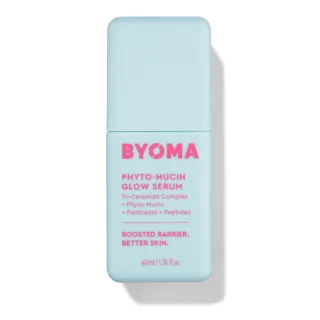
Works for
MoisturizingPalmitoyl tripeptide-1, Ceramide np + 20 moreWorks well
“Helps reduce fine lines and hydrate your skin”
This product can help improve hydration of the skin with the two types of ingredients.
The first type is called “humectants”:
these ingredients help attract water.
When humectants are on the surface of the skin, they “pull in” the moisture from the outside environment, or from
within deeper layers of the skin. The following ingredients in this product do the job:
arginine, betaine.
This product also contains ingredients called “occlusives”. They help reduce the speed with which our skin loses moisture to the outside environment. These ingredients also help soften the upper layer of the skin, so it feels less tight and nicer to the touch. The following ingredients in this product do the job: arginine, cholesterol.
The following ingredients in this product are especially good for supporting the skin barrier and helping with the hydration level: ceramide np, palmitoyl tripeptide-1, panthenol, phytosphingosine
Anti-agingPalmitoyl tripeptide-1, Hyaluronic acid + 1 moreMay help
“Helps reduce fine lines and hydrate your skin”
This product contains palmitoyl tripeptide-1. There is some human evidence that this ingredient helps reduce and prevent fine lines and wrinkles and improve skin elasticity and firmness, though it is smaller or less consistent than the evidence for the best anti-aging ingredients.
Evens skin toneLactic acid ~0.05–0.15%, below the ~2% it needsUnder-dosed
“Phyto-mucin delivers deep hydration and a dewy glow, while peptides and panthenol help improve texture, enhance plumpness and promote a more even-looking skin tone.”
Effective ingredients missing or their concentration is too low
Can it cause trouble?
Irritancy12 flagged ingredientsMedium risk
Comedogenic1 ingredient rated 2 or more on the 0–5 pore-clogging scale1 flagged


User reviews
Be the first — your take helps the next person decide.
Ingredients
Filter by role to see what each ingredient is doing.
Water~40–60%
Glycerin~3.8–5.8%
- Irritation risk
- Low
One of the best moisturizing ingredients. Naturally present in skin. It attracts water to the upper layer of the skin working as a humectant
More about GlycerinButylene glycol~3.2–4.9%
- Irritation risk
- Low
Used to create a nice product texture and help delivery of other ingredients. Might be somewhat helpful in attracting water to the upper layer of the skin
More about Butylene glycolMethylpropanediol~2.6–3.8%
1,2-hexanediol~1.1–1.7%
Propanediol~1.6–2.4%
- Irritation risk
- Low
Acts as a solvent for other ingredients. Speeds up the absorption of other ingredients into the skin
More about PropanediolGlyceryl polymethacrylate~1.4–2%
- Irritation risk
- Low
Used to create a nice product texture
More about Glyceryl polymethacrylateDioscorea japonica root extract~1.2–1.8%
- Irritation risk
- Low
Propylene glycol~0.95–1.4%
- Irritation risk
- High
Helps oil and water mix together and can enhance the penetration of other ingredients into the skin. It can be irritating
More about Propylene glycolLaminaria japonica extract~0.5–1.2%
- Irritation risk
- Low
- Comedogenicity
- 3/5
Seaweed extract that might help to attract water to the upper layer of the skin and have some anti-oxidant properties
More about Laminaria japonica extractHibiscus esculentus fruit extract~0.35–0.85%
- Irritation risk
- High
A plant extract that might help to neutralize free radicals. It can be irritating
More about Hibiscus esculentus fruit extractPalmitoyl tripeptide-1~0.3–0.75%
- Irritation risk
- Low
A type of peptide. Peptides are excellent moisturizers and might be able support collagen production reducing fine lines and wrinkles
More about Palmitoyl tripeptide-1Corchorus olitorius leaf extract~0.15–0.5%
- Irritation risk
- Low
Arginine~0.1–0.4%
- Irritation risk
- Low
An amino acid that is naturally present in skin and helps keep it hydrated. When used together with AHAs, it can reduce their irritating effect on the skin
More about ArgininePanthenol~0.1–0.4%
- Irritation risk
- Low
Helps attract water to the upper layer of the skin and can help improve skin barrier function
More about PanthenolNelumbo nucifera root extract~0.1–0.4%
- Irritation risk
- Low
Hydroxyacetophenone~0.1–0.45%
Polyglutamic acid~0.1–0.45%
- Irritation risk
- Low
Helps attract water to the upper layer of the skin.
More about Polyglutamic acidGlycereth-25 pca isostearate~0.1–0.45%
Hyaluronic acid~0.1–0.35%
- Irritation risk
- Low
One of the best moisturizing ingredients. Attracts water into the upper layer of the skin. Naturally present in skin. Typically has large molecule size unless advertised otherwise on the product label. Helps support skin's barrier function and may help to reduce inflammation
More about Hyaluronic acidHydrolyzed hyaluronic acid~0.05–0.3%
- Irritation risk
- Low
One of the best moisturizing ingredients. Attracts water into the upper layer of the skin. A version of it is naturally present in skin
More about Hydrolyzed hyaluronic acidSodium hyaluronate~0.05–0.3%
- Irritation risk
- Low
One of the best moisturizing ingredients. Attracts water into the upper layer of the skin
More about Sodium hyaluronateCeramide np~0.1–0.3%
- Irritation risk
- Low
A type of lipid similar to ceramides naturally present in skin. Helps to soften the upper layer of the skin and supports the skin barrier function to keep it hydrated. Can help to prevent inflammation in skin
More about Ceramide npBetaine~0.05–0.2%
- Irritation risk
- Low
Helps attract water to the upper layer of the skin and improves the product texture
More about BetaineCholesterol~0.1–0.35%
- Irritation risk
- Low
An emollient that is naturally found in skin
More about CholesterolCarbomer~0.05–0.2%
- Irritation risk
- Low
Helps create a thicker or gel-like product texture. It is not a surfactant but can be used in gentle cleansing formulations
More about CarbomerCaprylic/capric triglyceride~0.1–0.3%
- Irritation risk
- Medium
A good mix of fatty acids that forms a protective layer on the skin. Improves the shelf life of products. Derived from coconut and glycerin
More about Caprylic/capric triglyceridePhytosphingosine~0.05–0.3%
- Irritation risk
- Low
A type of lipid that is naturally present in skin. It might help in repairing skin barrier function and has anti-bacterial effect
More about PhytosphingosineXanthan gum~0.05–0.2%
- Irritation risk
- Low
Used to create a thicker product consistency
More about Xanthan gumStearic acid~0.1–0.5%
- Irritation risk
- Low
Helps oil and water mix together and works as an emollient
More about Stearic acidOleic acid~0.1–0.4%
- Irritation risk
- Medium
Helps soften the upper layer of the skin. At the same time, it can weaken the skin's barrier enhancing penetration of other ingredients and increasing the risk of skin dryness
More about Oleic acidHydrogenated lecithin~0.05–0.3%
- Irritation risk
- Low
Helps to retain moisture by creating a protective barrier on the skin. Rich in fatty acids. Improves product texture and helps with the penetration of other ingredients.
More about Hydrogenated lecithinSodium lactate~0.05–0.2%
- Irritation risk
- Medium
Helps attract water to the upper layer of the skin. Is often used to adjust the pH level of the product
More about Sodium lactateSodium polyacrylate~0.1–0.3%
- Irritation risk
- Low
Used to create a gel-like product texture, as well as to stabilize emulsions
More about Sodium polyacrylateLactic acid~0.05–0.15%
- Irritation risk
- Medium
An exfoliating and moisturizing alpha-hydroxy acid (AHA). Typically causes less irritation than other AHAs, for example, glycolic acid. At high concentrations (about 15%), lactic acid can help reduce lines and wrinkles. Recent studies show that lactic acid can support the "good" bacteria living on skin's surface (healthy skin microbiome)
More about Lactic acidCaprylyl glycol~0.05–0.2%
- Irritation risk
- Medium
Helps preserve products and creates a nice product texture
More about Caprylyl glycolEthylhexylglycerin~0.01–0.05%
Caprylhydroxamic acid~0.01–0.05%
Ingredient list view
Water, Glycerin, Butylene glycol, Methylpropanediol, 1,2-hexanediol, Propanediol, Glyceryl polymethacrylate, Dioscorea japonica root extract, Propylene glycol, Laminaria japonica extract, Hibiscus esculentus fruit extract, Palmitoyl tripeptide-1, Corchorus olitorius leaf extract, Arginine, Panthenol, Nelumbo nucifera root extract, Hydroxyacetophenone, Polyglutamic acid, Glycereth-25 pca isostearate, Hyaluronic acid, Hydrolyzed hyaluronic acid, Sodium hyaluronate, Ceramide np, Betaine, Cholesterol, Carbomer, Caprylic/capric triglyceride, Phytosphingosine, Xanthan gum, Stearic acid, Oleic acid, Hydrogenated lecithin, Sodium lactate, Sodium polyacrylate, Lactic acid, Caprylyl glycol, Ethylhexylglycerin, Caprylhydroxamic acid
Compare prices
Retailers ranked by price — lowest first.
Affiliate links · As an Amazon Associate, WIMJ earns from qualifying purchases.
Worth comparing, line by line.
Match % combines shared ingredients, the first five ingredients, shared actives and hero ingredients, irritancy (lower counts in the alternative's favour), texture and body area. Only products in the same routine step are compared.
| BYOMAPHYTO-MUCIN GLOW SERUMYOUR PRODUCT | TIRTIRCica Care Serum | DRMTLGYNeedle-less Serum | ArenciaDeep Water Surge Hydrating Serum 30 | |
|---|---|---|---|---|
| Match | — | 57% | 55% | 55% |
| Price | $10.18 | $24.75+$14.57 | $51.75+$41.57 | $15.19+$5.01 |
| Shared key ingredients | — | 9 of 15 | 7 of 15 | 9 of 15 |
| Key difference | — | Madecassoside | Niacinamide | Copper Tripeptide-1 |
| Irritancy | Medium | Medium | Low | Medium |
| Drying alcohol | — | — | — | — |
| View product | Shop | Shop | Shop |
More alternatives: Paula's choice HA BoosterCeraVe Hydrating Hyaluronic Acid Serum
Product summary
"BYOMA - PHYTO-MUCIN GLOW SERUM" is effective for: Moisturizing
This product could be helpful for: Anti-aging, but its actives are not the most effective or are not well-studied.
Ingredient callouts
- Ceramides (phytosphingosine 0.30% - 0.55% and ceramide np 0.30% - 0.55%). Ceramides are a type of lipids that our skin produces itself. They are a building block of the skin's barrier. Ceramides used in skincare are synthetic or extracted from plants. They work well for softening the skin surface and "patch holes" in the skin's barrier.
- Peptides (palmitoyl tripeptide-1 0.50% - 0.75%). There are many different kind of Peptides and they are naturally present in our skin. They all are a combination of aminoacids. Some of them work as natural antibiotics, promote wound-healing and production of collagen. The science is still not settled on how effective Peptides are in skincare, but it is very likely that they have a benefit. They might help restore the skin barrier and fight the signs of aging. At the very least, Peptides work as humectants: they attract water to the upper layer of the skin and improve its hydration.
- Humectants (sodium lactate 0.25% - 0.45%, betaine 0.25% - 0.45%, sodium hyaluronate 0.25% - 0.50%, hydrolyzed hyaluronic acid 0.25% - 0.45%, hyaluronic acid 0.25% - 0.50%, polyglutamic acid 0.30% - 0.55%, panthenol 0.40% - 0.60%, arginine 0.40% - 0.60% and glycerin 4.30% - 5.30%). These ingredients help attract water to the upper layer of the skin and improve the skin hydration.
About the brand
According to Cruelty-Free Kitty "BYOMA" is cruelty free and so is its parent company.
Sources cited in this review
Every concentration estimate and effectiveness label is anchored to one of these 20 studies and safety reviews.
- 1
- 2
- 3Surfactants and experimental irritant contact dermatitisncbi.nlm.nih.gov
- 4Propylene Glycolpubmed.ncbi.nlm.nih.gov
- 5Skin-sensitizing and irritant properties of propylene glycolonlinelibrary.wiley.com
- 6

Affiliate links · As an Amazon Associate, WIMJ earns from qualifying purchases.