Works for
MoisturizingPanthenol, Cetearyl alcohol + 19 moreWorks well
“The lightweight, fast absorbing formula fights the appearance of all visible signs of aging, deeply hydrating and replenishing your skin.”
This product can help improve hydration of the skin with the two types of ingredients.
The first type is called “humectants”:
these ingredients help attract water.
When humectants are on the surface of the skin, they “pull in” the moisture from the outside environment, or from
within deeper layers of the skin. The following ingredients in this product do the job:
glycerin, sodium hyaluronate.
This product also contains ingredients called “occlusives”. They help reduce the speed with which our skin loses moisture to the outside environment. These ingredients also help soften the upper layer of the skin, so it feels less tight and nicer to the touch. The following ingredients in this product do the job: butyrospermum parkii butter, helianthus annuus seed oil.
The following ingredients in this product are especially good for supporting the skin barrier and helping with the hydration level: panthenol
Anti-agingVitis vinifera seed extract, Aloe barbadensis leaf juice + 7 moreMay help
“Precious Persian silk tree extract reduces all visible signs of tiredness and skin blemishes to create an absolutely youthful-looking complexion.”
This product contains vitis vinifera seed extract. There is some human evidence that this ingredient helps reduce and prevent fine lines and wrinkles and improve skin elasticity and firmness, though it is smaller or less consistent than the evidence for the best anti-aging ingredients.
Anti-blemishRetinyl palmitate ~0.2–0.35%, below the ~0.5% it needsUnder-dosed
“Precious Persian silk tree extract reduces all visible signs of tiredness and skin blemishes to create an absolutely youthful-looking complexion.”
Effective ingredients missing or their concentration is too low.
Anti-oxidationSide benefit · Haematococcus pluvialis extract, Vitis vinifera seed extract + 10 moreWorks well
This product contains antioxidants (ubiquinone, vitis vinifera seed extract) that can help neutralize free radicals in skin. By doing so, they can lessen the damage the skin gets from the UV light (sun).
The following ingredients - haematococcus pluvialis extract also can have an antioxidant effect, but there is less evidence to confirm their effectiveness in skin.
Can it cause trouble?
Irritancy3 strong irritants: Retinyl palmitate, Alcohol + 1 more — patch-test recommendedHigh risk
Comedogenic2 ingredients rated 2 or more on the 0–5 pore-clogging scale2 flagged

User reviews
Be the first — your take helps the next person decide.
Ingredients
Filter by role to see what each ingredient is doing.
Water~45–55%
Cetearyl alcohol~5.2–6.3%
- Irritation risk
- Low
- Comedogenicity
- 2/5
A non-drying alcohol. Works as an emollient. Helps water and oil mix together and creates a nice product texture
More about Cetearyl alcoholGlycerin~4.2–5.1%
- Irritation risk
- Low
One of the best moisturizing ingredients. Naturally present in skin. It attracts water to the upper layer of the skin working as a humectant
More about GlycerinPropylene glycol~3–3.7%
- Irritation risk
- High
Helps oil and water mix together and can enhance the penetration of other ingredients into the skin. It can be irritating
More about Propylene glycolPrunus armeniaca kernel oil~2.4–2.9%
- Irritation risk
- Medium
An emollient that helps soften the skin
More about Prunus armeniaca kernel oilAloe barbadensis leaf juice~1.9–2.4%
- Irritation risk
- Medium
Traditionally used to treat sunburns, dermatitis and inflammation, but evidence for its effectiveness is lacking. The extract can contain humectants that help attract water into the skin
More about Aloe barbadensis leaf juiceDicaprylyl ether~1.7–2%
- Irritation risk
- Low
Helps soften the upper layer of the skin while creating a non-greasy feel on the skin. Helps to dissolve other ingredients
More about Dicaprylyl etherEuglena gracilis extract~1.4–1.7%
- Irritation risk
- Low
Butyrospermum parkii butter~1.2–1.5%
- Irritation risk
- Low
- Comedogenicity
- 3/5
A great moisturising ingredient that softens the skin and reduces water loss from its upper layer. It also can be helpful in protecting skin from free radicals
More about Butyrospermum parkii butterLepidium sativum sprout extract~0.8–1.2%
- Irritation risk
- Low
Helianthus annuus seed oil~0.7–1.05%
- Irritation risk
- Low
A great emollient due to its high linoleic acid content. One of the most effective plant oils in helping skin hydration and repairing skin barrier function
More about Helianthus annuus seed oilPhenoxyethanol~0.55–0.8%
- Irritation risk
- Low
A preservative. It helps prevent bacterial growth in cosmetic products
More about PhenoxyethanolSqualane~0.55–0.8%
- Irritation risk
- Low
An oil naturally present in skin. Works as an emollient to soften the skin and form a protective layer on its surface without a greasy feeling.
More about SqualaneVitis vinifera seed oil~0.5–0.75%
- Irritation risk
- Medium
A great emollient that can also have anti-oxidant properties
More about Vitis vinifera seed oilGold~0.4–0.65%
Albizia julibrissin bark extract~0.4–0.6%
- Irritation risk
- High
A plant extract that might help to neutralize free radicals in skin. Is claimed to help reduce hyperpigmentation but evidence is missing
More about Albizia julibrissin bark extractHaematococcus pluvialis extract~0.35–0.65%
- Irritation risk
- Medium
Green algae extract that might contain antioxidant astaxanthin
More about Haematococcus pluvialis extractTocopherol~0.35–0.6%
- Irritation risk
- Low
Pure form of vitamin E. Can help moisturise and protect the skin from free radicals. Often used to help stabilise other ingredients or the formula itself
More about TocopherolSoluble collagen~0.3–0.55%
- Irritation risk
- Low
A typically plant-derived compound that is supposed mimic human collagen. Cannot penetrate the skin barrier so is not particularly useful in skincare products beyond attracting water to the upper layer of the skin
More about Soluble collagenPanthenol~0.3–0.5%
- Irritation risk
- Low
Helps attract water to the upper layer of the skin and can help improve skin barrier function
More about PanthenolVitis vinifera seed extract~0.3–0.55%
- Irritation risk
- Low
A plant extract that contains resveratrol and other anti-oxidant compounds that can help neutralize free radicals, reduce inflammation in skin and even out its tone. Can be also used to stabilize the product formulation
More about Vitis vinifera seed extractOenothera biennis oil~0.3–0.55%
- Irritation risk
- Medium
Helps soften the upper layer of the skin and can support skin barrier function
More about Oenothera biennis oilSodium hyaluronate~0.25–0.45%
- Irritation risk
- Low
One of the best moisturizing ingredients. Attracts water into the upper layer of the skin
More about Sodium hyaluronateEthylhexylglycerin~0.25–0.5%
Lecithin~0.3–0.55%
- Irritation risk
- Low
Used mostly for creating emulsions - helping oil and water mix together. Helps soften the upper layer of the skin
More about LecithinUbiquinone~0.25–0.5%
- Irritation risk
- Low
Coenzyme Q10. It helps neutralize free radicals in skin, improves skin hydration and might be helpful agains fine lines and wrinkles. It can be an allergen
More about UbiquinoneCaprylic/capric triglyceride~0.3–0.55%
- Irritation risk
- Medium
A good mix of fatty acids that forms a protective layer on the skin. Improves the shelf life of products. Derived from coconut and glycerin
More about Caprylic/capric triglycerideAscorbyl palmitate~0.25–0.45%
- Irritation risk
- Medium
Being a lipid soluble form of vitamin C, it is more stable and can penetrate the skin better than L-Ascorbic acid. It is effective in protecting the skin from free radicals, as well as evening the skin tone, but is less effective in stimulating collagen production compared to L-Ascorbic acid.
More about Ascorbyl palmitateLactic acid~0.25–0.45%
- Irritation risk
- Medium
An exfoliating and moisturizing alpha-hydroxy acid (AHA). Typically causes less irritation than other AHAs, for example, glycolic acid. At high concentrations (about 15%), lactic acid can help reduce lines and wrinkles. Recent studies show that lactic acid can support the "good" bacteria living on skin's surface (healthy skin microbiome)
More about Lactic acidAscorbyl tetraisopalmitate~0.25–0.5%
- Irritation risk
- Medium
A vitamin C derivative. Studies show that is might be effective in reducing hyperpigmentation, but there are no studies confirming that it is effectively converted into the bioavailable form of Vitamin C in skin. It is not clear how this derivative compares in effectiveness to the topical application of bioavailable form of vitamin C (L-ascorbic acid)
More about Ascorbyl tetraisopalmitateSodium benzoate~0.25–0.45%
Tocopheryl acetate~0.25–0.45%
- Irritation risk
- Medium
A more stable but less bio-available form of vitamin E compared to Tocopherol. Might help moisturize and protect the skin from free radicals, but mostly used in low concentrations to stabilize other ingredients.
More about Tocopheryl acetateSorbic acid~0.25–0.45%
Citric acid~0.25–0.4%
- Irritation risk
- Medium
Can work as an exfoliant but is typically used to adjust the product pH
More about Citric acidRetinyl palmitate~0.2–0.35%
- Irritation risk
- High
Three steps removed from the active form of vitamin A - retinoic acid. To have an effect in the skin, it first needs to be converted twice to become the retinoic acid. This means it is less potent than retinol, but could also be less irritating. Once converted to the retinoic acid in the skin, it helps against all signs of aging, improves skin cell turnover and helps fight blemishes and clogged pores. However, in many cosmetic formulations, it is used in a concentration that is too low to have the full effect
More about Retinyl palmitatePotassium sorbate~0.2–0.4%
Dehydroacetic acid~0.2–0.35%
Benzoic acid~0.2–0.35%
Diisopropyl adipate~0.2–0.4%
- Irritation risk
- Low
Helps soften the upper layer of the skin
More about Diisopropyl adipateSodium cetearyl sulfate~0.3–0.5%
- Irritation risk
- Medium
Helps water and oil mix together and works as a cleansing agent
More about Sodium cetearyl sulfateSodium hydroxide~0.15–0.25%
Xanthan gum~0.15–0.25%
- Irritation risk
- Low
Used to create a thicker product consistency
More about Xanthan gumAlcohol~0.05–0.15%
- Irritation risk
- High
Can be drying and contribute to skin irritation. Used in formulars to dissolve other ingredients, create a thinner product consistency or for its antibacterial properties
More about AlcoholParfum~0.05–0.1%
- Irritation risk
- High
An aromatic blend of unspecified and possibly irritating ingredients
More about ParfumIngredient list view
Water, Cetearyl alcohol, Glycerin, Propylene glycol, Prunus armeniaca kernel oil, Aloe barbadensis leaf juice, Dicaprylyl ether, Euglena gracilis extract, Butyrospermum parkii butter, Lepidium sativum sprout extract, Helianthus annuus seed oil, Phenoxyethanol, Squalane, Vitis vinifera seed oil, Gold, Albizia julibrissin bark extract, Haematococcus pluvialis extract, Tocopherol, Soluble collagen, Panthenol, Vitis vinifera seed extract, Oenothera biennis oil, Sodium hyaluronate, Ethylhexylglycerin, Lecithin, Ubiquinone, Caprylic/capric triglyceride, Ascorbyl palmitate, Lactic acid, Ascorbyl tetraisopalmitate, Sodium benzoate, Tocopheryl acetate, Sorbic acid, Citric acid, Retinyl palmitate, Potassium sorbate, Dehydroacetic acid, Benzoic acid, Diisopropyl adipate, Sodium cetearyl sulfate, Sodium hydroxide, Xanthan gum, Alcohol, Parfum
Compare prices
Retailers ranked by price — lowest first.
Affiliate links · As an Amazon Associate, WIMJ earns from qualifying purchases.
Worth comparing, line by line.
Match % combines shared ingredients, the first five ingredients, shared actives and hero ingredients, irritancy (lower counts in the alternative's favour), texture and body area. Only products in the same routine step are compared.
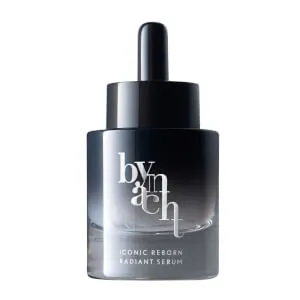
| BYNACHTIconic Reborn Radiant SerumYOUR PRODUCT | Dr Dennis GrossAdvanced Retinol + Ferulic Texture Renewal Serum | OlaySuper Serum 5 Serum Benefits In One | ArmoniaActive Snake Lifting Effect Serum | |
|---|---|---|---|---|
| Match | — | 59% | 55% | 52% |
| Price | — | $15.40 | $29.74 | $29.72 |
| Shared key ingredients | — | 7 of 17 | 4 of 17 | 5 of 17 |
| Key difference | — | Retinol | Niacinamide | Niacinamide |
| Irritancy | High | Medium | Medium | High |
| Drying alcohol | Contains drying alcohol | — | — | Contains drying alcohol |
| View product | Shop | Shop | Shop |


More alternatives: Elizabeth Grant Caviar Cellular Recharge Super SerumNatura Siberica Berëza Siberica Anti-Blemish Correcting Face Serum
Product summary
"BYNACHT - Iconic Reborn Radiant Serum" is effective for: Moisturizing
This product could be helpful for: Anti-aging, but its actives are not the most effective or are not well-studied.
Ingredient callouts
- this product includes a form of Retinoids (vitamin A) - retinyl palmitate 0.20% - 0.35%, but this type of vitamin A is not very effective. It could in theory help with fine lines and wrinkles, but the effect is most likely minimal.
- Humectants (sodium hyaluronate 0.25% - 0.45%, soluble collagen 0.30% - 0.55%, glycerin 4.20% - 5.10% and panthenol 0.30% - 0.50%). These ingredients help attract water to the upper layer of the skin and improve the skin hydration.
Price
The product retails for 125.00$ in the United States.
For a detailed price comparison: click here.
Sources cited in this review
Every concentration estimate and effectiveness label is anchored to one of these 29 studies and safety reviews.
- 1
- 2Surfactants and experimental irritant contact dermatitisncbi.nlm.nih.gov
- 3Propylene Glycolpubmed.ncbi.nlm.nih.gov
- 4Skin-sensitizing and irritant properties of propylene glycolonlinelibrary.wiley.com
- 5
- 6

Affiliate links · As an Amazon Associate, WIMJ earns from qualifying purchases.