Works for
1 of 1 advertised claim delivered
Moisturizing19 ingredients credited for this claimGood support
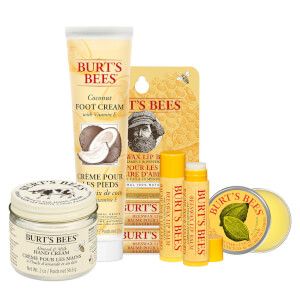
“Including four of our bestsellers, The Classics Set will promise to treat your skin naturally, leaving it deeply moisturised and healthy.”
This product can help improve hydration of the skin with the two types of ingredients.
The first type is called “humectants”:
these ingredients help attract water.
When humectants are on the surface of the skin, they “pull in” the moisture from the outside environment, or from
within deeper layers of the skin. The following ingredients in this product do the job:
avena sativa kernel flour, glycerin.
This product also contains ingredients called “occlusives”. They help reduce the speed with which our skin loses moisture to the outside environment. These ingredients also help soften the upper layer of the skin, so it feels less tight and nicer to the touch. The following ingredients in this product do the job: beeswax, cera alba.
Can it cause trouble?
Irritancy10 strong irritants: Alcohol, Parfum + 8 more — patch-test recommendedHigh risk
Comedogenic9 ingredients rated 2 or more on the 0–5 pore-clogging scale9 flagged
User reviews
Be the first — your take helps the next person decide.
Ingredients
Filter by role to see what each ingredient is doing.
Milk~22–33%
Cream~3.2–4.8%
- Irritation risk
- Low
Prunus amygdalus dulcis oil~4.3–6.4%
- Irritation risk
- Low
An emollient that softens the skin
More about Prunus amygdalus dulcis oilWater~3.4–5.1%
Cera alba~3–4.5%
- Irritation risk
- Medium
Forms a protective barrier that holds water and keeps dry skin hydrated. Keeps an emulsion from separating into its oil and liquid components, and increases the thickness of a product. Can be an allergen
More about Cera albaPolyglyceryl-3 oleate~1.7–2.5%
- Irritation risk
- Medium
Helps oil and water mix together
More about Polyglyceryl-3 oleateAloe barbadensis leaf juice~1.3–1.9%
- Irritation risk
- Medium
Traditionally used to treat sunburns, dermatitis and inflammation, but evidence for its effectiveness is lacking. The extract can contain humectants that help attract water into the skin
More about Aloe barbadensis leaf juiceKaolin~1.3–1.9%
- Irritation risk
- Low
A type of clay that consists mainly of aluminum silicate. Helps absorb oil and creates a thicker product consistency. Can be used to add a white color
More about KaolinSine adipe lac~0.6–1.4%
- Irritation risk
- Low
Tocopherol~0.45–1.05%
- Irritation risk
- Low
Pure form of vitamin E. Can help moisturise and protect the skin from free radicals. Often used to help stabilise other ingredients or the formula itself
More about TocopherolLonicera japonica flower extract~0.4–0.95%
- Irritation risk
- High
A plant extract that might help neutralize free radicals in skin. Can contain volalite oils and be irritating
More about Lonicera japonica flower extractLonicera caprifolium flower extract~0.3–0.7%
- Irritation risk
- High
A plant extract that might help neutralize free radicals in skin. Can contain volalite oils and be irritating
More about Lonicera caprifolium flower extractGlycine soja oil~0.3–0.75%
- Irritation risk
- Medium
- Comedogenicity
- 2/5
A good emollient that helps soften the skin and helps repair its barrier function. It can clog pores if used in high concentrations.
More about Glycine soja oilLecithin~0.3–0.7%
- Irritation risk
- Low
Used mostly for creating emulsions - helping oil and water mix together. Helps soften the upper layer of the skin
More about LecithinCitric acid~0.15–0.6%
- Irritation risk
- Medium
Can work as an exfoliant but is typically used to adjust the product pH
More about Citric acidCarrageenan~0.15–0.7%
- Irritation risk
- Medium
- Comedogenicity
- 3/5
Helps thicken the product formula and create a nice product formulation
More about CarrageenanSucrose~0.15–0.55%
- Irritation risk
- Low
Can help attract water to the upper layer of the skin. In crystal form, it can work as a gentle exfoliant, gentler than the salt scrub. Helps stabilize the emulsion
More about SucroseAlcohol~0.15–0.6%
- Irritation risk
- High
Can be drying and contribute to skin irritation. Used in formulars to dissolve other ingredients, create a thinner product consistency or for its antibacterial properties
More about AlcoholStearic acid~0.2–0.75%
- Irritation risk
- Low
Helps oil and water mix together and works as an emollient
More about Stearic acidAscorbyl palmitate~0.1–0.45%
- Irritation risk
- Medium
Being a lipid soluble form of vitamin C, it is more stable and can penetrate the skin better than L-Ascorbic acid. It is effective in protecting the skin from free radicals, as well as evening the skin tone, but is less effective in stimulating collagen production compared to L-Ascorbic acid.
More about Ascorbyl palmitateGlyceryl oleate~0.15–0.55%
- Irritation risk
- High
Helps oil and water mix together. Can be irritating
More about Glyceryl oleateGlyceryl stearate~0.15–0.6%
- Irritation risk
- Low
An emollient that softens the skin and forms a protective layer on its surface. Helps water and oil mix together
More about Glyceryl stearatePotassium sorbate~0.1–0.4%
Sodium benzoate~0.1–0.35%
Sodium phytate~0.1–0.35%
Parfum~0.1–0.3%
- Irritation risk
- High
An aromatic blend of unspecified and possibly irritating ingredients
More about ParfumPhenoxyethanol~0.1–0.4%
- Irritation risk
- Low
A preservative. It helps prevent bacterial growth in cosmetic products
More about PhenoxyethanolEugenol~0.05–0.25%
Linalool~0.1–0.3%
Beeswax~0.15–0.55%
- Irritation risk
- Low
Forms a protective barrier that holds water and keeps dry skin hydrated. Keeps an emulsion from separating into its oil and liquid components, and increases the thickness of a product. Can be an allergen
More about BeeswaxCera alba~0.3–0.7%
- Irritation risk
- Medium
Forms a protective barrier that holds water and keeps dry skin hydrated. Keeps an emulsion from separating into its oil and liquid components, and increases the thickness of a product. Can be an allergen
More about Cera albaCocos nucifera oil~0.1–0.4%
- Irritation risk
- Low
- Comedogenicity
- 3/5
An emollient. Found to be as effective as a moisturizer for dry skin as mineral oil. Could be comedogenic
More about Cocos nucifera oilHelianthus annuus seed oil~0.1–0.5%
- Irritation risk
- Low
A great emollient due to its high linoleic acid content. One of the most effective plant oils in helping skin hydration and repairing skin barrier function
More about Helianthus annuus seed oilMentha piperita oil~0.05–0.3%
Lanolin~0.15–0.55%
- Irritation risk
- Low
Sebum of wool-bearing animals (most commonly sheep). Helps soften the upper layer of the skin and reduce the skin water loss. In rare cases could be an allergen. Not suitable for vegans
More about LanolinTocopherol~0.1–0.4%
- Irritation risk
- Low
Pure form of vitamin E. Can help moisturise and protect the skin from free radicals. Often used to help stabilise other ingredients or the formula itself
More about TocopherolRosmarinus officinalis leaf extract~0.1–0.35%
- Irritation risk
- High
Can be helpful in reducing inflammation in skin, including inflamed acne. It can be irritating
More about Rosmarinus officinalis leaf extractGlycine soja oil~0.1–0.5%
- Irritation risk
- Medium
- Comedogenicity
- 2/5
A good emollient that helps soften the skin and helps repair its barrier function. It can clog pores if used in high concentrations.
More about Glycine soja oilCanola oil~0.15–0.55%
- Irritation risk
- Medium
A plant oil that can help soften the upper layer of the skin
More about Canola oilLimonene~0.1–0.35%
- Irritation risk
- High
A common frangrance that can easily irritate skin, especially if exposed to air, light or heat
More about LimoneneCocos nucifera oil~0.1–0.45%
- Irritation risk
- Low
- Comedogenicity
- 3/5
An emollient. Found to be as effective as a moisturizer for dry skin as mineral oil. Could be comedogenic
More about Cocos nucifera oilCream~0.15–0.55%
- Irritation risk
- Low
Glycerin~0.1–0.45%
- Irritation risk
- Low
One of the best moisturizing ingredients. Naturally present in skin. It attracts water to the upper layer of the skin working as a humectant
More about GlycerinOlea europaea fruit oil~0.1–0.5%
- Irritation risk
- Medium
An emollient that helps soften the skin but is not effective for restoring its barrier function. Might be helpful to calm down inflammation
More about Olea europaea fruit oilAvena sativa kernel flour~0.15–0.65%
- Irritation risk
- Low
A type of colloidal oatmeal. Can contain potent antioxidants and anti-inflammatory compounds. Is effective in supporting skin barrier
More about Avena sativa kernel flourParfum~0.1–0.35%
- Irritation risk
- High
An aromatic blend of unspecified and possibly irritating ingredients
More about ParfumCocos nucifera oil~0.1–0.45%
- Irritation risk
- Low
- Comedogenicity
- 3/5
An emollient. Found to be as effective as a moisturizer for dry skin as mineral oil. Could be comedogenic
More about Cocos nucifera oilQuillaja saponaria bark extract~0.15–0.65%
- Irritation risk
- Medium
Helps water and oil mix together
More about Quillaja saponaria bark extractLanolin~0.15–0.6%
- Irritation risk
- Low
Sebum of wool-bearing animals (most commonly sheep). Helps soften the upper layer of the skin and reduce the skin water loss. In rare cases could be an allergen. Not suitable for vegans
More about LanolinCanola oil~0.15–0.55%
- Irritation risk
- Medium
A plant oil that can help soften the upper layer of the skin
More about Canola oilRosmarinus officinalis leaf extract~0.1–0.35%
- Irritation risk
- High
Can be helpful in reducing inflammation in skin, including inflamed acne. It can be irritating
More about Rosmarinus officinalis leaf extractTocopherol~0.1–0.4%
- Irritation risk
- Low
Pure form of vitamin E. Can help moisturise and protect the skin from free radicals. Often used to help stabilise other ingredients or the formula itself
More about TocopherolGlycine soja oil~0.1–0.5%
- Irritation risk
- Medium
- Comedogenicity
- 2/5
A good emollient that helps soften the skin and helps repair its barrier function. It can clog pores if used in high concentrations.
More about Glycine soja oilCoumarin~0.1–0.35%
Limonene~0.1–0.35%
- Irritation risk
- High
A common frangrance that can easily irritate skin, especially if exposed to air, light or heat
More about LimoneneLinalool~0.1–0.35%
Citrus limon peel oil~0.1–0.35%
Butter~0.1–0.4%
- Irritation risk
- Low
Cream~0.15–0.55%
- Irritation risk
- Low
Prunus amygdalus dulcis oil~0.15–0.5%
- Irritation risk
- Low
An emollient that softens the skin
More about Prunus amygdalus dulcis oilCera alba~0.3–0.7%
- Irritation risk
- Medium
Forms a protective barrier that holds water and keeps dry skin hydrated. Keeps an emulsion from separating into its oil and liquid components, and increases the thickness of a product. Can be an allergen
More about Cera albaBeeswax~0.15–0.6%
- Irritation risk
- Low
Forms a protective barrier that holds water and keeps dry skin hydrated. Keeps an emulsion from separating into its oil and liquid components, and increases the thickness of a product. Can be an allergen
More about BeeswaxCitrus limon peel oil~0.1–0.3%
Theobroma cacao seed butter~0.1–0.5%
- Irritation risk
- Low
- Comedogenicity
- 3/5
Helps soften the upper layer of the skin and can be helpful in restoring the skin barrier function. Might have some anti-oxidant effect
More about Theobroma cacao seed butterCandelilla cera~0.2–0.8%
- Irritation risk
- Low
Beta-carotene~0.1–0.4%
Rosmarinus officinalis leaf extract~0.1–0.3%
- Irritation risk
- High
Can be helpful in reducing inflammation in skin, including inflamed acne. It can be irritating
More about Rosmarinus officinalis leaf extractTocopherol~0.1–0.4%
- Irritation risk
- Low
Pure form of vitamin E. Can help moisturise and protect the skin from free radicals. Often used to help stabilise other ingredients or the formula itself
More about TocopherolHelianthus annuus seed oil~0.1–0.5%
- Irritation risk
- Low
A great emollient due to its high linoleic acid content. One of the most effective plant oils in helping skin hydration and repairing skin barrier function
More about Helianthus annuus seed oilGlycine soja oil~0.1–0.4%
- Irritation risk
- Medium
- Comedogenicity
- 2/5
A good emollient that helps soften the skin and helps repair its barrier function. It can clog pores if used in high concentrations.
More about Glycine soja oilCanola oil~0.15–0.5%
- Irritation risk
- Medium
A plant oil that can help soften the upper layer of the skin
More about Canola oilLimonene~0.05–0.1%
- Irritation risk
- High
A common frangrance that can easily irritate skin, especially if exposed to air, light or heat
More about LimoneneCitral~0.05–0.1%
Ingredient list view
Unknown, Milk, Cream, Prunus amygdalus dulcis oil, Water, Cera alba, Polyglyceryl-3 oleate, Aloe barbadensis leaf juice, Kaolin, Sine adipe lac, Tocopherol, Lonicera japonica flower extract, Lonicera caprifolium flower extract, Glycine soja oil, Lecithin, Citric acid, Carrageenan, Sucrose, Alcohol, Stearic acid, Ascorbyl palmitate, Glyceryl oleate, Glyceryl stearate, Potassium sorbate, Sodium benzoate, Sodium phytate, Parfum, Phenoxyethanol, Eugenol, Linalool, Beeswax, Cera alba, Cocos nucifera oil, Helianthus annuus seed oil, Mentha piperita oil, Lanolin, Tocopherol, Rosmarinus officinalis leaf extract, Glycine soja oil, Canola oil, Limonene, Cocos nucifera oil, Cream, Glycerin, Olea europaea fruit oil, Avena sativa kernel flour, Parfum, Cocos nucifera oil, Quillaja saponaria bark extract, Lanolin, Canola oil, Rosmarinus officinalis leaf extract, Tocopherol, Glycine soja oil, Coumarin, Limonene, Linalool, Citrus limon peel oil, Butter, Unknown, Cream, Prunus amygdalus dulcis oil, Cera alba, Beeswax, Citrus limon peel oil, Theobroma cacao seed butter, Unknown, Candelilla cera, Unknown, Beta-carotene, Rosmarinus officinalis leaf extract, Tocopherol, Helianthus annuus seed oil, Glycine soja oil, Canola oil, Limonene, Citral
Compare prices
Retailers ranked by price — lowest first.
Affiliate links · prices updated regularly · As an Amazon Associate, WIMJ earns from qualifying purchases.
Sources cited in this review
Every concentration estimate and effectiveness label is anchored to one of these 19 studies and safety reviews.
- 1
- 2
- 3Vitamin E in dermatologyncbi.nlm.nih.gov
- 4Vitamin E and Skin Healthlpi.oregonstate.edu
- 5
- 6

Affiliate links · As an Amazon Associate, WIMJ earns from qualifying purchases.