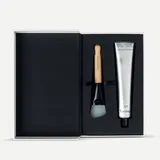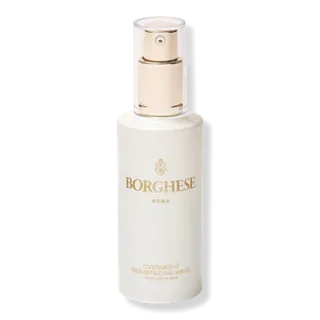
Borghese Overnight Resurfacing Mask with AHA & BHA

Borghese Overnight Resurfacing Mask with AHA & BHA

Efficacy91/100IrritancyHigh

Works for

Exfoliation
Lactic acid, Glycolic acid + 2 more
Works well
What the product description says
“Overnight Resurfacing Mask with AHA & BHA”
Source: Ulta

This product can help exfoliate the skin. In other words, it helps break down the bonds between dead cells on the surface of the skin and speed up the skin turnover. Skin often appears softer and brighter after exfoliation, but overdoing it can result in disrupted skin barrier. The following ingredient is doing the exfoliating job in this product: glycolic acid, lactic acid.

Lactic acidKey activeEffect: HighAn exfoliating and moisturizing alpha-hydroxy acid (AHA). Typically causes less irritation than other AHAs, for example, glycolic acid. At high concentrations (about 15%), lactic acid can help reduce lines and wrinkles. Recent studies show that lactic acid can support the "good" bacteria living on skin's surface (healthy skin microbiome)~3–3.7%
Glycolic acidKey activeEffect: HighAn alpha-hydroxy acid (AHA) that helps to remove the dead skin cells on the surface of the skin reveling a more even, smoother complexation. It is also able to stimulate collagen production with long-term use. Could help to reduce pore congestion. It can be irritating to the skin. Apply sunscreen daily if using products with glycolic acid~2.3–2.9%
Salix alba bark extractEffect: LowA plant extract that can help neutralize free radicals in skin. It contains a compound salicin that can theoretically be converted into salicylic acid that, in turn, helps reduce inflammation in skin, but the evidence of effectiveness in skin is lacking and the extract is usually not used in a concentration that would enable an exfoliating effect~0.5–0.75%
GluconolactoneUnder-dosedA polyhydroxy acid (PHA) that helps shed the dead cells from the skin surface revealing smoother skin. Is believed to be genter than AHAs. It helps attract water to the upper layer of the skin and can stimulate production of skin's own hyaluronic acid resulting in improved hydration levels. It has been shown to be helpful against acne and clogged pores if used consistently (e.g over a period of 12 weeks) in high enough concentration. It can help reduce fine lines and wrinkles and improve skin tone with long-term application. Can help neutralize free radicals~0.3–0.5%
Anti-aging
Lactic acid, Glycolic acid + 3 more
Works well
What the product description says
“This overnight mask works with your skin’s circadian rhythm to gently resurface skin, reducing wrinkles and minimizing pores, replenish hydration and strengthen skin barrier.”
Source: Ulta

This product can help reduce and prevent fine lines and wrinkles, improve skin elasticity and firmness because it contains glycolic acid.

These ingredients in the product can also be helpful, even though there is less evidence for their effectiveness: lactic acid.

Keep in mind that it typically takes at least 6 weeks to notice any results because the changes that are needed to improve fine lines and elasticity happen in the deeper layers of the skin. No topical anti-aging product can “erase” wrinkles or fully reverse signs of aging.

Lactic acidKey activeEffect: MediumAn exfoliating and moisturizing alpha-hydroxy acid (AHA). Typically causes less irritation than other AHAs, for example, glycolic acid. At high concentrations (about 15%), lactic acid can help reduce lines and wrinkles. Recent studies show that lactic acid can support the "good" bacteria living on skin's surface (healthy skin microbiome)~3–3.7%
Glycolic acidKey activeEffect: HighAn alpha-hydroxy acid (AHA) that helps to remove the dead skin cells on the surface of the skin reveling a more even, smoother complexation. It is also able to stimulate collagen production with long-term use. Could help to reduce pore congestion. It can be irritating to the skin. Apply sunscreen daily if using products with glycolic acid~2.3–2.9%
Limnanthes alba seed oilEffect: LowThis oil's cmposition is closest to rapeseed oil. It is a very stable oil and serves as an emoillient~0.6–0.9%
TocopherolEffect: Low, below effective dosePure form of vitamin E. Can help moisturise and protect the skin from free radicals. Often used to help stabilise other ingredients or the formula itself~0.3–0.55%
GluconolactoneUnder-dosedA polyhydroxy acid (PHA) that helps shed the dead cells from the skin surface revealing smoother skin. Is believed to be genter than AHAs. It helps attract water to the upper layer of the skin and can stimulate production of skin's own hyaluronic acid resulting in improved hydration levels. It has been shown to be helpful against acne and clogged pores if used consistently (e.g over a period of 12 weeks) in high enough concentration. It can help reduce fine lines and wrinkles and improve skin tone with long-term application. Can help neutralize free radicals~0.3–0.5%
Moisturizing
Jojoba esters, Lactic acid + 22 more
Works
What the product description says
“This overnight mask works with your skin’s circadian rhythm to gently resurface skin, reducing wrinkles and minimizing pores, replenish hydration and strengthen skin barrier.”
Source: Ulta

This product can help improve hydration of the skin with the two types of ingredients.

The first type is called “humectants”:
these ingredients help attract water. When humectants are on the surface of the skin, they “pull in” the moisture from the outside environment, or from within deeper layers of the skin. The following ingredients in this product do the job: glycerin, hydrolyzed hyaluronic acid.

This product also contains ingredients called “occlusives”. They help reduce the speed with which our skin loses moisture to the outside environment. These ingredients also help soften the upper layer of the skin, so it feels less tight and nicer to the touch. The following ingredients in this product do the job: helianthus annuus seed oil, cocos nucifera fruit extract.

Jojoba estersKey active· EmollientEffect: HighAn emollient made of jojoba oil. Helps soften the skin and support its barrier function~4.1–5%
Lactic acidKey active· HumectantEffect: HighAn exfoliating and moisturizing alpha-hydroxy acid (AHA). Typically causes less irritation than other AHAs, for example, glycolic acid. At high concentrations (about 15%), lactic acid can help reduce lines and wrinkles. Recent studies show that lactic acid can support the "good" bacteria living on skin's surface (healthy skin microbiome)~3–3.7%
GlycerinKey active· HumectantEffect: HighOne of the best moisturizing ingredients. Naturally present in skin. It attracts water to the upper layer of the skin working as a humectant~1.7–2.1%
Carthamus tinctorius oleosomesKey active· EmollientEffect: MediumHelps soften the upper layer of the skin~1.4–1.8%
Lactobacillus fermentKey active· HumectantEffect: HighA fermentation product created by bacteria Lactobacillus. The fermented product has anti-bacterial properties and might be helpful in calming down inflammation, but studies are lacking. Helps attract water to the upper layer of the skin. Can be used as a preservative~1.1–1.4%
Vitis vinifera seed oilKey active· EmollientEffect: HighA great emollient that can also have anti-oxidant properties~1–1.2%
Limnanthes alba seed oilKey active· EmollientEffect: HighThis oil's cmposition is closest to rapeseed oil. It is a very stable oil and serves as an emoillient~0.6–0.9%
Cetearyl alcoholKey active· EmollientEffect: MediumA non-drying alcohol. Works as an emollient. Helps water and oil mix together and creates a nice product texture~0.55–0.8%
LactobacillusKey activeEffect: HighA non-living ingredient made by fermentation with the bacteria Lactobacillus. It can help attract water to the upper layer of the skin and might help reduce inflammation~0.35–0.65%
Corallina officinalis extractKey activeEffect: HighRed algae extract that helps attract water to the upper layer of the skin and might contain antioxidants~0.3–0.55%
Helianthus annuus seed oilKey active· Emollient, OcclusiveEffect: HighA great emollient due to its high linoleic acid content. One of the most effective plant oils in helping skin hydration and repairing skin barrier function~0.3–0.6%
Saccharum officinarum extractKey activeEffect: HighSugar extract that helps attract water to the upper layer of the skin~0.3–0.55%
Cocos nucifera fruit extractKey active· EmollientEffect: HighAn emollient. Found to be as effective as a moisturizer for dry skin as mineral oil. Could be comedogenic~0.3–0.6%
GlucoseKey active· HumectantEffect: MediumHelps attract water to the upper layer of the skin. Could be helpful in restoring the skin barrier function~0.25–0.5%
Hydrolyzed hyaluronic acidKey active· HumectantEffect: HighOne of the best moisturizing ingredients. Attracts water into the upper layer of the skin. A version of it is naturally present in skin~0.2–0.35%
Hydrolyzed sodium hyaluronateKey activeEffect: HighAttracts water into the upper layer of the skin~0.15–0.3%
Kalanchoe pinnata leaf extractEffect: LowIs claimed to improve skin's ability to produce its natural moisturizers, but solid research is lacking~0.6–0.9%
Arachidyl alcohol· EmollientEffect: LowUsed to soften the upper layer of the skin and create a thicker product consistency~0.5–0.8%
Behenyl alcohol· Emollient, OcclusiveEffect: LowNon-drying alcohol that helps water and oil mix together. Also serves as an emollient~0.4–0.6%
Polyglyceryl-10 stearateEffect: LowHelps water and oil mix together and softens the upper layer of the skin~0.3–0.55%
Calcium gluconate· HumectantEffect: LowHelps attract water to the upper layer of the skin and helps to improve appearance of the product~0.1–0.2%
TocopherolEffect: Low, below effective dosePure form of vitamin E. Can help moisturise and protect the skin from free radicals. Often used to help stabilise other ingredients or the formula itself~0.3–0.55%
Argania spinosa kernel oilUnder-dosedAn emollient that helps soften the upper layer of the skin. Might have some weak anti-oxidant properties~0.35–0.6%
GluconolactoneUnder-dosedA polyhydroxy acid (PHA) that helps shed the dead cells from the skin surface revealing smoother skin. Is believed to be genter than AHAs. It helps attract water to the upper layer of the skin and can stimulate production of skin's own hyaluronic acid resulting in improved hydration levels. It has been shown to be helpful against acne and clogged pores if used consistently (e.g over a period of 12 weeks) in high enough concentration. It can help reduce fine lines and wrinkles and improve skin tone with long-term application. Can help neutralize free radicals~0.3–0.5%
Evens skin tone
Side benefit · Lactic acid, Glycolic acid + 1 more
Works well

This product can help reduce hypepigmentation and even out the skin tone because it contains the following effective ingredients: glycolic acid, lactic acid

Keep in mind that you would need to apply any topical skincare targetted at hypigmentation consistently for a couple of months to get a result. No topical skincare product can help get rid of hyperpigmentation (including post-acne marks and age spots) instantly.

Lactic acidKey activeEffect: HighAn exfoliating and moisturizing alpha-hydroxy acid (AHA). Typically causes less irritation than other AHAs, for example, glycolic acid. At high concentrations (about 15%), lactic acid can help reduce lines and wrinkles. Recent studies show that lactic acid can support the "good" bacteria living on skin's surface (healthy skin microbiome)~3–3.7%
Glycolic acidKey activeEffect: HighAn alpha-hydroxy acid (AHA) that helps to remove the dead skin cells on the surface of the skin reveling a more even, smoother complexation. It is also able to stimulate collagen production with long-term use. Could help to reduce pore congestion. It can be irritating to the skin. Apply sunscreen daily if using products with glycolic acid~2.3–2.9%
GluconolactoneUnder-dosedA polyhydroxy acid (PHA) that helps shed the dead cells from the skin surface revealing smoother skin. Is believed to be genter than AHAs. It helps attract water to the upper layer of the skin and can stimulate production of skin's own hyaluronic acid resulting in improved hydration levels. It has been shown to be helpful against acne and clogged pores if used consistently (e.g over a period of 12 weeks) in high enough concentration. It can help reduce fine lines and wrinkles and improve skin tone with long-term application. Can help neutralize free radicals~0.3–0.5%

Can it cause trouble?

Irritancy
6 strong irritants: Kalanchoe pinnata leaf extract, Zingiber officinale root extract + 4 more — patch-test recommended
High risk
We flagged 26 ingredients with irritancy potential. Severity depends on your sensitivity threshold; the table lists the worst offenders first.
IngredientFunctionIrritationEst. amount
Glycolic acidAn alpha-hydroxy acid (AHA) that helps to remove the dead skin cells on the surface of the skin reveling a more even, smoother complexation. It is also able to stimulate collagen production with long-term use. Could help to reduce pore congestion. It can be irritating to the skin. Apply sunscreen daily if using products with glycolic acidHigh~2.3–2.9%est.
Kalanchoe pinnata leaf extractIs claimed to improve skin's ability to produce its natural moisturizers, but solid research is lackingHigh~0.6–0.9%est.
Salix alba bark extractA plant extract that can help neutralize free radicals in skin. It contains a compound salicin that can theoretically be converted into salicylic acid that, in turn, helps reduce inflammation in skin, but the evidence of effectiveness in skin is lacking and the extract is usually not used in a concentration that would enable an exfoliating effectHigh~0.5–0.75%est.
Coco-glucosideUsed as a cleansing agent (surfactant) in cleansers. Helps water and oil mix together in lotions. Can be irritatingHigh~0.45–0.7%est.
Zingiber officinale root extractA plant extract that can contain an irritating essential oil. Might have some anti-oxidant effect, but evidence is lackingHigh~0.25–0.45%est.
LipaseAn enzyme that breaks down and helps remove oil (sebum or other oils). It could damage the skin barrier in the same way that surfactants doHigh~0.3–0.55%est.
Melia azadirachta leaf extractA plant extract that has anti-bacterial properties. Can be used to preserve the product. Can be irritatingHigh~0.3–0.55%est.
Citrus aurantium dulcis fruit extractA plant extract that is used as a fragrance. Can be irritating and lead to photosensitivityHigh~0.25–0.5%est.
Citrus limon fruit extractUsed as a fragrance. Can be irritating and cause photosensitivityHigh~0.25–0.45%est.
Aloe barbadensis flower extractA plant extract that might have some anti-oxidant effectHigh~0.25–0.5%est.
Curcuma longa root extractA plant extract that can contain an active compound curcumin, that may have some anti-inflammatory properties when applied to the skin, but solid research is lacking and the typical concentration used in skincare products is too low. Can be an irritantHigh~0.1–0.2%est.
Ocimum basilicum flower/leaf extractUsed as a fragrance. Canbe irritatingHigh~0.15–0.25%est.
Ocimum sanctum leaf extractA plant extract that is rich in a fragrance compound eugenol that is a frequent allergen and can be irritating. It might also contain anti-oxidants to help neutralize free radicalsHigh~0.1–0.15%est.
Jojoba estersAn emollient made of jojoba oil. Helps soften the skin and support its barrier functionMedium~4.1–5%est.
Lactic acidAn exfoliating and moisturizing alpha-hydroxy acid (AHA). Typically causes less irritation than other AHAs, for example, glycolic acid. At high concentrations (about 15%), lactic acid can help reduce lines and wrinkles. Recent studies show that lactic acid can support the "good" bacteria living on skin's surface (healthy skin microbiome)Medium~3–3.7%est.
Potassium hydroxideUsed to adjust the pH level of productsMedium~1.9–2.4%est.
Vitis vinifera seed oilA great emollient that can also have anti-oxidant propertiesMedium~1–1.2%est.
Argania spinosa kernel oilAn emollient that helps soften the upper layer of the skin. Might have some weak anti-oxidant propertiesMedium~0.35–0.6%est.
Citric acidCan work as an exfoliant but is typically used to adjust the product pHMedium~0.3–0.55%est.
Polyglyceryl-10 stearateHelps water and oil mix together and softens the upper layer of the skinMedium~0.3–0.55%est.
GluconolactoneA polyhydroxy acid (PHA) that helps shed the dead cells from the skin surface revealing smoother skin. Is believed to be genter than AHAs. It helps attract water to the upper layer of the skin and can stimulate production of skin's own hyaluronic acid resulting in improved hydration levels. It has been shown to be helpful against acne and clogged pores if used consistently (e.g over a period of 12 weeks) in high enough concentration. It can help reduce fine lines and wrinkles and improve skin tone with long-term application. Can help neutralize free radicalsMedium~0.3–0.5%est.
1,2-hexanediolA preservativeMedium~0.3–0.55%est.
Melia azadirachta flower extractA plant extract that might be helpful to neutralize free radicals in skinMedium~0.3–0.55%est.
Coccinia indica fruit extractA plant extract that might have some anti-oxidant effect helping neutralize free radicals in skinMedium~0.25–0.5%est.
Solanum melongena fruit extractEggplant fruit extract. Might have some anti-oxidant effectMedium~0.2–0.4%est.
Acer saccharum extractA plant extract that contains small percentage of AHAs. Is unlikely to have any skin benefit due the small concentration of the active compoundsMedium~0.15–0.3%est.
Comedogenic
3 ingredients rated 2 or more on the 0–5 pore-clogging scale
3 flagged
These ingredients have a comedogenic rating of 2 or more on a 0–5 scale; the table shows each one's rating. In leave-on products they can clog pores in acne-prone skin.
IngredientFunctionRatingEst. amount
Cocos nucifera fruit extractAn emollient. Found to be as effective as a moisturizer for dry skin as mineral oil. Could be comedogenic3/5~0.3–0.6%est.
Corallina officinalis extractRed algae extract that helps attract water to the upper layer of the skin and might contain antioxidants3/5~0.3–0.55%est.
Cetearyl alcoholA non-drying alcohol. Works as an emollient. Helps water and oil mix together and creates a nice product texture2/5~0.55–0.8%est.
Did this help you decide?

User reviews

Would you recommend?
No community reviews yet.

Be the first — your take helps the next person decide.

Ingredients

Filter by role to see what each ingredient is doing.

Water~45–55%
Formula
Irritation risk
Low

Plain old water

More about Water
Propanediol~4.6–5.6%
Formula
Irritation risk
Low

Acts as a solvent for other ingredients. Speeds up the absorption of other ingredients into the skin

More about Propanediol
Jojoba esters~4.1–5%
Key activeIrritant · medium
Irritation risk
Medium
Works for
Moisturizing

An emollient made of jojoba oil. Helps soften the skin and support its barrier function

More about Jojoba esters
Lactic acid~3–3.7%
Key activeIrritant · medium
Irritation risk
Medium
Works for
Evens skin toneMoisturizingExfoliationAnti-aging

An exfoliating and moisturizing alpha-hydroxy acid (AHA). Typically causes less irritation than other AHAs, for example, glycolic acid. At high concentrations (about 15%), lactic acid can help reduce lines and wrinkles. Recent studies show that lactic acid can support the "good" bacteria living on skin's surface (healthy skin microbiome)

More about Lactic acid
Glycolic acid~2.3–2.9%
Key activeIrritant · high
Irritation risk
High
Works for
Anti-agingEvens skin toneExfoliationAnti-blemish

An alpha-hydroxy acid (AHA) that helps to remove the dead skin cells on the surface of the skin reveling a more even, smoother complexation. It is also able to stimulate collagen production with long-term use. Could help to reduce pore congestion. It can be irritating to the skin. Apply sunscreen daily if using products with glycolic acid

More about Glycolic acid
Potassium hydroxide~1.9–2.4%
Irritant · medium
Irritation risk
Medium

Used to adjust the pH level of products

More about Potassium hydroxide
Glycerin~1.7–2.1%
Key active
Irritation risk
Low
Works for
Moisturizing

One of the best moisturizing ingredients. Naturally present in skin. It attracts water to the upper layer of the skin working as a humectant

More about Glycerin
Carthamus tinctorius oleosomes~1.4–1.8%
Key active
Irritation risk
Low
Works for
Moisturizing

Helps soften the upper layer of the skin

More about Carthamus tinctorius oleosomes
Lactobacillus ferment~1.1–1.4%
Key active
Irritation risk
Low
Works for
MoisturizingAnti-inflammatoryAnti-oxidationReduces irritation

A fermentation product created by bacteria Lactobacillus. The fermented product has anti-bacterial properties and might be helpful in calming down inflammation, but studies are lacking. Helps attract water to the upper layer of the skin. Can be used as a preservative

More about Lactobacillus ferment
Vitis vinifera seed oil~1–1.2%
Key activeIrritant · medium
Irritation risk
Medium
Works for
MoisturizingAnti-oxidation

A great emollient that can also have anti-oxidant properties

More about Vitis vinifera seed oil
Bixa orellana seed extract~0.7–1.05%
Formula
Kalanchoe pinnata leaf extract~0.6–0.9%
Irritant · high
Irritation risk
High
Works for
Moisturizing

Is claimed to improve skin's ability to produce its natural moisturizers, but solid research is lacking

More about Kalanchoe pinnata leaf extract
Limnanthes alba seed oil~0.6–0.9%
Key active
Irritation risk
Low
Works for
MoisturizingAnti-oxidationAnti-aging

This oil's cmposition is closest to rapeseed oil. It is a very stable oil and serves as an emoillient

More about Limnanthes alba seed oil
Salix alba bark extract~0.5–0.75%
Irritant · high
Irritation risk
High
Works for
Anti-inflammatoryAnti-oxidationAnti-blemishExfoliation

A plant extract that can help neutralize free radicals in skin. It contains a compound salicin that can theoretically be converted into salicylic acid that, in turn, helps reduce inflammation in skin, but the evidence of effectiveness in skin is lacking and the extract is usually not used in a concentration that would enable an exfoliating effect

More about Salix alba bark extract
Cetearyl alcohol~0.55–0.8%
Key activeComedogenic 2/5
Irritation risk
Low
Comedogenicity
2/5
Works for
CleansingMoisturizing

A non-drying alcohol. Works as an emollient. Helps water and oil mix together and creates a nice product texture

More about Cetearyl alcohol
Arachidyl alcohol~0.5–0.8%
Formula
Irritation risk
Low
Works for
Moisturizing

Used to soften the upper layer of the skin and create a thicker product consistency

More about Arachidyl alcohol
Sclerotium gum~0.45–0.7%
Formula
Irritation risk
Low

Used to create gel-like formulas and stabilize emulsions

More about Sclerotium gum
Xanthan gum~0.45–0.65%
Formula
Irritation risk
Low
Works for
Cleansing

Used to create a thicker product consistency

More about Xanthan gum
Lactobacillus~0.35–0.65%
Key active
Irritation risk
Low
Works for
Moisturizing

A non-living ingredient made by fermentation with the bacteria Lactobacillus. It can help attract water to the upper layer of the skin and might help reduce inflammation

More about Lactobacillus
Inulin lauryl carbamate~0.35–0.65%
Formula
Irritation risk
Low
Works for
Cleansing
More about Inulin lauryl carbamate
Coco-glucoside~0.45–0.7%
Irritant · high
Irritation risk
High
Works for
Cleansing

Used as a cleansing agent (surfactant) in cleansers. Helps water and oil mix together in lotions. Can be irritating

More about Coco-glucoside
Argania spinosa kernel oil~0.35–0.6%
Under-dosedIrritant · medium
Irritation risk
Medium
Works for
MoisturizingAnti-oxidation

An emollient that helps soften the upper layer of the skin. Might have some weak anti-oxidant properties

More about Argania spinosa kernel oil
Behenyl alcohol~0.4–0.6%
Formula
Irritation risk
Low
Works for
Moisturizing

Non-drying alcohol that helps water and oil mix together. Also serves as an emollient

More about Behenyl alcohol
Zingiber officinale root extract~0.25–0.45%
Irritant · high
Irritation risk
High
Works for
Anti-oxidation

A plant extract that can contain an irritating essential oil. Might have some anti-oxidant effect, but evidence is lacking

More about Zingiber officinale root extract
Citric acid~0.3–0.55%
Irritant · medium
Irritation risk
Medium

Can work as an exfoliant but is typically used to adjust the product pH

More about Citric acid
Lipase~0.3–0.55%
Irritant · high
Irritation risk
High

An enzyme that breaks down and helps remove oil (sebum or other oils). It could damage the skin barrier in the same way that surfactants do

More about Lipase
Arachidyl glucoside~0.3–0.6%
Formula
Irritation risk
Low
Works for
Cleansing

Helps oil and water mix together

More about Arachidyl glucoside
Tocopherol~0.3–0.55%
Formula
Irritation risk
Low
Works for
Anti-oxidationAnti-agingAnti-inflammatoryMoisturizing

Pure form of vitamin E. Can help moisturise and protect the skin from free radicals. Often used to help stabilise other ingredients or the formula itself

More about Tocopherol
Protease~0.3–0.55%
Formula
Irritation risk
Low
More about Protease
Cocos nucifera fruit extract~0.3–0.6%
Key activeComedogenic 3/5
Irritation risk
Low
Comedogenicity
3/5
Works for
Moisturizing

An emollient. Found to be as effective as a moisturizer for dry skin as mineral oil. Could be comedogenic

More about Cocos nucifera fruit extract
Helianthus annuus seed oil~0.3–0.6%
Key active
Irritation risk
Low
Works for
Moisturizing

A great emollient due to its high linoleic acid content. One of the most effective plant oils in helping skin hydration and repairing skin barrier function

More about Helianthus annuus seed oil
Polyglyceryl-10 stearate~0.3–0.55%
Irritant · medium
Irritation risk
Medium
Works for
Moisturizing

Helps water and oil mix together and softens the upper layer of the skin

More about Polyglyceryl-10 stearate
Gluconolactone~0.3–0.5%
Under-dosedIrritant · medium
Irritation risk
Medium
Works for
MoisturizingAnti-agingEvens skin toneExfoliationAnti-blemishAnti-oxidation

A polyhydroxy acid (PHA) that helps shed the dead cells from the skin surface revealing smoother skin. Is believed to be genter than AHAs. It helps attract water to the upper layer of the skin and can stimulate production of skin's own hyaluronic acid resulting in improved hydration levels. It has been shown to be helpful against acne and clogged pores if used consistently (e.g over a period of 12 weeks) in high enough concentration. It can help reduce fine lines and wrinkles and improve skin tone with long-term application. Can help neutralize free radicals

More about Gluconolactone
1,2-hexanediol~0.3–0.55%
Irritant · medium
Irritation risk
Medium

A preservative

More about 1,2-hexanediol
Vaccinium myrtillus fruit/leaf extract~0.3–0.5%
Formula
Melia azadirachta leaf extract~0.3–0.55%
Irritant · high
Irritation risk
High
Works for
AntibacterialAnti-blemish

A plant extract that has anti-bacterial properties. Can be used to preserve the product. Can be irritating

More about Melia azadirachta leaf extract
Melia azadirachta flower extract~0.3–0.55%
Irritant · medium
Irritation risk
Medium
Works for
Anti-oxidation

A plant extract that might be helpful to neutralize free radicals in skin

More about Melia azadirachta flower extract
Corallina officinalis extract~0.3–0.55%
Key activeComedogenic 3/5
Irritation risk
Low
Comedogenicity
3/5
Works for
MoisturizingAnti-oxidation

Red algae extract that helps attract water to the upper layer of the skin and might contain antioxidants

More about Corallina officinalis extract
Sodium benzoate~0.25–0.5%
Formula
Irritation risk
Low

A preservative

More about Sodium benzoate
Saccharum officinarum extract~0.3–0.55%
Key active
Irritation risk
Low
Works for
Moisturizing

Sugar extract that helps attract water to the upper layer of the skin

More about Saccharum officinarum extract
Coccinia indica fruit extract~0.25–0.5%
Irritant · medium
Irritation risk
Medium
Works for
Anti-oxidation

A plant extract that might have some anti-oxidant effect helping neutralize free radicals in skin

More about Coccinia indica fruit extract
Glucose~0.25–0.5%
Key active
Irritation risk
Low
Works for
Moisturizing

Helps attract water to the upper layer of the skin. Could be helpful in restoring the skin barrier function

More about Glucose
Citrus aurantium dulcis fruit extract~0.25–0.5%
Irritant · high
Irritation risk
High

A plant extract that is used as a fragrance. Can be irritating and lead to photosensitivity

More about Citrus aurantium dulcis fruit extract
Citrus limon fruit extract~0.25–0.45%
Irritant · high
Irritation risk
High

Used as a fragrance. Can be irritating and cause photosensitivity

More about Citrus limon fruit extract
Aloe barbadensis flower extract~0.25–0.5%
Irritant · high
Irritation risk
High
Works for
Anti-oxidation

A plant extract that might have some anti-oxidant effect

More about Aloe barbadensis flower extract
Solanum melongena fruit extract~0.2–0.4%
Irritant · medium
Irritation risk
Medium
Works for
Anti-oxidation

Eggplant fruit extract. Might have some anti-oxidant effect

More about Solanum melongena fruit extract
Hydrolyzed hyaluronic acid~0.2–0.35%
Key active
Irritation risk
Low
Works for
Moisturizing

One of the best moisturizing ingredients. Attracts water into the upper layer of the skin. A version of it is naturally present in skin

More about Hydrolyzed hyaluronic acid
Acer saccharum extract~0.15–0.3%
Irritant · medium
Irritation risk
Medium

A plant extract that contains small percentage of AHAs. Is unlikely to have any skin benefit due the small concentration of the active compounds

More about Acer saccharum extract
Curcuma longa root extract~0.1–0.2%
Irritant · high
Irritation risk
High
Works for
Anti-inflammatory

A plant extract that can contain an active compound curcumin, that may have some anti-inflammatory properties when applied to the skin, but solid research is lacking and the typical concentration used in skincare products is too low. Can be an irritant

More about Curcuma longa root extract
Hydrolyzed sodium hyaluronate~0.15–0.3%
Key active
Irritation risk
Low
Works for
Moisturizing

Attracts water into the upper layer of the skin

More about Hydrolyzed sodium hyaluronate
Ocimum basilicum flower/leaf extract~0.15–0.25%
Irritant · high
Irritation risk
High

Used as a fragrance. Canbe irritating

More about Ocimum basilicum flower/leaf extract
Ocimum sanctum leaf extract~0.1–0.15%
Irritant · high
Irritation risk
High
Works for
Anti-oxidation

A plant extract that is rich in a fragrance compound eugenol that is a frequent allergen and can be irritating. It might also contain anti-oxidants to help neutralize free radicals

More about Ocimum sanctum leaf extract
Calcium gluconate~0.1–0.2%
Formula
Irritation risk
Low
Works for
Moisturizing

Helps attract water to the upper layer of the skin and helps to improve appearance of the product

More about Calcium gluconate
Ingredient list view

Water, Propanediol, Jojoba esters, Lactic acid, Glycolic acid, Potassium hydroxide, Glycerin, Carthamus tinctorius oleosomes, Lactobacillus ferment, Vitis vinifera seed oil, Bixa orellana seed extract, Kalanchoe pinnata leaf extract, Limnanthes alba seed oil, Salix alba bark extract, Cetearyl alcohol, Arachidyl alcohol, Sclerotium gum, Xanthan gum, Lactobacillus, Inulin lauryl carbamate, Coco-glucoside, Argania spinosa kernel oil, Behenyl alcohol, Zingiber officinale root extract, Citric acid, Lipase, Arachidyl glucoside, Tocopherol, Protease, Cocos nucifera fruit extract, Helianthus annuus seed oil, Polyglyceryl-10 stearate, Gluconolactone, 1,2-hexanediol, Vaccinium myrtillus fruit/leaf extract, Melia azadirachta leaf extract, Melia azadirachta flower extract, Corallina officinalis extract, Sodium benzoate, Saccharum officinarum extract, Coccinia indica fruit extract, Glucose, Citrus aurantium dulcis fruit extract, Citrus limon fruit extract, Aloe barbadensis flower extract, Solanum melongena fruit extract, Hydrolyzed hyaluronic acid, Acer saccharum extract, Curcuma longa root extract, Hydrolyzed sodium hyaluronate, Ocimum basilicum flower/leaf extract, Ocimum sanctum leaf extract, Calcium gluconate

Compare prices

Retailers ranked by price — lowest first.

Amazon USPrice as of 11/20 15:04 GMT
$58.40
Buy
Ulta1.7 oz
$73.00
Buy

Affiliate links · As an Amazon Associate, WIMJ earns from qualifying purchases.

Worth comparing, line by line.

Match % combines shared ingredients, the first five ingredients, shared actives and hero ingredients, irritancy (lower counts in the alternative's favour), texture and body area. Only products in the same routine step are compared.

Side-by-side comparison of this product against its closest alternatives
BorgheseOvernight Resurfacing Mask with AHA & BHAYOUR PRODUCTREVOLUTION SKINCAREx Sali Hughes Better in 5 Express Exfoliating MaskTypologyCoffret Masque Pores Dilatés et Points Noirs — AHA 10 % + PHA 10 %Versed SkinDoctor's Visit Instant Resurfacing Mask
Match—56%54%54%
Price$58.40$13.11−$45.29$32.50−$25.90$17.99−$40.41
Shared key ingredients—4 of 184 of 186 of 18
Key difference—PanthenolMandelic AcidSalicylic Acid
Irritancy High Low Low High
Drying alcohol————
View product Shop Shop Shop

More alternatives: Herbivore Milky Way 10% AHA + Oat Soothing Exfoliating SerumHerbivore Botanicals Milky Way 10% AHA + Oat Soothing Exfoliating Serum

Cheaper alternatives? See how this stacks up against similar formulas.
We compare ingredient profiles across our catalog — pick the closest match for your budget.
Open dupe finder

Sources cited in this review

Every concentration estimate and effectiveness label is anchored to one of these 44 studies and safety reviews.

  1. 1
  2. 2
  3. 3
  4. 4
  5. 5
  6. 6
Borghese Overnight Resurfacing Mask with AHA & BHA
BorgheseOvernight Resurfacing Mask with AHA & BHA

Affiliate links · As an Amazon Associate, WIMJ earns from qualifying purchases.

As an Amazon Associate, WIMJ earns from qualifying purchases.