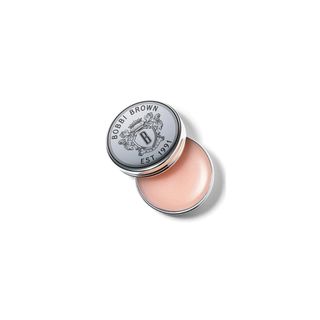
Bobbi Brown Lip Balm SPF 15
Works for
1 of 2 advertised claims delivered
Sun protectionSPF 15 · 4 UV filters · Broad spectrumWeak protectionSPF under 30
This product offers broad spectrum sun protection, but it is weak. We recommend to use a broad spectrum sunscreen with at least SPF 30.
Moisturizing17 ingredients credited for this claimStrong support
“A hydrating lip balm boosted by skin-nourishing botanicals and extracts to help smooth, soften, and condition lips, plus SPF to help provide protection against sun damage.”
This product can help soften the skin and reduce its moisture loss with emollients and occlusives: beeswax, bis-diglyceryl polyacyladipate-2.
Keep in mind that this product does not contain effective ingredients to attract water to the upper layer of the skin. This is why an additional product with humectants like glycerin or hyaluronic acid can be helpful (apply it before this product for the best results).
The following ingredients in this product are especially good for supporting the skin barrier and helping with the hydration level: petrolatum, phytosphingosine
Can it cause trouble?
Irritancy5 strong irritants: Benzyl benzoate, Parfum + 3 more — patch-test recommendedHigh risk
Comedogenic2 ingredients rated 2 or more on the 0–5 pore-clogging scale2 flagged
User reviews
Be the first — your take helps the next person decide.
Ingredients
Filter by role to see what each ingredient is doing.
Ethylhexyl methoxycinnamate7.5%
- Irritation risk
- High
Octinoxate. When used in higher concentrations, works as a sunscreen protecting the skin from UVB rays. When used in lower concentration, helps to preserve the product formulation. Is shown to be harmful to coral reefs - consider avoiding bathing in coral reef areas when wearing a product with this ingredient. It can be irritating
More about Ethylhexyl methoxycinnamateEthylhexyl salicylate3.5%
- Irritation risk
- Low
Octisalate. A UV filter. It offers some protection against the sun rays that cause sunburn (UVB), but does not protect against the most aging sun rays (UVA). It loses its effectiveness quickly when exposed to sunlight. It is an organic, or so called "chemical" sunscreen
More about Ethylhexyl salicylateButyl methoxydibenzoylmethane3%
- Irritation risk
- Medium
Avobenzone. An organic, or so-called "chemical" UV filter. Protects against both UVA and UVB rays. Needs to be combined with other filters in a formulation to be stable.
More about Butyl methoxydibenzoylmethanePetrolatum~22–33%
- Irritation risk
- Low
One of the most effective and the most studied occlusive ingredients that creates a protective layer on top of the skin preventing moisture loss
More about PetrolatumMicrocrystalline wax~5–7.5%
Cera microcristallina~4.7–7.1%
- Irritation risk
- Low
Helps to soften the upper layer of the skin, reduce water loss from its surface and create a thicker product consistency
More about Cera microcristallinaPolybutene~3.7–5.5%
Bis-diglyceryl polyacyladipate-2~3–4.5%
- Irritation risk
- Low
Helps soften the upper layer of the skin and reduce water loss from its surface
More about Bis-diglyceryl polyacyladipate-2Octyldodecyl stearoyl stearate~2.2–3.2%
- Irritation risk
- Low
Beeswax~1.8–2.8%
- Irritation risk
- Low
Forms a protective barrier that holds water and keeps dry skin hydrated. Keeps an emulsion from separating into its oil and liquid components, and increases the thickness of a product. Can be an allergen
More about BeeswaxCera alba~1.9–2.8%
- Irritation risk
- Medium
Forms a protective barrier that holds water and keeps dry skin hydrated. Keeps an emulsion from separating into its oil and liquid components, and increases the thickness of a product. Can be an allergen
More about Cera albaBeeswax~1.4–2%
- Irritation risk
- Low
Forms a protective barrier that holds water and keeps dry skin hydrated. Keeps an emulsion from separating into its oil and liquid components, and increases the thickness of a product. Can be an allergen
More about BeeswaxOctyldodecanol~1–1.5%
- Irritation risk
- Low
An emollient that helps to soften the skin and create a pleasant product texture and stabilize the formulation
More about OctyldodecanolOzokerite~0.85–1.3%
Glycine soja oil~0.55–1.25%
- Irritation risk
- Medium
- Comedogenicity
- 2/5
A good emollient that helps soften the skin and helps repair its barrier function. It can clog pores if used in high concentrations.
More about Glycine soja oilTocopheryl acetate~0.45–1.05%
- Irritation risk
- Medium
A more stable but less bio-available form of vitamin E compared to Tocopherol. Might help moisturize and protect the skin from free radicals, but mostly used in low concentrations to stabilize other ingredients.
More about Tocopheryl acetateGlyceryl distearate~0.5–1.1%
- Irritation risk
- Low
Caprylyl glycol~0.45–1.05%
- Irritation risk
- Medium
Helps preserve products and creates a nice product texture
More about Caprylyl glycolCholesterol~0.45–1.1%
- Irritation risk
- Low
An emollient that is naturally found in skin
More about CholesterolPersea gratissima oil~0.45–1.05%
- Irritation risk
- Medium
An emollient that helps soften the skin and could be helpful in repairing its barrier function
More about Persea gratissima oilOlea europaea fruit oil~0.4–0.95%
- Irritation risk
- Medium
An emollient that helps soften the skin but is not effective for restoring its barrier function. Might be helpful to calm down inflammation
More about Olea europaea fruit oilTriticum vulgare germ oil~0.4–0.9%
- Irritation risk
- Low
- Comedogenicity
- 3/5
A good emoillient. Contains vitamin E which can help neutralise free radicals, however the oil is unstable. Avoid if you have gluten or wheat sensitivity (including food allergies).
More about Triticum vulgare germ oilCoffea arabica seed extract~0.35–0.8%
- Irritation risk
- Low
Might be helpful in neutralizing free radicals in skin
More about Coffea arabica seed extractOleic acid~0.35–0.85%
- Irritation risk
- Medium
Helps soften the upper layer of the skin. At the same time, it can weaken the skin's barrier enhancing penetration of other ingredients and increasing the risk of skin dryness
More about Oleic acidPalmitic acid~0.4–0.95%
- Irritation risk
- Low
An emollient that is naturally present in skin and helps soften it
More about Palmitic acidRicinus communis seed oil~0.35–0.85%
- Irritation risk
- Medium
A plant oil that can help soften the skin. It might be helpful in calming down inflammation, but solid research is lacking. Is often used in lip products to create the needed product consistency
More about Ricinus communis seed oilBenzyl benzoate~0.2–0.75%
- Irritation risk
- High
Fragrance with sweet balsamic smell. Help to preserve products and dissolve other ingredients. Could trigger allergic reactions and be irritating
More about Benzyl benzoateTitanium dioxide~0.4–0.95%
- Irritation risk
- Low
Works as a UV filter when used in high concentrations. It is photostable and is effective mostly against the UVB light, with some protection in the UVA range. In small concentrations, used for its ability to improve the color of cosmetic products. Is usually well tolerated by the skin
More about Titanium dioxideCi 77891~0.15–0.6%
- Irritation risk
- Low
Phytosphingosine~0.3–0.75%
- Irritation risk
- Low
A type of lipid that is naturally present in skin. It might help in repairing skin barrier function and has anti-bacterial effect
More about PhytosphingosineParfum~0.1–0.45%
- Irritation risk
- High
An aromatic blend of unspecified and possibly irritating ingredients
More about ParfumAloe barbadensis leaf extract~0.2–0.75%
- Irritation risk
- Medium
Traditionally used to treat sunburns, dermatitis and inflammation, but evidence for its effectiveness is lacking. The extract can contain humectants that help attract water into the skin
More about Aloe barbadensis leaf extractCitronellol~0.1–0.4%
Alpha-isomethyl ionone~0.1–0.4%
- Irritation risk
- High
A fragrance. Potential allergen and can be irritating
More about Alpha-isomethyl iononeGeraniol~0.05–0.3%
Ci 15850~0.1–0.3%
Ingredient list view
Ethylhexyl methoxycinnamate, Ethylhexyl salicylate, Butyl methoxydibenzoylmethane, Petrolatum, Microcrystalline wax, Cera microcristallina, Polybutene, Bis-diglyceryl polyacyladipate-2, Octyldodecyl stearoyl stearate, Beeswax, Cera alba, Beeswax, Octyldodecanol, Ozokerite, Glycine soja oil, Tocopheryl acetate, Glyceryl distearate, Caprylyl glycol, Cholesterol, Persea gratissima oil, Olea europaea fruit oil, Triticum vulgare germ oil, Coffea arabica seed extract, Oleic acid, Palmitic acid, Ricinus communis seed oil, Benzyl benzoate, Titanium dioxide, Ci 77891, Phytosphingosine, Parfum, Aloe barbadensis leaf extract, Citronellol, Alpha-isomethyl ionone, Geraniol, Ci 15850
Compare prices
Retailers ranked by price — lowest first.

Product summary
"Bobbi Brown - Lip Balm SPF 15" "is a broad spectrum lip sunscreen meaning that it protects both from UVB rays (" burning "- they cause sunburn) and UVA rays (" aging "- they don't cause sunburn but lead to premature aging and pigmentation issues). However, it does not offer enough sun protection. We recommend to use a sunscreen with at least SPF 30 daily.
Sunscreen filters
This is a so-called" chemical "sunscreen. It means that it uses organic UV filters. They typically offer good sun protection and rarely leave a white cast, but they can be irritating for some people with sensitive skin. Here are the exact UV filters in this sunscreen: avobenzone 3.00% (declared), octinoxate 7.50% (declared) and octisalate 3.50% (declared).
Irritation risk
There are quite a few common irritants in this product, including ingredients without particular skin benefits. We would not recommend it for sensitive skin. We assess the overall irritancy of this lip product to be high. For a detailed overview of all potential irritants: click here
You can see the detailed formula review with the breakdown of all actives in the product and the full ingredient list with estimated concentrations in the tables below.
Price
The product retails from 24.00$ up to 28.49$ in the United States, for 77.29CA$ in Canada, for 30.02£ in the United Kingdom and for 22.00£ in the United Kingdom.
For a detailed price comparison: click here.
Sources cited in this review
Every concentration estimate and effectiveness label is anchored to one of these 11 studies and safety reviews.
- 1
- 2
- 3
- 4Use of “natural” oils for moisturization: Review of olive, coconut, and sunflower seed oilonlinelibrary.wiley.com
- 5
- 6

Affiliate links · As an Amazon Associate, WIMJ earns from qualifying purchases.