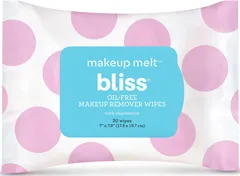
Works for:
based on ingredients and %- Cleansing
Can it cause trouble?
- Irritation risk: medium
- Comedogenic risk ingredients: 4
Key actives

Works for
Cleansing
What does the product description say?
Makeup Melt Oil-Free Makeup Remover Wipes
Source: From product name
This product works by removing dirt and oil from the surface of the skin.
It contains the following cleansing agents that tend to be harsh on the skin: sodium lauryl sulfate.
The following cleansing agents are typically mild, but still can cause an irritation or allergy for some people sodium laureth sulfate.
Keep in mind that cleansing can disrupt the skin barrier, and most people do not need to cleanse their skin more than once per day.
Helps water and oil mix together
Helps oil and water mix together. Has some emollient properties
A non-drying alcohol. Works as an emollient. Helps water and oil mix together and creates a nice product texture
An emollient that softens the skin and forms a protective layer on its surface. Helps water and oil mix together
Helps oil and water mix together
Helps oil and water mix together
Works as a foaming cleansing agent
Helps water and oil mix together and works as a cleansing agent
A cleansing agent (SLS). It can be irritating
How honest is this product?
| Promise | Can it deliver? |
|---|---|
| Cleansing |
Total Promises Fulfilled score: 75/100.
We receive a small commission for purchases made through these links at no cost for you. Thank you for your support! Learn more
Potential irritants
Comedogenic ingredients
User reviews (0)
Averages from community submissions.
No reviews yet for this product.
Be the first to share your experience!
Tried this product?
Help capture what the ingredient list can't—texture, finish, pilling, scent, and more. Answer what you can, skip the rest.
Takes ~30 seconds.
Reviews are shown in aggregate. No personal details.
Key Actives
Naturally present in skin (urea makes up about 7% of natural moisturizing factors in skin). Attracts water to the upper layer of the skin. Also has a positive effect on the skin barrier beyond the humectant action. Can enhance penetration of other ingredients. Is an exfoliating ingredient when used in high concentrations
A silicone that helps improve the product texture and spreadability. Can absorb oil creating a short-term mattifying effect on the skin
A plant extract that can help attract water to the upper layer of the skin and might help to reduce inflammation
An emollient that softens the skin and forms a protective layer on its surface. Helps water and oil mix together
A non-drying alcohol. Works as an emollient. Helps water and oil mix together and creates a nice product texture
A cleansing agent (SLS). It can be irritating
Works as a foaming cleansing agent
One of the most effective and the most studied occlusive ingredients that creates a protective layer on top of the skin preventing moisture loss
Mineral oil. One of the most effective and well studied occlusive and emollient moisturizing ingredients. Helps reduce moisture loss in skin and repair skin barrier function
One of the best moisturizing ingredients. Naturally present in skin. It attracts water to the upper layer of the skin working as a humectant
Helps oil and water mix together. Has some emollient properties
Helps water and oil mix together and works as a cleansing agent
Potential irritants
A cleansing agent (SLS). It can be irritating
Works as a foaming cleansing agent
A preservative that releases formaldehyde and can be irritating
Plant extract that can have healing and anti-inflammatory properties. It is a potential allergen and can be irritating
A plant extract that can help attract water to the upper layer of the skin and might help to reduce inflammation
An aromatic blend of unspecified and possibly irritating ingredients
A more stable but less bio-available form of vitamin E compared to Tocopherol. Might help moisturize and protect the skin from free radicals, but mostly used in low concentrations to stabilize other ingredients.
Might be somewhat helpful in reducing hyperpigmentation and neutralizing free radicals but its typical concentration in a product is too low for having an effect
Traditionally used to treat sunburns, dermatitis and inflammation, but evidence for its effectiveness is lacking. The extract can contain humectants that help attract water into the skin
Helps oil and water mix together. Has some emollient properties
Helps water and oil mix together and works as a cleansing agent
Helps preserve products and creates a nice product texture
Helps to control the skin's pH level. Maintains the skin's natural film of amino-lactic acids and oils. Helps to preserve products
Comedogenic ingredients
A cleansing agent (SLS). It can be irritating
Works as a foaming cleansing agent
A non-drying alcohol. Works as an emollient. Helps water and oil mix together and creates a nice product texture
Helps oil and water mix together. Has some emollient properties
All ingredients
A cleansing agent (SLS). It can be irritating
Works as a foaming cleansing agent
A preservative that releases formaldehyde and can be irritating
Naturally present in skin (urea makes up about 7% of natural moisturizing factors in skin). Attracts water to the upper layer of the skin. Also has a positive effect on the skin barrier beyond the humectant action. Can enhance penetration of other ingredients. Is an exfoliating ingredient when used in high concentrations
One of the most effective and the most studied occlusive ingredients that creates a protective layer on top of the skin preventing moisture loss
Mineral oil. One of the most effective and well studied occlusive and emollient moisturizing ingredients. Helps reduce moisture loss in skin and repair skin barrier function
A silicone that helps improve the product texture and spreadability. Can absorb oil creating a short-term mattifying effect on the skin
An emollient that softens the skin and helps prevent moisture loss.
A more stable but less bio-available form of vitamin E compared to Tocopherol. Might help moisturize and protect the skin from free radicals, but mostly used in low concentrations to stabilize other ingredients.
Plant extract that can have healing and anti-inflammatory properties. It is a potential allergen and can be irritating
Might be somewhat helpful in reducing hyperpigmentation and neutralizing free radicals but its typical concentration in a product is too low for having an effect
An effective moisturizing and skin barrier repair ingredient. Helps calm down inflammation and has some anti-oxidant properties
Traditionally used to treat sunburns, dermatitis and inflammation, but evidence for its effectiveness is lacking. The extract can contain humectants that help attract water into the skin
A plant extract that can help attract water to the upper layer of the skin and might help to reduce inflammation
One of the best moisturizing ingredients. Naturally present in skin. It attracts water to the upper layer of the skin working as a humectant
An emollient that softens the skin and forms a protective layer on its surface. Helps water and oil mix together
A non-drying alcohol. Works as an emollient. Helps water and oil mix together and creates a nice product texture
An emollient that helps soften the skin and is used to improve product texture and stability
Helps oil and water mix together. Has some emollient properties
Helps water and oil mix together and works as a cleansing agent
Helps preserve products and creates a nice product texture
A preservative. It helps prevent bacterial growth in cosmetic products
Helps to control the skin's pH level. Maintains the skin's natural film of amino-lactic acids and oils. Helps to preserve products
An aromatic blend of unspecified and possibly irritating ingredients
Ingredient list view
Sodium lauryl sulfate, Sodium laureth sulfate, Dmdm hydantoin, Urea, Petrolatum, Paraffinum liquidum, Unknown, Formaldehyde, Water, Cyclopentasiloxane, Cetearyl isononanoate, Polysorbate 20, Tocopheryl acetate, Chamomilla recutita flower extract, Cucumis sativus fruit extract, Avena sativa kernel extract, Aloe barbadensis leaf extract, Althaea officinalis root extract, Glycerin, Glyceryl stearate, Lauryl glucoside, Cetearyl alcohol, Cetyl palmitate, Ceteareth-12, Ceteareth-20, Sodium lauryl glucose carboxylate, Caprylyl glycol, Phenoxyethanol, Sorbic acid, Potassium sorbate, Benzoic acid, Sodium citrate, Sodium benzoate, Parfum