Works for
Evens skin toneRetinyl palmitate, Ascorbic acidMay help
“Tightens loose skin, improves elasticity, skin density, and firmness, while reducing fine lines and wrinkles, reducing photodamage and hyperpigmentation, while increasing keratinocyte proliferation [ 2 ]”
The following ingredient (ingredients) in this product might be helpful, but there is no evidence to confirm that it actually works: retinyl palmitate.
Anti-agingRetinyl palmitate, Copper tripeptide-1 + 2 moreMay help
“This synergistic formula offers the most potent healing and repair benefits of STABLE BPC-157 with the anti-aging and regenerative properties of GHK-Cu.”
This product contains copper tripeptide-1, retinyl palmitate. These ingredients might be able to help reduce and prevent fine lines and wrinkles, improve skin elasticity and firmness, but there is not enough evidence that it actually works.
Can it cause trouble?
Irritancy1 strong irritant: Retinyl palmitateMedium risk
ComedogenicClean of flagged comedogenic ingredientsNone flagged

User reviews
Be the first — your take helps the next person decide.
Ingredients
Filter by role to see what each ingredient is doing.
Aloe barbadensis leaf juice~23–34%
- Irritation risk
- Medium
Traditionally used to treat sunburns, dermatitis and inflammation, but evidence for its effectiveness is lacking. The extract can contain humectants that help attract water into the skin
More about Aloe barbadensis leaf juiceCarbomer~8.8–13.2%
- Irritation risk
- Low
Helps create a thicker or gel-like product texture. It is not a surfactant but can be used in gentle cleansing formulations
More about CarbomerAloe barbadensis leaf juice~5–7.5%
- Irritation risk
- Medium
Traditionally used to treat sunburns, dermatitis and inflammation, but evidence for its effectiveness is lacking. The extract can contain humectants that help attract water into the skin
More about Aloe barbadensis leaf juiceAloe barbadensis leaf polysaccharides~3.8–5.7%
- Irritation risk
- Low
Tocopheryl acetate~2.7–4.1%
- Irritation risk
- Medium
A more stable but less bio-available form of vitamin E compared to Tocopherol. Might help moisturize and protect the skin from free radicals, but mostly used in low concentrations to stabilize other ingredients.
More about Tocopheryl acetateRetinyl palmitate~1.9–2.8%
- Irritation risk
- High
Three steps removed from the active form of vitamin A - retinoic acid. To have an effect in the skin, it first needs to be converted twice to become the retinoic acid. This means it is less potent than retinol, but could also be less irritating. Once converted to the retinoic acid in the skin, it helps against all signs of aging, improves skin cell turnover and helps fight blemishes and clogged pores. However, in many cosmetic formulations, it is used in a concentration that is too low to have the full effect
More about Retinyl palmitateAscorbic acid~1.4–2.1%
- Irritation risk
- High
The most well-researched antioxidant that works in skin. Helps neutralize free radicals supporting collagen production, helping to even out the skin tone and preventing early signs of aging
More about Ascorbic acidEdta~0.5–1%
Caprylyl glycol~0.9–1.3%
- Irritation risk
- Medium
Helps preserve products and creates a nice product texture
More about Caprylyl glycolPhenoxyethanol~0.35–0.85%
- Irritation risk
- Low
A preservative. It helps prevent bacterial growth in cosmetic products
More about PhenoxyethanolSorbic acid~0.3–0.6%
Copper tripeptide-1~0.2–0.75%
- Irritation risk
- Low
A naturally occurring peptide. One of the most studied peptides in dermatology. It is sometimes abbreviated GHK-Cu. Belongs to the class of carrier peptides. It stimulates both synthesis and breakdown of collagen in skin. It is released in skin wounds and inflammation to support healing. It accelerates wound-healing of the skin and can stimulate hair growth. There are preliminary studies that confirm that copper tripeptide can help support collagen production reducing fine lines and wrinkles and decrease inflammation in skin.
More about Copper tripeptide-1Ingredient list view
Aloe barbadensis leaf juice, Carbomer, Aloe barbadensis leaf juice, Aloe barbadensis leaf polysaccharides, Tocopheryl acetate, Retinyl palmitate, Ascorbic acid, Edta, Caprylyl glycol, Phenoxyethanol, Sorbic acid, Copper tripeptide-1, Unknown
Compare prices
Retailers ranked by price — lowest first.

Worth comparing, line by line.
Match % combines shared ingredients, the first five ingredients, shared actives and hero ingredients, irritancy (lower counts in the alternative's favour), texture and body area. Only products in the same routine step are compared.
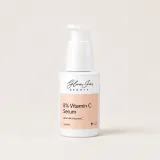
| BioPrimeREGENERATIVE SERUMYOUR PRODUCT | Glow Jar8% AM Vitamin C Serum | Paula's choiceActive Serum Intensive Vitamin C and E + Ferulic Acid | DIMEHyper Glow Serum | |
|---|---|---|---|---|
| Match | — | 75% | 75% | 74% |
| Price | — | $41.38 | — | $32.00 |
| Shared key ingredients | — | 1 of 3 | 1 of 3 | 1 of 3 |
| Key difference | — | Salicylic Acid | Ferulic Acid | Ferulic Acid |
| Irritancy | Medium | Low | Low | Low |
| Drying alcohol | — | — | — | — |
| View product | Shop | Shop | Shop |

More alternatives: Beauty Pie Superactive Capsules Extreme 30% Vitamin C Serum + Resveratrol + OryzanolBlu Atlas Vitamin C Serum
Product summary
"BioPrime - REGENERATIVE SERUM" could be helpful for: Anti-aging and Evens skin tone, but its actives are not the most effective or are not well-studied.
Ingredient callouts
- This product also contains Vitamin C (Ascorbic Acid). It can be an effective active for anti-aging and evening out the skin tone, but in this product it is used for stabilizing other ingredients in the formulation. In this concentration (1.20% - 1.90%) it cannot have a noticeable benefit for the skin.
- This product includes a form of Retinoids (vitamin A) - retinyl palmitate 1.50% - 2.20%, but this type of vitamin A is not very effective. It could in theory help with fine lines and wrinkles, but the effect is most likely minimal.
- Peptides (copper tripeptide-1 0.15% - 0.60%). There are many different kind of Peptides and they are naturally present in our skin. They all are a combination of aminoacids. Some of them work as natural antibiotics, promote wound-healing and production of collagen. The science is still not settled on how effective Peptides are in skincare, but it is very likely that they have a benefit. They might help restore the skin barrier and fight the signs of aging. At the very least, Peptides work as humectants: they attract water to the upper layer of the skin and improve its hydration.
Sources cited in this review
Every concentration estimate and effectiveness label is anchored to one of these 4 studies and safety reviews.
- 1
- 2
- 3
- 4

Affiliate links · As an Amazon Associate, WIMJ earns from qualifying purchases.